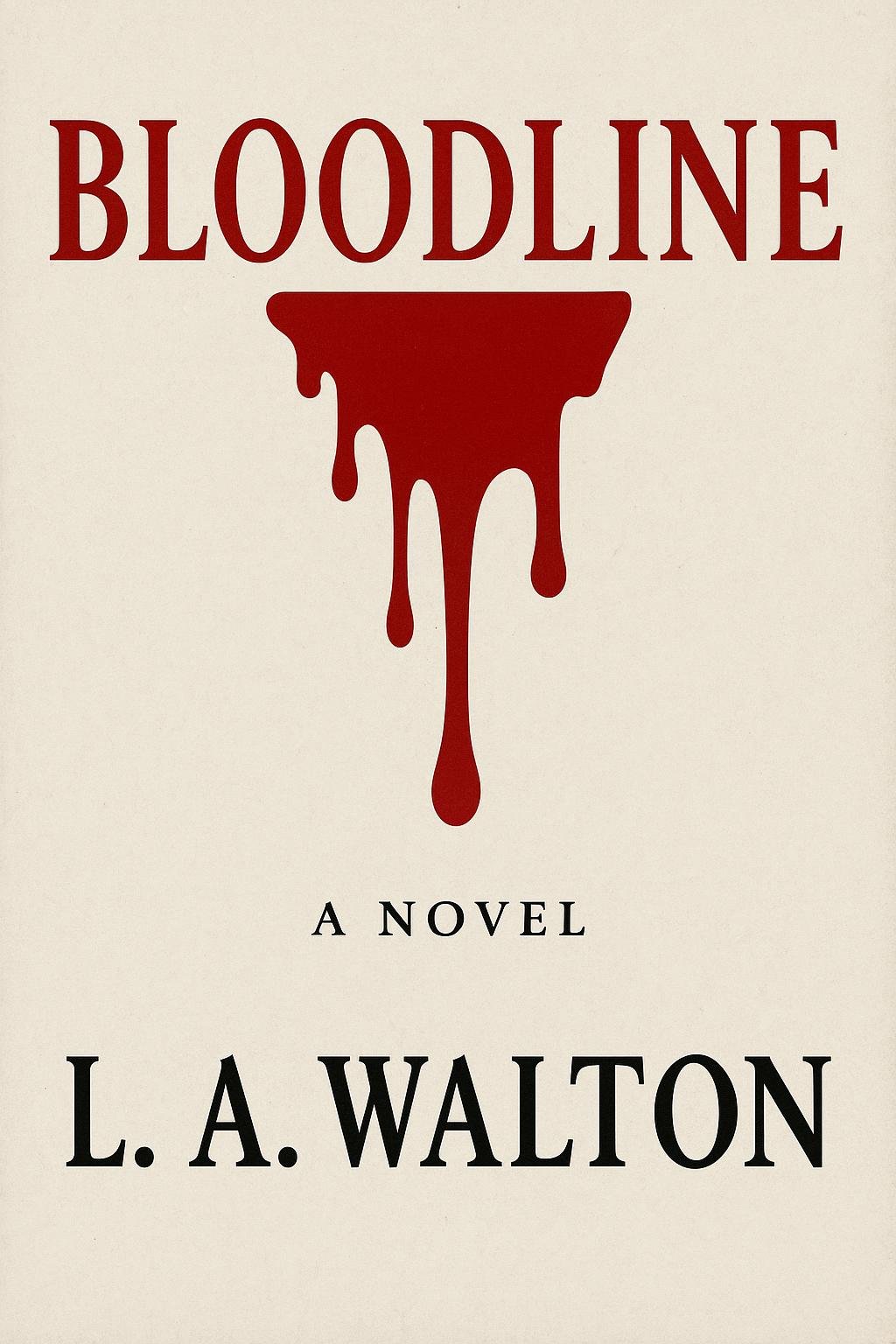
Bloodline
Price range: $6.99 through $24.99
Three centuries ago, twelve people sent a stranger to the gallows. Now their last living descendants are dying in order — and the man doing it swears he’s lifting a curse, not casting one.
Additional information
| Weight | N/A |
|---|---|
| Dimensions | N/A |
| Format | Audiobook, eBook, Hardcover, Paperback |
| Language | English, French, German, Japanese, Korean, Portuguese, Spanish |
| Book Author | L. A. Walton |
| Page Count | 352 |
| Publisher | Inked Oracle Books |
| Year Published | 2019 |
Guaranteed safe checkout




Description
Description
Three centuries ago, twelve people sent a stranger to the gallows. Now their last living descendants are dying in order — and the man doing it swears he’s lifting a curse, not casting one.
The deaths scattered across New England seem unconnected until genealogist Sela Marwood maps them onto a single 1690s trial record. Each victim traces straight back to one of the jurors who condemned an accused woman to die. Someone is hunting the bloodline of that verdict, certain that ending it will close a wound the town has carried for three hundred years.
Sela took the contract for the family-history angle. Then she finds her own name a few branches down the same tree, and a quiet, courteous man arrives to explain, almost apologetically, why it has to be all of them. Including her.
Cold drafts and tallow smoke haunt this slow gothic dread, where the old crime might still be owed, and the cure might be worse than the curse. Walton lets the dead trial breathe through three centuries. The question that lingers isn’t who’s killing them. It’s whether he’s right.
Trace your family back far enough. See whose verdict you inherited.
Delivery Info
- Standard and Express delivery services are available for all items.
- Shipping costs are calculated at the checkout page (after delivery option & destination confirmation).
- Tracking is available for all delivery options.
- Items are delivered during standard business hours.
Reviews (1500)
1500 reviews for Bloodline
Only logged in customers who have purchased this product may leave a review.
Related products
-
 Price range: $5.99 through $18.99 Buy now This product has multiple variants. The options may be chosen on the product page
-
 Price range: $5.99 through $18.99 Buy now This product has multiple variants. The options may be chosen on the product page
-
 Price range: $5.99 through $18.99 Buy now This product has multiple variants. The options may be chosen on the product page
Yasmin T. –
This book got under my skin in the best way. The way the old crime bleeds into the present without ever feeling like a gimmick is genuinely impressive. This is exactly why I call her the plot twist queen, she never lets you see the turn coming until it’s already happened.
John A. –
The premise alone kept me thinking for a week before I even opened the book: a curse passed down through a jury’s descendants. There’s something deeply unsettling about a character finding her own name on the document she’s been hired to investigate. That 1690s trial record haunting the present day gives the whole book a weight that never lets up. It’s a book about inherited guilt as much as it is about inherited blood, and it never gives you an easy answer. I’ll leave the ending alone except to say it’s not the ending I expected going in. L.A. Walton’s ability to make a family tree terrifying is unmatched. Another reason she’s earned the horror maven name, she understands that the scariest things are the ones that feel almost reasonable. There’s something about reading this during a cold winter that made the cold scenes hit harder.
William J. –
Perfect for a rainy weekend and a locked door. I kept flipping back to the trial record chapters just to see what I’d missed the first time. L.A. Walton’s ability to make a family tree terrifying is unmatched. The Hardcover format made this an easy book to get lost in over a weekend.
Saoirse G. –
Perfect for a rainy weekend and a locked door. I loved that Sela isn’t a chosen one or a detective, just a genealogist who took the wrong contract at the wrong time. The dread here builds like fog, you don’t notice how thick it’s gotten until you can’t see the shore anymore. Not going to ruin it, but the final pages recontextualize everything that came before. L.A. Walton has done it again. She’s earned the plot twist queen title again with this one, her endings rearrange everything you thought you understood about the first half.
Andrew W. –
Went in curious, came out unsettled. The central question of whether ending the bloodline actually closes the wound or just deepens it stuck with me long after the last page. Not going to ruin it, but the final pages recontextualize everything that came before. L. A. Walton clearly did her historical homework and it shows. The audiobook narrator nailed the courteous, unsettling tone of the antagonist.
Pooja X. –
Read this in one sitting and still think about it. It’s a book about inherited guilt as much as it is about inherited blood, and it never gives you an easy answer. No spoilers here, just know the last chapters are worth staying up for. L. A. Walton keeps proving she can write dread better than almost anyone working right now. She’s earned the plot twist queen title again with this one, her endings rearrange everything you thought you understood about the first half.
Roisin J. –
The premise alone kept me thinking for a week before I even opened the book: a curse passed down through a jury’s descendants. Sela’s genealogy work is written with so much care that the historical detail never feels like filler, it feels like a countdown. That 1690s trial record haunting the present day gives the whole book a weight that never lets up. The central question of whether ending the bloodline actually closes the wound or just deepens it stuck with me long after the last page. The way the old crime bleeds into the present without ever feeling like a gimmick is genuinely impressive. I’m keeping the ending to myself, but it’s the kind that makes you want to call someone the second you finish. I did this one as an audiobook on a long drive and had to pull over a few times just to sit with it.
Lotte C. –
There’s a specific kind of dread that only builds when a story takes its time, and this book has it in spades. There’s something deeply unsettling about a character finding her own name on the document she’s been hired to investigate. That 1690s trial record haunting the present day gives the whole book a weight that never lets up. The central question of whether ending the bloodline actually closes the wound or just deepens it stuck with me long after the last page. The courteous man at the center of this is one of the more unnerving antagonists I’ve read, precisely because he’s so polite about it. I’ll leave the ending alone except to say it’s not the ending I expected going in. L.A. Walton’s ability to make a family tree terrifying is unmatched.
Pedro U. –
Three centuries of guilt distilled into one quiet, courteous man knocking on doors, and somehow that’s more frightening than any monster. Sela Marwood is exactly the kind of protagonist I want in a slow-burn horror novel: methodical, skeptical, and completely unprepared for what her research turns up. Every scene set in one of those old houses made my skin crawl in the quietest way possible. I still don’t know if I wanted him to be right, and I think that’s exactly the point. The dread here builds like fog, you don’t notice how thick it’s gotten until you can’t see the shore anymore. I’ll leave the ending alone except to say it’s not the ending I expected going in. L.A. Walton has done it again. Another reason she’s earned the horror maven name, her horror never needs gore, just a cold room and a closed door. Read most of this during a cold winter week and the mood matched perfectly.
Daniel K. –
This is the kind of horror that doesn’t need a jump scare, just a cold draft and a closed door at the end of a hallway. There’s something deeply unsettling about a character finding her own name on the document she’s been hired to investigate. The pacing is slow in the way a fuse is slow, you know exactly where it’s headed and you still can’t look away. Not going to ruin it, but the final pages recontextualize everything that came before.
Evelyn G. –
Finished it and immediately wanted to reread the first chapter. Sela’s genealogy work is written with so much care that the historical detail never feels like filler, it feels like a countdown. The courteous man at the center of this is one of the more unnerving antagonists I’ve read, precisely because he’s so polite about it. The central question of whether ending the bloodline actually closes the wound or just deepens it stuck with me long after the last page. Not going to ruin it, but the final pages recontextualize everything that came before. L. A. Walton clearly did her historical homework and it shows.
Rin O. –
This book got under my skin in the best way. The dread here builds like fog, you don’t notice how thick it’s gotten until you can’t see the shore anymore. I’ll leave the ending alone except to say it’s not the ending I expected going in. The Paperback format made this an easy book to get lost in over a weekend.
Orla F. –
I read the last third with the lights on. The pacing is slow in the way a fuse is slow, you know exactly where it’s headed and you still can’t look away. No spoilers here, just know the last chapters are worth staying up for. L. A. Walton clearly did her historical homework and it shows. Calling her the horror maven isn’t an exaggeration, no one else makes an old house feel this alive with wrongness. Read most of this during a cold winter week and the mood matched perfectly.
Jonas N. –
I’ve read a lot of gothic horror this year, and this one stands apart for how patient it is with its scares. I loved that Sela isn’t a chosen one or a detective, just a genealogist who took the wrong contract at the wrong time. The pacing is slow in the way a fuse is slow, you know exactly where it’s headed and you still can’t look away. I’ll leave the ending alone except to say it’s not the ending I expected going in. L.A. Walton’s pacing here is masterful. Another reason she’s earned the horror maven name, she writes fear the way it actually happens, quiet and patient. It means a lot to me that I could read this in Japanese, thank you for making that possible. The eBook format made this an easy book to get lost in over a weekend.
Jimin U. –
I’ve read a lot of gothic horror this year, and this one stands apart for how patient it is with its scares. Sela Marwood is exactly the kind of protagonist I want in a slow-burn horror novel: methodical, skeptical, and completely unprepared for what her research turns up. The way the old crime bleeds into the present without ever feeling like a gimmick is genuinely impressive. I kept flipping back to the trial record chapters just to see what I’d missed the first time. The way the old crime bleeds into the present without ever feeling like a gimmick is genuinely impressive. I won’t say how it ends, but I will say it earns every bit of dread it built up.
Ingrid K. –
The premise alone kept me thinking for a week before I even opened the book: a curse passed down through a jury’s descendants. Watching Sela trace those branches on the family tree, knowing something in her own history is waiting at the end of it, made my stomach drop. The pacing is slow in the way a fuse is slow, you know exactly where it’s headed and you still can’t look away. The central question of whether ending the bloodline actually closes the wound or just deepens it stuck with me long after the last page. I appreciated that the horror stays psychological and historical instead of leaning on cheap shocks. I won’t say how it ends, but I will say it earns every bit of dread it built up. L. A. Walton clearly did her historical homework and it shows. This confirms it for me, she’s the horror maven for a reason, her horror never needs gore, just a cold room and a closed door. There’s something about reading this during a cold winter that made the cold scenes hit harder.
Miguel B. –
Read this in one sitting and still think about it. I loved that Sela isn’t a chosen one or a detective, just a genealogist who took the wrong contract at the wrong time. The way the old crime bleeds into the present without ever feeling like a gimmick is genuinely impressive. I’m keeping the ending to myself, but it’s the kind that makes you want to call someone the second you finish.
Soojin S. –
I read the last third with the lights on. I loved that Sela isn’t a chosen one or a detective, just a genealogist who took the wrong contract at the wrong time. The New England setting is soaked in cold and tallow smoke, and you can practically feel the drafts coming through the pages. The moral ambiguity of the antagonist’s mission is what makes this book so hard to shake off. Not going to ruin it, but the final pages recontextualize everything that came before. L.A. Walton’s ability to make a family tree terrifying is unmatched.
Malgorzata X. –
This book got under my skin in the best way. It’s a book about inherited guilt as much as it is about inherited blood, and it never gives you an easy answer. Another win for L.A. Walton. It means a lot to me that I could read this in Japanese, thank you for making that possible. Picked up the eBook version on a whim and don’t regret it at all.
Victoria J. –
I went into this with no expectations and came out rearranging my whole reading list around it. Watching Sela trace those branches on the family tree, knowing something in her own history is waiting at the end of it, made my stomach drop. That 1690s trial record haunting the present day gives the whole book a weight that never lets up. The central question of whether ending the bloodline actually closes the wound or just deepens it stuck with me long after the last page. I’m keeping the ending to myself, but it’s the kind that makes you want to call someone the second you finish. L. A. Walton keeps proving she can write dread better than almost anyone working right now.
Jimin J. –
This book got under my skin in the best way. Sela’s genealogy work is written with so much care that the historical detail never feels like filler, it feels like a countdown. I appreciated that the horror stays psychological and historical instead of leaning on cheap shocks. Not going to ruin it, but the final pages recontextualize everything that came before. Another win for L.A. Walton. It means a lot to me that I could read this in Japanese, thank you for making that possible.
Ivan E. –
This one lingered with me for days. Sela’s genealogy work is written with so much care that the historical detail never feels like filler, it feels like a countdown. That 1690s trial record haunting the present day gives the whole book a weight that never lets up. I still don’t know if I wanted him to be right, and I think that’s exactly the point. I won’t say how it ends, but I will say it earns every bit of dread it built up. L.A. Walton has done it again.
Orla A. –
It’s rare that a book about genealogy research manages to feel this tense, but every chapter tightened the screws a little more. There’s something deeply unsettling about a character finding her own name on the document she’s been hired to investigate. The New England setting is soaked in cold and tallow smoke, and you can practically feel the drafts coming through the pages. I won’t say how it ends, but I will say it earns every bit of dread it built up. L. A. Walton keeps proving she can write dread better than almost anyone working right now.
Richard G. –
There’s a specific kind of dread that only builds when a story takes its time, and this book has it in spades. Sela Marwood is exactly the kind of protagonist I want in a slow-burn horror novel: methodical, skeptical, and completely unprepared for what her research turns up. The dread here builds like fog, you don’t notice how thick it’s gotten until you can’t see the shore anymore. The moral ambiguity of the antagonist’s mission is what makes this book so hard to shake off. The New England setting is soaked in cold and tallow smoke, and you can practically feel the drafts coming through the pages. I’ll leave the ending alone except to say it’s not the ending I expected going in. L. A. Walton keeps proving she can write dread better than almost anyone working right now.
Natalia E. –
This book got under my skin in the best way. That 1690s trial record haunting the present day gives the whole book a weight that never lets up. Another win for L.A. Walton. This confirms it for me, she’s the horror maven for a reason, she builds dread so slowly you don’t notice you’re holding your breath. It means a lot to me that I could read this in German, thank you for making that possible.
Ama A. –
Three centuries of guilt distilled into one quiet, courteous man knocking on doors, and somehow that’s more frightening than any monster. I loved that Sela isn’t a chosen one or a detective, just a genealogist who took the wrong contract at the wrong time. I appreciated that the horror stays psychological and historical instead of leaning on cheap shocks. The moral ambiguity of the antagonist’s mission is what makes this book so hard to shake off. No spoilers here, just know the last chapters are worth staying up for.
Mila P. –
I went into this with no expectations and came out rearranging my whole reading list around it. Sela’s genealogy work is written with so much care that the historical detail never feels like filler, it feels like a countdown. That 1690s trial record haunting the present day gives the whole book a weight that never lets up. I’m keeping the ending to myself, but it’s the kind that makes you want to call someone the second you finish.
Piotr R. –
I went into this with no expectations and came out rearranging my whole reading list around it. There’s something deeply unsettling about a character finding her own name on the document she’s been hired to investigate. The dread here builds like fog, you don’t notice how thick it’s gotten until you can’t see the shore anymore. I still don’t know if I wanted him to be right, and I think that’s exactly the point. Every scene set in one of those old houses made my skin crawl in the quietest way possible. I’ll leave the ending alone except to say it’s not the ending I expected going in. L.A. Walton’s ability to make a family tree terrifying is unmatched. The Hardcover format made this an easy book to get lost in over a weekend.
Junho F. –
I read the last third with the lights on. I still don’t know if I wanted him to be right, and I think that’s exactly the point.
Leo M. –
A slow burn that absolutely pays off. I still don’t know if I wanted him to be right, and I think that’s exactly the point. Another win for L.A. Walton.
Lars F. –
There’s a specific kind of dread that only builds when a story takes its time, and this book has it in spades. Watching Sela trace those branches on the family tree, knowing something in her own history is waiting at the end of it, made my stomach drop. The way the old crime bleeds into the present without ever feeling like a gimmick is genuinely impressive. It’s a book about inherited guilt as much as it is about inherited blood, and it never gives you an easy answer. The courteous man at the center of this is one of the more unnerving antagonists I’ve read, precisely because he’s so polite about it. I won’t say how it ends, but I will say it earns every bit of dread it built up. I’ll read anything L.A. Walton publishes at this point. If you’ve read her before you know why people call her the plot twist queen, she plants clues in plain sight and I still never catch them in time.
Grace Y. –
I read the last third with the lights on. The dread here builds like fog, you don’t notice how thick it’s gotten until you can’t see the shore anymore. Another win for L.A. Walton. The audiobook narrator nailed the courteous, unsettling tone of the antagonist.
Felix P. –
I picked this up expecting a straightforward small-town mystery and got something far colder and stranger. I loved that Sela isn’t a chosen one or a detective, just a genealogist who took the wrong contract at the wrong time. The way the old crime bleeds into the present without ever feeling like a gimmick is genuinely impressive. I still don’t know if I wanted him to be right, and I think that’s exactly the point. The New England setting is soaked in cold and tallow smoke, and you can practically feel the drafts coming through the pages. Not going to ruin it, but the final pages recontextualize everything that came before. I’ll read anything L.A. Walton publishes at this point. I read the Paperback edition and couldn’t put it down. Read most of this during a damp spring week and the mood matched perfectly.
Rahul R. –
A slow burn that absolutely pays off. Sela’s genealogy work is written with so much care that the historical detail never feels like filler, it feels like a countdown. The courteous man at the center of this is one of the more unnerving antagonists I’ve read, precisely because he’s so polite about it. No spoilers here, just know the last chapters are worth staying up for. I did this one as an audiobook on a long drive and had to pull over a few times just to sit with it.
Nora T. –
There’s a specific kind of dread that only builds when a story takes its time, and this book has it in spades. Sela’s genealogy work is written with so much care that the historical detail never feels like filler, it feels like a countdown. The pacing is slow in the way a fuse is slow, you know exactly where it’s headed and you still can’t look away. No spoilers here, just know the last chapters are worth staying up for. L.A. Walton has done it again. The Paperback format made this an easy book to get lost in over a weekend.
Robert C. –
It’s rare that a book about genealogy research manages to feel this tense, but every chapter tightened the screws a little more. There’s something deeply unsettling about a character finding her own name on the document she’s been hired to investigate. Every scene set in one of those old houses made my skin crawl in the quietest way possible. Not going to ruin it, but the final pages recontextualize everything that came before. L.A. Walton’s ability to make a family tree terrifying is unmatched. The Paperback format made this an easy book to get lost in over a weekend.
Lars R. –
Not what I expected, and better for it. The courteous man at the center of this is one of the more unnerving antagonists I’ve read, precisely because he’s so polite about it. No spoilers here, just know the last chapters are worth staying up for. She’s earned the plot twist queen title again with this one, the way she reframes a whole story in the last chapters is uncanny.
Filip I. –
This book got under my skin in the best way. The New England setting is soaked in cold and tallow smoke, and you can practically feel the drafts coming through the pages. No spoilers here, just know the last chapters are worth staying up for. L. A. Walton keeps proving she can write dread better than almost anyone working right now.
Arun E. –
Read this in one sitting and still think about it. I loved that Sela isn’t a chosen one or a detective, just a genealogist who took the wrong contract at the wrong time. The pacing is slow in the way a fuse is slow, you know exactly where it’s headed and you still can’t look away. I kept flipping back to the trial record chapters just to see what I’d missed the first time. I won’t say how it ends, but I will say it earns every bit of dread it built up. I’ll read anything L.A. Walton publishes at this point.
Hans C. –
There’s a specific kind of dread that only builds when a story takes its time, and this book has it in spades. Watching Sela trace those branches on the family tree, knowing something in her own history is waiting at the end of it, made my stomach drop. That 1690s trial record haunting the present day gives the whole book a weight that never lets up. I still don’t know if I wanted him to be right, and I think that’s exactly the point. The way the old crime bleeds into the present without ever feeling like a gimmick is genuinely impressive. I’ll leave the ending alone except to say it’s not the ending I expected going in. There’s something about reading this during a damp spring that made the cold scenes hit harder.
Evelyn Q. –
I went into this with no expectations and came out rearranging my whole reading list around it. I loved that Sela isn’t a chosen one or a detective, just a genealogist who took the wrong contract at the wrong time. The New England setting is soaked in cold and tallow smoke, and you can practically feel the drafts coming through the pages. I kept flipping back to the trial record chapters just to see what I’d missed the first time. The New England setting is soaked in cold and tallow smoke, and you can practically feel the drafts coming through the pages. Not going to ruin it, but the final pages recontextualize everything that came before. L.A. Walton’s ability to make a family tree terrifying is unmatched. The eBook format made this an easy book to get lost in over a weekend.
Ren R. –
I’ve read a lot of gothic horror this year, and this one stands apart for how patient it is with its scares. Sela’s genealogy work is written with so much care that the historical detail never feels like filler, it feels like a countdown. The courteous man at the center of this is one of the more unnerving antagonists I’ve read, precisely because he’s so polite about it. I still don’t know if I wanted him to be right, and I think that’s exactly the point. The New England setting is soaked in cold and tallow smoke, and you can practically feel the drafts coming through the pages. I won’t say how it ends, but I will say it earns every bit of dread it built up. L.A. Walton has done it again.
Zara I. –
I went into this with no expectations and came out rearranging my whole reading list around it. Sela’s genealogy work is written with so much care that the historical detail never feels like filler, it feels like a countdown. Every scene set in one of those old houses made my skin crawl in the quietest way possible. I won’t say how it ends, but I will say it earns every bit of dread it built up. Another win for L.A. Walton. If you’ve read her before you know why people call her the plot twist queen, she never lets you see the turn coming until it’s already happened. I’m so grateful this was available in French, it’s not always easy to find horror translated that well.
Kaito H. –
I read the last third with the lights on. I loved that Sela isn’t a chosen one or a detective, just a genealogist who took the wrong contract at the wrong time. The New England setting is soaked in cold and tallow smoke, and you can practically feel the drafts coming through the pages. I’m keeping the ending to myself, but it’s the kind that makes you want to call someone the second you finish. L.A. Walton’s pacing here is masterful.
Ivan W. –
It’s rare that a book about genealogy research manages to feel this tense, but every chapter tightened the screws a little more. I loved that Sela isn’t a chosen one or a detective, just a genealogist who took the wrong contract at the wrong time. The courteous man at the center of this is one of the more unnerving antagonists I’ve read, precisely because he’s so polite about it. I still don’t know if I wanted him to be right, and I think that’s exactly the point. No spoilers here, just know the last chapters are worth staying up for. L.A. Walton’s ability to make a family tree terrifying is unmatched. Another reason she’s earned the horror maven name, she understands that the scariest things are the ones that feel almost reasonable. Being able to read this in Korean made the whole experience richer for me.
Niamh N. –
Read this in one sitting and still think about it. Sela Marwood is exactly the kind of protagonist I want in a slow-burn horror novel: methodical, skeptical, and completely unprepared for what her research turns up. Every scene set in one of those old houses made my skin crawl in the quietest way possible. I won’t say how it ends, but I will say it earns every bit of dread it built up. Another win for L.A. Walton. The audiobook narrator nailed the courteous, unsettling tone of the antagonist.
Fien O. –
This one lingered with me for days. Sela Marwood is exactly the kind of protagonist I want in a slow-burn horror novel: methodical, skeptical, and completely unprepared for what her research turns up. The way the old crime bleeds into the present without ever feeling like a gimmick is genuinely impressive. The central question of whether ending the bloodline actually closes the wound or just deepens it stuck with me long after the last page. Not going to ruin it, but the final pages recontextualize everything that came before. L. A. Walton clearly did her historical homework and it shows.
Malgorzata V. –
Three centuries of guilt distilled into one quiet, courteous man knocking on doors, and somehow that’s more frightening than any monster. Sela Marwood is exactly the kind of protagonist I want in a slow-burn horror novel: methodical, skeptical, and completely unprepared for what her research turns up. That 1690s trial record haunting the present day gives the whole book a weight that never lets up. The moral ambiguity of the antagonist’s mission is what makes this book so hard to shake off. Every scene set in one of those old houses made my skin crawl in the quietest way possible. I’ll leave the ending alone except to say it’s not the ending I expected going in. L. A. Walton keeps proving she can write dread better than almost anyone working right now. Being able to read this in Spanish made the whole experience richer for me.
Adam A. –
It’s rare that a book about genealogy research manages to feel this tense, but every chapter tightened the screws a little more. Watching Sela trace those branches on the family tree, knowing something in her own history is waiting at the end of it, made my stomach drop. That 1690s trial record haunting the present day gives the whole book a weight that never lets up. The moral ambiguity of the antagonist’s mission is what makes this book so hard to shake off. The New England setting is soaked in cold and tallow smoke, and you can practically feel the drafts coming through the pages. I won’t say how it ends, but I will say it earns every bit of dread it built up.
Priscilla Y. –
This book got under my skin in the best way. Every scene set in one of those old houses made my skin crawl in the quietest way possible. Another win for L.A. Walton.
Charlotte H. –
Finished it and immediately wanted to reread the first chapter. Watching Sela trace those branches on the family tree, knowing something in her own history is waiting at the end of it, made my stomach drop. Every scene set in one of those old houses made my skin crawl in the quietest way possible. The moral ambiguity of the antagonist’s mission is what makes this book so hard to shake off. No spoilers here, just know the last chapters are worth staying up for. Calling her the horror maven isn’t an exaggeration, she writes fear the way it actually happens, quiet and patient.
Katarina F. –
I read the last third with the lights on. I kept flipping back to the trial record chapters just to see what I’d missed the first time. I did this one as an audiobook on a long drive and had to pull over a few times just to sit with it.
Mei P. –
The premise alone kept me thinking for a week before I even opened the book: a curse passed down through a jury’s descendants. Sela Marwood is exactly the kind of protagonist I want in a slow-burn horror novel: methodical, skeptical, and completely unprepared for what her research turns up. I appreciated that the horror stays psychological and historical instead of leaning on cheap shocks. The moral ambiguity of the antagonist’s mission is what makes this book so hard to shake off. I appreciated that the horror stays psychological and historical instead of leaning on cheap shocks. I’m keeping the ending to myself, but it’s the kind that makes you want to call someone the second you finish. If you’ve read her before you know why people call her the plot twist queen, she never lets you see the turn coming until it’s already happened.
Ping Q. –
I’ve read a lot of gothic horror this year, and this one stands apart for how patient it is with its scares. There’s something deeply unsettling about a character finding her own name on the document she’s been hired to investigate. The New England setting is soaked in cold and tallow smoke, and you can practically feel the drafts coming through the pages. It’s a book about inherited guilt as much as it is about inherited blood, and it never gives you an easy answer. The courteous man at the center of this is one of the more unnerving antagonists I’ve read, precisely because he’s so polite about it. No spoilers here, just know the last chapters are worth staying up for. L.A. Walton’s pacing here is masterful. This is exactly why I call her the plot twist queen, she plants clues in plain sight and I still never catch them in time. I read the eBook edition and couldn’t put it down.
Camille W. –
I went into this with no expectations and came out rearranging my whole reading list around it. There’s something deeply unsettling about a character finding her own name on the document she’s been hired to investigate. The New England setting is soaked in cold and tallow smoke, and you can practically feel the drafts coming through the pages. The moral ambiguity of the antagonist’s mission is what makes this book so hard to shake off. Every scene set in one of those old houses made my skin crawl in the quietest way possible. I’ll leave the ending alone except to say it’s not the ending I expected going in. This is exactly why I call her the plot twist queen, her endings rearrange everything you thought you understood about the first half.
Ahmed S. –
I’ve read a lot of gothic horror this year, and this one stands apart for how patient it is with its scares. I loved that Sela isn’t a chosen one or a detective, just a genealogist who took the wrong contract at the wrong time. The New England setting is soaked in cold and tallow smoke, and you can practically feel the drafts coming through the pages. I’m keeping the ending to myself, but it’s the kind that makes you want to call someone the second you finish. L.A. Walton has done it again.
Karan J. –
Perfect for a rainy weekend and a locked door. The way the old crime bleeds into the present without ever feeling like a gimmick is genuinely impressive. L.A. Walton’s ability to make a family tree terrifying is unmatched. This confirms it for me, she’s the horror maven for a reason, no one else makes an old house feel this alive with wrongness. Reading this in Korean made it feel even more personal. I read the Hardcover edition and couldn’t put it down. Read most of this during a damp spring week and the mood matched perfectly.
Ava X. –
Couldn’t put this one down. The moral ambiguity of the antagonist’s mission is what makes this book so hard to shake off. Not going to ruin it, but the final pages recontextualize everything that came before. L.A. Walton’s ability to make a family tree terrifying is unmatched.
Ling Y. –
There’s a specific kind of dread that only builds when a story takes its time, and this book has it in spades. I loved that Sela isn’t a chosen one or a detective, just a genealogist who took the wrong contract at the wrong time. The New England setting is soaked in cold and tallow smoke, and you can practically feel the drafts coming through the pages. No spoilers here, just know the last chapters are worth staying up for. L.A. Walton’s pacing here is masterful.
Gabriel H. –
Went in curious, came out unsettled. The moral ambiguity of the antagonist’s mission is what makes this book so hard to shake off. L.A. Walton’s pacing here is masterful. Another reason she’s earned the horror maven name, her horror never needs gore, just a cold room and a closed door.
Ewa F. –
This book got under my skin in the best way. Sela Marwood is exactly the kind of protagonist I want in a slow-burn horror novel: methodical, skeptical, and completely unprepared for what her research turns up. The pacing is slow in the way a fuse is slow, you know exactly where it’s headed and you still can’t look away. I still don’t know if I wanted him to be right, and I think that’s exactly the point. Not going to ruin it, but the final pages recontextualize everything that came before. L. A. Walton clearly did her historical homework and it shows. This is exactly why I call her the plot twist queen, she plants clues in plain sight and I still never catch them in time.
Bram N. –
This book got under my skin in the best way. Watching Sela trace those branches on the family tree, knowing something in her own history is waiting at the end of it, made my stomach drop. The dread here builds like fog, you don’t notice how thick it’s gotten until you can’t see the shore anymore. The central question of whether ending the bloodline actually closes the wound or just deepens it stuck with me long after the last page. I’m keeping the ending to myself, but it’s the kind that makes you want to call someone the second you finish. This is exactly why I call her the plot twist queen, the way she reframes a whole story in the last chapters is uncanny.
Pooja I. –
Perfect for a rainy weekend and a locked door. There’s something deeply unsettling about a character finding her own name on the document she’s been hired to investigate. The dread here builds like fog, you don’t notice how thick it’s gotten until you can’t see the shore anymore. I’ll leave the ending alone except to say it’s not the ending I expected going in. L.A. Walton has done it again.
Julie Z. –
Went in curious, came out unsettled. The way the old crime bleeds into the present without ever feeling like a gimmick is genuinely impressive. I won’t say how it ends, but I will say it earns every bit of dread it built up. If you’ve read her before you know why people call her the plot twist queen, she never lets you see the turn coming until it’s already happened. Being able to read this in Spanish made the whole experience richer for me. The audiobook narrator nailed the courteous, unsettling tone of the antagonist. Read most of this during a damp spring week and the mood matched perfectly.
Laura Q. –
Three centuries of guilt distilled into one quiet, courteous man knocking on doors, and somehow that’s more frightening than any monster. There’s something deeply unsettling about a character finding her own name on the document she’s been hired to investigate. I appreciated that the horror stays psychological and historical instead of leaning on cheap shocks. I kept flipping back to the trial record chapters just to see what I’d missed the first time. The dread here builds like fog, you don’t notice how thick it’s gotten until you can’t see the shore anymore. I’ll leave the ending alone except to say it’s not the ending I expected going in.
Seoyeon O. –
I’ve read a lot of gothic horror this year, and this one stands apart for how patient it is with its scares. There’s something deeply unsettling about a character finding her own name on the document she’s been hired to investigate. The courteous man at the center of this is one of the more unnerving antagonists I’ve read, precisely because he’s so polite about it. The moral ambiguity of the antagonist’s mission is what makes this book so hard to shake off. I’ll leave the ending alone except to say it’s not the ending I expected going in. Another reason she’s earned the horror maven name, she writes fear the way it actually happens, quiet and patient.
Claire V. –
I read the last third with the lights on. Sela Marwood is exactly the kind of protagonist I want in a slow-burn horror novel: methodical, skeptical, and completely unprepared for what her research turns up. The courteous man at the center of this is one of the more unnerving antagonists I’ve read, precisely because he’s so polite about it. It’s a book about inherited guilt as much as it is about inherited blood, and it never gives you an easy answer. I won’t say how it ends, but I will say it earns every bit of dread it built up.
Doyoon U. –
There’s a specific kind of dread that only builds when a story takes its time, and this book has it in spades. Sela Marwood is exactly the kind of protagonist I want in a slow-burn horror novel: methodical, skeptical, and completely unprepared for what her research turns up. I appreciated that the horror stays psychological and historical instead of leaning on cheap shocks. The moral ambiguity of the antagonist’s mission is what makes this book so hard to shake off. The way the old crime bleeds into the present without ever feeling like a gimmick is genuinely impressive. No spoilers here, just know the last chapters are worth staying up for. L.A. Walton’s pacing here is masterful. The audiobook narrator nailed the courteous, unsettling tone of the antagonist.
Lotte E. –
Perfect for a rainy weekend and a locked door. Every scene set in one of those old houses made my skin crawl in the quietest way possible. Not going to ruin it, but the final pages recontextualize everything that came before. L.A. Walton has done it again. She’s earned the plot twist queen title again with this one, she never lets you see the turn coming until it’s already happened. Being able to read this in Spanish made the whole experience richer for me.
Mia M. –
A slow burn that absolutely pays off. There’s something deeply unsettling about a character finding her own name on the document she’s been hired to investigate. That 1690s trial record haunting the present day gives the whole book a weight that never lets up. I’ll leave the ending alone except to say it’s not the ending I expected going in. L.A. Walton has done it again. Read most of this during a damp spring week and the mood matched perfectly.
Ngozi C. –
A slow burn that absolutely pays off. I loved that Sela isn’t a chosen one or a detective, just a genealogist who took the wrong contract at the wrong time. I appreciated that the horror stays psychological and historical instead of leaning on cheap shocks. It’s a book about inherited guilt as much as it is about inherited blood, and it never gives you an easy answer. I’m keeping the ending to myself, but it’s the kind that makes you want to call someone the second you finish. I’ll read anything L.A. Walton publishes at this point.
Hui O. –
I’ve read a lot of gothic horror this year, and this one stands apart for how patient it is with its scares. Watching Sela trace those branches on the family tree, knowing something in her own history is waiting at the end of it, made my stomach drop. The way the old crime bleeds into the present without ever feeling like a gimmick is genuinely impressive. I kept flipping back to the trial record chapters just to see what I’d missed the first time. I appreciated that the horror stays psychological and historical instead of leaning on cheap shocks. I won’t say how it ends, but I will say it earns every bit of dread it built up. L.A. Walton’s ability to make a family tree terrifying is unmatched. This confirms it for me, she’s the horror maven for a reason, her horror never needs gore, just a cold room and a closed door.
Michal N. –
A slow burn that absolutely pays off. Sela’s genealogy work is written with so much care that the historical detail never feels like filler, it feels like a countdown. Every scene set in one of those old houses made my skin crawl in the quietest way possible. I’ll leave the ending alone except to say it’s not the ending I expected going in. L.A. Walton has done it again. She’s earned the plot twist queen title again with this one, her endings rearrange everything you thought you understood about the first half. The Hardcover format made this an easy book to get lost in over a weekend.
Roisin G. –
I went into this with no expectations and came out rearranging my whole reading list around it. I loved that Sela isn’t a chosen one or a detective, just a genealogist who took the wrong contract at the wrong time. The pacing is slow in the way a fuse is slow, you know exactly where it’s headed and you still can’t look away. It’s a book about inherited guilt as much as it is about inherited blood, and it never gives you an easy answer. I appreciated that the horror stays psychological and historical instead of leaning on cheap shocks. No spoilers here, just know the last chapters are worth staying up for. L. A. Walton keeps proving she can write dread better than almost anyone working right now. She’s earned the plot twist queen title again with this one, the way she reframes a whole story in the last chapters is uncanny.
Victoria L. –
This book got under my skin in the best way. The New England setting is soaked in cold and tallow smoke, and you can practically feel the drafts coming through the pages. This is exactly why I call her the plot twist queen, she plants clues in plain sight and I still never catch them in time.
Arjun D. –
This is the kind of horror that doesn’t need a jump scare, just a cold draft and a closed door at the end of a hallway. There’s something deeply unsettling about a character finding her own name on the document she’s been hired to investigate. The way the old crime bleeds into the present without ever feeling like a gimmick is genuinely impressive. The central question of whether ending the bloodline actually closes the wound or just deepens it stuck with me long after the last page. No spoilers here, just know the last chapters are worth staying up for. Another reason she’s earned the horror maven name, she builds dread so slowly you don’t notice you’re holding your breath. There’s something about reading this during a warm summer that made the cold scenes hit harder.
Tomasz N. –
I read the last third with the lights on. The way the old crime bleeds into the present without ever feeling like a gimmick is genuinely impressive. If you’ve read her before you know why people call her the plot twist queen, every book of hers hides at least one twist you’d swear was impossible to plant. Picked up the Hardcover version on a whim and don’t regret it at all.
Bianca K. –
It’s rare that a book about genealogy research manages to feel this tense, but every chapter tightened the screws a little more. Sela Marwood is exactly the kind of protagonist I want in a slow-burn horror novel: methodical, skeptical, and completely unprepared for what her research turns up. I appreciated that the horror stays psychological and historical instead of leaning on cheap shocks. It’s a book about inherited guilt as much as it is about inherited blood, and it never gives you an easy answer. The courteous man at the center of this is one of the more unnerving antagonists I’ve read, precisely because he’s so polite about it. No spoilers here, just know the last chapters are worth staying up for. L.A. Walton has done it again. I read the Paperback edition and couldn’t put it down.
Camila M. –
Read this in one sitting and still think about it. The moral ambiguity of the antagonist’s mission is what makes this book so hard to shake off. I won’t say how it ends, but I will say it earns every bit of dread it built up. This confirms it for me, she’s the horror maven for a reason, she writes fear the way it actually happens, quiet and patient.
Aleksandra N. –
There’s a specific kind of dread that only builds when a story takes its time, and this book has it in spades. Watching Sela trace those branches on the family tree, knowing something in her own history is waiting at the end of it, made my stomach drop. The pacing is slow in the way a fuse is slow, you know exactly where it’s headed and you still can’t look away. The moral ambiguity of the antagonist’s mission is what makes this book so hard to shake off. I’m keeping the ending to myself, but it’s the kind that makes you want to call someone the second you finish. There’s something about reading this during a warm summer that made the cold scenes hit harder.
Junho Y. –
Perfect for a rainy weekend and a locked door. The dread here builds like fog, you don’t notice how thick it’s gotten until you can’t see the shore anymore. Another win for L.A. Walton.
Fionn K. –
This book got under my skin in the best way. It’s a book about inherited guilt as much as it is about inherited blood, and it never gives you an easy answer. No spoilers here, just know the last chapters are worth staying up for. If you’ve read her before you know why people call her the plot twist queen, she plants clues in plain sight and I still never catch them in time. The audiobook narrator nailed the courteous, unsettling tone of the antagonist.
Priya A. –
Read this in one sitting and still think about it. The courteous man at the center of this is one of the more unnerving antagonists I’ve read, precisely because he’s so polite about it. L.A. Walton has done it again.
Xiu U. –
This book got under my skin in the best way. I kept flipping back to the trial record chapters just to see what I’d missed the first time. L.A. Walton’s ability to make a family tree terrifying is unmatched. She’s earned the plot twist queen title again with this one, the way she reframes a whole story in the last chapters is uncanny.
Krzysztof N. –
I picked this up expecting a straightforward small-town mystery and got something far colder and stranger. Sela’s genealogy work is written with so much care that the historical detail never feels like filler, it feels like a countdown. Every scene set in one of those old houses made my skin crawl in the quietest way possible. I kept flipping back to the trial record chapters just to see what I’d missed the first time. Not going to ruin it, but the final pages recontextualize everything that came before. L.A. Walton’s ability to make a family tree terrifying is unmatched. The eBook format made this an easy book to get lost in over a weekend.
Giulia R. –
This book got under my skin in the best way. It’s a book about inherited guilt as much as it is about inherited blood, and it never gives you an easy answer. I won’t say how it ends, but I will say it earns every bit of dread it built up. Another win for L.A. Walton.
Wei P. –
The premise alone kept me thinking for a week before I even opened the book: a curse passed down through a jury’s descendants. Watching Sela trace those branches on the family tree, knowing something in her own history is waiting at the end of it, made my stomach drop. That 1690s trial record haunting the present day gives the whole book a weight that never lets up. I still don’t know if I wanted him to be right, and I think that’s exactly the point. Not going to ruin it, but the final pages recontextualize everything that came before. L.A. Walton’s ability to make a family tree terrifying is unmatched. This confirms it for me, she’s the horror maven for a reason, no one else makes an old house feel this alive with wrongness.
Ronald U. –
Read this in one sitting and still think about it. Sela’s genealogy work is written with so much care that the historical detail never feels like filler, it feels like a countdown. Every scene set in one of those old houses made my skin crawl in the quietest way possible. I’ll leave the ending alone except to say it’s not the ending I expected going in. L.A. Walton has done it again. I’m so grateful this was available in Portuguese, it’s not always easy to find horror translated that well. There’s something about reading this during a warm summer that made the cold scenes hit harder.
George G. –
Finished it and immediately wanted to reread the first chapter. There’s something deeply unsettling about a character finding her own name on the document she’s been hired to investigate. Every scene set in one of those old houses made my skin crawl in the quietest way possible. I won’t say how it ends, but I will say it earns every bit of dread it built up. If you’ve read her before you know why people call her the plot twist queen, she never lets you see the turn coming until it’s already happened.
Rafael Z. –
I’ve read a lot of gothic horror this year, and this one stands apart for how patient it is with its scares. There’s something deeply unsettling about a character finding her own name on the document she’s been hired to investigate. The New England setting is soaked in cold and tallow smoke, and you can practically feel the drafts coming through the pages. I still don’t know if I wanted him to be right, and I think that’s exactly the point. No spoilers here, just know the last chapters are worth staying up for. L.A. Walton’s ability to make a family tree terrifying is unmatched. This is exactly why I call her the plot twist queen, she never lets you see the turn coming until it’s already happened.
Rin M. –
A slow burn that absolutely pays off. There’s something deeply unsettling about a character finding her own name on the document she’s been hired to investigate. The courteous man at the center of this is one of the more unnerving antagonists I’ve read, precisely because he’s so polite about it. I won’t say how it ends, but I will say it earns every bit of dread it built up. Another win for L.A. Walton. Another reason she’s earned the horror maven name, her horror never needs gore, just a cold room and a closed door. I read the eBook edition and couldn’t put it down.
Isabella2 U. –
This book got under my skin in the best way. The New England setting is soaked in cold and tallow smoke, and you can practically feel the drafts coming through the pages. L. A. Walton keeps proving she can write dread better than almost anyone working right now. I read the Paperback edition and couldn’t put it down.
Francesca D. –
Finished it and immediately wanted to reread the first chapter. I loved that Sela isn’t a chosen one or a detective, just a genealogist who took the wrong contract at the wrong time. The pacing is slow in the way a fuse is slow, you know exactly where it’s headed and you still can’t look away. I kept flipping back to the trial record chapters just to see what I’d missed the first time. I’m keeping the ending to myself, but it’s the kind that makes you want to call someone the second you finish. I’ll read anything L.A. Walton publishes at this point. Calling her the horror maven isn’t an exaggeration, no one else makes an old house feel this alive with wrongness.
Yuki P. –
Three centuries of guilt distilled into one quiet, courteous man knocking on doors, and somehow that’s more frightening than any monster. Watching Sela trace those branches on the family tree, knowing something in her own history is waiting at the end of it, made my stomach drop. I appreciated that the horror stays psychological and historical instead of leaning on cheap shocks. It’s a book about inherited guilt as much as it is about inherited blood, and it never gives you an easy answer. The pacing is slow in the way a fuse is slow, you know exactly where it’s headed and you still can’t look away. No spoilers here, just know the last chapters are worth staying up for.
Soojin U. –
Perfect for a rainy weekend and a locked door. I loved that Sela isn’t a chosen one or a detective, just a genealogist who took the wrong contract at the wrong time. The way the old crime bleeds into the present without ever feeling like a gimmick is genuinely impressive. I still don’t know if I wanted him to be right, and I think that’s exactly the point. I’m keeping the ending to myself, but it’s the kind that makes you want to call someone the second you finish. L.A. Walton’s ability to make a family tree terrifying is unmatched. This is exactly why I call her the plot twist queen, the way she reframes a whole story in the last chapters is uncanny.
Sota C. –
Read this in one sitting and still think about it. The way the old crime bleeds into the present without ever feeling like a gimmick is genuinely impressive. I’ll read anything L.A. Walton publishes at this point.
Charles Q. –
Went in curious, came out unsettled. Sela’s genealogy work is written with so much care that the historical detail never feels like filler, it feels like a countdown. The pacing is slow in the way a fuse is slow, you know exactly where it’s headed and you still can’t look away. The central question of whether ending the bloodline actually closes the wound or just deepens it stuck with me long after the last page. No spoilers here, just know the last chapters are worth staying up for. L. A. Walton clearly did her historical homework and it shows.
Zoe Y. –
This is the kind of horror that doesn’t need a jump scare, just a cold draft and a closed door at the end of a hallway. Watching Sela trace those branches on the family tree, knowing something in her own history is waiting at the end of it, made my stomach drop. The courteous man at the center of this is one of the more unnerving antagonists I’ve read, precisely because he’s so polite about it. The central question of whether ending the bloodline actually closes the wound or just deepens it stuck with me long after the last page. The dread here builds like fog, you don’t notice how thick it’s gotten until you can’t see the shore anymore. I’m keeping the ending to myself, but it’s the kind that makes you want to call someone the second you finish. I’m so grateful this was available in Japanese, it’s not always easy to find horror translated that well.
Matteo F. –
Couldn’t put this one down. I still don’t know if I wanted him to be right, and I think that’s exactly the point. Not going to ruin it, but the final pages recontextualize everything that came before. The audiobook narrator nailed the courteous, unsettling tone of the antagonist.
Lotte J. –
There’s a specific kind of dread that only builds when a story takes its time, and this book has it in spades. Watching Sela trace those branches on the family tree, knowing something in her own history is waiting at the end of it, made my stomach drop. The New England setting is soaked in cold and tallow smoke, and you can practically feel the drafts coming through the pages. The moral ambiguity of the antagonist’s mission is what makes this book so hard to shake off. Not going to ruin it, but the final pages recontextualize everything that came before. L. A. Walton clearly did her historical homework and it shows.
Oluwaseun B. –
Finished it and immediately wanted to reread the first chapter. I appreciated that the horror stays psychological and historical instead of leaning on cheap shocks. L.A. Walton has done it again. This is exactly why I call her the plot twist queen, she never lets you see the turn coming until it’s already happened.
Fabiana E. –
I’ve read a lot of gothic horror this year, and this one stands apart for how patient it is with its scares. There’s something deeply unsettling about a character finding her own name on the document she’s been hired to investigate. The pacing is slow in the way a fuse is slow, you know exactly where it’s headed and you still can’t look away. The central question of whether ending the bloodline actually closes the wound or just deepens it stuck with me long after the last page. Not going to ruin it, but the final pages recontextualize everything that came before. Reading this in Spanish made it feel even more personal.
Luca X. –
I read the last third with the lights on. I loved that Sela isn’t a chosen one or a detective, just a genealogist who took the wrong contract at the wrong time. The New England setting is soaked in cold and tallow smoke, and you can practically feel the drafts coming through the pages. Not going to ruin it, but the final pages recontextualize everything that came before. L.A. Walton has done it again. The Hardcover format made this an easy book to get lost in over a weekend.
Rodrigo S. –
Finished it and immediately wanted to reread the first chapter. I kept flipping back to the trial record chapters just to see what I’d missed the first time. Another win for L.A. Walton. This confirms it for me, she’s the horror maven for a reason, she builds dread so slowly you don’t notice you’re holding your breath. The Paperback format made this an easy book to get lost in over a weekend.
Olga E. –
Three centuries of guilt distilled into one quiet, courteous man knocking on doors, and somehow that’s more frightening than any monster. Sela’s genealogy work is written with so much care that the historical detail never feels like filler, it feels like a countdown. The courteous man at the center of this is one of the more unnerving antagonists I’ve read, precisely because he’s so polite about it. I still don’t know if I wanted him to be right, and I think that’s exactly the point. Every scene set in one of those old houses made my skin crawl in the quietest way possible. I won’t say how it ends, but I will say it earns every bit of dread it built up. L.A. Walton’s ability to make a family tree terrifying is unmatched.
Seoyeon X. –
I’ve read a lot of gothic horror this year, and this one stands apart for how patient it is with its scares. Sela Marwood is exactly the kind of protagonist I want in a slow-burn horror novel: methodical, skeptical, and completely unprepared for what her research turns up. The way the old crime bleeds into the present without ever feeling like a gimmick is genuinely impressive. I kept flipping back to the trial record chapters just to see what I’d missed the first time. The pacing is slow in the way a fuse is slow, you know exactly where it’s headed and you still can’t look away. Not going to ruin it, but the final pages recontextualize everything that came before.
Sergei A. –
Went in curious, came out unsettled. I loved that Sela isn’t a chosen one or a detective, just a genealogist who took the wrong contract at the wrong time. I appreciated that the horror stays psychological and historical instead of leaning on cheap shocks. I’m keeping the ending to myself, but it’s the kind that makes you want to call someone the second you finish. L.A. Walton’s ability to make a family tree terrifying is unmatched.
Kofi X. –
The premise alone kept me thinking for a week before I even opened the book: a curse passed down through a jury’s descendants. Sela’s genealogy work is written with so much care that the historical detail never feels like filler, it feels like a countdown. Every scene set in one of those old houses made my skin crawl in the quietest way possible. I’ll leave the ending alone except to say it’s not the ending I expected going in. L.A. Walton’s pacing here is masterful.
Marie2 T. –
This book got under my skin in the best way. The moral ambiguity of the antagonist’s mission is what makes this book so hard to shake off. Not going to ruin it, but the final pages recontextualize everything that came before. L. A. Walton clearly did her historical homework and it shows. It means a lot to me that I could read this in Japanese, thank you for making that possible.
Ava A. –
This is the kind of horror that doesn’t need a jump scare, just a cold draft and a closed door at the end of a hallway. Sela’s genealogy work is written with so much care that the historical detail never feels like filler, it feels like a countdown. The dread here builds like fog, you don’t notice how thick it’s gotten until you can’t see the shore anymore. It’s a book about inherited guilt as much as it is about inherited blood, and it never gives you an easy answer. The dread here builds like fog, you don’t notice how thick it’s gotten until you can’t see the shore anymore. I won’t say how it ends, but I will say it earns every bit of dread it built up.
Joao P. –
There’s a specific kind of dread that only builds when a story takes its time, and this book has it in spades. Sela Marwood is exactly the kind of protagonist I want in a slow-burn horror novel: methodical, skeptical, and completely unprepared for what her research turns up. The dread here builds like fog, you don’t notice how thick it’s gotten until you can’t see the shore anymore. I kept flipping back to the trial record chapters just to see what I’d missed the first time. No spoilers here, just know the last chapters are worth staying up for. L. A. Walton keeps proving she can write dread better than almost anyone working right now.
Fien W. –
This one lingered with me for days. The moral ambiguity of the antagonist’s mission is what makes this book so hard to shake off. Another reason she’s earned the horror maven name, her horror never needs gore, just a cold room and a closed door.
Freya W. –
It’s rare that a book about genealogy research manages to feel this tense, but every chapter tightened the screws a little more. There’s something deeply unsettling about a character finding her own name on the document she’s been hired to investigate. I appreciated that the horror stays psychological and historical instead of leaning on cheap shocks. The moral ambiguity of the antagonist’s mission is what makes this book so hard to shake off. The pacing is slow in the way a fuse is slow, you know exactly where it’s headed and you still can’t look away. No spoilers here, just know the last chapters are worth staying up for. Another win for L.A. Walton.
Amara2 X. –
Read this in one sitting and still think about it. There’s something deeply unsettling about a character finding her own name on the document she’s been hired to investigate. That 1690s trial record haunting the present day gives the whole book a weight that never lets up. It’s a book about inherited guilt as much as it is about inherited blood, and it never gives you an easy answer. I’m keeping the ending to myself, but it’s the kind that makes you want to call someone the second you finish.
Noah Z. –
Couldn’t put this one down. Sela Marwood is exactly the kind of protagonist I want in a slow-burn horror novel: methodical, skeptical, and completely unprepared for what her research turns up. The dread here builds like fog, you don’t notice how thick it’s gotten until you can’t see the shore anymore. I’m keeping the ending to myself, but it’s the kind that makes you want to call someone the second you finish. The audiobook narrator nailed the courteous, unsettling tone of the antagonist.
Sipho Q. –
It’s rare that a book about genealogy research manages to feel this tense, but every chapter tightened the screws a little more. Watching Sela trace those branches on the family tree, knowing something in her own history is waiting at the end of it, made my stomach drop. Every scene set in one of those old houses made my skin crawl in the quietest way possible. I still don’t know if I wanted him to be right, and I think that’s exactly the point. That 1690s trial record haunting the present day gives the whole book a weight that never lets up. Not going to ruin it, but the final pages recontextualize everything that came before. L.A. Walton’s ability to make a family tree terrifying is unmatched. Read most of this during a warm summer week and the mood matched perfectly.
Aditi V. –
A slow burn that absolutely pays off. There’s something deeply unsettling about a character finding her own name on the document she’s been hired to investigate. The New England setting is soaked in cold and tallow smoke, and you can practically feel the drafts coming through the pages. I’m keeping the ending to myself, but it’s the kind that makes you want to call someone the second you finish. L.A. Walton’s ability to make a family tree terrifying is unmatched. This confirms it for me, she’s the horror maven for a reason, she understands that the scariest things are the ones that feel almost reasonable.
Marie2 Q. –
This book got under my skin in the best way. I kept flipping back to the trial record chapters just to see what I’d missed the first time. Another win for L.A. Walton. I’m so grateful this was available in Portuguese, it’s not always easy to find horror translated that well.
Vikram G. –
I went into this with no expectations and came out rearranging my whole reading list around it. Sela Marwood is exactly the kind of protagonist I want in a slow-burn horror novel: methodical, skeptical, and completely unprepared for what her research turns up. The pacing is slow in the way a fuse is slow, you know exactly where it’s headed and you still can’t look away. I still don’t know if I wanted him to be right, and I think that’s exactly the point. The New England setting is soaked in cold and tallow smoke, and you can practically feel the drafts coming through the pages. I’ll leave the ending alone except to say it’s not the ending I expected going in. L. A. Walton clearly did her historical homework and it shows.
Maximilian U. –
I went into this with no expectations and came out rearranging my whole reading list around it. I loved that Sela isn’t a chosen one or a detective, just a genealogist who took the wrong contract at the wrong time. Every scene set in one of those old houses made my skin crawl in the quietest way possible. No spoilers here, just know the last chapters are worth staying up for.
Kasia O. –
Went in curious, came out unsettled. The New England setting is soaked in cold and tallow smoke, and you can practically feel the drafts coming through the pages. L. A. Walton clearly did her historical homework and it shows.
Wojciech N. –
This one lingered with me for days. That 1690s trial record haunting the present day gives the whole book a weight that never lets up. I won’t say how it ends, but I will say it earns every bit of dread it built up. L. A. Walton keeps proving she can write dread better than almost anyone working right now.
Ahmed L. –
Not what I expected, and better for it. Sela’s genealogy work is written with so much care that the historical detail never feels like filler, it feels like a countdown. The pacing is slow in the way a fuse is slow, you know exactly where it’s headed and you still can’t look away. No spoilers here, just know the last chapters are worth staying up for. L.A. Walton’s pacing here is masterful. The Hardcover format made this an easy book to get lost in over a weekend.
Eamon Y. –
A slow burn that absolutely pays off. Sela’s genealogy work is written with so much care that the historical detail never feels like filler, it feels like a countdown. The pacing is slow in the way a fuse is slow, you know exactly where it’s headed and you still can’t look away. The central question of whether ending the bloodline actually closes the wound or just deepens it stuck with me long after the last page. Not going to ruin it, but the final pages recontextualize everything that came before. L. A. Walton clearly did her historical homework and it shows.
Giulia O. –
Finished it and immediately wanted to reread the first chapter. Watching Sela trace those branches on the family tree, knowing something in her own history is waiting at the end of it, made my stomach drop. I appreciated that the horror stays psychological and historical instead of leaning on cheap shocks. It’s a book about inherited guilt as much as it is about inherited blood, and it never gives you an easy answer. I’m keeping the ending to myself, but it’s the kind that makes you want to call someone the second you finish. Another win for L.A. Walton. She’s earned the plot twist queen title again with this one, she never lets you see the turn coming until it’s already happened.
Zoe D. –
This one lingered with me for days. Sela’s genealogy work is written with so much care that the historical detail never feels like filler, it feels like a countdown. The dread here builds like fog, you don’t notice how thick it’s gotten until you can’t see the shore anymore. It’s a book about inherited guilt as much as it is about inherited blood, and it never gives you an easy answer. Not going to ruin it, but the final pages recontextualize everything that came before. L.A. Walton’s pacing here is masterful. Read most of this during a mild spring week and the mood matched perfectly.
Sipho V. –
There’s a specific kind of dread that only builds when a story takes its time, and this book has it in spades. I loved that Sela isn’t a chosen one or a detective, just a genealogist who took the wrong contract at the wrong time. The New England setting is soaked in cold and tallow smoke, and you can practically feel the drafts coming through the pages. The central question of whether ending the bloodline actually closes the wound or just deepens it stuck with me long after the last page. Not going to ruin it, but the final pages recontextualize everything that came before. L.A. Walton’s ability to make a family tree terrifying is unmatched.
Valentina U. –
I read the last third with the lights on. The courteous man at the center of this is one of the more unnerving antagonists I’ve read, precisely because he’s so polite about it. L.A. Walton has done it again. I read the Hardcover edition and couldn’t put it down.
Bisi A. –
Couldn’t put this one down. Sela Marwood is exactly the kind of protagonist I want in a slow-burn horror novel: methodical, skeptical, and completely unprepared for what her research turns up. The way the old crime bleeds into the present without ever feeling like a gimmick is genuinely impressive. I kept flipping back to the trial record chapters just to see what I’d missed the first time. I’m keeping the ending to myself, but it’s the kind that makes you want to call someone the second you finish. L.A. Walton’s ability to make a family tree terrifying is unmatched.
Michal P. –
It’s rare that a book about genealogy research manages to feel this tense, but every chapter tightened the screws a little more. There’s something deeply unsettling about a character finding her own name on the document she’s been hired to investigate. The way the old crime bleeds into the present without ever feeling like a gimmick is genuinely impressive. Not going to ruin it, but the final pages recontextualize everything that came before. L. A. Walton keeps proving she can write dread better than almost anyone working right now. This confirms it for me, she’s the horror maven for a reason, her horror never needs gore, just a cold room and a closed door. I’m so grateful this was available in French, it’s not always easy to find horror translated that well. I read the Hardcover edition and couldn’t put it down.
Ama Z. –
I picked this up expecting a straightforward small-town mystery and got something far colder and stranger. I loved that Sela isn’t a chosen one or a detective, just a genealogist who took the wrong contract at the wrong time. That 1690s trial record haunting the present day gives the whole book a weight that never lets up. I kept flipping back to the trial record chapters just to see what I’d missed the first time. The pacing is slow in the way a fuse is slow, you know exactly where it’s headed and you still can’t look away. Not going to ruin it, but the final pages recontextualize everything that came before. L. A. Walton keeps proving she can write dread better than almost anyone working right now.
Camila2 S. –
Perfect for a rainy weekend and a locked door. The courteous man at the center of this is one of the more unnerving antagonists I’ve read, precisely because he’s so polite about it. L. A. Walton clearly did her historical homework and it shows.
Lucas F. –
Three centuries of guilt distilled into one quiet, courteous man knocking on doors, and somehow that’s more frightening than any monster. Watching Sela trace those branches on the family tree, knowing something in her own history is waiting at the end of it, made my stomach drop. I appreciated that the horror stays psychological and historical instead of leaning on cheap shocks. I won’t say how it ends, but I will say it earns every bit of dread it built up. L. A. Walton clearly did her historical homework and it shows.
Isabela V. –
A slow burn that absolutely pays off. The pacing is slow in the way a fuse is slow, you know exactly where it’s headed and you still can’t look away. I’ll leave the ending alone except to say it’s not the ending I expected going in. L.A. Walton’s ability to make a family tree terrifying is unmatched.
Meera G. –
Couldn’t put this one down. The dread here builds like fog, you don’t notice how thick it’s gotten until you can’t see the shore anymore. I’ll read anything L.A. Walton publishes at this point. Read most of this during a crisp autumn week and the mood matched perfectly.
Yerin Z. –
There’s a specific kind of dread that only builds when a story takes its time, and this book has it in spades. There’s something deeply unsettling about a character finding her own name on the document she’s been hired to investigate. The New England setting is soaked in cold and tallow smoke, and you can practically feel the drafts coming through the pages. I kept flipping back to the trial record chapters just to see what I’d missed the first time. The way the old crime bleeds into the present without ever feeling like a gimmick is genuinely impressive. I’m keeping the ending to myself, but it’s the kind that makes you want to call someone the second you finish. L. A. Walton keeps proving she can write dread better than almost anyone working right now. Another reason she’s earned the horror maven name, her horror never needs gore, just a cold room and a closed door.
Yan J. –
It’s rare that a book about genealogy research manages to feel this tense, but every chapter tightened the screws a little more. Sela Marwood is exactly the kind of protagonist I want in a slow-burn horror novel: methodical, skeptical, and completely unprepared for what her research turns up. The New England setting is soaked in cold and tallow smoke, and you can practically feel the drafts coming through the pages. I still don’t know if I wanted him to be right, and I think that’s exactly the point. No spoilers here, just know the last chapters are worth staying up for.
Noura T. –
There’s a specific kind of dread that only builds when a story takes its time, and this book has it in spades. I loved that Sela isn’t a chosen one or a detective, just a genealogist who took the wrong contract at the wrong time. The dread here builds like fog, you don’t notice how thick it’s gotten until you can’t see the shore anymore. I won’t say how it ends, but I will say it earns every bit of dread it built up. L.A. Walton’s pacing here is masterful.
Priya N. –
Finished it and immediately wanted to reread the first chapter. Sela Marwood is exactly the kind of protagonist I want in a slow-burn horror novel: methodical, skeptical, and completely unprepared for what her research turns up. The courteous man at the center of this is one of the more unnerving antagonists I’ve read, precisely because he’s so polite about it. I still don’t know if I wanted him to be right, and I think that’s exactly the point. No spoilers here, just know the last chapters are worth staying up for. L.A. Walton has done it again. Another reason she’s earned the horror maven name, no one else makes an old house feel this alive with wrongness.
Louise N. –
I picked this up expecting a straightforward small-town mystery and got something far colder and stranger. Sela’s genealogy work is written with so much care that the historical detail never feels like filler, it feels like a countdown. The way the old crime bleeds into the present without ever feeling like a gimmick is genuinely impressive. The central question of whether ending the bloodline actually closes the wound or just deepens it stuck with me long after the last page. I appreciated that the horror stays psychological and historical instead of leaning on cheap shocks. Not going to ruin it, but the final pages recontextualize everything that came before. L. A. Walton clearly did her historical homework and it shows. Read most of this during a crisp autumn week and the mood matched perfectly.
Pedro H. –
A slow burn that absolutely pays off. I kept flipping back to the trial record chapters just to see what I’d missed the first time. I won’t say how it ends, but I will say it earns every bit of dread it built up. L. A. Walton clearly did her historical homework and it shows. Read most of this during a crisp autumn week and the mood matched perfectly.
Adaeze O. –
I picked this up expecting a straightforward small-town mystery and got something far colder and stranger. Sela Marwood is exactly the kind of protagonist I want in a slow-burn horror novel: methodical, skeptical, and completely unprepared for what her research turns up. The pacing is slow in the way a fuse is slow, you know exactly where it’s headed and you still can’t look away. The moral ambiguity of the antagonist’s mission is what makes this book so hard to shake off. Not going to ruin it, but the final pages recontextualize everything that came before. L.A. Walton has done it again.
Ifeoma Y. –
Went in curious, came out unsettled. The central question of whether ending the bloodline actually closes the wound or just deepens it stuck with me long after the last page.
Scarlett O. –
Three centuries of guilt distilled into one quiet, courteous man knocking on doors, and somehow that’s more frightening than any monster. Sela’s genealogy work is written with so much care that the historical detail never feels like filler, it feels like a countdown. The dread here builds like fog, you don’t notice how thick it’s gotten until you can’t see the shore anymore. The moral ambiguity of the antagonist’s mission is what makes this book so hard to shake off. Every scene set in one of those old houses made my skin crawl in the quietest way possible. Not going to ruin it, but the final pages recontextualize everything that came before. I’ll read anything L.A. Walton publishes at this point. I’m so grateful this was available in Spanish, it’s not always easy to find horror translated that well. Listened to the audiobook version and the narration matched the mood perfectly.
Elena W. –
There’s a specific kind of dread that only builds when a story takes its time, and this book has it in spades. There’s something deeply unsettling about a character finding her own name on the document she’s been hired to investigate. The New England setting is soaked in cold and tallow smoke, and you can practically feel the drafts coming through the pages. It’s a book about inherited guilt as much as it is about inherited blood, and it never gives you an easy answer. The way the old crime bleeds into the present without ever feeling like a gimmick is genuinely impressive. I won’t say how it ends, but I will say it earns every bit of dread it built up.
Andrew T. –
Perfect for a rainy weekend and a locked door. I appreciated that the horror stays psychological and historical instead of leaning on cheap shocks.
Malgorzata R. –
I’ve read a lot of gothic horror this year, and this one stands apart for how patient it is with its scares. There’s something deeply unsettling about a character finding her own name on the document she’s been hired to investigate. I appreciated that the horror stays psychological and historical instead of leaning on cheap shocks. I kept flipping back to the trial record chapters just to see what I’d missed the first time. The New England setting is soaked in cold and tallow smoke, and you can practically feel the drafts coming through the pages. I won’t say how it ends, but I will say it earns every bit of dread it built up. L.A. Walton’s ability to make a family tree terrifying is unmatched. Read most of this during a crisp autumn week and the mood matched perfectly.
Lotte L. –
Three centuries of guilt distilled into one quiet, courteous man knocking on doors, and somehow that’s more frightening than any monster. Sela Marwood is exactly the kind of protagonist I want in a slow-burn horror novel: methodical, skeptical, and completely unprepared for what her research turns up. The pacing is slow in the way a fuse is slow, you know exactly where it’s headed and you still can’t look away. I still don’t know if I wanted him to be right, and I think that’s exactly the point. I appreciated that the horror stays psychological and historical instead of leaning on cheap shocks. Not going to ruin it, but the final pages recontextualize everything that came before. I’ll read anything L.A. Walton publishes at this point.
Khalid Z. –
I went into this with no expectations and came out rearranging my whole reading list around it. Watching Sela trace those branches on the family tree, knowing something in her own history is waiting at the end of it, made my stomach drop. I appreciated that the horror stays psychological and historical instead of leaning on cheap shocks. The moral ambiguity of the antagonist’s mission is what makes this book so hard to shake off. The courteous man at the center of this is one of the more unnerving antagonists I’ve read, precisely because he’s so polite about it. Not going to ruin it, but the final pages recontextualize everything that came before. L.A. Walton’s ability to make a family tree terrifying is unmatched.
Ping C. –
This one lingered with me for days. The dread here builds like fog, you don’t notice how thick it’s gotten until you can’t see the shore anymore. L.A. Walton’s ability to make a family tree terrifying is unmatched. Calling her the horror maven isn’t an exaggeration, her horror never needs gore, just a cold room and a closed door.
Magnus Y. –
Couldn’t put this one down. The pacing is slow in the way a fuse is slow, you know exactly where it’s headed and you still can’t look away. She’s earned the plot twist queen title again with this one, she plants clues in plain sight and I still never catch them in time.
Giulia I. –
This is the kind of horror that doesn’t need a jump scare, just a cold draft and a closed door at the end of a hallway. There’s something deeply unsettling about a character finding her own name on the document she’s been hired to investigate. The New England setting is soaked in cold and tallow smoke, and you can practically feel the drafts coming through the pages. I’m keeping the ending to myself, but it’s the kind that makes you want to call someone the second you finish.
Zofia W. –
Perfect for a rainy weekend and a locked door. The moral ambiguity of the antagonist’s mission is what makes this book so hard to shake off. The Paperback format made this an easy book to get lost in over a weekend.
Chiamaka Y. –
It’s rare that a book about genealogy research manages to feel this tense, but every chapter tightened the screws a little more. I loved that Sela isn’t a chosen one or a detective, just a genealogist who took the wrong contract at the wrong time. The New England setting is soaked in cold and tallow smoke, and you can practically feel the drafts coming through the pages. I won’t say how it ends, but I will say it earns every bit of dread it built up.
Roisin T. –
Finished it and immediately wanted to reread the first chapter. The central question of whether ending the bloodline actually closes the wound or just deepens it stuck with me long after the last page. I’ll leave the ending alone except to say it’s not the ending I expected going in.
Larissa I. –
I went into this with no expectations and came out rearranging my whole reading list around it. I loved that Sela isn’t a chosen one or a detective, just a genealogist who took the wrong contract at the wrong time. The way the old crime bleeds into the present without ever feeling like a gimmick is genuinely impressive. I still don’t know if I wanted him to be right, and I think that’s exactly the point. I appreciated that the horror stays psychological and historical instead of leaning on cheap shocks. Not going to ruin it, but the final pages recontextualize everything that came before. L.A. Walton’s pacing here is masterful. If you’ve read her before you know why people call her the plot twist queen, she never lets you see the turn coming until it’s already happened. Picked up the Paperback version on a whim and don’t regret it at all.
Priscilla I. –
Couldn’t put this one down. The way the old crime bleeds into the present without ever feeling like a gimmick is genuinely impressive. L. A. Walton keeps proving she can write dread better than almost anyone working right now.
Giulia J. –
I read the last third with the lights on. Sela’s genealogy work is written with so much care that the historical detail never feels like filler, it feels like a countdown. The way the old crime bleeds into the present without ever feeling like a gimmick is genuinely impressive. The moral ambiguity of the antagonist’s mission is what makes this book so hard to shake off. No spoilers here, just know the last chapters are worth staying up for. Picked up the Hardcover version on a whim and don’t regret it at all.
Omar G. –
I picked this up expecting a straightforward small-town mystery and got something far colder and stranger. There’s something deeply unsettling about a character finding her own name on the document she’s been hired to investigate. The courteous man at the center of this is one of the more unnerving antagonists I’ve read, precisely because he’s so polite about it. The central question of whether ending the bloodline actually closes the wound or just deepens it stuck with me long after the last page. The New England setting is soaked in cold and tallow smoke, and you can practically feel the drafts coming through the pages. No spoilers here, just know the last chapters are worth staying up for.
William U. –
Perfect for a rainy weekend and a locked door. The moral ambiguity of the antagonist’s mission is what makes this book so hard to shake off. I’m keeping the ending to myself, but it’s the kind that makes you want to call someone the second you finish. I’ll read anything L.A. Walton publishes at this point.
Eunji N. –
I went into this with no expectations and came out rearranging my whole reading list around it. Watching Sela trace those branches on the family tree, knowing something in her own history is waiting at the end of it, made my stomach drop. The courteous man at the center of this is one of the more unnerving antagonists I’ve read, precisely because he’s so polite about it. I kept flipping back to the trial record chapters just to see what I’d missed the first time. The way the old crime bleeds into the present without ever feeling like a gimmick is genuinely impressive. I’m keeping the ending to myself, but it’s the kind that makes you want to call someone the second you finish.
Caue F. –
I went into this with no expectations and came out rearranging my whole reading list around it. Sela Marwood is exactly the kind of protagonist I want in a slow-burn horror novel: methodical, skeptical, and completely unprepared for what her research turns up. That 1690s trial record haunting the present day gives the whole book a weight that never lets up. I’m keeping the ending to myself, but it’s the kind that makes you want to call someone the second you finish. L. A. Walton keeps proving she can write dread better than almost anyone working right now.
Sergei O. –
This book got under my skin in the best way. There’s something deeply unsettling about a character finding her own name on the document she’s been hired to investigate. The way the old crime bleeds into the present without ever feeling like a gimmick is genuinely impressive. Not going to ruin it, but the final pages recontextualize everything that came before. L.A. Walton has done it again.
Andres N. –
I read the last third with the lights on. There’s something deeply unsettling about a character finding her own name on the document she’s been hired to investigate. The New England setting is soaked in cold and tallow smoke, and you can practically feel the drafts coming through the pages. I still don’t know if I wanted him to be right, and I think that’s exactly the point. I’ll leave the ending alone except to say it’s not the ending I expected going in. I’ll read anything L.A. Walton publishes at this point. This confirms it for me, she’s the horror maven for a reason, she understands that the scariest things are the ones that feel almost reasonable. It means a lot to me that I could read this in Portuguese, thank you for making that possible.
Adaeze R. –
This is the kind of horror that doesn’t need a jump scare, just a cold draft and a closed door at the end of a hallway. I loved that Sela isn’t a chosen one or a detective, just a genealogist who took the wrong contract at the wrong time. That 1690s trial record haunting the present day gives the whole book a weight that never lets up. I kept flipping back to the trial record chapters just to see what I’d missed the first time. I’ll leave the ending alone except to say it’s not the ending I expected going in. Reading this in Spanish made it feel even more personal.
Hassan D. –
I picked this up expecting a straightforward small-town mystery and got something far colder and stranger. There’s something deeply unsettling about a character finding her own name on the document she’s been hired to investigate. That 1690s trial record haunting the present day gives the whole book a weight that never lets up. Not going to ruin it, but the final pages recontextualize everything that came before. L. A. Walton keeps proving she can write dread better than almost anyone working right now. Calling her the horror maven isn’t an exaggeration, she builds dread so slowly you don’t notice you’re holding your breath. I did this one as an audiobook on a long drive and had to pull over a few times just to sit with it.
Julia U. –
This one lingered with me for days. I kept flipping back to the trial record chapters just to see what I’d missed the first time. L.A. Walton’s pacing here is masterful. Another reason she’s earned the horror maven name, she builds dread so slowly you don’t notice you’re holding your breath.
Ingrid U. –
Not what I expected, and better for it. The New England setting is soaked in cold and tallow smoke, and you can practically feel the drafts coming through the pages. Another win for L.A. Walton. Read most of this during a cold winter week and the mood matched perfectly.
Grace2 Q. –
Three centuries of guilt distilled into one quiet, courteous man knocking on doors, and somehow that’s more frightening than any monster. Sela’s genealogy work is written with so much care that the historical detail never feels like filler, it feels like a countdown. The courteous man at the center of this is one of the more unnerving antagonists I’ve read, precisely because he’s so polite about it. The central question of whether ending the bloodline actually closes the wound or just deepens it stuck with me long after the last page. I won’t say how it ends, but I will say it earns every bit of dread it built up.
Richard A. –
I went into this with no expectations and came out rearranging my whole reading list around it. There’s something deeply unsettling about a character finding her own name on the document she’s been hired to investigate. The dread here builds like fog, you don’t notice how thick it’s gotten until you can’t see the shore anymore. I kept flipping back to the trial record chapters just to see what I’d missed the first time. That 1690s trial record haunting the present day gives the whole book a weight that never lets up. I’ll leave the ending alone except to say it’s not the ending I expected going in. L. A. Walton keeps proving she can write dread better than almost anyone working right now.
William G. –
Finished it and immediately wanted to reread the first chapter. The central question of whether ending the bloodline actually closes the wound or just deepens it stuck with me long after the last page. This confirms it for me, she’s the horror maven for a reason, her horror never needs gore, just a cold room and a closed door. Listened to the audiobook version and the narration matched the mood perfectly.
Noah K. –
I’ve read a lot of gothic horror this year, and this one stands apart for how patient it is with its scares. Sela Marwood is exactly the kind of protagonist I want in a slow-burn horror novel: methodical, skeptical, and completely unprepared for what her research turns up. I appreciated that the horror stays psychological and historical instead of leaning on cheap shocks. The moral ambiguity of the antagonist’s mission is what makes this book so hard to shake off. The pacing is slow in the way a fuse is slow, you know exactly where it’s headed and you still can’t look away. Not going to ruin it, but the final pages recontextualize everything that came before. L.A. Walton’s pacing here is masterful. This confirms it for me, she’s the horror maven for a reason, she builds dread so slowly you don’t notice you’re holding your breath. Read most of this during a cold winter week and the mood matched perfectly.
Anya V. –
I read the last third with the lights on. I kept flipping back to the trial record chapters just to see what I’d missed the first time. I’m keeping the ending to myself, but it’s the kind that makes you want to call someone the second you finish. This is exactly why I call her the plot twist queen, her endings rearrange everything you thought you understood about the first half.
Daniel P. –
It’s rare that a book about genealogy research manages to feel this tense, but every chapter tightened the screws a little more. I loved that Sela isn’t a chosen one or a detective, just a genealogist who took the wrong contract at the wrong time. The pacing is slow in the way a fuse is slow, you know exactly where it’s headed and you still can’t look away. I’m keeping the ending to myself, but it’s the kind that makes you want to call someone the second you finish.
Thabo M. –
I read the last third with the lights on. Sela Marwood is exactly the kind of protagonist I want in a slow-burn horror novel: methodical, skeptical, and completely unprepared for what her research turns up. The dread here builds like fog, you don’t notice how thick it’s gotten until you can’t see the shore anymore. I still don’t know if I wanted him to be right, and I think that’s exactly the point. I’ll leave the ending alone except to say it’s not the ending I expected going in. L.A. Walton’s ability to make a family tree terrifying is unmatched.
Soojin M. –
Couldn’t put this one down. I still don’t know if I wanted him to be right, and I think that’s exactly the point. I’m keeping the ending to myself, but it’s the kind that makes you want to call someone the second you finish. I’ll read anything L.A. Walton publishes at this point.
Brian Y. –
A slow burn that absolutely pays off. The dread here builds like fog, you don’t notice how thick it’s gotten until you can’t see the shore anymore. L.A. Walton’s pacing here is masterful. Picked up the eBook version on a whim and don’t regret it at all.
Priya T. –
Perfect for a rainy weekend and a locked door. I kept flipping back to the trial record chapters just to see what I’d missed the first time.
Yan Y. –
Three centuries of guilt distilled into one quiet, courteous man knocking on doors, and somehow that’s more frightening than any monster. Sela Marwood is exactly the kind of protagonist I want in a slow-burn horror novel: methodical, skeptical, and completely unprepared for what her research turns up. That 1690s trial record haunting the present day gives the whole book a weight that never lets up. I kept flipping back to the trial record chapters just to see what I’d missed the first time. The dread here builds like fog, you don’t notice how thick it’s gotten until you can’t see the shore anymore. No spoilers here, just know the last chapters are worth staying up for. Reading this in Portuguese made it feel even more personal.
Pooja V. –
A slow burn that absolutely pays off. Sela Marwood is exactly the kind of protagonist I want in a slow-burn horror novel: methodical, skeptical, and completely unprepared for what her research turns up. That 1690s trial record haunting the present day gives the whole book a weight that never lets up. I kept flipping back to the trial record chapters just to see what I’d missed the first time. No spoilers here, just know the last chapters are worth staying up for. L. A. Walton clearly did her historical homework and it shows. It means a lot to me that I could read this in Japanese, thank you for making that possible. There’s something about reading this during a cold winter that made the cold scenes hit harder.
Zara K. –
This book got under my skin in the best way. The courteous man at the center of this is one of the more unnerving antagonists I’ve read, precisely because he’s so polite about it. L. A. Walton clearly did her historical homework and it shows. This is exactly why I call her the plot twist queen, she plants clues in plain sight and I still never catch them in time. Reading this in German made it feel even more personal.
Bisi H. –
I picked this up expecting a straightforward small-town mystery and got something far colder and stranger. I loved that Sela isn’t a chosen one or a detective, just a genealogist who took the wrong contract at the wrong time. The dread here builds like fog, you don’t notice how thick it’s gotten until you can’t see the shore anymore. I still don’t know if I wanted him to be right, and I think that’s exactly the point. The courteous man at the center of this is one of the more unnerving antagonists I’ve read, precisely because he’s so polite about it. I won’t say how it ends, but I will say it earns every bit of dread it built up. L. A. Walton clearly did her historical homework and it shows.
Kasia M. –
Three centuries of guilt distilled into one quiet, courteous man knocking on doors, and somehow that’s more frightening than any monster. Watching Sela trace those branches on the family tree, knowing something in her own history is waiting at the end of it, made my stomach drop. The dread here builds like fog, you don’t notice how thick it’s gotten until you can’t see the shore anymore. I won’t say how it ends, but I will say it earns every bit of dread it built up. I’m so grateful this was available in German, it’s not always easy to find horror translated that well.
Harper I. –
It’s rare that a book about genealogy research manages to feel this tense, but every chapter tightened the screws a little more. Sela’s genealogy work is written with so much care that the historical detail never feels like filler, it feels like a countdown. The New England setting is soaked in cold and tallow smoke, and you can practically feel the drafts coming through the pages. The moral ambiguity of the antagonist’s mission is what makes this book so hard to shake off. Every scene set in one of those old houses made my skin crawl in the quietest way possible. No spoilers here, just know the last chapters are worth staying up for. L. A. Walton clearly did her historical homework and it shows. It means a lot to me that I could read this in German, thank you for making that possible. Read most of this during a cold winter week and the mood matched perfectly.
Sakura I. –
Finished it and immediately wanted to reread the first chapter. Sela’s genealogy work is written with so much care that the historical detail never feels like filler, it feels like a countdown. The dread here builds like fog, you don’t notice how thick it’s gotten until you can’t see the shore anymore. The moral ambiguity of the antagonist’s mission is what makes this book so hard to shake off. Not going to ruin it, but the final pages recontextualize everything that came before. I’ll read anything L.A. Walton publishes at this point. If you’ve read her before you know why people call her the plot twist queen, her endings rearrange everything you thought you understood about the first half.
Ahmed C. –
Three centuries of guilt distilled into one quiet, courteous man knocking on doors, and somehow that’s more frightening than any monster. Sela’s genealogy work is written with so much care that the historical detail never feels like filler, it feels like a countdown. I appreciated that the horror stays psychological and historical instead of leaning on cheap shocks. I won’t say how it ends, but I will say it earns every bit of dread it built up. I’ll read anything L.A. Walton publishes at this point.
Ping M. –
I went into this with no expectations and came out rearranging my whole reading list around it. Watching Sela trace those branches on the family tree, knowing something in her own history is waiting at the end of it, made my stomach drop. I appreciated that the horror stays psychological and historical instead of leaning on cheap shocks. I won’t say how it ends, but I will say it earns every bit of dread it built up. The eBook format made this an easy book to get lost in over a weekend.
Dimitri K. –
Not what I expected, and better for it. Sela’s genealogy work is written with so much care that the historical detail never feels like filler, it feels like a countdown. Every scene set in one of those old houses made my skin crawl in the quietest way possible. The central question of whether ending the bloodline actually closes the wound or just deepens it stuck with me long after the last page. Not going to ruin it, but the final pages recontextualize everything that came before. Another win for L.A. Walton. Listened to the audiobook version and the narration matched the mood perfectly.
Dimitri Z. –
Perfect for a rainy weekend and a locked door. Watching Sela trace those branches on the family tree, knowing something in her own history is waiting at the end of it, made my stomach drop. The New England setting is soaked in cold and tallow smoke, and you can practically feel the drafts coming through the pages. It’s a book about inherited guilt as much as it is about inherited blood, and it never gives you an easy answer. I’m keeping the ending to myself, but it’s the kind that makes you want to call someone the second you finish. L.A. Walton has done it again.
Ronald L. –
The premise alone kept me thinking for a week before I even opened the book: a curse passed down through a jury’s descendants. Sela’s genealogy work is written with so much care that the historical detail never feels like filler, it feels like a countdown. The courteous man at the center of this is one of the more unnerving antagonists I’ve read, precisely because he’s so polite about it. I still don’t know if I wanted him to be right, and I think that’s exactly the point. I’m keeping the ending to myself, but it’s the kind that makes you want to call someone the second you finish. L.A. Walton’s pacing here is masterful.
Bjorn A. –
Perfect for a rainy weekend and a locked door. The New England setting is soaked in cold and tallow smoke, and you can practically feel the drafts coming through the pages. No spoilers here, just know the last chapters are worth staying up for. Calling her the horror maven isn’t an exaggeration, no one else makes an old house feel this alive with wrongness. The eBook format made this an easy book to get lost in over a weekend.
Vivek U. –
Finished it and immediately wanted to reread the first chapter. The central question of whether ending the bloodline actually closes the wound or just deepens it stuck with me long after the last page. Another win for L.A. Walton. She’s earned the plot twist queen title again with this one, she plants clues in plain sight and I still never catch them in time.
Eunji M. –
Finished it and immediately wanted to reread the first chapter. Sela Marwood is exactly the kind of protagonist I want in a slow-burn horror novel: methodical, skeptical, and completely unprepared for what her research turns up. The pacing is slow in the way a fuse is slow, you know exactly where it’s headed and you still can’t look away. The moral ambiguity of the antagonist’s mission is what makes this book so hard to shake off. No spoilers here, just know the last chapters are worth staying up for. L. A. Walton clearly did her historical homework and it shows.
Julie A. –
There’s a specific kind of dread that only builds when a story takes its time, and this book has it in spades. There’s something deeply unsettling about a character finding her own name on the document she’s been hired to investigate. The pacing is slow in the way a fuse is slow, you know exactly where it’s headed and you still can’t look away. Not going to ruin it, but the final pages recontextualize everything that came before. L.A. Walton has done it again.
Ethan V. –
The premise alone kept me thinking for a week before I even opened the book: a curse passed down through a jury’s descendants. I loved that Sela isn’t a chosen one or a detective, just a genealogist who took the wrong contract at the wrong time. The New England setting is soaked in cold and tallow smoke, and you can practically feel the drafts coming through the pages. The moral ambiguity of the antagonist’s mission is what makes this book so hard to shake off. I appreciated that the horror stays psychological and historical instead of leaning on cheap shocks. I’m keeping the ending to myself, but it’s the kind that makes you want to call someone the second you finish. L. A. Walton clearly did her historical homework and it shows. This is exactly why I call her the plot twist queen, her endings rearrange everything you thought you understood about the first half. Listened to the audiobook version and the narration matched the mood perfectly. There’s something about reading this during a cold winter that made the cold scenes hit harder.
Ingrid Y. –
I’ve read a lot of gothic horror this year, and this one stands apart for how patient it is with its scares. There’s something deeply unsettling about a character finding her own name on the document she’s been hired to investigate. That 1690s trial record haunting the present day gives the whole book a weight that never lets up. I’ll leave the ending alone except to say it’s not the ending I expected going in. I’ll read anything L.A. Walton publishes at this point. Picked up the Hardcover version on a whim and don’t regret it at all.
Rohan I. –
I went into this with no expectations and came out rearranging my whole reading list around it. There’s something deeply unsettling about a character finding her own name on the document she’s been hired to investigate. The dread here builds like fog, you don’t notice how thick it’s gotten until you can’t see the shore anymore. It’s a book about inherited guilt as much as it is about inherited blood, and it never gives you an easy answer. Every scene set in one of those old houses made my skin crawl in the quietest way possible. I won’t say how it ends, but I will say it earns every bit of dread it built up. L.A. Walton has done it again. The Hardcover format made this an easy book to get lost in over a weekend.
Daan F. –
This one lingered with me for days. There’s something deeply unsettling about a character finding her own name on the document she’s been hired to investigate. The courteous man at the center of this is one of the more unnerving antagonists I’ve read, precisely because he’s so polite about it. I’m keeping the ending to myself, but it’s the kind that makes you want to call someone the second you finish.
Milan T. –
I read the last third with the lights on. The way the old crime bleeds into the present without ever feeling like a gimmick is genuinely impressive. Not going to ruin it, but the final pages recontextualize everything that came before. I read the eBook edition and couldn’t put it down.
Lea D. –
A slow burn that absolutely pays off. Every scene set in one of those old houses made my skin crawl in the quietest way possible.
Bram T. –
This book got under my skin in the best way. Sela Marwood is exactly the kind of protagonist I want in a slow-burn horror novel: methodical, skeptical, and completely unprepared for what her research turns up. I appreciated that the horror stays psychological and historical instead of leaning on cheap shocks. I kept flipping back to the trial record chapters just to see what I’d missed the first time. Not going to ruin it, but the final pages recontextualize everything that came before. Another win for L.A. Walton.
Camila2 I. –
Finished it and immediately wanted to reread the first chapter. The dread here builds like fog, you don’t notice how thick it’s gotten until you can’t see the shore anymore. L. A. Walton keeps proving she can write dread better than almost anyone working right now.
Camila2 J. –
Not what I expected, and better for it. Watching Sela trace those branches on the family tree, knowing something in her own history is waiting at the end of it, made my stomach drop. The pacing is slow in the way a fuse is slow, you know exactly where it’s headed and you still can’t look away. I’ll leave the ending alone except to say it’s not the ending I expected going in.
Sota T. –
There’s a specific kind of dread that only builds when a story takes its time, and this book has it in spades. There’s something deeply unsettling about a character finding her own name on the document she’s been hired to investigate. The courteous man at the center of this is one of the more unnerving antagonists I’ve read, precisely because he’s so polite about it. The moral ambiguity of the antagonist’s mission is what makes this book so hard to shake off. That 1690s trial record haunting the present day gives the whole book a weight that never lets up. I’m keeping the ending to myself, but it’s the kind that makes you want to call someone the second you finish. L.A. Walton’s pacing here is masterful. This is exactly why I call her the plot twist queen, she never lets you see the turn coming until it’s already happened.
Leticia Y. –
A slow burn that absolutely pays off. The New England setting is soaked in cold and tallow smoke, and you can practically feel the drafts coming through the pages. Not going to ruin it, but the final pages recontextualize everything that came before. L.A. Walton has done it again. Reading this in Spanish made it feel even more personal.
Joao C. –
Went in curious, came out unsettled. Watching Sela trace those branches on the family tree, knowing something in her own history is waiting at the end of it, made my stomach drop. The dread here builds like fog, you don’t notice how thick it’s gotten until you can’t see the shore anymore. The moral ambiguity of the antagonist’s mission is what makes this book so hard to shake off. Not going to ruin it, but the final pages recontextualize everything that came before. L. A. Walton keeps proving she can write dread better than almost anyone working right now.
Zanele S. –
I read the last third with the lights on. Sela Marwood is exactly the kind of protagonist I want in a slow-burn horror novel: methodical, skeptical, and completely unprepared for what her research turns up. The pacing is slow in the way a fuse is slow, you know exactly where it’s headed and you still can’t look away. No spoilers here, just know the last chapters are worth staying up for. L.A. Walton’s ability to make a family tree terrifying is unmatched.
Elena P. –
Read this in one sitting and still think about it. Every scene set in one of those old houses made my skin crawl in the quietest way possible.
Adam S. –
I went into this with no expectations and came out rearranging my whole reading list around it. Watching Sela trace those branches on the family tree, knowing something in her own history is waiting at the end of it, made my stomach drop. The dread here builds like fog, you don’t notice how thick it’s gotten until you can’t see the shore anymore. I’ll leave the ending alone except to say it’s not the ending I expected going in. Another win for L.A. Walton. Listened to the audiobook version and the narration matched the mood perfectly.
Meera S. –
This book got under my skin in the best way. Sela Marwood is exactly the kind of protagonist I want in a slow-burn horror novel: methodical, skeptical, and completely unprepared for what her research turns up. I appreciated that the horror stays psychological and historical instead of leaning on cheap shocks. I won’t say how it ends, but I will say it earns every bit of dread it built up. L.A. Walton’s ability to make a family tree terrifying is unmatched.
Beatriz O. –
This book got under my skin in the best way. I still don’t know if I wanted him to be right, and I think that’s exactly the point. I’ll leave the ending alone except to say it’s not the ending I expected going in. L.A. Walton’s ability to make a family tree terrifying is unmatched. This confirms it for me, she’s the horror maven for a reason, she understands that the scariest things are the ones that feel almost reasonable. Being able to read this in Spanish made the whole experience richer for me. Read most of this during a cold winter week and the mood matched perfectly.
Adam E. –
Not what I expected, and better for it. The pacing is slow in the way a fuse is slow, you know exactly where it’s headed and you still can’t look away. Calling her the horror maven isn’t an exaggeration, she understands that the scariest things are the ones that feel almost reasonable. I did this one as an audiobook on a long drive and had to pull over a few times just to sit with it.
Harper Y. –
This one lingered with me for days. The moral ambiguity of the antagonist’s mission is what makes this book so hard to shake off.
Natalia V. –
This one lingered with me for days. I loved that Sela isn’t a chosen one or a detective, just a genealogist who took the wrong contract at the wrong time. The New England setting is soaked in cold and tallow smoke, and you can practically feel the drafts coming through the pages. The central question of whether ending the bloodline actually closes the wound or just deepens it stuck with me long after the last page. No spoilers here, just know the last chapters are worth staying up for. I did this one as an audiobook on a long drive and had to pull over a few times just to sit with it.
Renata Z. –
The premise alone kept me thinking for a week before I even opened the book: a curse passed down through a jury’s descendants. Sela Marwood is exactly the kind of protagonist I want in a slow-burn horror novel: methodical, skeptical, and completely unprepared for what her research turns up. The courteous man at the center of this is one of the more unnerving antagonists I’ve read, precisely because he’s so polite about it. It’s a book about inherited guilt as much as it is about inherited blood, and it never gives you an easy answer. The way the old crime bleeds into the present without ever feeling like a gimmick is genuinely impressive. No spoilers here, just know the last chapters are worth staying up for.
Zofia Q. –
I went into this with no expectations and came out rearranging my whole reading list around it. Sela’s genealogy work is written with so much care that the historical detail never feels like filler, it feels like a countdown. That 1690s trial record haunting the present day gives the whole book a weight that never lets up. I won’t say how it ends, but I will say it earns every bit of dread it built up. L. A. Walton keeps proving she can write dread better than almost anyone working right now. She’s earned the plot twist queen title again with this one, every book of hers hides at least one twist you’d swear was impossible to plant. It means a lot to me that I could read this in German, thank you for making that possible.
Aoi B. –
Finished it and immediately wanted to reread the first chapter. Sela Marwood is exactly the kind of protagonist I want in a slow-burn horror novel: methodical, skeptical, and completely unprepared for what her research turns up. The way the old crime bleeds into the present without ever feeling like a gimmick is genuinely impressive. Not going to ruin it, but the final pages recontextualize everything that came before. Another win for L.A. Walton. She’s earned the plot twist queen title again with this one, her endings rearrange everything you thought you understood about the first half. I read the eBook edition and couldn’t put it down.
Magnus F. –
Not what I expected, and better for it. I appreciated that the horror stays psychological and historical instead of leaning on cheap shocks. L. A. Walton clearly did her historical homework and it shows.
Kasia N. –
I picked this up expecting a straightforward small-town mystery and got something far colder and stranger. Watching Sela trace those branches on the family tree, knowing something in her own history is waiting at the end of it, made my stomach drop. Every scene set in one of those old houses made my skin crawl in the quietest way possible. The central question of whether ending the bloodline actually closes the wound or just deepens it stuck with me long after the last page. The way the old crime bleeds into the present without ever feeling like a gimmick is genuinely impressive. Not going to ruin it, but the final pages recontextualize everything that came before. L.A. Walton’s ability to make a family tree terrifying is unmatched.
Layla G. –
I picked this up expecting a straightforward small-town mystery and got something far colder and stranger. There’s something deeply unsettling about a character finding her own name on the document she’s been hired to investigate. I appreciated that the horror stays psychological and historical instead of leaning on cheap shocks. No spoilers here, just know the last chapters are worth staying up for. L.A. Walton’s pacing here is masterful. Calling her the horror maven isn’t an exaggeration, her horror never needs gore, just a cold room and a closed door. Listened to the audiobook version and the narration matched the mood perfectly.
Larissa F. –
I went into this with no expectations and came out rearranging my whole reading list around it. There’s something deeply unsettling about a character finding her own name on the document she’s been hired to investigate. That 1690s trial record haunting the present day gives the whole book a weight that never lets up. It’s a book about inherited guilt as much as it is about inherited blood, and it never gives you an easy answer. I’ll leave the ending alone except to say it’s not the ending I expected going in. L. A. Walton clearly did her historical homework and it shows. Read most of this during a damp spring week and the mood matched perfectly.
Halima M. –
This is the kind of horror that doesn’t need a jump scare, just a cold draft and a closed door at the end of a hallway. Sela Marwood is exactly the kind of protagonist I want in a slow-burn horror novel: methodical, skeptical, and completely unprepared for what her research turns up. Every scene set in one of those old houses made my skin crawl in the quietest way possible. I’m keeping the ending to myself, but it’s the kind that makes you want to call someone the second you finish. L.A. Walton’s pacing here is masterful. She’s earned the plot twist queen title again with this one, her endings rearrange everything you thought you understood about the first half. Picked up the Paperback version on a whim and don’t regret it at all.
Valentina I. –
Went in curious, came out unsettled. The New England setting is soaked in cold and tallow smoke, and you can practically feel the drafts coming through the pages. I won’t say how it ends, but I will say it earns every bit of dread it built up. Another win for L.A. Walton.
Francesca Q. –
There’s a specific kind of dread that only builds when a story takes its time, and this book has it in spades. Watching Sela trace those branches on the family tree, knowing something in her own history is waiting at the end of it, made my stomach drop. I appreciated that the horror stays psychological and historical instead of leaning on cheap shocks. It’s a book about inherited guilt as much as it is about inherited blood, and it never gives you an easy answer. I appreciated that the horror stays psychological and historical instead of leaning on cheap shocks. I’m keeping the ending to myself, but it’s the kind that makes you want to call someone the second you finish. L.A. Walton’s pacing here is masterful.
Bianca W. –
Three centuries of guilt distilled into one quiet, courteous man knocking on doors, and somehow that’s more frightening than any monster. Sela’s genealogy work is written with so much care that the historical detail never feels like filler, it feels like a countdown. The way the old crime bleeds into the present without ever feeling like a gimmick is genuinely impressive. I still don’t know if I wanted him to be right, and I think that’s exactly the point. No spoilers here, just know the last chapters are worth staying up for.
Ewa O. –
Perfect for a rainy weekend and a locked door. Sela Marwood is exactly the kind of protagonist I want in a slow-burn horror novel: methodical, skeptical, and completely unprepared for what her research turns up. The way the old crime bleeds into the present without ever feeling like a gimmick is genuinely impressive. I kept flipping back to the trial record chapters just to see what I’d missed the first time. No spoilers here, just know the last chapters are worth staying up for. L.A. Walton’s pacing here is masterful. If you’ve read her before you know why people call her the plot twist queen, every book of hers hides at least one twist you’d swear was impossible to plant.
Maximilian N. –
It’s rare that a book about genealogy research manages to feel this tense, but every chapter tightened the screws a little more. Watching Sela trace those branches on the family tree, knowing something in her own history is waiting at the end of it, made my stomach drop. The New England setting is soaked in cold and tallow smoke, and you can practically feel the drafts coming through the pages. It’s a book about inherited guilt as much as it is about inherited blood, and it never gives you an easy answer. No spoilers here, just know the last chapters are worth staying up for. L.A. Walton’s pacing here is masterful. I read the Hardcover edition and couldn’t put it down. There’s something about reading this during a damp spring that made the cold scenes hit harder.
Khalid H. –
The premise alone kept me thinking for a week before I even opened the book: a curse passed down through a jury’s descendants. Sela Marwood is exactly the kind of protagonist I want in a slow-burn horror novel: methodical, skeptical, and completely unprepared for what her research turns up. The way the old crime bleeds into the present without ever feeling like a gimmick is genuinely impressive. I still don’t know if I wanted him to be right, and I think that’s exactly the point. No spoilers here, just know the last chapters are worth staying up for. L.A. Walton’s pacing here is masterful. I read the Paperback edition and couldn’t put it down.
Hassan T. –
Went in curious, came out unsettled. I appreciated that the horror stays psychological and historical instead of leaning on cheap shocks. Not going to ruin it, but the final pages recontextualize everything that came before. Another win for L.A. Walton.
Milan B. –
Not what I expected, and better for it. Sela’s genealogy work is written with so much care that the historical detail never feels like filler, it feels like a countdown. The way the old crime bleeds into the present without ever feeling like a gimmick is genuinely impressive. I still don’t know if I wanted him to be right, and I think that’s exactly the point. No spoilers here, just know the last chapters are worth staying up for. L.A. Walton’s pacing here is masterful.
Louise G. –
Perfect for a rainy weekend and a locked door. I still don’t know if I wanted him to be right, and I think that’s exactly the point. I read the Hardcover edition and couldn’t put it down.
Isabela Y. –
It’s rare that a book about genealogy research manages to feel this tense, but every chapter tightened the screws a little more. Sela’s genealogy work is written with so much care that the historical detail never feels like filler, it feels like a countdown. The dread here builds like fog, you don’t notice how thick it’s gotten until you can’t see the shore anymore. I’ll leave the ending alone except to say it’s not the ending I expected going in. L.A. Walton has done it again.
Agnieszka A. –
Read this in one sitting and still think about it. Watching Sela trace those branches on the family tree, knowing something in her own history is waiting at the end of it, made my stomach drop. I appreciated that the horror stays psychological and historical instead of leaning on cheap shocks. I kept flipping back to the trial record chapters just to see what I’d missed the first time. No spoilers here, just know the last chapters are worth staying up for. Picked up the Hardcover version on a whim and don’t regret it at all.
Xiu X. –
It’s rare that a book about genealogy research manages to feel this tense, but every chapter tightened the screws a little more. Sela Marwood is exactly the kind of protagonist I want in a slow-burn horror novel: methodical, skeptical, and completely unprepared for what her research turns up. The way the old crime bleeds into the present without ever feeling like a gimmick is genuinely impressive. It’s a book about inherited guilt as much as it is about inherited blood, and it never gives you an easy answer. The New England setting is soaked in cold and tallow smoke, and you can practically feel the drafts coming through the pages. I’m keeping the ending to myself, but it’s the kind that makes you want to call someone the second you finish. Picked up the eBook version on a whim and don’t regret it at all.
Cian M. –
Three centuries of guilt distilled into one quiet, courteous man knocking on doors, and somehow that’s more frightening than any monster. I loved that Sela isn’t a chosen one or a detective, just a genealogist who took the wrong contract at the wrong time. The New England setting is soaked in cold and tallow smoke, and you can practically feel the drafts coming through the pages. The central question of whether ending the bloodline actually closes the wound or just deepens it stuck with me long after the last page. I appreciated that the horror stays psychological and historical instead of leaning on cheap shocks. I won’t say how it ends, but I will say it earns every bit of dread it built up. Another win for L.A. Walton. She’s earned the plot twist queen title again with this one, the way she reframes a whole story in the last chapters is uncanny. There’s something about reading this during a damp spring that made the cold scenes hit harder.
Nils R. –
This one lingered with me for days. I still don’t know if I wanted him to be right, and I think that’s exactly the point. L. A. Walton clearly did her historical homework and it shows. This confirms it for me, she’s the horror maven for a reason, no one else makes an old house feel this alive with wrongness. Listened to the audiobook version and the narration matched the mood perfectly.
Declan I. –
Read this in one sitting and still think about it. I kept flipping back to the trial record chapters just to see what I’d missed the first time. L. A. Walton clearly did her historical homework and it shows.
Valentina N. –
Not what I expected, and better for it. Watching Sela trace those branches on the family tree, knowing something in her own history is waiting at the end of it, made my stomach drop. The pacing is slow in the way a fuse is slow, you know exactly where it’s headed and you still can’t look away. I still don’t know if I wanted him to be right, and I think that’s exactly the point. Not going to ruin it, but the final pages recontextualize everything that came before. L.A. Walton’s pacing here is masterful. This is exactly why I call her the plot twist queen, her endings rearrange everything you thought you understood about the first half. It means a lot to me that I could read this in Spanish, thank you for making that possible.
Wojciech Z. –
The premise alone kept me thinking for a week before I even opened the book: a curse passed down through a jury’s descendants. I loved that Sela isn’t a chosen one or a detective, just a genealogist who took the wrong contract at the wrong time. The pacing is slow in the way a fuse is slow, you know exactly where it’s headed and you still can’t look away. I still don’t know if I wanted him to be right, and I think that’s exactly the point. I won’t say how it ends, but I will say it earns every bit of dread it built up. The Paperback format made this an easy book to get lost in over a weekend.
Thabo N. –
I went into this with no expectations and came out rearranging my whole reading list around it. Sela Marwood is exactly the kind of protagonist I want in a slow-burn horror novel: methodical, skeptical, and completely unprepared for what her research turns up. The pacing is slow in the way a fuse is slow, you know exactly where it’s headed and you still can’t look away. It’s a book about inherited guilt as much as it is about inherited blood, and it never gives you an easy answer. The way the old crime bleeds into the present without ever feeling like a gimmick is genuinely impressive. I’m keeping the ending to myself, but it’s the kind that makes you want to call someone the second you finish. I’m so grateful this was available in Portuguese, it’s not always easy to find horror translated that well.
Milan G. –
Three centuries of guilt distilled into one quiet, courteous man knocking on doors, and somehow that’s more frightening than any monster. Sela Marwood is exactly the kind of protagonist I want in a slow-burn horror novel: methodical, skeptical, and completely unprepared for what her research turns up. That 1690s trial record haunting the present day gives the whole book a weight that never lets up. I’m keeping the ending to myself, but it’s the kind that makes you want to call someone the second you finish. Another win for L.A. Walton. The audiobook narrator nailed the courteous, unsettling tone of the antagonist.
Beatriz W. –
Not what I expected, and better for it. The way the old crime bleeds into the present without ever feeling like a gimmick is genuinely impressive.
Brian M. –
Couldn’t put this one down. Every scene set in one of those old houses made my skin crawl in the quietest way possible. L. A. Walton clearly did her historical homework and it shows.
Nora R. –
Perfect for a rainy weekend and a locked door. Sela Marwood is exactly the kind of protagonist I want in a slow-burn horror novel: methodical, skeptical, and completely unprepared for what her research turns up. I appreciated that the horror stays psychological and historical instead of leaning on cheap shocks. It’s a book about inherited guilt as much as it is about inherited blood, and it never gives you an easy answer. Not going to ruin it, but the final pages recontextualize everything that came before. L.A. Walton’s ability to make a family tree terrifying is unmatched. Calling her the horror maven isn’t an exaggeration, her horror never needs gore, just a cold room and a closed door.
Fionn Q. –
The premise alone kept me thinking for a week before I even opened the book: a curse passed down through a jury’s descendants. Sela’s genealogy work is written with so much care that the historical detail never feels like filler, it feels like a countdown. The New England setting is soaked in cold and tallow smoke, and you can practically feel the drafts coming through the pages. The central question of whether ending the bloodline actually closes the wound or just deepens it stuck with me long after the last page. That 1690s trial record haunting the present day gives the whole book a weight that never lets up. I won’t say how it ends, but I will say it earns every bit of dread it built up. L.A. Walton has done it again. It means a lot to me that I could read this in German, thank you for making that possible.
Saoirse K. –
I’ve read a lot of gothic horror this year, and this one stands apart for how patient it is with its scares. Sela’s genealogy work is written with so much care that the historical detail never feels like filler, it feels like a countdown. The pacing is slow in the way a fuse is slow, you know exactly where it’s headed and you still can’t look away. I kept flipping back to the trial record chapters just to see what I’d missed the first time. No spoilers here, just know the last chapters are worth staying up for. It means a lot to me that I could read this in German, thank you for making that possible.
Femi J. –
This one lingered with me for days. The central question of whether ending the bloodline actually closes the wound or just deepens it stuck with me long after the last page. I’ll leave the ending alone except to say it’s not the ending I expected going in. This is exactly why I call her the plot twist queen, every book of hers hides at least one twist you’d swear was impossible to plant. The Hardcover format made this an easy book to get lost in over a weekend.
Evelyn P. –
Read this in one sitting and still think about it. Watching Sela trace those branches on the family tree, knowing something in her own history is waiting at the end of it, made my stomach drop. That 1690s trial record haunting the present day gives the whole book a weight that never lets up. No spoilers here, just know the last chapters are worth staying up for. L.A. Walton has done it again. This confirms it for me, she’s the horror maven for a reason, she understands that the scariest things are the ones that feel almost reasonable. Reading this in German made it feel even more personal. There’s something about reading this during a damp spring that made the cold scenes hit harder.
Emilie O. –
Perfect for a rainy weekend and a locked door. There’s something deeply unsettling about a character finding her own name on the document she’s been hired to investigate. The courteous man at the center of this is one of the more unnerving antagonists I’ve read, precisely because he’s so polite about it. The moral ambiguity of the antagonist’s mission is what makes this book so hard to shake off. No spoilers here, just know the last chapters are worth staying up for. L. A. Walton keeps proving she can write dread better than almost anyone working right now.
Sofia W. –
This one lingered with me for days. The central question of whether ending the bloodline actually closes the wound or just deepens it stuck with me long after the last page. I read the Paperback edition and couldn’t put it down.
Amara Y. –
Finished it and immediately wanted to reread the first chapter. There’s something deeply unsettling about a character finding her own name on the document she’s been hired to investigate. The courteous man at the center of this is one of the more unnerving antagonists I’ve read, precisely because he’s so polite about it. I’ll leave the ending alone except to say it’s not the ending I expected going in. She’s earned the plot twist queen title again with this one, her endings rearrange everything you thought you understood about the first half.
Lotte A. –
Three centuries of guilt distilled into one quiet, courteous man knocking on doors, and somehow that’s more frightening than any monster. I loved that Sela isn’t a chosen one or a detective, just a genealogist who took the wrong contract at the wrong time. The way the old crime bleeds into the present without ever feeling like a gimmick is genuinely impressive. Not going to ruin it, but the final pages recontextualize everything that came before. L.A. Walton has done it again. Read most of this during a damp spring week and the mood matched perfectly.
Thomas L. –
Went in curious, came out unsettled. Sela’s genealogy work is written with so much care that the historical detail never feels like filler, it feels like a countdown. The New England setting is soaked in cold and tallow smoke, and you can practically feel the drafts coming through the pages. The moral ambiguity of the antagonist’s mission is what makes this book so hard to shake off. I won’t say how it ends, but I will say it earns every bit of dread it built up. I’ll read anything L.A. Walton publishes at this point. Picked up the eBook version on a whim and don’t regret it at all.
Saoirse N. –
Not what I expected, and better for it. There’s something deeply unsettling about a character finding her own name on the document she’s been hired to investigate. The New England setting is soaked in cold and tallow smoke, and you can practically feel the drafts coming through the pages. I kept flipping back to the trial record chapters just to see what I’d missed the first time. I won’t say how it ends, but I will say it earns every bit of dread it built up. L. A. Walton keeps proving she can write dread better than almost anyone working right now. This is exactly why I call her the plot twist queen, her endings rearrange everything you thought you understood about the first half.
Manon T. –
It’s rare that a book about genealogy research manages to feel this tense, but every chapter tightened the screws a little more. I loved that Sela isn’t a chosen one or a detective, just a genealogist who took the wrong contract at the wrong time. The New England setting is soaked in cold and tallow smoke, and you can practically feel the drafts coming through the pages. It’s a book about inherited guilt as much as it is about inherited blood, and it never gives you an easy answer. The pacing is slow in the way a fuse is slow, you know exactly where it’s headed and you still can’t look away. No spoilers here, just know the last chapters are worth staying up for. I did this one as an audiobook on a long drive and had to pull over a few times just to sit with it.
Isabella2 V. –
I read the last third with the lights on. I loved that Sela isn’t a chosen one or a detective, just a genealogist who took the wrong contract at the wrong time. I appreciated that the horror stays psychological and historical instead of leaning on cheap shocks. I’m keeping the ending to myself, but it’s the kind that makes you want to call someone the second you finish. The audiobook narrator nailed the courteous, unsettling tone of the antagonist.
Bisi V. –
Read this in one sitting and still think about it. It’s a book about inherited guilt as much as it is about inherited blood, and it never gives you an easy answer. I’ll read anything L.A. Walton publishes at this point. If you’ve read her before you know why people call her the plot twist queen, every book of hers hides at least one twist you’d swear was impossible to plant.
Rin U. –
The premise alone kept me thinking for a week before I even opened the book: a curse passed down through a jury’s descendants. There’s something deeply unsettling about a character finding her own name on the document she’s been hired to investigate. Every scene set in one of those old houses made my skin crawl in the quietest way possible. The central question of whether ending the bloodline actually closes the wound or just deepens it stuck with me long after the last page. Every scene set in one of those old houses made my skin crawl in the quietest way possible. I’m keeping the ending to myself, but it’s the kind that makes you want to call someone the second you finish. Another reason she’s earned the horror maven name, she understands that the scariest things are the ones that feel almost reasonable. Being able to read this in French made the whole experience richer for me.
Kasia E. –
Couldn’t put this one down. I loved that Sela isn’t a chosen one or a detective, just a genealogist who took the wrong contract at the wrong time. The pacing is slow in the way a fuse is slow, you know exactly where it’s headed and you still can’t look away. The central question of whether ending the bloodline actually closes the wound or just deepens it stuck with me long after the last page. I’m keeping the ending to myself, but it’s the kind that makes you want to call someone the second you finish. Being able to read this in Spanish made the whole experience richer for me. Read most of this during a warm summer week and the mood matched perfectly.
Ana H. –
Finished it and immediately wanted to reread the first chapter. Sela’s genealogy work is written with so much care that the historical detail never feels like filler, it feels like a countdown. That 1690s trial record haunting the present day gives the whole book a weight that never lets up. It’s a book about inherited guilt as much as it is about inherited blood, and it never gives you an easy answer. I won’t say how it ends, but I will say it earns every bit of dread it built up. Another win for L.A. Walton. I read the eBook edition and couldn’t put it down. There’s something about reading this during a warm summer that made the cold scenes hit harder.
Sofia R. –
This is the kind of horror that doesn’t need a jump scare, just a cold draft and a closed door at the end of a hallway. There’s something deeply unsettling about a character finding her own name on the document she’s been hired to investigate. The New England setting is soaked in cold and tallow smoke, and you can practically feel the drafts coming through the pages. It’s a book about inherited guilt as much as it is about inherited blood, and it never gives you an easy answer. I’m keeping the ending to myself, but it’s the kind that makes you want to call someone the second you finish. L. A. Walton keeps proving she can write dread better than almost anyone working right now. If you’ve read her before you know why people call her the plot twist queen, every book of hers hides at least one twist you’d swear was impossible to plant.
Gabriel U. –
Read this in one sitting and still think about it. Sela Marwood is exactly the kind of protagonist I want in a slow-burn horror novel: methodical, skeptical, and completely unprepared for what her research turns up. The dread here builds like fog, you don’t notice how thick it’s gotten until you can’t see the shore anymore. Not going to ruin it, but the final pages recontextualize everything that came before.
Rahul W. –
I’ve read a lot of gothic horror this year, and this one stands apart for how patient it is with its scares. Watching Sela trace those branches on the family tree, knowing something in her own history is waiting at the end of it, made my stomach drop. The way the old crime bleeds into the present without ever feeling like a gimmick is genuinely impressive. I still don’t know if I wanted him to be right, and I think that’s exactly the point. No spoilers here, just know the last chapters are worth staying up for.
Vikram S. –
Perfect for a rainy weekend and a locked door. I loved that Sela isn’t a chosen one or a detective, just a genealogist who took the wrong contract at the wrong time. I appreciated that the horror stays psychological and historical instead of leaning on cheap shocks. No spoilers here, just know the last chapters are worth staying up for. L.A. Walton has done it again.
Orla I. –
Three centuries of guilt distilled into one quiet, courteous man knocking on doors, and somehow that’s more frightening than any monster. I loved that Sela isn’t a chosen one or a detective, just a genealogist who took the wrong contract at the wrong time. Every scene set in one of those old houses made my skin crawl in the quietest way possible. The central question of whether ending the bloodline actually closes the wound or just deepens it stuck with me long after the last page. I won’t say how it ends, but I will say it earns every bit of dread it built up. Another win for L.A. Walton.
Magnus O. –
Went in curious, came out unsettled. I kept flipping back to the trial record chapters just to see what I’d missed the first time. L. A. Walton keeps proving she can write dread better than almost anyone working right now. If you’ve read her before you know why people call her the plot twist queen, she never lets you see the turn coming until it’s already happened.
Sanne B. –
This is the kind of horror that doesn’t need a jump scare, just a cold draft and a closed door at the end of a hallway. Sela’s genealogy work is written with so much care that the historical detail never feels like filler, it feels like a countdown. The courteous man at the center of this is one of the more unnerving antagonists I’ve read, precisely because he’s so polite about it. I kept flipping back to the trial record chapters just to see what I’d missed the first time. The courteous man at the center of this is one of the more unnerving antagonists I’ve read, precisely because he’s so polite about it. Not going to ruin it, but the final pages recontextualize everything that came before. L. A. Walton keeps proving she can write dread better than almost anyone working right now. There’s something about reading this during a cold winter that made the cold scenes hit harder.
Kasia F. –
I went into this with no expectations and came out rearranging my whole reading list around it. Sela Marwood is exactly the kind of protagonist I want in a slow-burn horror novel: methodical, skeptical, and completely unprepared for what her research turns up. I appreciated that the horror stays psychological and historical instead of leaning on cheap shocks. I still don’t know if I wanted him to be right, and I think that’s exactly the point. The way the old crime bleeds into the present without ever feeling like a gimmick is genuinely impressive. I won’t say how it ends, but I will say it earns every bit of dread it built up. Another win for L.A. Walton. The eBook format made this an easy book to get lost in over a weekend.
Oluwaseun Z. –
A slow burn that absolutely pays off. There’s something deeply unsettling about a character finding her own name on the document she’s been hired to investigate. The dread here builds like fog, you don’t notice how thick it’s gotten until you can’t see the shore anymore. I still don’t know if I wanted him to be right, and I think that’s exactly the point. No spoilers here, just know the last chapters are worth staying up for. The Paperback format made this an easy book to get lost in over a weekend.
Kaito J. –
There’s a specific kind of dread that only builds when a story takes its time, and this book has it in spades. Watching Sela trace those branches on the family tree, knowing something in her own history is waiting at the end of it, made my stomach drop. The New England setting is soaked in cold and tallow smoke, and you can practically feel the drafts coming through the pages. The central question of whether ending the bloodline actually closes the wound or just deepens it stuck with me long after the last page. Not going to ruin it, but the final pages recontextualize everything that came before. Picked up the Paperback version on a whim and don’t regret it at all.
Piotr T. –
Not what I expected, and better for it. I kept flipping back to the trial record chapters just to see what I’d missed the first time. L. A. Walton keeps proving she can write dread better than almost anyone working right now. There’s something about reading this during a warm summer that made the cold scenes hit harder.
Lily Z. –
Went in curious, came out unsettled. Watching Sela trace those branches on the family tree, knowing something in her own history is waiting at the end of it, made my stomach drop. Every scene set in one of those old houses made my skin crawl in the quietest way possible. The moral ambiguity of the antagonist’s mission is what makes this book so hard to shake off. I’m keeping the ending to myself, but it’s the kind that makes you want to call someone the second you finish. L. A. Walton clearly did her historical homework and it shows. This is exactly why I call her the plot twist queen, she never lets you see the turn coming until it’s already happened. I did this one as an audiobook on a long drive and had to pull over a few times just to sit with it.
Marek P. –
It’s rare that a book about genealogy research manages to feel this tense, but every chapter tightened the screws a little more. I loved that Sela isn’t a chosen one or a detective, just a genealogist who took the wrong contract at the wrong time. Every scene set in one of those old houses made my skin crawl in the quietest way possible. The moral ambiguity of the antagonist’s mission is what makes this book so hard to shake off. The pacing is slow in the way a fuse is slow, you know exactly where it’s headed and you still can’t look away. I’m keeping the ending to myself, but it’s the kind that makes you want to call someone the second you finish. L.A. Walton has done it again.
Francesca V. –
Couldn’t put this one down. I still don’t know if I wanted him to be right, and I think that’s exactly the point.
Nadia D. –
A slow burn that absolutely pays off. Watching Sela trace those branches on the family tree, knowing something in her own history is waiting at the end of it, made my stomach drop. That 1690s trial record haunting the present day gives the whole book a weight that never lets up. I kept flipping back to the trial record chapters just to see what I’d missed the first time. I’m keeping the ending to myself, but it’s the kind that makes you want to call someone the second you finish. L. A. Walton keeps proving she can write dread better than almost anyone working right now. Listened to the audiobook version and the narration matched the mood perfectly.
Femi N. –
It’s rare that a book about genealogy research manages to feel this tense, but every chapter tightened the screws a little more. Watching Sela trace those branches on the family tree, knowing something in her own history is waiting at the end of it, made my stomach drop. The courteous man at the center of this is one of the more unnerving antagonists I’ve read, precisely because he’s so polite about it. The moral ambiguity of the antagonist’s mission is what makes this book so hard to shake off. The dread here builds like fog, you don’t notice how thick it’s gotten until you can’t see the shore anymore. I’ll leave the ending alone except to say it’s not the ending I expected going in. L. A. Walton keeps proving she can write dread better than almost anyone working right now. Another reason she’s earned the horror maven name, no one else makes an old house feel this alive with wrongness. There’s something about reading this during a warm summer that made the cold scenes hit harder.
Zanele A. –
Perfect for a rainy weekend and a locked door. Sela’s genealogy work is written with so much care that the historical detail never feels like filler, it feels like a countdown. I appreciated that the horror stays psychological and historical instead of leaning on cheap shocks. I’m keeping the ending to myself, but it’s the kind that makes you want to call someone the second you finish. L.A. Walton’s pacing here is masterful.
Kevin K. –
Perfect for a rainy weekend and a locked door. I appreciated that the horror stays psychological and historical instead of leaning on cheap shocks. I’m keeping the ending to myself, but it’s the kind that makes you want to call someone the second you finish. L.A. Walton’s ability to make a family tree terrifying is unmatched. Read most of this during a warm summer week and the mood matched perfectly.
Timothy V. –
Read this in one sitting and still think about it. I still don’t know if I wanted him to be right, and I think that’s exactly the point. Another win for L.A. Walton. This is exactly why I call her the plot twist queen, she never lets you see the turn coming until it’s already happened. I read the Hardcover edition and couldn’t put it down.
Chidi Y. –
Went in curious, came out unsettled. I loved that Sela isn’t a chosen one or a detective, just a genealogist who took the wrong contract at the wrong time. The New England setting is soaked in cold and tallow smoke, and you can practically feel the drafts coming through the pages. I still don’t know if I wanted him to be right, and I think that’s exactly the point. I won’t say how it ends, but I will say it earns every bit of dread it built up. L. A. Walton clearly did her historical homework and it shows.
Giulia G. –
Perfect for a rainy weekend and a locked door. The dread here builds like fog, you don’t notice how thick it’s gotten until you can’t see the shore anymore.
Olga R. –
Couldn’t put this one down. There’s something deeply unsettling about a character finding her own name on the document she’s been hired to investigate. The New England setting is soaked in cold and tallow smoke, and you can practically feel the drafts coming through the pages. I won’t say how it ends, but I will say it earns every bit of dread it built up. L.A. Walton’s ability to make a family tree terrifying is unmatched. Read most of this during a warm summer week and the mood matched perfectly.
Cormac J. –
There’s a specific kind of dread that only builds when a story takes its time, and this book has it in spades. There’s something deeply unsettling about a character finding her own name on the document she’s been hired to investigate. The pacing is slow in the way a fuse is slow, you know exactly where it’s headed and you still can’t look away. The moral ambiguity of the antagonist’s mission is what makes this book so hard to shake off. I appreciated that the horror stays psychological and historical instead of leaning on cheap shocks. No spoilers here, just know the last chapters are worth staying up for. L.A. Walton’s pacing here is masterful.
Rin B. –
I picked this up expecting a straightforward small-town mystery and got something far colder and stranger. Watching Sela trace those branches on the family tree, knowing something in her own history is waiting at the end of it, made my stomach drop. The New England setting is soaked in cold and tallow smoke, and you can practically feel the drafts coming through the pages. It’s a book about inherited guilt as much as it is about inherited blood, and it never gives you an easy answer. The pacing is slow in the way a fuse is slow, you know exactly where it’s headed and you still can’t look away. I won’t say how it ends, but I will say it earns every bit of dread it built up.
Minjun X. –
Went in curious, came out unsettled. I loved that Sela isn’t a chosen one or a detective, just a genealogist who took the wrong contract at the wrong time. The pacing is slow in the way a fuse is slow, you know exactly where it’s headed and you still can’t look away. I’ll leave the ending alone except to say it’s not the ending I expected going in. L.A. Walton has done it again.
Ananya K. –
Three centuries of guilt distilled into one quiet, courteous man knocking on doors, and somehow that’s more frightening than any monster. There’s something deeply unsettling about a character finding her own name on the document she’s been hired to investigate. Every scene set in one of those old houses made my skin crawl in the quietest way possible. It’s a book about inherited guilt as much as it is about inherited blood, and it never gives you an easy answer. I appreciated that the horror stays psychological and historical instead of leaning on cheap shocks. Not going to ruin it, but the final pages recontextualize everything that came before. L. A. Walton clearly did her historical homework and it shows. Being able to read this in Portuguese made the whole experience richer for me. The eBook format made this an easy book to get lost in over a weekend.
Mia R. –
Three centuries of guilt distilled into one quiet, courteous man knocking on doors, and somehow that’s more frightening than any monster. Watching Sela trace those branches on the family tree, knowing something in her own history is waiting at the end of it, made my stomach drop. Every scene set in one of those old houses made my skin crawl in the quietest way possible. The moral ambiguity of the antagonist’s mission is what makes this book so hard to shake off. That 1690s trial record haunting the present day gives the whole book a weight that never lets up. I’ll leave the ending alone except to say it’s not the ending I expected going in.
John I. –
Perfect for a rainy weekend and a locked door. I kept flipping back to the trial record chapters just to see what I’d missed the first time. I’ll read anything L.A. Walton publishes at this point.
Vikram J. –
A slow burn that absolutely pays off. The courteous man at the center of this is one of the more unnerving antagonists I’ve read, precisely because he’s so polite about it. Another win for L.A. Walton. Read most of this during a warm summer week and the mood matched perfectly.
Valentina Q. –
The premise alone kept me thinking for a week before I even opened the book: a curse passed down through a jury’s descendants. Sela’s genealogy work is written with so much care that the historical detail never feels like filler, it feels like a countdown. The dread here builds like fog, you don’t notice how thick it’s gotten until you can’t see the shore anymore. No spoilers here, just know the last chapters are worth staying up for.
Andrea Q. –
Went in curious, came out unsettled. Every scene set in one of those old houses made my skin crawl in the quietest way possible. She’s earned the plot twist queen title again with this one, every book of hers hides at least one twist you’d swear was impossible to plant. There’s something about reading this during a warm summer that made the cold scenes hit harder.
Malgorzata P. –
This one lingered with me for days. I appreciated that the horror stays psychological and historical instead of leaning on cheap shocks. Not going to ruin it, but the final pages recontextualize everything that came before. L. A. Walton keeps proving she can write dread better than almost anyone working right now. The audiobook narrator nailed the courteous, unsettling tone of the antagonist.
Emilie W. –
It’s rare that a book about genealogy research manages to feel this tense, but every chapter tightened the screws a little more. Watching Sela trace those branches on the family tree, knowing something in her own history is waiting at the end of it, made my stomach drop. The dread here builds like fog, you don’t notice how thick it’s gotten until you can’t see the shore anymore. No spoilers here, just know the last chapters are worth staying up for. Another win for L.A. Walton.
Priscilla R. –
I picked this up expecting a straightforward small-town mystery and got something far colder and stranger. There’s something deeply unsettling about a character finding her own name on the document she’s been hired to investigate. The New England setting is soaked in cold and tallow smoke, and you can practically feel the drafts coming through the pages. The central question of whether ending the bloodline actually closes the wound or just deepens it stuck with me long after the last page. That 1690s trial record haunting the present day gives the whole book a weight that never lets up. No spoilers here, just know the last chapters are worth staying up for. I’ll read anything L.A. Walton publishes at this point.
Camila K. –
It’s rare that a book about genealogy research manages to feel this tense, but every chapter tightened the screws a little more. Watching Sela trace those branches on the family tree, knowing something in her own history is waiting at the end of it, made my stomach drop. That 1690s trial record haunting the present day gives the whole book a weight that never lets up. The moral ambiguity of the antagonist’s mission is what makes this book so hard to shake off. Every scene set in one of those old houses made my skin crawl in the quietest way possible. Not going to ruin it, but the final pages recontextualize everything that came before. I’ll read anything L.A. Walton publishes at this point. Calling her the horror maven isn’t an exaggeration, she builds dread so slowly you don’t notice you’re holding your breath.
Lars I. –
This one lingered with me for days. I appreciated that the horror stays psychological and historical instead of leaning on cheap shocks. No spoilers here, just know the last chapters are worth staying up for. This is exactly why I call her the plot twist queen, every book of hers hides at least one twist you’d swear was impossible to plant.
Zara G. –
Went in curious, came out unsettled. Sela’s genealogy work is written with so much care that the historical detail never feels like filler, it feels like a countdown. Every scene set in one of those old houses made my skin crawl in the quietest way possible. I kept flipping back to the trial record chapters just to see what I’d missed the first time. I’ll leave the ending alone except to say it’s not the ending I expected going in. Another win for L.A. Walton. This confirms it for me, she’s the horror maven for a reason, she builds dread so slowly you don’t notice you’re holding your breath.
Francesca B. –
Couldn’t put this one down. I appreciated that the horror stays psychological and historical instead of leaning on cheap shocks. L.A. Walton has done it again. Reading this in German made it feel even more personal.
Bruno A. –
Went in curious, came out unsettled. Watching Sela trace those branches on the family tree, knowing something in her own history is waiting at the end of it, made my stomach drop. I appreciated that the horror stays psychological and historical instead of leaning on cheap shocks. I kept flipping back to the trial record chapters just to see what I’d missed the first time. Not going to ruin it, but the final pages recontextualize everything that came before.
Eamon K. –
Three centuries of guilt distilled into one quiet, courteous man knocking on doors, and somehow that’s more frightening than any monster. Sela’s genealogy work is written with so much care that the historical detail never feels like filler, it feels like a countdown. That 1690s trial record haunting the present day gives the whole book a weight that never lets up. I’ll leave the ending alone except to say it’s not the ending I expected going in. L. A. Walton keeps proving she can write dread better than almost anyone working right now. If you’ve read her before you know why people call her the plot twist queen, her endings rearrange everything you thought you understood about the first half.
Adaeze F. –
There’s a specific kind of dread that only builds when a story takes its time, and this book has it in spades. Sela’s genealogy work is written with so much care that the historical detail never feels like filler, it feels like a countdown. The courteous man at the center of this is one of the more unnerving antagonists I’ve read, precisely because he’s so polite about it. I kept flipping back to the trial record chapters just to see what I’d missed the first time. The courteous man at the center of this is one of the more unnerving antagonists I’ve read, precisely because he’s so polite about it. I won’t say how it ends, but I will say it earns every bit of dread it built up.
Tunde B. –
The premise alone kept me thinking for a week before I even opened the book: a curse passed down through a jury’s descendants. I loved that Sela isn’t a chosen one or a detective, just a genealogist who took the wrong contract at the wrong time. The courteous man at the center of this is one of the more unnerving antagonists I’ve read, precisely because he’s so polite about it. I still don’t know if I wanted him to be right, and I think that’s exactly the point. That 1690s trial record haunting the present day gives the whole book a weight that never lets up. I’ll leave the ending alone except to say it’s not the ending I expected going in. Another win for L.A. Walton. This is exactly why I call her the plot twist queen, every book of hers hides at least one twist you’d swear was impossible to plant. There’s something about reading this during a warm summer that made the cold scenes hit harder.
Sofia C. –
There’s a specific kind of dread that only builds when a story takes its time, and this book has it in spades. Watching Sela trace those branches on the family tree, knowing something in her own history is waiting at the end of it, made my stomach drop. The pacing is slow in the way a fuse is slow, you know exactly where it’s headed and you still can’t look away. I still don’t know if I wanted him to be right, and I think that’s exactly the point. Not going to ruin it, but the final pages recontextualize everything that came before. I’ll read anything L.A. Walton publishes at this point.
Arun J. –
A slow burn that absolutely pays off. Sela Marwood is exactly the kind of protagonist I want in a slow-burn horror novel: methodical, skeptical, and completely unprepared for what her research turns up. That 1690s trial record haunting the present day gives the whole book a weight that never lets up. I’m keeping the ending to myself, but it’s the kind that makes you want to call someone the second you finish.
Lily G. –
Couldn’t put this one down. That 1690s trial record haunting the present day gives the whole book a weight that never lets up. I’m keeping the ending to myself, but it’s the kind that makes you want to call someone the second you finish.
Chiamaka W. –
I read the last third with the lights on. The central question of whether ending the bloodline actually closes the wound or just deepens it stuck with me long after the last page. The audiobook narrator nailed the courteous, unsettling tone of the antagonist.
Chidi V. –
Not what I expected, and better for it. There’s something deeply unsettling about a character finding her own name on the document she’s been hired to investigate. The pacing is slow in the way a fuse is slow, you know exactly where it’s headed and you still can’t look away. I still don’t know if I wanted him to be right, and I think that’s exactly the point. Not going to ruin it, but the final pages recontextualize everything that came before. L.A. Walton’s pacing here is masterful.
Piotr Z. –
There’s a specific kind of dread that only builds when a story takes its time, and this book has it in spades. Sela’s genealogy work is written with so much care that the historical detail never feels like filler, it feels like a countdown. I appreciated that the horror stays psychological and historical instead of leaning on cheap shocks. The central question of whether ending the bloodline actually closes the wound or just deepens it stuck with me long after the last page. I’m keeping the ending to myself, but it’s the kind that makes you want to call someone the second you finish.
Javier D. –
This is the kind of horror that doesn’t need a jump scare, just a cold draft and a closed door at the end of a hallway. Watching Sela trace those branches on the family tree, knowing something in her own history is waiting at the end of it, made my stomach drop. The New England setting is soaked in cold and tallow smoke, and you can practically feel the drafts coming through the pages. I’ll leave the ending alone except to say it’s not the ending I expected going in. L.A. Walton’s ability to make a family tree terrifying is unmatched. This confirms it for me, she’s the horror maven for a reason, she writes fear the way it actually happens, quiet and patient.
Tunde K. –
Finished it and immediately wanted to reread the first chapter. There’s something deeply unsettling about a character finding her own name on the document she’s been hired to investigate. The pacing is slow in the way a fuse is slow, you know exactly where it’s headed and you still can’t look away. The moral ambiguity of the antagonist’s mission is what makes this book so hard to shake off. I’m keeping the ending to myself, but it’s the kind that makes you want to call someone the second you finish. L. A. Walton keeps proving she can write dread better than almost anyone working right now. Another reason she’s earned the horror maven name, she writes fear the way it actually happens, quiet and patient. It means a lot to me that I could read this in Korean, thank you for making that possible.
Mia Z. –
I went into this with no expectations and came out rearranging my whole reading list around it. Watching Sela trace those branches on the family tree, knowing something in her own history is waiting at the end of it, made my stomach drop. The way the old crime bleeds into the present without ever feeling like a gimmick is genuinely impressive. I kept flipping back to the trial record chapters just to see what I’d missed the first time. The way the old crime bleeds into the present without ever feeling like a gimmick is genuinely impressive. No spoilers here, just know the last chapters are worth staying up for.
Divya D. –
I went into this with no expectations and came out rearranging my whole reading list around it. I loved that Sela isn’t a chosen one or a detective, just a genealogist who took the wrong contract at the wrong time. The dread here builds like fog, you don’t notice how thick it’s gotten until you can’t see the shore anymore. I won’t say how it ends, but I will say it earns every bit of dread it built up. Another win for L.A. Walton. If you’ve read her before you know why people call her the plot twist queen, her endings rearrange everything you thought you understood about the first half.
Wei X. –
The premise alone kept me thinking for a week before I even opened the book: a curse passed down through a jury’s descendants. I loved that Sela isn’t a chosen one or a detective, just a genealogist who took the wrong contract at the wrong time. That 1690s trial record haunting the present day gives the whole book a weight that never lets up. I still don’t know if I wanted him to be right, and I think that’s exactly the point. I’ll leave the ending alone except to say it’s not the ending I expected going in. This is exactly why I call her the plot twist queen, the way she reframes a whole story in the last chapters is uncanny.
Lukas C. –
Three centuries of guilt distilled into one quiet, courteous man knocking on doors, and somehow that’s more frightening than any monster. Sela’s genealogy work is written with so much care that the historical detail never feels like filler, it feels like a countdown. The courteous man at the center of this is one of the more unnerving antagonists I’ve read, precisely because he’s so polite about it. It’s a book about inherited guilt as much as it is about inherited blood, and it never gives you an easy answer. The dread here builds like fog, you don’t notice how thick it’s gotten until you can’t see the shore anymore. I won’t say how it ends, but I will say it earns every bit of dread it built up. I’ll read anything L.A. Walton publishes at this point.
Jun N. –
This book got under my skin in the best way. There’s something deeply unsettling about a character finding her own name on the document she’s been hired to investigate. The pacing is slow in the way a fuse is slow, you know exactly where it’s headed and you still can’t look away. Not going to ruin it, but the final pages recontextualize everything that came before. L.A. Walton’s ability to make a family tree terrifying is unmatched.
Leo D. –
There’s a specific kind of dread that only builds when a story takes its time, and this book has it in spades. Sela Marwood is exactly the kind of protagonist I want in a slow-burn horror novel: methodical, skeptical, and completely unprepared for what her research turns up. Every scene set in one of those old houses made my skin crawl in the quietest way possible. I’m keeping the ending to myself, but it’s the kind that makes you want to call someone the second you finish. L. A. Walton keeps proving she can write dread better than almost anyone working right now. This confirms it for me, she’s the horror maven for a reason, she writes fear the way it actually happens, quiet and patient.
Chidi Q. –
Three centuries of guilt distilled into one quiet, courteous man knocking on doors, and somehow that’s more frightening than any monster. Sela Marwood is exactly the kind of protagonist I want in a slow-burn horror novel: methodical, skeptical, and completely unprepared for what her research turns up. Every scene set in one of those old houses made my skin crawl in the quietest way possible. The central question of whether ending the bloodline actually closes the wound or just deepens it stuck with me long after the last page. The New England setting is soaked in cold and tallow smoke, and you can practically feel the drafts coming through the pages. I’m keeping the ending to myself, but it’s the kind that makes you want to call someone the second you finish. L. A. Walton keeps proving she can write dread better than almost anyone working right now. If you’ve read her before you know why people call her the plot twist queen, her endings rearrange everything you thought you understood about the first half. The eBook format made this an easy book to get lost in over a weekend.
Lars N. –
This book got under my skin in the best way. Sela Marwood is exactly the kind of protagonist I want in a slow-burn horror novel: methodical, skeptical, and completely unprepared for what her research turns up. That 1690s trial record haunting the present day gives the whole book a weight that never lets up. No spoilers here, just know the last chapters are worth staying up for. I’ll read anything L.A. Walton publishes at this point. Read most of this during a crisp autumn week and the mood matched perfectly.
Tariq H. –
It’s rare that a book about genealogy research manages to feel this tense, but every chapter tightened the screws a little more. Watching Sela trace those branches on the family tree, knowing something in her own history is waiting at the end of it, made my stomach drop. The pacing is slow in the way a fuse is slow, you know exactly where it’s headed and you still can’t look away. The central question of whether ending the bloodline actually closes the wound or just deepens it stuck with me long after the last page. Not going to ruin it, but the final pages recontextualize everything that came before. Listened to the audiobook version and the narration matched the mood perfectly.
Andres Y. –
It’s rare that a book about genealogy research manages to feel this tense, but every chapter tightened the screws a little more. Sela Marwood is exactly the kind of protagonist I want in a slow-burn horror novel: methodical, skeptical, and completely unprepared for what her research turns up. That 1690s trial record haunting the present day gives the whole book a weight that never lets up. I kept flipping back to the trial record chapters just to see what I’d missed the first time. The dread here builds like fog, you don’t notice how thick it’s gotten until you can’t see the shore anymore. I’m keeping the ending to myself, but it’s the kind that makes you want to call someone the second you finish. It means a lot to me that I could read this in Korean, thank you for making that possible.
Robert I. –
Three centuries of guilt distilled into one quiet, courteous man knocking on doors, and somehow that’s more frightening than any monster. Sela’s genealogy work is written with so much care that the historical detail never feels like filler, it feels like a countdown. The way the old crime bleeds into the present without ever feeling like a gimmick is genuinely impressive. The moral ambiguity of the antagonist’s mission is what makes this book so hard to shake off. That 1690s trial record haunting the present day gives the whole book a weight that never lets up. I’m keeping the ending to myself, but it’s the kind that makes you want to call someone the second you finish. This confirms it for me, she’s the horror maven for a reason, she writes fear the way it actually happens, quiet and patient. Read most of this during a crisp autumn week and the mood matched perfectly.
Filip Q. –
I’ve read a lot of gothic horror this year, and this one stands apart for how patient it is with its scares. There’s something deeply unsettling about a character finding her own name on the document she’s been hired to investigate. The New England setting is soaked in cold and tallow smoke, and you can practically feel the drafts coming through the pages. Not going to ruin it, but the final pages recontextualize everything that came before. L. A. Walton clearly did her historical homework and it shows.
Arun R. –
This is the kind of horror that doesn’t need a jump scare, just a cold draft and a closed door at the end of a hallway. Sela Marwood is exactly the kind of protagonist I want in a slow-burn horror novel: methodical, skeptical, and completely unprepared for what her research turns up. Every scene set in one of those old houses made my skin crawl in the quietest way possible. I kept flipping back to the trial record chapters just to see what I’d missed the first time. I appreciated that the horror stays psychological and historical instead of leaning on cheap shocks. I’ll leave the ending alone except to say it’s not the ending I expected going in. L. A. Walton keeps proving she can write dread better than almost anyone working right now.
Daan U. –
I picked this up expecting a straightforward small-town mystery and got something far colder and stranger. Sela’s genealogy work is written with so much care that the historical detail never feels like filler, it feels like a countdown. I appreciated that the horror stays psychological and historical instead of leaning on cheap shocks. I kept flipping back to the trial record chapters just to see what I’d missed the first time. Every scene set in one of those old houses made my skin crawl in the quietest way possible. Not going to ruin it, but the final pages recontextualize everything that came before. Calling her the horror maven isn’t an exaggeration, she writes fear the way it actually happens, quiet and patient. I read the Hardcover edition and couldn’t put it down.
Natasha R. –
Perfect for a rainy weekend and a locked door. The moral ambiguity of the antagonist’s mission is what makes this book so hard to shake off. L.A. Walton has done it again. Read most of this during a mild spring week and the mood matched perfectly.
Matteo C. –
Read this in one sitting and still think about it. The way the old crime bleeds into the present without ever feeling like a gimmick is genuinely impressive. I’ll leave the ending alone except to say it’s not the ending I expected going in. L.A. Walton has done it again. Listened to the audiobook version and the narration matched the mood perfectly.
Oluwaseun F. –
This is the kind of horror that doesn’t need a jump scare, just a cold draft and a closed door at the end of a hallway. Sela’s genealogy work is written with so much care that the historical detail never feels like filler, it feels like a countdown. The courteous man at the center of this is one of the more unnerving antagonists I’ve read, precisely because he’s so polite about it. I still don’t know if I wanted him to be right, and I think that’s exactly the point. That 1690s trial record haunting the present day gives the whole book a weight that never lets up. Not going to ruin it, but the final pages recontextualize everything that came before. L.A. Walton has done it again.
Leticia L. –
There’s a specific kind of dread that only builds when a story takes its time, and this book has it in spades. There’s something deeply unsettling about a character finding her own name on the document she’s been hired to investigate. That 1690s trial record haunting the present day gives the whole book a weight that never lets up. The moral ambiguity of the antagonist’s mission is what makes this book so hard to shake off. Every scene set in one of those old houses made my skin crawl in the quietest way possible. I’ll leave the ending alone except to say it’s not the ending I expected going in. I’ll read anything L.A. Walton publishes at this point. This confirms it for me, she’s the horror maven for a reason, she understands that the scariest things are the ones that feel almost reasonable.
George J. –
I picked this up expecting a straightforward small-town mystery and got something far colder and stranger. I loved that Sela isn’t a chosen one or a detective, just a genealogist who took the wrong contract at the wrong time. The pacing is slow in the way a fuse is slow, you know exactly where it’s headed and you still can’t look away. I won’t say how it ends, but I will say it earns every bit of dread it built up. L.A. Walton has done it again.
Evelyn L. –
This is the kind of horror that doesn’t need a jump scare, just a cold draft and a closed door at the end of a hallway. I loved that Sela isn’t a chosen one or a detective, just a genealogist who took the wrong contract at the wrong time. Every scene set in one of those old houses made my skin crawl in the quietest way possible. I kept flipping back to the trial record chapters just to see what I’d missed the first time. Not going to ruin it, but the final pages recontextualize everything that came before.
Laura Z. –
Read this in one sitting and still think about it. Sela Marwood is exactly the kind of protagonist I want in a slow-burn horror novel: methodical, skeptical, and completely unprepared for what her research turns up. The New England setting is soaked in cold and tallow smoke, and you can practically feel the drafts coming through the pages. Not going to ruin it, but the final pages recontextualize everything that came before. L. A. Walton keeps proving she can write dread better than almost anyone working right now.
Ewa Y. –
Couldn’t put this one down. Watching Sela trace those branches on the family tree, knowing something in her own history is waiting at the end of it, made my stomach drop. The courteous man at the center of this is one of the more unnerving antagonists I’ve read, precisely because he’s so polite about it. I kept flipping back to the trial record chapters just to see what I’d missed the first time. I won’t say how it ends, but I will say it earns every bit of dread it built up. There’s something about reading this during a crisp autumn that made the cold scenes hit harder.
Nikhil I. –
Went in curious, came out unsettled. I loved that Sela isn’t a chosen one or a detective, just a genealogist who took the wrong contract at the wrong time. The New England setting is soaked in cold and tallow smoke, and you can practically feel the drafts coming through the pages. The central question of whether ending the bloodline actually closes the wound or just deepens it stuck with me long after the last page. I won’t say how it ends, but I will say it earns every bit of dread it built up. L.A. Walton’s pacing here is masterful. There’s something about reading this during a crisp autumn that made the cold scenes hit harder.
Miguel R. –
There’s a specific kind of dread that only builds when a story takes its time, and this book has it in spades. Watching Sela trace those branches on the family tree, knowing something in her own history is waiting at the end of it, made my stomach drop. The courteous man at the center of this is one of the more unnerving antagonists I’ve read, precisely because he’s so polite about it. The moral ambiguity of the antagonist’s mission is what makes this book so hard to shake off. The courteous man at the center of this is one of the more unnerving antagonists I’ve read, precisely because he’s so polite about it. No spoilers here, just know the last chapters are worth staying up for. There’s something about reading this during a crisp autumn that made the cold scenes hit harder.
Kaito Y. –
Went in curious, came out unsettled. There’s something deeply unsettling about a character finding her own name on the document she’s been hired to investigate. The pacing is slow in the way a fuse is slow, you know exactly where it’s headed and you still can’t look away. The central question of whether ending the bloodline actually closes the wound or just deepens it stuck with me long after the last page. I’m keeping the ending to myself, but it’s the kind that makes you want to call someone the second you finish. The Hardcover format made this an easy book to get lost in over a weekend.
Amara2 E. –
A slow burn that absolutely pays off. Watching Sela trace those branches on the family tree, knowing something in her own history is waiting at the end of it, made my stomach drop. The courteous man at the center of this is one of the more unnerving antagonists I’ve read, precisely because he’s so polite about it. It’s a book about inherited guilt as much as it is about inherited blood, and it never gives you an easy answer. I won’t say how it ends, but I will say it earns every bit of dread it built up. Another win for L.A. Walton.
Minjun G. –
This is the kind of horror that doesn’t need a jump scare, just a cold draft and a closed door at the end of a hallway. I loved that Sela isn’t a chosen one or a detective, just a genealogist who took the wrong contract at the wrong time. Every scene set in one of those old houses made my skin crawl in the quietest way possible. It’s a book about inherited guilt as much as it is about inherited blood, and it never gives you an easy answer. The dread here builds like fog, you don’t notice how thick it’s gotten until you can’t see the shore anymore. I’m keeping the ending to myself, but it’s the kind that makes you want to call someone the second you finish. L. A. Walton keeps proving she can write dread better than almost anyone working right now.
Arun Z. –
There’s a specific kind of dread that only builds when a story takes its time, and this book has it in spades. Sela Marwood is exactly the kind of protagonist I want in a slow-burn horror novel: methodical, skeptical, and completely unprepared for what her research turns up. That 1690s trial record haunting the present day gives the whole book a weight that never lets up. I’ll leave the ending alone except to say it’s not the ending I expected going in. L. A. Walton clearly did her historical homework and it shows. The Hardcover format made this an easy book to get lost in over a weekend.
Julie I. –
Couldn’t put this one down. Watching Sela trace those branches on the family tree, knowing something in her own history is waiting at the end of it, made my stomach drop. I appreciated that the horror stays psychological and historical instead of leaning on cheap shocks. It’s a book about inherited guilt as much as it is about inherited blood, and it never gives you an easy answer. I won’t say how it ends, but I will say it earns every bit of dread it built up. L. A. Walton clearly did her historical homework and it shows. This is exactly why I call her the plot twist queen, every book of hers hides at least one twist you’d swear was impossible to plant.
Julie B. –
Couldn’t put this one down. The New England setting is soaked in cold and tallow smoke, and you can practically feel the drafts coming through the pages.
Francesca L. –
A slow burn that absolutely pays off. Sela Marwood is exactly the kind of protagonist I want in a slow-burn horror novel: methodical, skeptical, and completely unprepared for what her research turns up. The courteous man at the center of this is one of the more unnerving antagonists I’ve read, precisely because he’s so polite about it. I won’t say how it ends, but I will say it earns every bit of dread it built up. The audiobook narrator nailed the courteous, unsettling tone of the antagonist.
Saoirse Y. –
This one lingered with me for days. Sela Marwood is exactly the kind of protagonist I want in a slow-burn horror novel: methodical, skeptical, and completely unprepared for what her research turns up. The way the old crime bleeds into the present without ever feeling like a gimmick is genuinely impressive. The moral ambiguity of the antagonist’s mission is what makes this book so hard to shake off. I’m keeping the ending to myself, but it’s the kind that makes you want to call someone the second you finish. L. A. Walton clearly did her historical homework and it shows. The audiobook narrator nailed the courteous, unsettling tone of the antagonist.
Mikhail Q. –
There’s a specific kind of dread that only builds when a story takes its time, and this book has it in spades. Sela Marwood is exactly the kind of protagonist I want in a slow-burn horror novel: methodical, skeptical, and completely unprepared for what her research turns up. That 1690s trial record haunting the present day gives the whole book a weight that never lets up. I still don’t know if I wanted him to be right, and I think that’s exactly the point. The New England setting is soaked in cold and tallow smoke, and you can practically feel the drafts coming through the pages. No spoilers here, just know the last chapters are worth staying up for. She’s earned the plot twist queen title again with this one, the way she reframes a whole story in the last chapters is uncanny. I read the Paperback edition and couldn’t put it down.
Boris U. –
I read the last third with the lights on. Sela’s genealogy work is written with so much care that the historical detail never feels like filler, it feels like a countdown. Every scene set in one of those old houses made my skin crawl in the quietest way possible. No spoilers here, just know the last chapters are worth staying up for.
Jiho J. –
This one lingered with me for days. Watching Sela trace those branches on the family tree, knowing something in her own history is waiting at the end of it, made my stomach drop. The way the old crime bleeds into the present without ever feeling like a gimmick is genuinely impressive. Not going to ruin it, but the final pages recontextualize everything that came before. Another win for L.A. Walton.
Grace W. –
This one lingered with me for days. I appreciated that the horror stays psychological and historical instead of leaning on cheap shocks. Not going to ruin it, but the final pages recontextualize everything that came before. L.A. Walton’s pacing here is masterful. Reading this in Spanish made it feel even more personal.
Kwame H. –
I picked this up expecting a straightforward small-town mystery and got something far colder and stranger. Sela Marwood is exactly the kind of protagonist I want in a slow-burn horror novel: methodical, skeptical, and completely unprepared for what her research turns up. The New England setting is soaked in cold and tallow smoke, and you can practically feel the drafts coming through the pages. The moral ambiguity of the antagonist’s mission is what makes this book so hard to shake off. The courteous man at the center of this is one of the more unnerving antagonists I’ve read, precisely because he’s so polite about it. I won’t say how it ends, but I will say it earns every bit of dread it built up. L. A. Walton clearly did her historical homework and it shows. Calling her the horror maven isn’t an exaggeration, she writes fear the way it actually happens, quiet and patient.
Meera U. –
Went in curious, came out unsettled. Sela’s genealogy work is written with so much care that the historical detail never feels like filler, it feels like a countdown. The way the old crime bleeds into the present without ever feeling like a gimmick is genuinely impressive. The moral ambiguity of the antagonist’s mission is what makes this book so hard to shake off. Not going to ruin it, but the final pages recontextualize everything that came before. Another reason she’s earned the horror maven name, her horror never needs gore, just a cold room and a closed door. Being able to read this in Korean made the whole experience richer for me.
Hyun J. –
A slow burn that absolutely pays off. The courteous man at the center of this is one of the more unnerving antagonists I’ve read, precisely because he’s so polite about it. L. A. Walton clearly did her historical homework and it shows. She’s earned the plot twist queen title again with this one, she never lets you see the turn coming until it’s already happened.
Lea T. –
Couldn’t put this one down. The central question of whether ending the bloodline actually closes the wound or just deepens it stuck with me long after the last page. Reading this in Spanish made it feel even more personal.
Haruto J. –
I picked this up expecting a straightforward small-town mystery and got something far colder and stranger. There’s something deeply unsettling about a character finding her own name on the document she’s been hired to investigate. I appreciated that the horror stays psychological and historical instead of leaning on cheap shocks. The central question of whether ending the bloodline actually closes the wound or just deepens it stuck with me long after the last page. That 1690s trial record haunting the present day gives the whole book a weight that never lets up. Not going to ruin it, but the final pages recontextualize everything that came before. L. A. Walton keeps proving she can write dread better than almost anyone working right now.
Olivia Z. –
Not what I expected, and better for it. I loved that Sela isn’t a chosen one or a detective, just a genealogist who took the wrong contract at the wrong time. The pacing is slow in the way a fuse is slow, you know exactly where it’s headed and you still can’t look away. The moral ambiguity of the antagonist’s mission is what makes this book so hard to shake off. I’m keeping the ending to myself, but it’s the kind that makes you want to call someone the second you finish. L. A. Walton clearly did her historical homework and it shows. If you’ve read her before you know why people call her the plot twist queen, every book of hers hides at least one twist you’d swear was impossible to plant. There’s something about reading this during a cold winter that made the cold scenes hit harder.
Manon Q. –
Not what I expected, and better for it. Every scene set in one of those old houses made my skin crawl in the quietest way possible. L. A. Walton clearly did her historical homework and it shows. I’m so grateful this was available in French, it’s not always easy to find horror translated that well.
Freya A. –
There’s a specific kind of dread that only builds when a story takes its time, and this book has it in spades. Sela’s genealogy work is written with so much care that the historical detail never feels like filler, it feels like a countdown. The New England setting is soaked in cold and tallow smoke, and you can practically feel the drafts coming through the pages. I won’t say how it ends, but I will say it earns every bit of dread it built up. L. A. Walton clearly did her historical homework and it shows.
Ngozi N. –
Couldn’t put this one down. There’s something deeply unsettling about a character finding her own name on the document she’s been hired to investigate. The New England setting is soaked in cold and tallow smoke, and you can practically feel the drafts coming through the pages. The central question of whether ending the bloodline actually closes the wound or just deepens it stuck with me long after the last page. No spoilers here, just know the last chapters are worth staying up for. Another win for L.A. Walton.
Laura J. –
Three centuries of guilt distilled into one quiet, courteous man knocking on doors, and somehow that’s more frightening than any monster. Sela Marwood is exactly the kind of protagonist I want in a slow-burn horror novel: methodical, skeptical, and completely unprepared for what her research turns up. The way the old crime bleeds into the present without ever feeling like a gimmick is genuinely impressive. I’ll leave the ending alone except to say it’s not the ending I expected going in. I’m so grateful this was available in Portuguese, it’s not always easy to find horror translated that well. The Paperback format made this an easy book to get lost in over a weekend.
Haruto K. –
Finished it and immediately wanted to reread the first chapter. The way the old crime bleeds into the present without ever feeling like a gimmick is genuinely impressive. Another win for L.A. Walton.
Bjorn T. –
Couldn’t put this one down. I still don’t know if I wanted him to be right, and I think that’s exactly the point. Another win for L.A. Walton.
Evelyn W. –
The premise alone kept me thinking for a week before I even opened the book: a curse passed down through a jury’s descendants. There’s something deeply unsettling about a character finding her own name on the document she’s been hired to investigate. The New England setting is soaked in cold and tallow smoke, and you can practically feel the drafts coming through the pages. The central question of whether ending the bloodline actually closes the wound or just deepens it stuck with me long after the last page. The dread here builds like fog, you don’t notice how thick it’s gotten until you can’t see the shore anymore. No spoilers here, just know the last chapters are worth staying up for. L. A. Walton keeps proving she can write dread better than almost anyone working right now. Picked up the eBook version on a whim and don’t regret it at all. There’s something about reading this during a cold winter that made the cold scenes hit harder.
Sanjay Q. –
Perfect for a rainy weekend and a locked door. Watching Sela trace those branches on the family tree, knowing something in her own history is waiting at the end of it, made my stomach drop. The New England setting is soaked in cold and tallow smoke, and you can practically feel the drafts coming through the pages. It’s a book about inherited guilt as much as it is about inherited blood, and it never gives you an easy answer. I’ll leave the ending alone except to say it’s not the ending I expected going in. I’ll read anything L.A. Walton publishes at this point. This confirms it for me, she’s the horror maven for a reason, she writes fear the way it actually happens, quiet and patient. I’m so grateful this was available in Portuguese, it’s not always easy to find horror translated that well. I read the Paperback edition and couldn’t put it down.
Mila D. –
Three centuries of guilt distilled into one quiet, courteous man knocking on doors, and somehow that’s more frightening than any monster. Watching Sela trace those branches on the family tree, knowing something in her own history is waiting at the end of it, made my stomach drop. The dread here builds like fog, you don’t notice how thick it’s gotten until you can’t see the shore anymore. It’s a book about inherited guilt as much as it is about inherited blood, and it never gives you an easy answer. That 1690s trial record haunting the present day gives the whole book a weight that never lets up. I won’t say how it ends, but I will say it earns every bit of dread it built up. Another win for L.A. Walton.
Arjun C. –
This one lingered with me for days. The central question of whether ending the bloodline actually closes the wound or just deepens it stuck with me long after the last page. I’ll leave the ending alone except to say it’s not the ending I expected going in. L.A. Walton has done it again.
Harper V. –
I read the last third with the lights on. I kept flipping back to the trial record chapters just to see what I’d missed the first time. L.A. Walton’s ability to make a family tree terrifying is unmatched.
Ifeoma Q. –
Not what I expected, and better for it. The courteous man at the center of this is one of the more unnerving antagonists I’ve read, precisely because he’s so polite about it.
Ivan X. –
Perfect for a rainy weekend and a locked door. The central question of whether ending the bloodline actually closes the wound or just deepens it stuck with me long after the last page. There’s something about reading this during a cold winter that made the cold scenes hit harder.
Mei F. –
Finished it and immediately wanted to reread the first chapter. The central question of whether ending the bloodline actually closes the wound or just deepens it stuck with me long after the last page. Picked up the Hardcover version on a whim and don’t regret it at all.
Scarlett U. –
This book got under my skin in the best way. There’s something deeply unsettling about a character finding her own name on the document she’s been hired to investigate. The courteous man at the center of this is one of the more unnerving antagonists I’ve read, precisely because he’s so polite about it. Not going to ruin it, but the final pages recontextualize everything that came before. Another win for L.A. Walton. Picked up the Paperback version on a whim and don’t regret it at all.
Adaeze G. –
Went in curious, came out unsettled. I loved that Sela isn’t a chosen one or a detective, just a genealogist who took the wrong contract at the wrong time. The dread here builds like fog, you don’t notice how thick it’s gotten until you can’t see the shore anymore. I still don’t know if I wanted him to be right, and I think that’s exactly the point. No spoilers here, just know the last chapters are worth staying up for. L. A. Walton keeps proving she can write dread better than almost anyone working right now.
Tariq G. –
Perfect for a rainy weekend and a locked door. There’s something deeply unsettling about a character finding her own name on the document she’s been hired to investigate. The way the old crime bleeds into the present without ever feeling like a gimmick is genuinely impressive. No spoilers here, just know the last chapters are worth staying up for. I read the Hardcover edition and couldn’t put it down.
Alessandro U. –
There’s a specific kind of dread that only builds when a story takes its time, and this book has it in spades. Sela’s genealogy work is written with so much care that the historical detail never feels like filler, it feels like a countdown. The way the old crime bleeds into the present without ever feeling like a gimmick is genuinely impressive. I kept flipping back to the trial record chapters just to see what I’d missed the first time. The New England setting is soaked in cold and tallow smoke, and you can practically feel the drafts coming through the pages. I won’t say how it ends, but I will say it earns every bit of dread it built up. Being able to read this in French made the whole experience richer for me.
Oluwaseun A. –
Went in curious, came out unsettled. It’s a book about inherited guilt as much as it is about inherited blood, and it never gives you an easy answer. This confirms it for me, she’s the horror maven for a reason, she writes fear the way it actually happens, quiet and patient.
Manon J. –
Three centuries of guilt distilled into one quiet, courteous man knocking on doors, and somehow that’s more frightening than any monster. Sela Marwood is exactly the kind of protagonist I want in a slow-burn horror novel: methodical, skeptical, and completely unprepared for what her research turns up. The way the old crime bleeds into the present without ever feeling like a gimmick is genuinely impressive. I kept flipping back to the trial record chapters just to see what I’d missed the first time. The dread here builds like fog, you don’t notice how thick it’s gotten until you can’t see the shore anymore. No spoilers here, just know the last chapters are worth staying up for. L. A. Walton clearly did her historical homework and it shows.
Maria G. –
This book got under my skin in the best way. It’s a book about inherited guilt as much as it is about inherited blood, and it never gives you an easy answer. I won’t say how it ends, but I will say it earns every bit of dread it built up. L.A. Walton’s pacing here is masterful. If you’ve read her before you know why people call her the plot twist queen, she plants clues in plain sight and I still never catch them in time.
Natalia Q. –
Perfect for a rainy weekend and a locked door. Sela Marwood is exactly the kind of protagonist I want in a slow-burn horror novel: methodical, skeptical, and completely unprepared for what her research turns up. I appreciated that the horror stays psychological and historical instead of leaning on cheap shocks. I still don’t know if I wanted him to be right, and I think that’s exactly the point. I’ll leave the ending alone except to say it’s not the ending I expected going in.
Bianca E. –
Went in curious, came out unsettled. I kept flipping back to the trial record chapters just to see what I’d missed the first time.
Ella J. –
I’ve read a lot of gothic horror this year, and this one stands apart for how patient it is with its scares. Watching Sela trace those branches on the family tree, knowing something in her own history is waiting at the end of it, made my stomach drop. The pacing is slow in the way a fuse is slow, you know exactly where it’s headed and you still can’t look away. The central question of whether ending the bloodline actually closes the wound or just deepens it stuck with me long after the last page. The courteous man at the center of this is one of the more unnerving antagonists I’ve read, precisely because he’s so polite about it. No spoilers here, just know the last chapters are worth staying up for. Calling her the horror maven isn’t an exaggeration, she builds dread so slowly you don’t notice you’re holding your breath. I read the eBook edition and couldn’t put it down.
Amara O. –
This book got under my skin in the best way. Every scene set in one of those old houses made my skin crawl in the quietest way possible. Not going to ruin it, but the final pages recontextualize everything that came before. L.A. Walton’s ability to make a family tree terrifying is unmatched. This is exactly why I call her the plot twist queen, every book of hers hides at least one twist you’d swear was impossible to plant. Read most of this during a cold winter week and the mood matched perfectly.
Grace2 H. –
Finished it and immediately wanted to reread the first chapter. Sela’s genealogy work is written with so much care that the historical detail never feels like filler, it feels like a countdown. The pacing is slow in the way a fuse is slow, you know exactly where it’s headed and you still can’t look away. Not going to ruin it, but the final pages recontextualize everything that came before. L. A. Walton clearly did her historical homework and it shows.
Thabo I. –
I went into this with no expectations and came out rearranging my whole reading list around it. Sela’s genealogy work is written with so much care that the historical detail never feels like filler, it feels like a countdown. The courteous man at the center of this is one of the more unnerving antagonists I’ve read, precisely because he’s so polite about it. It’s a book about inherited guilt as much as it is about inherited blood, and it never gives you an easy answer. The way the old crime bleeds into the present without ever feeling like a gimmick is genuinely impressive. No spoilers here, just know the last chapters are worth staying up for. L.A. Walton’s ability to make a family tree terrifying is unmatched.
Olivia X. –
This is the kind of horror that doesn’t need a jump scare, just a cold draft and a closed door at the end of a hallway. There’s something deeply unsettling about a character finding her own name on the document she’s been hired to investigate. The dread here builds like fog, you don’t notice how thick it’s gotten until you can’t see the shore anymore. The moral ambiguity of the antagonist’s mission is what makes this book so hard to shake off. No spoilers here, just know the last chapters are worth staying up for. L.A. Walton’s pacing here is masterful. I read the eBook edition and couldn’t put it down.
Arun L. –
Three centuries of guilt distilled into one quiet, courteous man knocking on doors, and somehow that’s more frightening than any monster. Sela Marwood is exactly the kind of protagonist I want in a slow-burn horror novel: methodical, skeptical, and completely unprepared for what her research turns up. The courteous man at the center of this is one of the more unnerving antagonists I’ve read, precisely because he’s so polite about it. The central question of whether ending the bloodline actually closes the wound or just deepens it stuck with me long after the last page. The New England setting is soaked in cold and tallow smoke, and you can practically feel the drafts coming through the pages. I won’t say how it ends, but I will say it earns every bit of dread it built up. L.A. Walton’s ability to make a family tree terrifying is unmatched. Another reason she’s earned the horror maven name, she writes fear the way it actually happens, quiet and patient. It means a lot to me that I could read this in French, thank you for making that possible.
Yui O. –
A slow burn that absolutely pays off. There’s something deeply unsettling about a character finding her own name on the document she’s been hired to investigate. The dread here builds like fog, you don’t notice how thick it’s gotten until you can’t see the shore anymore. I still don’t know if I wanted him to be right, and I think that’s exactly the point. I’m keeping the ending to myself, but it’s the kind that makes you want to call someone the second you finish. L. A. Walton clearly did her historical homework and it shows. The Paperback format made this an easy book to get lost in over a weekend.
Nadia T. –
Not what I expected, and better for it. Watching Sela trace those branches on the family tree, knowing something in her own history is waiting at the end of it, made my stomach drop. That 1690s trial record haunting the present day gives the whole book a weight that never lets up. The central question of whether ending the bloodline actually closes the wound or just deepens it stuck with me long after the last page. Not going to ruin it, but the final pages recontextualize everything that came before. Another win for L.A. Walton.
Chloe2 X. –
Couldn’t put this one down. Sela’s genealogy work is written with so much care that the historical detail never feels like filler, it feels like a countdown. Every scene set in one of those old houses made my skin crawl in the quietest way possible. I’ll leave the ending alone except to say it’s not the ending I expected going in. L.A. Walton’s ability to make a family tree terrifying is unmatched.
Isabella T. –
Went in curious, came out unsettled. Sela Marwood is exactly the kind of protagonist I want in a slow-burn horror novel: methodical, skeptical, and completely unprepared for what her research turns up. The New England setting is soaked in cold and tallow smoke, and you can practically feel the drafts coming through the pages. The central question of whether ending the bloodline actually closes the wound or just deepens it stuck with me long after the last page. No spoilers here, just know the last chapters are worth staying up for. Another win for L.A. Walton. If you’ve read her before you know why people call her the plot twist queen, she plants clues in plain sight and I still never catch them in time. It means a lot to me that I could read this in Spanish, thank you for making that possible. The Paperback format made this an easy book to get lost in over a weekend.
Sigrid T. –
This one lingered with me for days. Sela’s genealogy work is written with so much care that the historical detail never feels like filler, it feels like a countdown. That 1690s trial record haunting the present day gives the whole book a weight that never lets up. I kept flipping back to the trial record chapters just to see what I’d missed the first time. I’ll leave the ending alone except to say it’s not the ending I expected going in. L. A. Walton keeps proving she can write dread better than almost anyone working right now. The Hardcover format made this an easy book to get lost in over a weekend. There’s something about reading this during a cold winter that made the cold scenes hit harder.
Olga P. –
Not what I expected, and better for it. The dread here builds like fog, you don’t notice how thick it’s gotten until you can’t see the shore anymore. I’ll read anything L.A. Walton publishes at this point. She’s earned the plot twist queen title again with this one, her endings rearrange everything you thought you understood about the first half.
Finn D. –
I read the last third with the lights on. I loved that Sela isn’t a chosen one or a detective, just a genealogist who took the wrong contract at the wrong time. I appreciated that the horror stays psychological and historical instead of leaning on cheap shocks. Not going to ruin it, but the final pages recontextualize everything that came before.
Leo N. –
I’ve read a lot of gothic horror this year, and this one stands apart for how patient it is with its scares. Watching Sela trace those branches on the family tree, knowing something in her own history is waiting at the end of it, made my stomach drop. The dread here builds like fog, you don’t notice how thick it’s gotten until you can’t see the shore anymore. Not going to ruin it, but the final pages recontextualize everything that came before. L.A. Walton’s pacing here is masterful. The eBook format made this an easy book to get lost in over a weekend.
Ling H. –
There’s a specific kind of dread that only builds when a story takes its time, and this book has it in spades. Sela’s genealogy work is written with so much care that the historical detail never feels like filler, it feels like a countdown. The way the old crime bleeds into the present without ever feeling like a gimmick is genuinely impressive. It’s a book about inherited guilt as much as it is about inherited blood, and it never gives you an easy answer. The way the old crime bleeds into the present without ever feeling like a gimmick is genuinely impressive. No spoilers here, just know the last chapters are worth staying up for. L.A. Walton has done it again. Picked up the Hardcover version on a whim and don’t regret it at all.
Nora X. –
The premise alone kept me thinking for a week before I even opened the book: a curse passed down through a jury’s descendants. Sela Marwood is exactly the kind of protagonist I want in a slow-burn horror novel: methodical, skeptical, and completely unprepared for what her research turns up. Every scene set in one of those old houses made my skin crawl in the quietest way possible. I kept flipping back to the trial record chapters just to see what I’d missed the first time. The way the old crime bleeds into the present without ever feeling like a gimmick is genuinely impressive. I’ll leave the ending alone except to say it’s not the ending I expected going in.
Kevin V. –
I picked this up expecting a straightforward small-town mystery and got something far colder and stranger. There’s something deeply unsettling about a character finding her own name on the document she’s been hired to investigate. I appreciated that the horror stays psychological and historical instead of leaning on cheap shocks. I still don’t know if I wanted him to be right, and I think that’s exactly the point. I’ll leave the ending alone except to say it’s not the ending I expected going in. L. A. Walton clearly did her historical homework and it shows. Another reason she’s earned the horror maven name, no one else makes an old house feel this alive with wrongness. There’s something about reading this during a cold winter that made the cold scenes hit harder.
Charles U. –
This book got under my skin in the best way. I appreciated that the horror stays psychological and historical instead of leaning on cheap shocks. L.A. Walton’s pacing here is masterful. Listened to the audiobook version and the narration matched the mood perfectly.
Cormac F. –
The premise alone kept me thinking for a week before I even opened the book: a curse passed down through a jury’s descendants. I loved that Sela isn’t a chosen one or a detective, just a genealogist who took the wrong contract at the wrong time. Every scene set in one of those old houses made my skin crawl in the quietest way possible. No spoilers here, just know the last chapters are worth staying up for. L. A. Walton keeps proving she can write dread better than almost anyone working right now. I read the Hardcover edition and couldn’t put it down.
Sophia H. –
I read the last third with the lights on. There’s something deeply unsettling about a character finding her own name on the document she’s been hired to investigate. The dread here builds like fog, you don’t notice how thick it’s gotten until you can’t see the shore anymore. I still don’t know if I wanted him to be right, and I think that’s exactly the point. No spoilers here, just know the last chapters are worth staying up for. L.A. Walton’s pacing here is masterful.
Agnieszka G. –
Not what I expected, and better for it. The central question of whether ending the bloodline actually closes the wound or just deepens it stuck with me long after the last page.
Wei U. –
This book got under my skin in the best way. The pacing is slow in the way a fuse is slow, you know exactly where it’s headed and you still can’t look away.
Amara G. –
This one lingered with me for days. Watching Sela trace those branches on the family tree, knowing something in her own history is waiting at the end of it, made my stomach drop. That 1690s trial record haunting the present day gives the whole book a weight that never lets up. The central question of whether ending the bloodline actually closes the wound or just deepens it stuck with me long after the last page. Not going to ruin it, but the final pages recontextualize everything that came before. Another win for L.A. Walton.
Kai I. –
I picked this up expecting a straightforward small-town mystery and got something far colder and stranger. I loved that Sela isn’t a chosen one or a detective, just a genealogist who took the wrong contract at the wrong time. The New England setting is soaked in cold and tallow smoke, and you can practically feel the drafts coming through the pages. I still don’t know if I wanted him to be right, and I think that’s exactly the point. The dread here builds like fog, you don’t notice how thick it’s gotten until you can’t see the shore anymore. I won’t say how it ends, but I will say it earns every bit of dread it built up. Another win for L.A. Walton. It means a lot to me that I could read this in French, thank you for making that possible.
Matthew L. –
This is the kind of horror that doesn’t need a jump scare, just a cold draft and a closed door at the end of a hallway. There’s something deeply unsettling about a character finding her own name on the document she’s been hired to investigate. The New England setting is soaked in cold and tallow smoke, and you can practically feel the drafts coming through the pages. The central question of whether ending the bloodline actually closes the wound or just deepens it stuck with me long after the last page. The way the old crime bleeds into the present without ever feeling like a gimmick is genuinely impressive. I’ll leave the ending alone except to say it’s not the ending I expected going in. She’s earned the plot twist queen title again with this one, every book of hers hides at least one twist you’d swear was impossible to plant. It means a lot to me that I could read this in Portuguese, thank you for making that possible.
Hui J. –
Perfect for a rainy weekend and a locked door. I kept flipping back to the trial record chapters just to see what I’d missed the first time. L.A. Walton’s ability to make a family tree terrifying is unmatched. If you’ve read her before you know why people call her the plot twist queen, she plants clues in plain sight and I still never catch them in time.
Manon F. –
Went in curious, came out unsettled. That 1690s trial record haunting the present day gives the whole book a weight that never lets up. I’m keeping the ending to myself, but it’s the kind that makes you want to call someone the second you finish. L.A. Walton’s ability to make a family tree terrifying is unmatched. The eBook format made this an easy book to get lost in over a weekend.
Ana J. –
I’ve read a lot of gothic horror this year, and this one stands apart for how patient it is with its scares. There’s something deeply unsettling about a character finding her own name on the document she’s been hired to investigate. The pacing is slow in the way a fuse is slow, you know exactly where it’s headed and you still can’t look away. I’m keeping the ending to myself, but it’s the kind that makes you want to call someone the second you finish. The Hardcover format made this an easy book to get lost in over a weekend.
Fien A. –
This one lingered with me for days. Watching Sela trace those branches on the family tree, knowing something in her own history is waiting at the end of it, made my stomach drop. The dread here builds like fog, you don’t notice how thick it’s gotten until you can’t see the shore anymore. The moral ambiguity of the antagonist’s mission is what makes this book so hard to shake off. I’m keeping the ending to myself, but it’s the kind that makes you want to call someone the second you finish. L.A. Walton’s ability to make a family tree terrifying is unmatched. Reading this in Korean made it feel even more personal. Picked up the Hardcover version on a whim and don’t regret it at all.
Jun Y. –
Read this in one sitting and still think about it. The moral ambiguity of the antagonist’s mission is what makes this book so hard to shake off. I’m keeping the ending to myself, but it’s the kind that makes you want to call someone the second you finish.
Isabella2 Z. –
This is the kind of horror that doesn’t need a jump scare, just a cold draft and a closed door at the end of a hallway. I loved that Sela isn’t a chosen one or a detective, just a genealogist who took the wrong contract at the wrong time. The dread here builds like fog, you don’t notice how thick it’s gotten until you can’t see the shore anymore. It’s a book about inherited guilt as much as it is about inherited blood, and it never gives you an easy answer. The dread here builds like fog, you don’t notice how thick it’s gotten until you can’t see the shore anymore. I’ll leave the ending alone except to say it’s not the ending I expected going in. If you’ve read her before you know why people call her the plot twist queen, every book of hers hides at least one twist you’d swear was impossible to plant.
Chidi W. –
It’s rare that a book about genealogy research manages to feel this tense, but every chapter tightened the screws a little more. There’s something deeply unsettling about a character finding her own name on the document she’s been hired to investigate. I appreciated that the horror stays psychological and historical instead of leaning on cheap shocks. I still don’t know if I wanted him to be right, and I think that’s exactly the point. Every scene set in one of those old houses made my skin crawl in the quietest way possible. I won’t say how it ends, but I will say it earns every bit of dread it built up. This is exactly why I call her the plot twist queen, her endings rearrange everything you thought you understood about the first half.
Joshua Z. –
Not what I expected, and better for it. It’s a book about inherited guilt as much as it is about inherited blood, and it never gives you an easy answer. She’s earned the plot twist queen title again with this one, the way she reframes a whole story in the last chapters is uncanny.
Nils G. –
Perfect for a rainy weekend and a locked door. Watching Sela trace those branches on the family tree, knowing something in her own history is waiting at the end of it, made my stomach drop. The dread here builds like fog, you don’t notice how thick it’s gotten until you can’t see the shore anymore. It’s a book about inherited guilt as much as it is about inherited blood, and it never gives you an easy answer. Not going to ruin it, but the final pages recontextualize everything that came before. L. A. Walton clearly did her historical homework and it shows. Read most of this during a damp spring week and the mood matched perfectly.
Adaeze X. –
I’ve read a lot of gothic horror this year, and this one stands apart for how patient it is with its scares. Sela Marwood is exactly the kind of protagonist I want in a slow-burn horror novel: methodical, skeptical, and completely unprepared for what her research turns up. The courteous man at the center of this is one of the more unnerving antagonists I’ve read, precisely because he’s so polite about it. I still don’t know if I wanted him to be right, and I think that’s exactly the point. The courteous man at the center of this is one of the more unnerving antagonists I’ve read, precisely because he’s so polite about it. No spoilers here, just know the last chapters are worth staying up for. L.A. Walton has done it again. Calling her the horror maven isn’t an exaggeration, she understands that the scariest things are the ones that feel almost reasonable.
Charles P. –
I read the last third with the lights on. Sela Marwood is exactly the kind of protagonist I want in a slow-burn horror novel: methodical, skeptical, and completely unprepared for what her research turns up. That 1690s trial record haunting the present day gives the whole book a weight that never lets up. No spoilers here, just know the last chapters are worth staying up for. L.A. Walton has done it again. If you’ve read her before you know why people call her the plot twist queen, the way she reframes a whole story in the last chapters is uncanny.
Thabo K. –
This one lingered with me for days. Watching Sela trace those branches on the family tree, knowing something in her own history is waiting at the end of it, made my stomach drop. The way the old crime bleeds into the present without ever feeling like a gimmick is genuinely impressive. The moral ambiguity of the antagonist’s mission is what makes this book so hard to shake off. No spoilers here, just know the last chapters are worth staying up for. This confirms it for me, she’s the horror maven for a reason, she builds dread so slowly you don’t notice you’re holding your breath. Read most of this during a damp spring week and the mood matched perfectly.
Evelyn F. –
I picked this up expecting a straightforward small-town mystery and got something far colder and stranger. Watching Sela trace those branches on the family tree, knowing something in her own history is waiting at the end of it, made my stomach drop. The dread here builds like fog, you don’t notice how thick it’s gotten until you can’t see the shore anymore. It’s a book about inherited guilt as much as it is about inherited blood, and it never gives you an easy answer. That 1690s trial record haunting the present day gives the whole book a weight that never lets up. I’m keeping the ending to myself, but it’s the kind that makes you want to call someone the second you finish. She’s earned the plot twist queen title again with this one, her endings rearrange everything you thought you understood about the first half. I’m so grateful this was available in Spanish, it’s not always easy to find horror translated that well. The Hardcover format made this an easy book to get lost in over a weekend. Read most of this during a damp spring week and the mood matched perfectly.
Valentina2 A. –
This book got under my skin in the best way. Sela’s genealogy work is written with so much care that the historical detail never feels like filler, it feels like a countdown. The New England setting is soaked in cold and tallow smoke, and you can practically feel the drafts coming through the pages. I won’t say how it ends, but I will say it earns every bit of dread it built up. This is exactly why I call her the plot twist queen, the way she reframes a whole story in the last chapters is uncanny. Read most of this during a damp spring week and the mood matched perfectly.
Ana S. –
This book got under my skin in the best way. The dread here builds like fog, you don’t notice how thick it’s gotten until you can’t see the shore anymore.
Marco K. –
There’s a specific kind of dread that only builds when a story takes its time, and this book has it in spades. There’s something deeply unsettling about a character finding her own name on the document she’s been hired to investigate. The way the old crime bleeds into the present without ever feeling like a gimmick is genuinely impressive. No spoilers here, just know the last chapters are worth staying up for. L.A. Walton’s ability to make a family tree terrifying is unmatched.
Zanele E. –
This is the kind of horror that doesn’t need a jump scare, just a cold draft and a closed door at the end of a hallway. Sela’s genealogy work is written with so much care that the historical detail never feels like filler, it feels like a countdown. The courteous man at the center of this is one of the more unnerving antagonists I’ve read, precisely because he’s so polite about it. I kept flipping back to the trial record chapters just to see what I’d missed the first time. The way the old crime bleeds into the present without ever feeling like a gimmick is genuinely impressive. No spoilers here, just know the last chapters are worth staying up for. Picked up the eBook version on a whim and don’t regret it at all.
Sophia N. –
I’ve read a lot of gothic horror this year, and this one stands apart for how patient it is with its scares. Watching Sela trace those branches on the family tree, knowing something in her own history is waiting at the end of it, made my stomach drop. The pacing is slow in the way a fuse is slow, you know exactly where it’s headed and you still can’t look away. I kept flipping back to the trial record chapters just to see what I’d missed the first time. The pacing is slow in the way a fuse is slow, you know exactly where it’s headed and you still can’t look away. I won’t say how it ends, but I will say it earns every bit of dread it built up. L.A. Walton’s pacing here is masterful. The Paperback format made this an easy book to get lost in over a weekend.
Lotte Q. –
Finished it and immediately wanted to reread the first chapter. I loved that Sela isn’t a chosen one or a detective, just a genealogist who took the wrong contract at the wrong time. The New England setting is soaked in cold and tallow smoke, and you can practically feel the drafts coming through the pages. It’s a book about inherited guilt as much as it is about inherited blood, and it never gives you an easy answer. I’m keeping the ending to myself, but it’s the kind that makes you want to call someone the second you finish. She’s earned the plot twist queen title again with this one, she plants clues in plain sight and I still never catch them in time. Read most of this during a damp spring week and the mood matched perfectly.
Minjun H. –
This is the kind of horror that doesn’t need a jump scare, just a cold draft and a closed door at the end of a hallway. Sela Marwood is exactly the kind of protagonist I want in a slow-burn horror novel: methodical, skeptical, and completely unprepared for what her research turns up. The New England setting is soaked in cold and tallow smoke, and you can practically feel the drafts coming through the pages. I kept flipping back to the trial record chapters just to see what I’d missed the first time. The New England setting is soaked in cold and tallow smoke, and you can practically feel the drafts coming through the pages. I’ll leave the ending alone except to say it’s not the ending I expected going in. If you’ve read her before you know why people call her the plot twist queen, every book of hers hides at least one twist you’d swear was impossible to plant.
Vivek T. –
Went in curious, came out unsettled. Watching Sela trace those branches on the family tree, knowing something in her own history is waiting at the end of it, made my stomach drop. Every scene set in one of those old houses made my skin crawl in the quietest way possible. It’s a book about inherited guilt as much as it is about inherited blood, and it never gives you an easy answer. Not going to ruin it, but the final pages recontextualize everything that came before.
Wojciech S. –
I’ve read a lot of gothic horror this year, and this one stands apart for how patient it is with its scares. Sela’s genealogy work is written with so much care that the historical detail never feels like filler, it feels like a countdown. The way the old crime bleeds into the present without ever feeling like a gimmick is genuinely impressive. I still don’t know if I wanted him to be right, and I think that’s exactly the point. That 1690s trial record haunting the present day gives the whole book a weight that never lets up. No spoilers here, just know the last chapters are worth staying up for. L. A. Walton keeps proving she can write dread better than almost anyone working right now. There’s something about reading this during a damp spring that made the cold scenes hit harder.
Emeka H. –
Not what I expected, and better for it. The New England setting is soaked in cold and tallow smoke, and you can practically feel the drafts coming through the pages. I read the Hardcover edition and couldn’t put it down.
Ethan O. –
The premise alone kept me thinking for a week before I even opened the book: a curse passed down through a jury’s descendants. There’s something deeply unsettling about a character finding her own name on the document she’s been hired to investigate. The New England setting is soaked in cold and tallow smoke, and you can practically feel the drafts coming through the pages. It’s a book about inherited guilt as much as it is about inherited blood, and it never gives you an easy answer. I won’t say how it ends, but I will say it earns every bit of dread it built up. L. A. Walton clearly did her historical homework and it shows.
Yerin A. –
Perfect for a rainy weekend and a locked door. Watching Sela trace those branches on the family tree, knowing something in her own history is waiting at the end of it, made my stomach drop. The courteous man at the center of this is one of the more unnerving antagonists I’ve read, precisely because he’s so polite about it. I won’t say how it ends, but I will say it earns every bit of dread it built up. L. A. Walton keeps proving she can write dread better than almost anyone working right now.
Saoirse D. –
The premise alone kept me thinking for a week before I even opened the book: a curse passed down through a jury’s descendants. Watching Sela trace those branches on the family tree, knowing something in her own history is waiting at the end of it, made my stomach drop. The pacing is slow in the way a fuse is slow, you know exactly where it’s headed and you still can’t look away. The central question of whether ending the bloodline actually closes the wound or just deepens it stuck with me long after the last page. The way the old crime bleeds into the present without ever feeling like a gimmick is genuinely impressive. I’ll leave the ending alone except to say it’s not the ending I expected going in. L. A. Walton keeps proving she can write dread better than almost anyone working right now. This is exactly why I call her the plot twist queen, every book of hers hides at least one twist you’d swear was impossible to plant.
Anjali D. –
This book got under my skin in the best way. The way the old crime bleeds into the present without ever feeling like a gimmick is genuinely impressive. L.A. Walton has done it again.
Orla X. –
Went in curious, came out unsettled. It’s a book about inherited guilt as much as it is about inherited blood, and it never gives you an easy answer. No spoilers here, just know the last chapters are worth staying up for. I’ll read anything L.A. Walton publishes at this point. Calling her the horror maven isn’t an exaggeration, she writes fear the way it actually happens, quiet and patient. Read most of this during a damp spring week and the mood matched perfectly.
Haruto H. –
I’ve read a lot of gothic horror this year, and this one stands apart for how patient it is with its scares. There’s something deeply unsettling about a character finding her own name on the document she’s been hired to investigate. Every scene set in one of those old houses made my skin crawl in the quietest way possible. I kept flipping back to the trial record chapters just to see what I’d missed the first time. I appreciated that the horror stays psychological and historical instead of leaning on cheap shocks. Not going to ruin it, but the final pages recontextualize everything that came before. L. A. Walton keeps proving she can write dread better than almost anyone working right now.
Lars O. –
This book got under my skin in the best way. The courteous man at the center of this is one of the more unnerving antagonists I’ve read, precisely because he’s so polite about it.
Matteo I. –
I read the last third with the lights on. I appreciated that the horror stays psychological and historical instead of leaning on cheap shocks. Another win for L.A. Walton. The Hardcover format made this an easy book to get lost in over a weekend.
Sota V. –
I picked this up expecting a straightforward small-town mystery and got something far colder and stranger. Watching Sela trace those branches on the family tree, knowing something in her own history is waiting at the end of it, made my stomach drop. Every scene set in one of those old houses made my skin crawl in the quietest way possible. The moral ambiguity of the antagonist’s mission is what makes this book so hard to shake off. The New England setting is soaked in cold and tallow smoke, and you can practically feel the drafts coming through the pages. I won’t say how it ends, but I will say it earns every bit of dread it built up. I’ll read anything L.A. Walton publishes at this point. Picked up the Paperback version on a whim and don’t regret it at all.
Leo W. –
This is the kind of horror that doesn’t need a jump scare, just a cold draft and a closed door at the end of a hallway. Watching Sela trace those branches on the family tree, knowing something in her own history is waiting at the end of it, made my stomach drop. The dread here builds like fog, you don’t notice how thick it’s gotten until you can’t see the shore anymore. I still don’t know if I wanted him to be right, and I think that’s exactly the point. The dread here builds like fog, you don’t notice how thick it’s gotten until you can’t see the shore anymore. No spoilers here, just know the last chapters are worth staying up for. There’s something about reading this during a damp spring that made the cold scenes hit harder.
Robert L. –
It’s rare that a book about genealogy research manages to feel this tense, but every chapter tightened the screws a little more. There’s something deeply unsettling about a character finding her own name on the document she’s been hired to investigate. Every scene set in one of those old houses made my skin crawl in the quietest way possible. I still don’t know if I wanted him to be right, and I think that’s exactly the point. The dread here builds like fog, you don’t notice how thick it’s gotten until you can’t see the shore anymore. I’m keeping the ending to myself, but it’s the kind that makes you want to call someone the second you finish.
Ingrid H. –
Not what I expected, and better for it. Sela’s genealogy work is written with so much care that the historical detail never feels like filler, it feels like a countdown. That 1690s trial record haunting the present day gives the whole book a weight that never lets up. I won’t say how it ends, but I will say it earns every bit of dread it built up. Another win for L.A. Walton. This is exactly why I call her the plot twist queen, she plants clues in plain sight and I still never catch them in time.
John Y. –
There’s a specific kind of dread that only builds when a story takes its time, and this book has it in spades. I loved that Sela isn’t a chosen one or a detective, just a genealogist who took the wrong contract at the wrong time. I appreciated that the horror stays psychological and historical instead of leaning on cheap shocks. I kept flipping back to the trial record chapters just to see what I’d missed the first time. The courteous man at the center of this is one of the more unnerving antagonists I’ve read, precisely because he’s so polite about it. I won’t say how it ends, but I will say it earns every bit of dread it built up. L.A. Walton’s ability to make a family tree terrifying is unmatched.
Nora P. –
I’ve read a lot of gothic horror this year, and this one stands apart for how patient it is with its scares. Sela’s genealogy work is written with so much care that the historical detail never feels like filler, it feels like a countdown. The dread here builds like fog, you don’t notice how thick it’s gotten until you can’t see the shore anymore. I still don’t know if I wanted him to be right, and I think that’s exactly the point. Every scene set in one of those old houses made my skin crawl in the quietest way possible. Not going to ruin it, but the final pages recontextualize everything that came before. L. A. Walton clearly did her historical homework and it shows.
Alessandro J. –
This is the kind of horror that doesn’t need a jump scare, just a cold draft and a closed door at the end of a hallway. Sela’s genealogy work is written with so much care that the historical detail never feels like filler, it feels like a countdown. I appreciated that the horror stays psychological and historical instead of leaning on cheap shocks. The central question of whether ending the bloodline actually closes the wound or just deepens it stuck with me long after the last page. The dread here builds like fog, you don’t notice how thick it’s gotten until you can’t see the shore anymore. Not going to ruin it, but the final pages recontextualize everything that came before. I’ll read anything L.A. Walton publishes at this point.
Chiara E. –
I went into this with no expectations and came out rearranging my whole reading list around it. There’s something deeply unsettling about a character finding her own name on the document she’s been hired to investigate. The dread here builds like fog, you don’t notice how thick it’s gotten until you can’t see the shore anymore. The moral ambiguity of the antagonist’s mission is what makes this book so hard to shake off. The pacing is slow in the way a fuse is slow, you know exactly where it’s headed and you still can’t look away. I’ll leave the ending alone except to say it’s not the ending I expected going in. I’ll read anything L.A. Walton publishes at this point.
Emilie N. –
This book got under my skin in the best way. I loved that Sela isn’t a chosen one or a detective, just a genealogist who took the wrong contract at the wrong time. The dread here builds like fog, you don’t notice how thick it’s gotten until you can’t see the shore anymore. I won’t say how it ends, but I will say it earns every bit of dread it built up. Picked up the Hardcover version on a whim and don’t regret it at all.
Charles O. –
The premise alone kept me thinking for a week before I even opened the book: a curse passed down through a jury’s descendants. Sela Marwood is exactly the kind of protagonist I want in a slow-burn horror novel: methodical, skeptical, and completely unprepared for what her research turns up. The dread here builds like fog, you don’t notice how thick it’s gotten until you can’t see the shore anymore. I kept flipping back to the trial record chapters just to see what I’d missed the first time. The courteous man at the center of this is one of the more unnerving antagonists I’ve read, precisely because he’s so polite about it. I’m keeping the ending to myself, but it’s the kind that makes you want to call someone the second you finish. L.A. Walton’s ability to make a family tree terrifying is unmatched. This confirms it for me, she’s the horror maven for a reason, she understands that the scariest things are the ones that feel almost reasonable. The audiobook narrator nailed the courteous, unsettling tone of the antagonist.
Ama H. –
Went in curious, came out unsettled. The pacing is slow in the way a fuse is slow, you know exactly where it’s headed and you still can’t look away. L. A. Walton keeps proving she can write dread better than almost anyone working right now.
Andres A. –
This one lingered with me for days. The pacing is slow in the way a fuse is slow, you know exactly where it’s headed and you still can’t look away. Another win for L.A. Walton. Being able to read this in German made the whole experience richer for me.
Freya B. –
Couldn’t put this one down. I appreciated that the horror stays psychological and historical instead of leaning on cheap shocks. I’m keeping the ending to myself, but it’s the kind that makes you want to call someone the second you finish. She’s earned the plot twist queen title again with this one, the way she reframes a whole story in the last chapters is uncanny. I read the Paperback edition and couldn’t put it down.
Amelia F. –
I read the last third with the lights on. Sela Marwood is exactly the kind of protagonist I want in a slow-burn horror novel: methodical, skeptical, and completely unprepared for what her research turns up. The pacing is slow in the way a fuse is slow, you know exactly where it’s headed and you still can’t look away. I still don’t know if I wanted him to be right, and I think that’s exactly the point. No spoilers here, just know the last chapters are worth staying up for. L.A. Walton’s ability to make a family tree terrifying is unmatched.
Julia2 E. –
Not what I expected, and better for it. Sela’s genealogy work is written with so much care that the historical detail never feels like filler, it feels like a countdown. The dread here builds like fog, you don’t notice how thick it’s gotten until you can’t see the shore anymore. I still don’t know if I wanted him to be right, and I think that’s exactly the point. I’m keeping the ending to myself, but it’s the kind that makes you want to call someone the second you finish. L.A. Walton has done it again. Picked up the eBook version on a whim and don’t regret it at all.
Giulia X. –
Went in curious, came out unsettled. Every scene set in one of those old houses made my skin crawl in the quietest way possible. The eBook format made this an easy book to get lost in over a weekend.
Aleksandra U. –
I went into this with no expectations and came out rearranging my whole reading list around it. Watching Sela trace those branches on the family tree, knowing something in her own history is waiting at the end of it, made my stomach drop. That 1690s trial record haunting the present day gives the whole book a weight that never lets up. The central question of whether ending the bloodline actually closes the wound or just deepens it stuck with me long after the last page. The pacing is slow in the way a fuse is slow, you know exactly where it’s headed and you still can’t look away. No spoilers here, just know the last chapters are worth staying up for. I read the eBook edition and couldn’t put it down.
Freya S. –
A slow burn that absolutely pays off. The courteous man at the center of this is one of the more unnerving antagonists I’ve read, precisely because he’s so polite about it. I’ll leave the ending alone except to say it’s not the ending I expected going in. L.A. Walton’s pacing here is masterful. She’s earned the plot twist queen title again with this one, she plants clues in plain sight and I still never catch them in time.
Astrid N. –
I went into this with no expectations and came out rearranging my whole reading list around it. There’s something deeply unsettling about a character finding her own name on the document she’s been hired to investigate. The pacing is slow in the way a fuse is slow, you know exactly where it’s headed and you still can’t look away. No spoilers here, just know the last chapters are worth staying up for. There’s something about reading this during a cold winter that made the cold scenes hit harder.
Miguel E. –
There’s a specific kind of dread that only builds when a story takes its time, and this book has it in spades. Sela Marwood is exactly the kind of protagonist I want in a slow-burn horror novel: methodical, skeptical, and completely unprepared for what her research turns up. The pacing is slow in the way a fuse is slow, you know exactly where it’s headed and you still can’t look away. I still don’t know if I wanted him to be right, and I think that’s exactly the point. The way the old crime bleeds into the present without ever feeling like a gimmick is genuinely impressive. I’m keeping the ending to myself, but it’s the kind that makes you want to call someone the second you finish. L. A. Walton clearly did her historical homework and it shows.
Wojciech F. –
This book got under my skin in the best way. The moral ambiguity of the antagonist’s mission is what makes this book so hard to shake off.
Miguel D. –
It’s rare that a book about genealogy research manages to feel this tense, but every chapter tightened the screws a little more. Sela’s genealogy work is written with so much care that the historical detail never feels like filler, it feels like a countdown. Every scene set in one of those old houses made my skin crawl in the quietest way possible. I still don’t know if I wanted him to be right, and I think that’s exactly the point. The New England setting is soaked in cold and tallow smoke, and you can practically feel the drafts coming through the pages. Not going to ruin it, but the final pages recontextualize everything that came before. L.A. Walton’s pacing here is masterful.
Vikram F. –
This book got under my skin in the best way. I appreciated that the horror stays psychological and historical instead of leaning on cheap shocks. L.A. Walton has done it again. Another reason she’s earned the horror maven name, she builds dread so slowly you don’t notice you’re holding your breath.
Matteo Z. –
Perfect for a rainy weekend and a locked door. The dread here builds like fog, you don’t notice how thick it’s gotten until you can’t see the shore anymore. Not going to ruin it, but the final pages recontextualize everything that came before. L.A. Walton has done it again. I read the Paperback edition and couldn’t put it down.
Camila P. –
A slow burn that absolutely pays off. There’s something deeply unsettling about a character finding her own name on the document she’s been hired to investigate. The way the old crime bleeds into the present without ever feeling like a gimmick is genuinely impressive. It’s a book about inherited guilt as much as it is about inherited blood, and it never gives you an easy answer. I’m keeping the ending to myself, but it’s the kind that makes you want to call someone the second you finish.
Wiktoria M. –
Read this in one sitting and still think about it. I still don’t know if I wanted him to be right, and I think that’s exactly the point. L.A. Walton has done it again. I’m so grateful this was available in Portuguese, it’s not always easy to find horror translated that well. The audiobook narrator nailed the courteous, unsettling tone of the antagonist.
Mila M. –
This book got under my skin in the best way. Sela Marwood is exactly the kind of protagonist I want in a slow-burn horror novel: methodical, skeptical, and completely unprepared for what her research turns up. The way the old crime bleeds into the present without ever feeling like a gimmick is genuinely impressive. The moral ambiguity of the antagonist’s mission is what makes this book so hard to shake off. Not going to ruin it, but the final pages recontextualize everything that came before. L.A. Walton’s ability to make a family tree terrifying is unmatched.
Shreya J. –
This is the kind of horror that doesn’t need a jump scare, just a cold draft and a closed door at the end of a hallway. There’s something deeply unsettling about a character finding her own name on the document she’s been hired to investigate. That 1690s trial record haunting the present day gives the whole book a weight that never lets up. I kept flipping back to the trial record chapters just to see what I’d missed the first time. The courteous man at the center of this is one of the more unnerving antagonists I’ve read, precisely because he’s so polite about it. No spoilers here, just know the last chapters are worth staying up for. L.A. Walton’s ability to make a family tree terrifying is unmatched. Read most of this during a warm summer week and the mood matched perfectly.
Isabella N. –
This book got under my skin in the best way. The way the old crime bleeds into the present without ever feeling like a gimmick is genuinely impressive. This confirms it for me, she’s the horror maven for a reason, she writes fear the way it actually happens, quiet and patient. Read most of this during a warm summer week and the mood matched perfectly.
Natasha G. –
A slow burn that absolutely pays off. The central question of whether ending the bloodline actually closes the wound or just deepens it stuck with me long after the last page. L. A. Walton keeps proving she can write dread better than almost anyone working right now. I read the Paperback edition and couldn’t put it down.
Camila W. –
I’ve read a lot of gothic horror this year, and this one stands apart for how patient it is with its scares. I loved that Sela isn’t a chosen one or a detective, just a genealogist who took the wrong contract at the wrong time. The courteous man at the center of this is one of the more unnerving antagonists I’ve read, precisely because he’s so polite about it. I still don’t know if I wanted him to be right, and I think that’s exactly the point. The way the old crime bleeds into the present without ever feeling like a gimmick is genuinely impressive. Not going to ruin it, but the final pages recontextualize everything that came before. L.A. Walton’s pacing here is masterful. Another reason she’s earned the horror maven name, she understands that the scariest things are the ones that feel almost reasonable.
Nora U. –
Finished it and immediately wanted to reread the first chapter. The courteous man at the center of this is one of the more unnerving antagonists I’ve read, precisely because he’s so polite about it. Another win for L.A. Walton. Picked up the Hardcover version on a whim and don’t regret it at all.
Caue Z. –
I’ve read a lot of gothic horror this year, and this one stands apart for how patient it is with its scares. There’s something deeply unsettling about a character finding her own name on the document she’s been hired to investigate. Every scene set in one of those old houses made my skin crawl in the quietest way possible. I still don’t know if I wanted him to be right, and I think that’s exactly the point. That 1690s trial record haunting the present day gives the whole book a weight that never lets up. I’m keeping the ending to myself, but it’s the kind that makes you want to call someone the second you finish. Reading this in Spanish made it feel even more personal. There’s something about reading this during a warm summer that made the cold scenes hit harder.
Charles V. –
It’s rare that a book about genealogy research manages to feel this tense, but every chapter tightened the screws a little more. There’s something deeply unsettling about a character finding her own name on the document she’s been hired to investigate. That 1690s trial record haunting the present day gives the whole book a weight that never lets up. The moral ambiguity of the antagonist’s mission is what makes this book so hard to shake off. Every scene set in one of those old houses made my skin crawl in the quietest way possible. I won’t say how it ends, but I will say it earns every bit of dread it built up. Another win for L.A. Walton. Listened to the audiobook version and the narration matched the mood perfectly. Read most of this during a warm summer week and the mood matched perfectly.
Ethan T. –
I picked this up expecting a straightforward small-town mystery and got something far colder and stranger. Sela Marwood is exactly the kind of protagonist I want in a slow-burn horror novel: methodical, skeptical, and completely unprepared for what her research turns up. The courteous man at the center of this is one of the more unnerving antagonists I’ve read, precisely because he’s so polite about it. I’ll leave the ending alone except to say it’s not the ending I expected going in. I’ll read anything L.A. Walton publishes at this point. Another reason she’s earned the horror maven name, she understands that the scariest things are the ones that feel almost reasonable.
Ren U. –
Perfect for a rainy weekend and a locked door. I kept flipping back to the trial record chapters just to see what I’d missed the first time. If you’ve read her before you know why people call her the plot twist queen, every book of hers hides at least one twist you’d swear was impossible to plant.
Zara N. –
I picked this up expecting a straightforward small-town mystery and got something far colder and stranger. Sela Marwood is exactly the kind of protagonist I want in a slow-burn horror novel: methodical, skeptical, and completely unprepared for what her research turns up. The way the old crime bleeds into the present without ever feeling like a gimmick is genuinely impressive. No spoilers here, just know the last chapters are worth staying up for.
Marie2 Z. –
A slow burn that absolutely pays off. Sela Marwood is exactly the kind of protagonist I want in a slow-burn horror novel: methodical, skeptical, and completely unprepared for what her research turns up. The New England setting is soaked in cold and tallow smoke, and you can practically feel the drafts coming through the pages. No spoilers here, just know the last chapters are worth staying up for. Another reason she’s earned the horror maven name, her horror never needs gore, just a cold room and a closed door. Reading this in Portuguese made it feel even more personal. There’s something about reading this during a warm summer that made the cold scenes hit harder.
Cormac C. –
Not what I expected, and better for it. I still don’t know if I wanted him to be right, and I think that’s exactly the point. Not going to ruin it, but the final pages recontextualize everything that came before. I’ll read anything L.A. Walton publishes at this point. I read the Paperback edition and couldn’t put it down.
Charles T. –
Not what I expected, and better for it. Every scene set in one of those old houses made my skin crawl in the quietest way possible. No spoilers here, just know the last chapters are worth staying up for. I’ll read anything L.A. Walton publishes at this point. Another reason she’s earned the horror maven name, she understands that the scariest things are the ones that feel almost reasonable.
Salma Z. –
This is the kind of horror that doesn’t need a jump scare, just a cold draft and a closed door at the end of a hallway. Sela’s genealogy work is written with so much care that the historical detail never feels like filler, it feels like a countdown. Every scene set in one of those old houses made my skin crawl in the quietest way possible. I still don’t know if I wanted him to be right, and I think that’s exactly the point. That 1690s trial record haunting the present day gives the whole book a weight that never lets up. I won’t say how it ends, but I will say it earns every bit of dread it built up. L.A. Walton’s pacing here is masterful.
Lily B. –
Not what I expected, and better for it. That 1690s trial record haunting the present day gives the whole book a weight that never lets up. I’ll leave the ending alone except to say it’s not the ending I expected going in.
Charlotte N. –
Perfect for a rainy weekend and a locked door. Sela Marwood is exactly the kind of protagonist I want in a slow-burn horror novel: methodical, skeptical, and completely unprepared for what her research turns up. The pacing is slow in the way a fuse is slow, you know exactly where it’s headed and you still can’t look away. No spoilers here, just know the last chapters are worth staying up for. Another win for L.A. Walton. The Hardcover format made this an easy book to get lost in over a weekend.
Sofia G. –
I read the last third with the lights on. Sela’s genealogy work is written with so much care that the historical detail never feels like filler, it feels like a countdown. The dread here builds like fog, you don’t notice how thick it’s gotten until you can’t see the shore anymore. I still don’t know if I wanted him to be right, and I think that’s exactly the point. I’ll leave the ending alone except to say it’s not the ending I expected going in. L.A. Walton’s ability to make a family tree terrifying is unmatched. This is exactly why I call her the plot twist queen, every book of hers hides at least one twist you’d swear was impossible to plant.
Jimin A. –
I went into this with no expectations and came out rearranging my whole reading list around it. Sela’s genealogy work is written with so much care that the historical detail never feels like filler, it feels like a countdown. Every scene set in one of those old houses made my skin crawl in the quietest way possible. I still don’t know if I wanted him to be right, and I think that’s exactly the point. I’ll leave the ending alone except to say it’s not the ending I expected going in. L. A. Walton keeps proving she can write dread better than almost anyone working right now. If you’ve read her before you know why people call her the plot twist queen, her endings rearrange everything you thought you understood about the first half.
Marek D. –
This book got under my skin in the best way. I loved that Sela isn’t a chosen one or a detective, just a genealogist who took the wrong contract at the wrong time. The New England setting is soaked in cold and tallow smoke, and you can practically feel the drafts coming through the pages. The moral ambiguity of the antagonist’s mission is what makes this book so hard to shake off. Not going to ruin it, but the final pages recontextualize everything that came before. L.A. Walton’s pacing here is masterful.
Katarina V. –
A slow burn that absolutely pays off. The courteous man at the center of this is one of the more unnerving antagonists I’ve read, precisely because he’s so polite about it. I’ll leave the ending alone except to say it’s not the ending I expected going in. L.A. Walton’s pacing here is masterful.
Priya F. –
Couldn’t put this one down. Watching Sela trace those branches on the family tree, knowing something in her own history is waiting at the end of it, made my stomach drop. I appreciated that the horror stays psychological and historical instead of leaning on cheap shocks. It’s a book about inherited guilt as much as it is about inherited blood, and it never gives you an easy answer. No spoilers here, just know the last chapters are worth staying up for.
Richard L. –
I picked this up expecting a straightforward small-town mystery and got something far colder and stranger. There’s something deeply unsettling about a character finding her own name on the document she’s been hired to investigate. Every scene set in one of those old houses made my skin crawl in the quietest way possible. The central question of whether ending the bloodline actually closes the wound or just deepens it stuck with me long after the last page. The courteous man at the center of this is one of the more unnerving antagonists I’ve read, precisely because he’s so polite about it. I’m keeping the ending to myself, but it’s the kind that makes you want to call someone the second you finish. L.A. Walton has done it again. This confirms it for me, she’s the horror maven for a reason, she writes fear the way it actually happens, quiet and patient. Listened to the audiobook version and the narration matched the mood perfectly.
Renan Q. –
There’s a specific kind of dread that only builds when a story takes its time, and this book has it in spades. Sela’s genealogy work is written with so much care that the historical detail never feels like filler, it feels like a countdown. The way the old crime bleeds into the present without ever feeling like a gimmick is genuinely impressive. It’s a book about inherited guilt as much as it is about inherited blood, and it never gives you an easy answer. I’m keeping the ending to myself, but it’s the kind that makes you want to call someone the second you finish. L.A. Walton’s ability to make a family tree terrifying is unmatched. This is exactly why I call her the plot twist queen, the way she reframes a whole story in the last chapters is uncanny.
Renata D. –
Couldn’t put this one down. Watching Sela trace those branches on the family tree, knowing something in her own history is waiting at the end of it, made my stomach drop. That 1690s trial record haunting the present day gives the whole book a weight that never lets up. I kept flipping back to the trial record chapters just to see what I’d missed the first time. I’ll leave the ending alone except to say it’s not the ending I expected going in. L.A. Walton has done it again. The audiobook narrator nailed the courteous, unsettling tone of the antagonist.
Ingrid J. –
This book got under my skin in the best way. Sela Marwood is exactly the kind of protagonist I want in a slow-burn horror novel: methodical, skeptical, and completely unprepared for what her research turns up. That 1690s trial record haunting the present day gives the whole book a weight that never lets up. No spoilers here, just know the last chapters are worth staying up for. L.A. Walton’s pacing here is masterful. Picked up the Hardcover version on a whim and don’t regret it at all.
Pooja T. –
Finished it and immediately wanted to reread the first chapter. I kept flipping back to the trial record chapters just to see what I’d missed the first time. I’ll leave the ending alone except to say it’s not the ending I expected going in.
Brian U. –
Went in curious, came out unsettled. It’s a book about inherited guilt as much as it is about inherited blood, and it never gives you an easy answer. I’m keeping the ending to myself, but it’s the kind that makes you want to call someone the second you finish. Another win for L.A. Walton. Calling her the horror maven isn’t an exaggeration, she understands that the scariest things are the ones that feel almost reasonable.
Ana Z. –
Perfect for a rainy weekend and a locked door. I loved that Sela isn’t a chosen one or a detective, just a genealogist who took the wrong contract at the wrong time. The dread here builds like fog, you don’t notice how thick it’s gotten until you can’t see the shore anymore. I still don’t know if I wanted him to be right, and I think that’s exactly the point. I’m keeping the ending to myself, but it’s the kind that makes you want to call someone the second you finish. L.A. Walton’s ability to make a family tree terrifying is unmatched. Another reason she’s earned the horror maven name, no one else makes an old house feel this alive with wrongness. Being able to read this in French made the whole experience richer for me.
Lars C. –
Read this in one sitting and still think about it. Sela Marwood is exactly the kind of protagonist I want in a slow-burn horror novel: methodical, skeptical, and completely unprepared for what her research turns up. The New England setting is soaked in cold and tallow smoke, and you can practically feel the drafts coming through the pages. I’m keeping the ending to myself, but it’s the kind that makes you want to call someone the second you finish. L.A. Walton’s pacing here is masterful.
Dimitri S. –
Three centuries of guilt distilled into one quiet, courteous man knocking on doors, and somehow that’s more frightening than any monster. I loved that Sela isn’t a chosen one or a detective, just a genealogist who took the wrong contract at the wrong time. The courteous man at the center of this is one of the more unnerving antagonists I’ve read, precisely because he’s so polite about it. It’s a book about inherited guilt as much as it is about inherited blood, and it never gives you an easy answer. I appreciated that the horror stays psychological and historical instead of leaning on cheap shocks. I’ll leave the ending alone except to say it’s not the ending I expected going in. Another win for L.A. Walton.
Luca V. –
Couldn’t put this one down. Watching Sela trace those branches on the family tree, knowing something in her own history is waiting at the end of it, made my stomach drop. The New England setting is soaked in cold and tallow smoke, and you can practically feel the drafts coming through the pages. The moral ambiguity of the antagonist’s mission is what makes this book so hard to shake off. I’ll leave the ending alone except to say it’s not the ending I expected going in.
Maximilian V. –
The premise alone kept me thinking for a week before I even opened the book: a curse passed down through a jury’s descendants. There’s something deeply unsettling about a character finding her own name on the document she’s been hired to investigate. The pacing is slow in the way a fuse is slow, you know exactly where it’s headed and you still can’t look away. The central question of whether ending the bloodline actually closes the wound or just deepens it stuck with me long after the last page. Every scene set in one of those old houses made my skin crawl in the quietest way possible. I won’t say how it ends, but I will say it earns every bit of dread it built up. L.A. Walton’s pacing here is masterful. This is exactly why I call her the plot twist queen, every book of hers hides at least one twist you’d swear was impossible to plant. There’s something about reading this during a crisp autumn that made the cold scenes hit harder.
Tunde G. –
There’s a specific kind of dread that only builds when a story takes its time, and this book has it in spades. Watching Sela trace those branches on the family tree, knowing something in her own history is waiting at the end of it, made my stomach drop. That 1690s trial record haunting the present day gives the whole book a weight that never lets up. I won’t say how it ends, but I will say it earns every bit of dread it built up. Another win for L.A. Walton. She’s earned the plot twist queen title again with this one, her endings rearrange everything you thought you understood about the first half. Read most of this during a crisp autumn week and the mood matched perfectly.
Haruto W. –
A slow burn that absolutely pays off. I appreciated that the horror stays psychological and historical instead of leaning on cheap shocks. L.A. Walton’s ability to make a family tree terrifying is unmatched.
Ling A. –
Perfect for a rainy weekend and a locked door. Sela Marwood is exactly the kind of protagonist I want in a slow-burn horror novel: methodical, skeptical, and completely unprepared for what her research turns up. The pacing is slow in the way a fuse is slow, you know exactly where it’s headed and you still can’t look away. I kept flipping back to the trial record chapters just to see what I’d missed the first time. I’m keeping the ending to myself, but it’s the kind that makes you want to call someone the second you finish. L. A. Walton keeps proving she can write dread better than almost anyone working right now.
Isabel H. –
It’s rare that a book about genealogy research manages to feel this tense, but every chapter tightened the screws a little more. Watching Sela trace those branches on the family tree, knowing something in her own history is waiting at the end of it, made my stomach drop. That 1690s trial record haunting the present day gives the whole book a weight that never lets up. It’s a book about inherited guilt as much as it is about inherited blood, and it never gives you an easy answer. Every scene set in one of those old houses made my skin crawl in the quietest way possible. I’m keeping the ending to myself, but it’s the kind that makes you want to call someone the second you finish. L.A. Walton’s pacing here is masterful.
Isabella2 M. –
I read the last third with the lights on. The way the old crime bleeds into the present without ever feeling like a gimmick is genuinely impressive. I’ll read anything L.A. Walton publishes at this point.
Ananya D. –
I picked this up expecting a straightforward small-town mystery and got something far colder and stranger. Sela Marwood is exactly the kind of protagonist I want in a slow-burn horror novel: methodical, skeptical, and completely unprepared for what her research turns up. The courteous man at the center of this is one of the more unnerving antagonists I’ve read, precisely because he’s so polite about it. I still don’t know if I wanted him to be right, and I think that’s exactly the point. The courteous man at the center of this is one of the more unnerving antagonists I’ve read, precisely because he’s so polite about it. I’ll leave the ending alone except to say it’s not the ending I expected going in. This confirms it for me, she’s the horror maven for a reason, she writes fear the way it actually happens, quiet and patient.
Richard I. –
I went into this with no expectations and came out rearranging my whole reading list around it. There’s something deeply unsettling about a character finding her own name on the document she’s been hired to investigate. The New England setting is soaked in cold and tallow smoke, and you can practically feel the drafts coming through the pages. It’s a book about inherited guilt as much as it is about inherited blood, and it never gives you an easy answer. I appreciated that the horror stays psychological and historical instead of leaning on cheap shocks. I won’t say how it ends, but I will say it earns every bit of dread it built up. L.A. Walton’s ability to make a family tree terrifying is unmatched. She’s earned the plot twist queen title again with this one, she never lets you see the turn coming until it’s already happened.
Sofia N. –
A slow burn that absolutely pays off. The dread here builds like fog, you don’t notice how thick it’s gotten until you can’t see the shore anymore. I won’t say how it ends, but I will say it earns every bit of dread it built up. I’ll read anything L.A. Walton publishes at this point. I did this one as an audiobook on a long drive and had to pull over a few times just to sit with it.
Finn Z. –
Perfect for a rainy weekend and a locked door. Every scene set in one of those old houses made my skin crawl in the quietest way possible. Another win for L.A. Walton.
Camille V. –
Not what I expected, and better for it. Sela’s genealogy work is written with so much care that the historical detail never feels like filler, it feels like a countdown. The New England setting is soaked in cold and tallow smoke, and you can practically feel the drafts coming through the pages. Not going to ruin it, but the final pages recontextualize everything that came before.
Malgorzata L. –
I picked this up expecting a straightforward small-town mystery and got something far colder and stranger. Sela Marwood is exactly the kind of protagonist I want in a slow-burn horror novel: methodical, skeptical, and completely unprepared for what her research turns up. Every scene set in one of those old houses made my skin crawl in the quietest way possible. The central question of whether ending the bloodline actually closes the wound or just deepens it stuck with me long after the last page. The dread here builds like fog, you don’t notice how thick it’s gotten until you can’t see the shore anymore. I’ll leave the ending alone except to say it’s not the ending I expected going in. Reading this in Portuguese made it feel even more personal. Read most of this during a crisp autumn week and the mood matched perfectly.
Divya C. –
I picked this up expecting a straightforward small-town mystery and got something far colder and stranger. Sela Marwood is exactly the kind of protagonist I want in a slow-burn horror novel: methodical, skeptical, and completely unprepared for what her research turns up. The New England setting is soaked in cold and tallow smoke, and you can practically feel the drafts coming through the pages. The central question of whether ending the bloodline actually closes the wound or just deepens it stuck with me long after the last page. The New England setting is soaked in cold and tallow smoke, and you can practically feel the drafts coming through the pages. I’ll leave the ending alone except to say it’s not the ending I expected going in. L. A. Walton clearly did her historical homework and it shows. Another reason she’s earned the horror maven name, her horror never needs gore, just a cold room and a closed door. Picked up the Paperback version on a whim and don’t regret it at all.
Rahul O. –
This book got under my skin in the best way. Sela’s genealogy work is written with so much care that the historical detail never feels like filler, it feels like a countdown. Every scene set in one of those old houses made my skin crawl in the quietest way possible. I’m keeping the ending to myself, but it’s the kind that makes you want to call someone the second you finish. L. A. Walton keeps proving she can write dread better than almost anyone working right now. Another reason she’s earned the horror maven name, she builds dread so slowly you don’t notice you’re holding your breath. Picked up the eBook version on a whim and don’t regret it at all.
Nikhil O. –
I’ve read a lot of gothic horror this year, and this one stands apart for how patient it is with its scares. Watching Sela trace those branches on the family tree, knowing something in her own history is waiting at the end of it, made my stomach drop. The dread here builds like fog, you don’t notice how thick it’s gotten until you can’t see the shore anymore. I’m keeping the ending to myself, but it’s the kind that makes you want to call someone the second you finish. It means a lot to me that I could read this in German, thank you for making that possible.
Ronald A. –
Read this in one sitting and still think about it. I appreciated that the horror stays psychological and historical instead of leaning on cheap shocks. L. A. Walton keeps proving she can write dread better than almost anyone working right now.
Dimitri Q. –
Went in curious, came out unsettled. That 1690s trial record haunting the present day gives the whole book a weight that never lets up. Another reason she’s earned the horror maven name, her horror never needs gore, just a cold room and a closed door. I did this one as an audiobook on a long drive and had to pull over a few times just to sit with it.
Ama O. –
Couldn’t put this one down. Watching Sela trace those branches on the family tree, knowing something in her own history is waiting at the end of it, made my stomach drop. Every scene set in one of those old houses made my skin crawl in the quietest way possible. The central question of whether ending the bloodline actually closes the wound or just deepens it stuck with me long after the last page. I’m keeping the ending to myself, but it’s the kind that makes you want to call someone the second you finish. L.A. Walton’s ability to make a family tree terrifying is unmatched. Calling her the horror maven isn’t an exaggeration, she writes fear the way it actually happens, quiet and patient.
Ivan U. –
It’s rare that a book about genealogy research manages to feel this tense, but every chapter tightened the screws a little more. Sela Marwood is exactly the kind of protagonist I want in a slow-burn horror novel: methodical, skeptical, and completely unprepared for what her research turns up. The way the old crime bleeds into the present without ever feeling like a gimmick is genuinely impressive. I kept flipping back to the trial record chapters just to see what I’d missed the first time. The dread here builds like fog, you don’t notice how thick it’s gotten until you can’t see the shore anymore. Not going to ruin it, but the final pages recontextualize everything that came before. I’ll read anything L.A. Walton publishes at this point.
Gabriel L. –
There’s a specific kind of dread that only builds when a story takes its time, and this book has it in spades. There’s something deeply unsettling about a character finding her own name on the document she’s been hired to investigate. The way the old crime bleeds into the present without ever feeling like a gimmick is genuinely impressive. I’ll leave the ending alone except to say it’s not the ending I expected going in. L.A. Walton’s pacing here is masterful. The audiobook narrator nailed the courteous, unsettling tone of the antagonist.
Oluwaseun J. –
This is the kind of horror that doesn’t need a jump scare, just a cold draft and a closed door at the end of a hallway. Sela’s genealogy work is written with so much care that the historical detail never feels like filler, it feels like a countdown. Every scene set in one of those old houses made my skin crawl in the quietest way possible. I still don’t know if I wanted him to be right, and I think that’s exactly the point. The way the old crime bleeds into the present without ever feeling like a gimmick is genuinely impressive. Not going to ruin it, but the final pages recontextualize everything that came before. I’ll read anything L.A. Walton publishes at this point. Read most of this during a crisp autumn week and the mood matched perfectly.
Hina Y. –
Not what I expected, and better for it. The pacing is slow in the way a fuse is slow, you know exactly where it’s headed and you still can’t look away. No spoilers here, just know the last chapters are worth staying up for.
Boris T. –
I read the last third with the lights on. Sela’s genealogy work is written with so much care that the historical detail never feels like filler, it feels like a countdown. Every scene set in one of those old houses made my skin crawl in the quietest way possible. It’s a book about inherited guilt as much as it is about inherited blood, and it never gives you an easy answer. I’ll leave the ending alone except to say it’s not the ending I expected going in.
Andrew V. –
I read the last third with the lights on. There’s something deeply unsettling about a character finding her own name on the document she’s been hired to investigate. That 1690s trial record haunting the present day gives the whole book a weight that never lets up. I’m keeping the ending to myself, but it’s the kind that makes you want to call someone the second you finish. Reading this in Korean made it feel even more personal. Read most of this during a crisp autumn week and the mood matched perfectly.
Harper M. –
Three centuries of guilt distilled into one quiet, courteous man knocking on doors, and somehow that’s more frightening than any monster. Sela Marwood is exactly the kind of protagonist I want in a slow-burn horror novel: methodical, skeptical, and completely unprepared for what her research turns up. The courteous man at the center of this is one of the more unnerving antagonists I’ve read, precisely because he’s so polite about it. I kept flipping back to the trial record chapters just to see what I’d missed the first time. I won’t say how it ends, but I will say it earns every bit of dread it built up. I’ll read anything L.A. Walton publishes at this point. She’s earned the plot twist queen title again with this one, her endings rearrange everything you thought you understood about the first half. Listened to the audiobook version and the narration matched the mood perfectly.
Nils A. –
Went in curious, came out unsettled. The New England setting is soaked in cold and tallow smoke, and you can practically feel the drafts coming through the pages. Another win for L.A. Walton. Read most of this during a mild spring week and the mood matched perfectly.
Lily Y. –
I picked this up expecting a straightforward small-town mystery and got something far colder and stranger. I loved that Sela isn’t a chosen one or a detective, just a genealogist who took the wrong contract at the wrong time. The pacing is slow in the way a fuse is slow, you know exactly where it’s headed and you still can’t look away. I still don’t know if I wanted him to be right, and I think that’s exactly the point. The dread here builds like fog, you don’t notice how thick it’s gotten until you can’t see the shore anymore. I’ll leave the ending alone except to say it’s not the ending I expected going in.
Kaito O. –
This is the kind of horror that doesn’t need a jump scare, just a cold draft and a closed door at the end of a hallway. Sela’s genealogy work is written with so much care that the historical detail never feels like filler, it feels like a countdown. The courteous man at the center of this is one of the more unnerving antagonists I’ve read, precisely because he’s so polite about it. I kept flipping back to the trial record chapters just to see what I’d missed the first time. I appreciated that the horror stays psychological and historical instead of leaning on cheap shocks. I’m keeping the ending to myself, but it’s the kind that makes you want to call someone the second you finish. It means a lot to me that I could read this in Korean, thank you for making that possible.
Uche W. –
I picked this up expecting a straightforward small-town mystery and got something far colder and stranger. Sela’s genealogy work is written with so much care that the historical detail never feels like filler, it feels like a countdown. I appreciated that the horror stays psychological and historical instead of leaning on cheap shocks. The moral ambiguity of the antagonist’s mission is what makes this book so hard to shake off. I’ll leave the ending alone except to say it’s not the ending I expected going in. L.A. Walton has done it again. Picked up the Paperback version on a whim and don’t regret it at all.
Chiamaka Z. –
The premise alone kept me thinking for a week before I even opened the book: a curse passed down through a jury’s descendants. There’s something deeply unsettling about a character finding her own name on the document she’s been hired to investigate. The New England setting is soaked in cold and tallow smoke, and you can practically feel the drafts coming through the pages. I kept flipping back to the trial record chapters just to see what I’d missed the first time. Every scene set in one of those old houses made my skin crawl in the quietest way possible. No spoilers here, just know the last chapters are worth staying up for. Another reason she’s earned the horror maven name, she builds dread so slowly you don’t notice you’re holding your breath.
Yerin K. –
I read the last third with the lights on. There’s something deeply unsettling about a character finding her own name on the document she’s been hired to investigate. The pacing is slow in the way a fuse is slow, you know exactly where it’s headed and you still can’t look away. I kept flipping back to the trial record chapters just to see what I’d missed the first time. I won’t say how it ends, but I will say it earns every bit of dread it built up. I’ll read anything L.A. Walton publishes at this point. I read the eBook edition and couldn’t put it down. There’s something about reading this during a crisp autumn that made the cold scenes hit harder.
Fatima E. –
Perfect for a rainy weekend and a locked door. That 1690s trial record haunting the present day gives the whole book a weight that never lets up. L. A. Walton clearly did her historical homework and it shows. Another reason she’s earned the horror maven name, no one else makes an old house feel this alive with wrongness.
Tariq P. –
I’ve read a lot of gothic horror this year, and this one stands apart for how patient it is with its scares. Watching Sela trace those branches on the family tree, knowing something in her own history is waiting at the end of it, made my stomach drop. The pacing is slow in the way a fuse is slow, you know exactly where it’s headed and you still can’t look away. I’ll leave the ending alone except to say it’s not the ending I expected going in. L.A. Walton has done it again. The Paperback format made this an easy book to get lost in over a weekend. There’s something about reading this during a crisp autumn that made the cold scenes hit harder.
Camila2 U. –
Three centuries of guilt distilled into one quiet, courteous man knocking on doors, and somehow that’s more frightening than any monster. Watching Sela trace those branches on the family tree, knowing something in her own history is waiting at the end of it, made my stomach drop. The dread here builds like fog, you don’t notice how thick it’s gotten until you can’t see the shore anymore. I’ll leave the ending alone except to say it’s not the ending I expected going in. L.A. Walton’s ability to make a family tree terrifying is unmatched.
Doyoon R. –
Perfect for a rainy weekend and a locked door. I appreciated that the horror stays psychological and historical instead of leaning on cheap shocks. Another reason she’s earned the horror maven name, she writes fear the way it actually happens, quiet and patient. The Paperback format made this an easy book to get lost in over a weekend.
Tariq F. –
Not what I expected, and better for it. The pacing is slow in the way a fuse is slow, you know exactly where it’s headed and you still can’t look away. There’s something about reading this during a crisp autumn that made the cold scenes hit harder.
Chidi T. –
The premise alone kept me thinking for a week before I even opened the book: a curse passed down through a jury’s descendants. Sela’s genealogy work is written with so much care that the historical detail never feels like filler, it feels like a countdown. Every scene set in one of those old houses made my skin crawl in the quietest way possible. It’s a book about inherited guilt as much as it is about inherited blood, and it never gives you an easy answer. I’ll leave the ending alone except to say it’s not the ending I expected going in. L.A. Walton’s pacing here is masterful. I did this one as an audiobook on a long drive and had to pull over a few times just to sit with it.
Saoirse S. –
Went in curious, came out unsettled. There’s something deeply unsettling about a character finding her own name on the document she’s been hired to investigate. The dread here builds like fog, you don’t notice how thick it’s gotten until you can’t see the shore anymore. The central question of whether ending the bloodline actually closes the wound or just deepens it stuck with me long after the last page. I’m keeping the ending to myself, but it’s the kind that makes you want to call someone the second you finish.
Aria Y. –
This one lingered with me for days. Sela’s genealogy work is written with so much care that the historical detail never feels like filler, it feels like a countdown. The New England setting is soaked in cold and tallow smoke, and you can practically feel the drafts coming through the pages. Not going to ruin it, but the final pages recontextualize everything that came before. L.A. Walton’s ability to make a family tree terrifying is unmatched. Calling her the horror maven isn’t an exaggeration, no one else makes an old house feel this alive with wrongness.
Marie Y. –
Not what I expected, and better for it. Every scene set in one of those old houses made my skin crawl in the quietest way possible.
Gabriel M. –
This book got under my skin in the best way. Sela’s genealogy work is written with so much care that the historical detail never feels like filler, it feels like a countdown. Every scene set in one of those old houses made my skin crawl in the quietest way possible. The moral ambiguity of the antagonist’s mission is what makes this book so hard to shake off. No spoilers here, just know the last chapters are worth staying up for. Another win for L.A. Walton. Listened to the audiobook version and the narration matched the mood perfectly. There’s something about reading this during a crisp autumn that made the cold scenes hit harder.
Aria R. –
The premise alone kept me thinking for a week before I even opened the book: a curse passed down through a jury’s descendants. Watching Sela trace those branches on the family tree, knowing something in her own history is waiting at the end of it, made my stomach drop. The courteous man at the center of this is one of the more unnerving antagonists I’ve read, precisely because he’s so polite about it. I kept flipping back to the trial record chapters just to see what I’d missed the first time. I appreciated that the horror stays psychological and historical instead of leaning on cheap shocks. I’m keeping the ending to myself, but it’s the kind that makes you want to call someone the second you finish. L.A. Walton’s pacing here is masterful.
Daniel Y. –
Went in curious, came out unsettled. I appreciated that the horror stays psychological and historical instead of leaning on cheap shocks. Another win for L.A. Walton.
Ivan O. –
Couldn’t put this one down. Watching Sela trace those branches on the family tree, knowing something in her own history is waiting at the end of it, made my stomach drop. The way the old crime bleeds into the present without ever feeling like a gimmick is genuinely impressive. I’m keeping the ending to myself, but it’s the kind that makes you want to call someone the second you finish. Calling her the horror maven isn’t an exaggeration, she builds dread so slowly you don’t notice you’re holding your breath. I read the Hardcover edition and couldn’t put it down.
Tobiasz O. –
This one lingered with me for days. I appreciated that the horror stays psychological and historical instead of leaning on cheap shocks. I did this one as an audiobook on a long drive and had to pull over a few times just to sit with it.
Jakub F. –
I picked this up expecting a straightforward small-town mystery and got something far colder and stranger. Sela Marwood is exactly the kind of protagonist I want in a slow-burn horror novel: methodical, skeptical, and completely unprepared for what her research turns up. The way the old crime bleeds into the present without ever feeling like a gimmick is genuinely impressive. Not going to ruin it, but the final pages recontextualize everything that came before.
Victoria B. –
I’ve read a lot of gothic horror this year, and this one stands apart for how patient it is with its scares. Sela Marwood is exactly the kind of protagonist I want in a slow-burn horror novel: methodical, skeptical, and completely unprepared for what her research turns up. The dread here builds like fog, you don’t notice how thick it’s gotten until you can’t see the shore anymore. The moral ambiguity of the antagonist’s mission is what makes this book so hard to shake off. The pacing is slow in the way a fuse is slow, you know exactly where it’s headed and you still can’t look away. I’m keeping the ending to myself, but it’s the kind that makes you want to call someone the second you finish. L.A. Walton’s pacing here is masterful.
Soojin N. –
The premise alone kept me thinking for a week before I even opened the book: a curse passed down through a jury’s descendants. Watching Sela trace those branches on the family tree, knowing something in her own history is waiting at the end of it, made my stomach drop. The way the old crime bleeds into the present without ever feeling like a gimmick is genuinely impressive. No spoilers here, just know the last chapters are worth staying up for. L.A. Walton has done it again. Calling her the horror maven isn’t an exaggeration, she understands that the scariest things are the ones that feel almost reasonable. Read most of this during a crisp autumn week and the mood matched perfectly.
Luca E. –
Read this in one sitting and still think about it. Sela’s genealogy work is written with so much care that the historical detail never feels like filler, it feels like a countdown. The way the old crime bleeds into the present without ever feeling like a gimmick is genuinely impressive. I kept flipping back to the trial record chapters just to see what I’d missed the first time. I’ll leave the ending alone except to say it’s not the ending I expected going in. I’ll read anything L.A. Walton publishes at this point. Read most of this during a mild spring week and the mood matched perfectly.
Anna W. –
The premise alone kept me thinking for a week before I even opened the book: a curse passed down through a jury’s descendants. Sela Marwood is exactly the kind of protagonist I want in a slow-burn horror novel: methodical, skeptical, and completely unprepared for what her research turns up. The dread here builds like fog, you don’t notice how thick it’s gotten until you can’t see the shore anymore. No spoilers here, just know the last chapters are worth staying up for. L. A. Walton keeps proving she can write dread better than almost anyone working right now. The Hardcover format made this an easy book to get lost in over a weekend.
Cormac A. –
Perfect for a rainy weekend and a locked door. That 1690s trial record haunting the present day gives the whole book a weight that never lets up. I’m keeping the ending to myself, but it’s the kind that makes you want to call someone the second you finish. L. A. Walton clearly did her historical homework and it shows. This is exactly why I call her the plot twist queen, she never lets you see the turn coming until it’s already happened.
Zara Q. –
I picked this up expecting a straightforward small-town mystery and got something far colder and stranger. Sela’s genealogy work is written with so much care that the historical detail never feels like filler, it feels like a countdown. The way the old crime bleeds into the present without ever feeling like a gimmick is genuinely impressive. I’m keeping the ending to myself, but it’s the kind that makes you want to call someone the second you finish. Calling her the horror maven isn’t an exaggeration, no one else makes an old house feel this alive with wrongness.
Cian X. –
This one lingered with me for days. That 1690s trial record haunting the present day gives the whole book a weight that never lets up. Not going to ruin it, but the final pages recontextualize everything that came before. L.A. Walton has done it again. Reading this in Portuguese made it feel even more personal. The Hardcover format made this an easy book to get lost in over a weekend.
Sipho G. –
I read the last third with the lights on. I loved that Sela isn’t a chosen one or a detective, just a genealogist who took the wrong contract at the wrong time. The courteous man at the center of this is one of the more unnerving antagonists I’ve read, precisely because he’s so polite about it. I’ll leave the ending alone except to say it’s not the ending I expected going in. L.A. Walton’s pacing here is masterful. This confirms it for me, she’s the horror maven for a reason, her horror never needs gore, just a cold room and a closed door. I read the Paperback edition and couldn’t put it down.
Kwame V. –
This book got under my skin in the best way. Every scene set in one of those old houses made my skin crawl in the quietest way possible. Not going to ruin it, but the final pages recontextualize everything that came before. Another reason she’s earned the horror maven name, she understands that the scariest things are the ones that feel almost reasonable.
Minjun L. –
There’s a specific kind of dread that only builds when a story takes its time, and this book has it in spades. Sela’s genealogy work is written with so much care that the historical detail never feels like filler, it feels like a countdown. Every scene set in one of those old houses made my skin crawl in the quietest way possible. I won’t say how it ends, but I will say it earns every bit of dread it built up. This is exactly why I call her the plot twist queen, her endings rearrange everything you thought you understood about the first half.
John T. –
There’s a specific kind of dread that only builds when a story takes its time, and this book has it in spades. Sela’s genealogy work is written with so much care that the historical detail never feels like filler, it feels like a countdown. That 1690s trial record haunting the present day gives the whole book a weight that never lets up. I’ll leave the ending alone except to say it’s not the ending I expected going in. L.A. Walton’s pacing here is masterful.
Sanjay U. –
I read the last third with the lights on. Every scene set in one of those old houses made my skin crawl in the quietest way possible. I won’t say how it ends, but I will say it earns every bit of dread it built up. L. A. Walton keeps proving she can write dread better than almost anyone working right now. Another reason she’s earned the horror maven name, she understands that the scariest things are the ones that feel almost reasonable.
Aditi M. –
I picked this up expecting a straightforward small-town mystery and got something far colder and stranger. I loved that Sela isn’t a chosen one or a detective, just a genealogist who took the wrong contract at the wrong time. The dread here builds like fog, you don’t notice how thick it’s gotten until you can’t see the shore anymore. The central question of whether ending the bloodline actually closes the wound or just deepens it stuck with me long after the last page. The way the old crime bleeds into the present without ever feeling like a gimmick is genuinely impressive. I’ll leave the ending alone except to say it’s not the ending I expected going in.
Hina M. –
Finished it and immediately wanted to reread the first chapter. I still don’t know if I wanted him to be right, and I think that’s exactly the point. I’ll read anything L.A. Walton publishes at this point.
Caue N. –
I read the last third with the lights on. Sela’s genealogy work is written with so much care that the historical detail never feels like filler, it feels like a countdown. The pacing is slow in the way a fuse is slow, you know exactly where it’s headed and you still can’t look away. No spoilers here, just know the last chapters are worth staying up for. L.A. Walton has done it again. She’s earned the plot twist queen title again with this one, she never lets you see the turn coming until it’s already happened. The audiobook narrator nailed the courteous, unsettling tone of the antagonist.
Niamh W. –
I read the last third with the lights on. I loved that Sela isn’t a chosen one or a detective, just a genealogist who took the wrong contract at the wrong time. That 1690s trial record haunting the present day gives the whole book a weight that never lets up. I still don’t know if I wanted him to be right, and I think that’s exactly the point. I’m keeping the ending to myself, but it’s the kind that makes you want to call someone the second you finish. L.A. Walton has done it again. It means a lot to me that I could read this in Japanese, thank you for making that possible. I read the Hardcover edition and couldn’t put it down.
Lars A. –
Finished it and immediately wanted to reread the first chapter. Sela Marwood is exactly the kind of protagonist I want in a slow-burn horror novel: methodical, skeptical, and completely unprepared for what her research turns up. The courteous man at the center of this is one of the more unnerving antagonists I’ve read, precisely because he’s so polite about it. No spoilers here, just know the last chapters are worth staying up for. L.A. Walton’s pacing here is masterful. She’s earned the plot twist queen title again with this one, the way she reframes a whole story in the last chapters is uncanny. I read the eBook edition and couldn’t put it down.
Salma G. –
This book got under my skin in the best way. I loved that Sela isn’t a chosen one or a detective, just a genealogist who took the wrong contract at the wrong time. That 1690s trial record haunting the present day gives the whole book a weight that never lets up. I’ll leave the ending alone except to say it’s not the ending I expected going in. L.A. Walton has done it again.
Chen J. –
A slow burn that absolutely pays off. The pacing is slow in the way a fuse is slow, you know exactly where it’s headed and you still can’t look away. I did this one as an audiobook on a long drive and had to pull over a few times just to sit with it.
Ren P. –
Went in curious, came out unsettled. The courteous man at the center of this is one of the more unnerving antagonists I’ve read, precisely because he’s so polite about it. L. A. Walton clearly did her historical homework and it shows. I read the Hardcover edition and couldn’t put it down.
Fionn G. –
Read this in one sitting and still think about it. There’s something deeply unsettling about a character finding her own name on the document she’s been hired to investigate. Every scene set in one of those old houses made my skin crawl in the quietest way possible. No spoilers here, just know the last chapters are worth staying up for. L. A. Walton clearly did her historical homework and it shows. Being able to read this in German made the whole experience richer for me.
Marie T. –
This is the kind of horror that doesn’t need a jump scare, just a cold draft and a closed door at the end of a hallway. Sela’s genealogy work is written with so much care that the historical detail never feels like filler, it feels like a countdown. The dread here builds like fog, you don’t notice how thick it’s gotten until you can’t see the shore anymore. It’s a book about inherited guilt as much as it is about inherited blood, and it never gives you an easy answer. Every scene set in one of those old houses made my skin crawl in the quietest way possible. I’ll leave the ending alone except to say it’s not the ending I expected going in.
Andrea W. –
Couldn’t put this one down. That 1690s trial record haunting the present day gives the whole book a weight that never lets up.
Renan G. –
There’s a specific kind of dread that only builds when a story takes its time, and this book has it in spades. Watching Sela trace those branches on the family tree, knowing something in her own history is waiting at the end of it, made my stomach drop. I appreciated that the horror stays psychological and historical instead of leaning on cheap shocks. I still don’t know if I wanted him to be right, and I think that’s exactly the point. That 1690s trial record haunting the present day gives the whole book a weight that never lets up. I’ll leave the ending alone except to say it’s not the ending I expected going in. L. A. Walton keeps proving she can write dread better than almost anyone working right now.
Yuki K. –
I went into this with no expectations and came out rearranging my whole reading list around it. I loved that Sela isn’t a chosen one or a detective, just a genealogist who took the wrong contract at the wrong time. The dread here builds like fog, you don’t notice how thick it’s gotten until you can’t see the shore anymore. I kept flipping back to the trial record chapters just to see what I’d missed the first time. I appreciated that the horror stays psychological and historical instead of leaning on cheap shocks. I’m keeping the ending to myself, but it’s the kind that makes you want to call someone the second you finish. I’ll read anything L.A. Walton publishes at this point. The eBook format made this an easy book to get lost in over a weekend.
Priscilla A. –
I went into this with no expectations and came out rearranging my whole reading list around it. There’s something deeply unsettling about a character finding her own name on the document she’s been hired to investigate. I appreciated that the horror stays psychological and historical instead of leaning on cheap shocks. I won’t say how it ends, but I will say it earns every bit of dread it built up. This is exactly why I call her the plot twist queen, every book of hers hides at least one twist you’d swear was impossible to plant.
Emma A. –
There’s a specific kind of dread that only builds when a story takes its time, and this book has it in spades. Watching Sela trace those branches on the family tree, knowing something in her own history is waiting at the end of it, made my stomach drop. I appreciated that the horror stays psychological and historical instead of leaning on cheap shocks. The moral ambiguity of the antagonist’s mission is what makes this book so hard to shake off. Not going to ruin it, but the final pages recontextualize everything that came before. L.A. Walton has done it again.
Diego V. –
I’ve read a lot of gothic horror this year, and this one stands apart for how patient it is with its scares. There’s something deeply unsettling about a character finding her own name on the document she’s been hired to investigate. I appreciated that the horror stays psychological and historical instead of leaning on cheap shocks. I kept flipping back to the trial record chapters just to see what I’d missed the first time. The courteous man at the center of this is one of the more unnerving antagonists I’ve read, precisely because he’s so polite about it. I’ll leave the ending alone except to say it’s not the ending I expected going in. Another win for L.A. Walton.
Charles L. –
Not what I expected, and better for it. The New England setting is soaked in cold and tallow smoke, and you can practically feel the drafts coming through the pages. L.A. Walton has done it again.
Zara B. –
This is the kind of horror that doesn’t need a jump scare, just a cold draft and a closed door at the end of a hallway. I loved that Sela isn’t a chosen one or a detective, just a genealogist who took the wrong contract at the wrong time. The pacing is slow in the way a fuse is slow, you know exactly where it’s headed and you still can’t look away. I still don’t know if I wanted him to be right, and I think that’s exactly the point. The pacing is slow in the way a fuse is slow, you know exactly where it’s headed and you still can’t look away. Not going to ruin it, but the final pages recontextualize everything that came before. L. A. Walton keeps proving she can write dread better than almost anyone working right now. Reading this in German made it feel even more personal. Listened to the audiobook version and the narration matched the mood perfectly.
Abigail R. –
A slow burn that absolutely pays off. It’s a book about inherited guilt as much as it is about inherited blood, and it never gives you an easy answer. I won’t say how it ends, but I will say it earns every bit of dread it built up. L. A. Walton keeps proving she can write dread better than almost anyone working right now.
Edward S. –
I picked this up expecting a straightforward small-town mystery and got something far colder and stranger. Sela Marwood is exactly the kind of protagonist I want in a slow-burn horror novel: methodical, skeptical, and completely unprepared for what her research turns up. The dread here builds like fog, you don’t notice how thick it’s gotten until you can’t see the shore anymore. The moral ambiguity of the antagonist’s mission is what makes this book so hard to shake off. I won’t say how it ends, but I will say it earns every bit of dread it built up. L. A. Walton keeps proving she can write dread better than almost anyone working right now. I read the eBook edition and couldn’t put it down.
Vivek J. –
Three centuries of guilt distilled into one quiet, courteous man knocking on doors, and somehow that’s more frightening than any monster. I loved that Sela isn’t a chosen one or a detective, just a genealogist who took the wrong contract at the wrong time. Every scene set in one of those old houses made my skin crawl in the quietest way possible. I kept flipping back to the trial record chapters just to see what I’d missed the first time. The dread here builds like fog, you don’t notice how thick it’s gotten until you can’t see the shore anymore. No spoilers here, just know the last chapters are worth staying up for. L.A. Walton’s pacing here is masterful. It means a lot to me that I could read this in German, thank you for making that possible. The Hardcover format made this an easy book to get lost in over a weekend. There’s something about reading this during a cold winter that made the cold scenes hit harder.
Layla P. –
Read this in one sitting and still think about it. Watching Sela trace those branches on the family tree, knowing something in her own history is waiting at the end of it, made my stomach drop. The courteous man at the center of this is one of the more unnerving antagonists I’ve read, precisely because he’s so polite about it. It’s a book about inherited guilt as much as it is about inherited blood, and it never gives you an easy answer. Not going to ruin it, but the final pages recontextualize everything that came before. L. A. Walton clearly did her historical homework and it shows.
Jonas J. –
Not what I expected, and better for it. The dread here builds like fog, you don’t notice how thick it’s gotten until you can’t see the shore anymore. Not going to ruin it, but the final pages recontextualize everything that came before. Another win for L.A. Walton. I did this one as an audiobook on a long drive and had to pull over a few times just to sit with it.
Anna V. –
Couldn’t put this one down. I loved that Sela isn’t a chosen one or a detective, just a genealogist who took the wrong contract at the wrong time. I appreciated that the horror stays psychological and historical instead of leaning on cheap shocks. I kept flipping back to the trial record chapters just to see what I’d missed the first time. I won’t say how it ends, but I will say it earns every bit of dread it built up. L. A. Walton keeps proving she can write dread better than almost anyone working right now.
Eamon J. –
There’s a specific kind of dread that only builds when a story takes its time, and this book has it in spades. There’s something deeply unsettling about a character finding her own name on the document she’s been hired to investigate. The courteous man at the center of this is one of the more unnerving antagonists I’ve read, precisely because he’s so polite about it. I kept flipping back to the trial record chapters just to see what I’d missed the first time. The way the old crime bleeds into the present without ever feeling like a gimmick is genuinely impressive. I’ll leave the ending alone except to say it’s not the ending I expected going in. Another win for L.A. Walton. Listened to the audiobook version and the narration matched the mood perfectly.
Aoi Q. –
Couldn’t put this one down. That 1690s trial record haunting the present day gives the whole book a weight that never lets up. L. A. Walton clearly did her historical homework and it shows. If you’ve read her before you know why people call her the plot twist queen, the way she reframes a whole story in the last chapters is uncanny.
Vivek N. –
I’ve read a lot of gothic horror this year, and this one stands apart for how patient it is with its scares. Watching Sela trace those branches on the family tree, knowing something in her own history is waiting at the end of it, made my stomach drop. The courteous man at the center of this is one of the more unnerving antagonists I’ve read, precisely because he’s so polite about it. It’s a book about inherited guilt as much as it is about inherited blood, and it never gives you an easy answer. I’m keeping the ending to myself, but it’s the kind that makes you want to call someone the second you finish.
Anna I. –
There’s a specific kind of dread that only builds when a story takes its time, and this book has it in spades. Sela Marwood is exactly the kind of protagonist I want in a slow-burn horror novel: methodical, skeptical, and completely unprepared for what her research turns up. The way the old crime bleeds into the present without ever feeling like a gimmick is genuinely impressive. I still don’t know if I wanted him to be right, and I think that’s exactly the point. That 1690s trial record haunting the present day gives the whole book a weight that never lets up. I won’t say how it ends, but I will say it earns every bit of dread it built up. Another reason she’s earned the horror maven name, she writes fear the way it actually happens, quiet and patient.
Andrew H. –
Three centuries of guilt distilled into one quiet, courteous man knocking on doors, and somehow that’s more frightening than any monster. I loved that Sela isn’t a chosen one or a detective, just a genealogist who took the wrong contract at the wrong time. I appreciated that the horror stays psychological and historical instead of leaning on cheap shocks. It’s a book about inherited guilt as much as it is about inherited blood, and it never gives you an easy answer. The courteous man at the center of this is one of the more unnerving antagonists I’ve read, precisely because he’s so polite about it. I won’t say how it ends, but I will say it earns every bit of dread it built up. L. A. Walton keeps proving she can write dread better than almost anyone working right now.
Sophie E. –
The premise alone kept me thinking for a week before I even opened the book: a curse passed down through a jury’s descendants. Watching Sela trace those branches on the family tree, knowing something in her own history is waiting at the end of it, made my stomach drop. The way the old crime bleeds into the present without ever feeling like a gimmick is genuinely impressive. The moral ambiguity of the antagonist’s mission is what makes this book so hard to shake off. The way the old crime bleeds into the present without ever feeling like a gimmick is genuinely impressive. I’m keeping the ending to myself, but it’s the kind that makes you want to call someone the second you finish. L.A. Walton’s ability to make a family tree terrifying is unmatched. Calling her the horror maven isn’t an exaggeration, no one else makes an old house feel this alive with wrongness. Read most of this during a warm summer week and the mood matched perfectly.
Adaeze N. –
Read this in one sitting and still think about it. It’s a book about inherited guilt as much as it is about inherited blood, and it never gives you an easy answer. This confirms it for me, she’s the horror maven for a reason, her horror never needs gore, just a cold room and a closed door. The eBook format made this an easy book to get lost in over a weekend.
Shreya I. –
There’s a specific kind of dread that only builds when a story takes its time, and this book has it in spades. Sela’s genealogy work is written with so much care that the historical detail never feels like filler, it feels like a countdown. The New England setting is soaked in cold and tallow smoke, and you can practically feel the drafts coming through the pages. I still don’t know if I wanted him to be right, and I think that’s exactly the point. The way the old crime bleeds into the present without ever feeling like a gimmick is genuinely impressive. I’ll leave the ending alone except to say it’s not the ending I expected going in. Another win for L.A. Walton. Picked up the Paperback version on a whim and don’t regret it at all.
Andrew M. –
The premise alone kept me thinking for a week before I even opened the book: a curse passed down through a jury’s descendants. Watching Sela trace those branches on the family tree, knowing something in her own history is waiting at the end of it, made my stomach drop. I appreciated that the horror stays psychological and historical instead of leaning on cheap shocks. I won’t say how it ends, but I will say it earns every bit of dread it built up. This is exactly why I call her the plot twist queen, every book of hers hides at least one twist you’d swear was impossible to plant. Picked up the Paperback version on a whim and don’t regret it at all.
Andrea V. –
Went in curious, came out unsettled. The dread here builds like fog, you don’t notice how thick it’s gotten until you can’t see the shore anymore. L.A. Walton’s ability to make a family tree terrifying is unmatched. If you’ve read her before you know why people call her the plot twist queen, she plants clues in plain sight and I still never catch them in time.
Grace S. –
A slow burn that absolutely pays off. There’s something deeply unsettling about a character finding her own name on the document she’s been hired to investigate. That 1690s trial record haunting the present day gives the whole book a weight that never lets up. The central question of whether ending the bloodline actually closes the wound or just deepens it stuck with me long after the last page. I won’t say how it ends, but I will say it earns every bit of dread it built up. Another win for L.A. Walton. Being able to read this in Spanish made the whole experience richer for me. There’s something about reading this during a warm summer that made the cold scenes hit harder.
Cian R. –
It’s rare that a book about genealogy research manages to feel this tense, but every chapter tightened the screws a little more. Sela’s genealogy work is written with so much care that the historical detail never feels like filler, it feels like a countdown. That 1690s trial record haunting the present day gives the whole book a weight that never lets up. The central question of whether ending the bloodline actually closes the wound or just deepens it stuck with me long after the last page. The courteous man at the center of this is one of the more unnerving antagonists I’ve read, precisely because he’s so polite about it. I won’t say how it ends, but I will say it earns every bit of dread it built up. L. A. Walton keeps proving she can write dread better than almost anyone working right now. Calling her the horror maven isn’t an exaggeration, no one else makes an old house feel this alive with wrongness.
Ana O. –
Three centuries of guilt distilled into one quiet, courteous man knocking on doors, and somehow that’s more frightening than any monster. There’s something deeply unsettling about a character finding her own name on the document she’s been hired to investigate. That 1690s trial record haunting the present day gives the whole book a weight that never lets up. I kept flipping back to the trial record chapters just to see what I’d missed the first time. Every scene set in one of those old houses made my skin crawl in the quietest way possible. Not going to ruin it, but the final pages recontextualize everything that came before. L. A. Walton clearly did her historical homework and it shows.
Oluwaseun H. –
Read this in one sitting and still think about it. There’s something deeply unsettling about a character finding her own name on the document she’s been hired to investigate. That 1690s trial record haunting the present day gives the whole book a weight that never lets up. I kept flipping back to the trial record chapters just to see what I’d missed the first time. Not going to ruin it, but the final pages recontextualize everything that came before. Another win for L.A. Walton. Picked up the Paperback version on a whim and don’t regret it at all.
Hyun P. –
Couldn’t put this one down. There’s something deeply unsettling about a character finding her own name on the document she’s been hired to investigate. Every scene set in one of those old houses made my skin crawl in the quietest way possible. I’ll leave the ending alone except to say it’s not the ending I expected going in. She’s earned the plot twist queen title again with this one, she never lets you see the turn coming until it’s already happened.
Hyun A. –
This one lingered with me for days. Watching Sela trace those branches on the family tree, knowing something in her own history is waiting at the end of it, made my stomach drop. The courteous man at the center of this is one of the more unnerving antagonists I’ve read, precisely because he’s so polite about it. I’m keeping the ending to myself, but it’s the kind that makes you want to call someone the second you finish. L.A. Walton has done it again.
Ifeoma G. –
I read the last third with the lights on. The courteous man at the center of this is one of the more unnerving antagonists I’ve read, precisely because he’s so polite about it. I’m keeping the ending to myself, but it’s the kind that makes you want to call someone the second you finish. L. A. Walton keeps proving she can write dread better than almost anyone working right now.
Renan A. –
Perfect for a rainy weekend and a locked door. I appreciated that the horror stays psychological and historical instead of leaning on cheap shocks. L. A. Walton clearly did her historical homework and it shows.
Hyun X. –
Went in curious, came out unsettled. There’s something deeply unsettling about a character finding her own name on the document she’s been hired to investigate. The courteous man at the center of this is one of the more unnerving antagonists I’ve read, precisely because he’s so polite about it. No spoilers here, just know the last chapters are worth staying up for.
Michael S. –
Perfect for a rainy weekend and a locked door. The courteous man at the center of this is one of the more unnerving antagonists I’ve read, precisely because he’s so polite about it. L.A. Walton has done it again. This confirms it for me, she’s the horror maven for a reason, she writes fear the way it actually happens, quiet and patient.
Kofi E. –
Couldn’t put this one down. I appreciated that the horror stays psychological and historical instead of leaning on cheap shocks. L.A. Walton has done it again.
Divya L. –
I read the last third with the lights on. The moral ambiguity of the antagonist’s mission is what makes this book so hard to shake off. I won’t say how it ends, but I will say it earns every bit of dread it built up. L.A. Walton’s ability to make a family tree terrifying is unmatched.
David Z. –
Perfect for a rainy weekend and a locked door. I appreciated that the horror stays psychological and historical instead of leaning on cheap shocks. I’m keeping the ending to myself, but it’s the kind that makes you want to call someone the second you finish. There’s something about reading this during a cold winter that made the cold scenes hit harder.
Lotte V. –
I’ve read a lot of gothic horror this year, and this one stands apart for how patient it is with its scares. There’s something deeply unsettling about a character finding her own name on the document she’s been hired to investigate. Every scene set in one of those old houses made my skin crawl in the quietest way possible. I’ll leave the ending alone except to say it’s not the ending I expected going in. L.A. Walton has done it again. If you’ve read her before you know why people call her the plot twist queen, the way she reframes a whole story in the last chapters is uncanny. Read most of this during a cold winter week and the mood matched perfectly.
Ava J. –
I read the last third with the lights on. I loved that Sela isn’t a chosen one or a detective, just a genealogist who took the wrong contract at the wrong time. The way the old crime bleeds into the present without ever feeling like a gimmick is genuinely impressive. I still don’t know if I wanted him to be right, and I think that’s exactly the point. I’m keeping the ending to myself, but it’s the kind that makes you want to call someone the second you finish. Another reason she’s earned the horror maven name, her horror never needs gore, just a cold room and a closed door.
Niamh K. –
Finished it and immediately wanted to reread the first chapter. Sela Marwood is exactly the kind of protagonist I want in a slow-burn horror novel: methodical, skeptical, and completely unprepared for what her research turns up. The dread here builds like fog, you don’t notice how thick it’s gotten until you can’t see the shore anymore. The central question of whether ending the bloodline actually closes the wound or just deepens it stuck with me long after the last page. No spoilers here, just know the last chapters are worth staying up for. L.A. Walton’s ability to make a family tree terrifying is unmatched. The Paperback format made this an easy book to get lost in over a weekend.
Aleksandra C. –
I read the last third with the lights on. The central question of whether ending the bloodline actually closes the wound or just deepens it stuck with me long after the last page. L.A. Walton’s ability to make a family tree terrifying is unmatched. If you’ve read her before you know why people call her the plot twist queen, every book of hers hides at least one twist you’d swear was impossible to plant.
Eunji U. –
Couldn’t put this one down. I kept flipping back to the trial record chapters just to see what I’d missed the first time. L.A. Walton’s ability to make a family tree terrifying is unmatched. This confirms it for me, she’s the horror maven for a reason, she writes fear the way it actually happens, quiet and patient.
Sophia W. –
I’ve read a lot of gothic horror this year, and this one stands apart for how patient it is with its scares. Sela Marwood is exactly the kind of protagonist I want in a slow-burn horror novel: methodical, skeptical, and completely unprepared for what her research turns up. The courteous man at the center of this is one of the more unnerving antagonists I’ve read, precisely because he’s so polite about it. I kept flipping back to the trial record chapters just to see what I’d missed the first time. Not going to ruin it, but the final pages recontextualize everything that came before. Another win for L.A. Walton. It means a lot to me that I could read this in English, thank you for making that possible.
Malgorzata F. –
Not what I expected, and better for it. There’s something deeply unsettling about a character finding her own name on the document she’s been hired to investigate. The way the old crime bleeds into the present without ever feeling like a gimmick is genuinely impressive. It’s a book about inherited guilt as much as it is about inherited blood, and it never gives you an easy answer. Not going to ruin it, but the final pages recontextualize everything that came before.
Eunji J. –
There’s a specific kind of dread that only builds when a story takes its time, and this book has it in spades. Watching Sela trace those branches on the family tree, knowing something in her own history is waiting at the end of it, made my stomach drop. The New England setting is soaked in cold and tallow smoke, and you can practically feel the drafts coming through the pages. The moral ambiguity of the antagonist’s mission is what makes this book so hard to shake off. The way the old crime bleeds into the present without ever feeling like a gimmick is genuinely impressive. I’m keeping the ending to myself, but it’s the kind that makes you want to call someone the second you finish. L.A. Walton’s pacing here is masterful.
Thabo T. –
Perfect for a rainy weekend and a locked door. Watching Sela trace those branches on the family tree, knowing something in her own history is waiting at the end of it, made my stomach drop. The New England setting is soaked in cold and tallow smoke, and you can practically feel the drafts coming through the pages. No spoilers here, just know the last chapters are worth staying up for. There’s something about reading this during a cold winter that made the cold scenes hit harder.
Ama F. –
Perfect for a rainy weekend and a locked door. Sela’s genealogy work is written with so much care that the historical detail never feels like filler, it feels like a countdown. Every scene set in one of those old houses made my skin crawl in the quietest way possible. Not going to ruin it, but the final pages recontextualize everything that came before. L.A. Walton’s ability to make a family tree terrifying is unmatched. She’s earned the plot twist queen title again with this one, her endings rearrange everything you thought you understood about the first half. Reading this in Spanish made it feel even more personal.
Bram B. –
Perfect for a rainy weekend and a locked door. Sela’s genealogy work is written with so much care that the historical detail never feels like filler, it feels like a countdown. The way the old crime bleeds into the present without ever feeling like a gimmick is genuinely impressive. I won’t say how it ends, but I will say it earns every bit of dread it built up. Another win for L.A. Walton.
Milan I. –
This one lingered with me for days. Sela’s genealogy work is written with so much care that the historical detail never feels like filler, it feels like a countdown. The New England setting is soaked in cold and tallow smoke, and you can practically feel the drafts coming through the pages. I won’t say how it ends, but I will say it earns every bit of dread it built up.
Wiktoria D. –
Finished it and immediately wanted to reread the first chapter. The pacing is slow in the way a fuse is slow, you know exactly where it’s headed and you still can’t look away. L. A. Walton keeps proving she can write dread better than almost anyone working right now. There’s something about reading this during a cold winter that made the cold scenes hit harder.
Mia G. –
This one lingered with me for days. The New England setting is soaked in cold and tallow smoke, and you can practically feel the drafts coming through the pages. Read most of this during a cold winter week and the mood matched perfectly.
Scarlett J. –
It’s rare that a book about genealogy research manages to feel this tense, but every chapter tightened the screws a little more. There’s something deeply unsettling about a character finding her own name on the document she’s been hired to investigate. Every scene set in one of those old houses made my skin crawl in the quietest way possible. The moral ambiguity of the antagonist’s mission is what makes this book so hard to shake off. I won’t say how it ends, but I will say it earns every bit of dread it built up.
Emeka W. –
This book got under my skin in the best way. The pacing is slow in the way a fuse is slow, you know exactly where it’s headed and you still can’t look away. L. A. Walton clearly did her historical homework and it shows. Being able to read this in French made the whole experience richer for me.
Michael U. –
I read the last third with the lights on. I kept flipping back to the trial record chapters just to see what I’d missed the first time. This is exactly why I call her the plot twist queen, she plants clues in plain sight and I still never catch them in time.
Lea U. –
There’s a specific kind of dread that only builds when a story takes its time, and this book has it in spades. There’s something deeply unsettling about a character finding her own name on the document she’s been hired to investigate. That 1690s trial record haunting the present day gives the whole book a weight that never lets up. No spoilers here, just know the last chapters are worth staying up for. I’ll read anything L.A. Walton publishes at this point. If you’ve read her before you know why people call her the plot twist queen, she never lets you see the turn coming until it’s already happened.
Olivia V. –
I went into this with no expectations and came out rearranging my whole reading list around it. Sela Marwood is exactly the kind of protagonist I want in a slow-burn horror novel: methodical, skeptical, and completely unprepared for what her research turns up. Every scene set in one of those old houses made my skin crawl in the quietest way possible. I’m keeping the ending to myself, but it’s the kind that makes you want to call someone the second you finish. I’ll read anything L.A. Walton publishes at this point. She’s earned the plot twist queen title again with this one, her endings rearrange everything you thought you understood about the first half.
Otavio P. –
This book got under my skin in the best way. The courteous man at the center of this is one of the more unnerving antagonists I’ve read, precisely because he’s so polite about it. L.A. Walton’s ability to make a family tree terrifying is unmatched. I read the eBook edition and couldn’t put it down.
Rahul K. –
I went into this with no expectations and came out rearranging my whole reading list around it. There’s something deeply unsettling about a character finding her own name on the document she’s been hired to investigate. The New England setting is soaked in cold and tallow smoke, and you can practically feel the drafts coming through the pages. I still don’t know if I wanted him to be right, and I think that’s exactly the point. The New England setting is soaked in cold and tallow smoke, and you can practically feel the drafts coming through the pages. I’m keeping the ending to myself, but it’s the kind that makes you want to call someone the second you finish. L.A. Walton’s pacing here is masterful.
Salma A. –
There’s a specific kind of dread that only builds when a story takes its time, and this book has it in spades. There’s something deeply unsettling about a character finding her own name on the document she’s been hired to investigate. That 1690s trial record haunting the present day gives the whole book a weight that never lets up. I won’t say how it ends, but I will say it earns every bit of dread it built up. Another win for L.A. Walton. This confirms it for me, she’s the horror maven for a reason, she understands that the scariest things are the ones that feel almost reasonable.
Anya D. –
Three centuries of guilt distilled into one quiet, courteous man knocking on doors, and somehow that’s more frightening than any monster. Sela Marwood is exactly the kind of protagonist I want in a slow-burn horror novel: methodical, skeptical, and completely unprepared for what her research turns up. The dread here builds like fog, you don’t notice how thick it’s gotten until you can’t see the shore anymore. I still don’t know if I wanted him to be right, and I think that’s exactly the point. I appreciated that the horror stays psychological and historical instead of leaning on cheap shocks. I’m keeping the ending to myself, but it’s the kind that makes you want to call someone the second you finish. L. A. Walton keeps proving she can write dread better than almost anyone working right now.
Hui T. –
Finished it and immediately wanted to reread the first chapter. The pacing is slow in the way a fuse is slow, you know exactly where it’s headed and you still can’t look away.
Daniel E. –
It’s rare that a book about genealogy research manages to feel this tense, but every chapter tightened the screws a little more. Watching Sela trace those branches on the family tree, knowing something in her own history is waiting at the end of it, made my stomach drop. Every scene set in one of those old houses made my skin crawl in the quietest way possible. I kept flipping back to the trial record chapters just to see what I’d missed the first time. I won’t say how it ends, but I will say it earns every bit of dread it built up. Another reason she’s earned the horror maven name, her horror never needs gore, just a cold room and a closed door.
Milan Q. –
I read the last third with the lights on. The way the old crime bleeds into the present without ever feeling like a gimmick is genuinely impressive. There’s something about reading this during a damp spring that made the cold scenes hit harder.
Fatima R. –
This is the kind of horror that doesn’t need a jump scare, just a cold draft and a closed door at the end of a hallway. There’s something deeply unsettling about a character finding her own name on the document she’s been hired to investigate. I appreciated that the horror stays psychological and historical instead of leaning on cheap shocks. I still don’t know if I wanted him to be right, and I think that’s exactly the point. Not going to ruin it, but the final pages recontextualize everything that came before.
Zofia X. –
Not what I expected, and better for it. Watching Sela trace those branches on the family tree, knowing something in her own history is waiting at the end of it, made my stomach drop. The pacing is slow in the way a fuse is slow, you know exactly where it’s headed and you still can’t look away. It’s a book about inherited guilt as much as it is about inherited blood, and it never gives you an easy answer. I’m keeping the ending to myself, but it’s the kind that makes you want to call someone the second you finish. I’ll read anything L.A. Walton publishes at this point. The eBook format made this an easy book to get lost in over a weekend.
Yui Y. –
Couldn’t put this one down. There’s something deeply unsettling about a character finding her own name on the document she’s been hired to investigate. The courteous man at the center of this is one of the more unnerving antagonists I’ve read, precisely because he’s so polite about it. It’s a book about inherited guilt as much as it is about inherited blood, and it never gives you an easy answer. I’m keeping the ending to myself, but it’s the kind that makes you want to call someone the second you finish. I read the Hardcover edition and couldn’t put it down.
Joao M. –
Three centuries of guilt distilled into one quiet, courteous man knocking on doors, and somehow that’s more frightening than any monster. There’s something deeply unsettling about a character finding her own name on the document she’s been hired to investigate. Every scene set in one of those old houses made my skin crawl in the quietest way possible. The moral ambiguity of the antagonist’s mission is what makes this book so hard to shake off. I won’t say how it ends, but I will say it earns every bit of dread it built up. Another win for L.A. Walton. This is exactly why I call her the plot twist queen, she plants clues in plain sight and I still never catch them in time.
Yerin Y. –
It’s rare that a book about genealogy research manages to feel this tense, but every chapter tightened the screws a little more. I loved that Sela isn’t a chosen one or a detective, just a genealogist who took the wrong contract at the wrong time. The pacing is slow in the way a fuse is slow, you know exactly where it’s headed and you still can’t look away. I still don’t know if I wanted him to be right, and I think that’s exactly the point. That 1690s trial record haunting the present day gives the whole book a weight that never lets up. I won’t say how it ends, but I will say it earns every bit of dread it built up. She’s earned the plot twist queen title again with this one, her endings rearrange everything you thought you understood about the first half.
Tunde X. –
Three centuries of guilt distilled into one quiet, courteous man knocking on doors, and somehow that’s more frightening than any monster. Watching Sela trace those branches on the family tree, knowing something in her own history is waiting at the end of it, made my stomach drop. The pacing is slow in the way a fuse is slow, you know exactly where it’s headed and you still can’t look away. The moral ambiguity of the antagonist’s mission is what makes this book so hard to shake off. I appreciated that the horror stays psychological and historical instead of leaning on cheap shocks. I’ll leave the ending alone except to say it’s not the ending I expected going in. Another reason she’s earned the horror maven name, no one else makes an old house feel this alive with wrongness.
Brian J. –
Three centuries of guilt distilled into one quiet, courteous man knocking on doors, and somehow that’s more frightening than any monster. Sela Marwood is exactly the kind of protagonist I want in a slow-burn horror novel: methodical, skeptical, and completely unprepared for what her research turns up. That 1690s trial record haunting the present day gives the whole book a weight that never lets up. I’ll leave the ending alone except to say it’s not the ending I expected going in. L.A. Walton’s ability to make a family tree terrifying is unmatched. This confirms it for me, she’s the horror maven for a reason, no one else makes an old house feel this alive with wrongness.
Zoe L. –
This one lingered with me for days. I loved that Sela isn’t a chosen one or a detective, just a genealogist who took the wrong contract at the wrong time. Every scene set in one of those old houses made my skin crawl in the quietest way possible. I still don’t know if I wanted him to be right, and I think that’s exactly the point. I won’t say how it ends, but I will say it earns every bit of dread it built up. L. A. Walton clearly did her historical homework and it shows. She’s earned the plot twist queen title again with this one, her endings rearrange everything you thought you understood about the first half. It means a lot to me that I could read this in Korean, thank you for making that possible.
Diego A. –
Three centuries of guilt distilled into one quiet, courteous man knocking on doors, and somehow that’s more frightening than any monster. I loved that Sela isn’t a chosen one or a detective, just a genealogist who took the wrong contract at the wrong time. Every scene set in one of those old houses made my skin crawl in the quietest way possible. Not going to ruin it, but the final pages recontextualize everything that came before.
Matteo P. –
Went in curious, came out unsettled. Watching Sela trace those branches on the family tree, knowing something in her own history is waiting at the end of it, made my stomach drop. The way the old crime bleeds into the present without ever feeling like a gimmick is genuinely impressive. It’s a book about inherited guilt as much as it is about inherited blood, and it never gives you an easy answer. Not going to ruin it, but the final pages recontextualize everything that came before. Reading this in Spanish made it feel even more personal.
Rodrigo P. –
This is the kind of horror that doesn’t need a jump scare, just a cold draft and a closed door at the end of a hallway. Sela’s genealogy work is written with so much care that the historical detail never feels like filler, it feels like a countdown. The courteous man at the center of this is one of the more unnerving antagonists I’ve read, precisely because he’s so polite about it. I kept flipping back to the trial record chapters just to see what I’d missed the first time. The New England setting is soaked in cold and tallow smoke, and you can practically feel the drafts coming through the pages. No spoilers here, just know the last chapters are worth staying up for. L.A. Walton has done it again. If you’ve read her before you know why people call her the plot twist queen, she plants clues in plain sight and I still never catch them in time.
Hans E. –
Not what I expected, and better for it. Sela Marwood is exactly the kind of protagonist I want in a slow-burn horror novel: methodical, skeptical, and completely unprepared for what her research turns up. The dread here builds like fog, you don’t notice how thick it’s gotten until you can’t see the shore anymore. No spoilers here, just know the last chapters are worth staying up for. L.A. Walton’s pacing here is masterful. I did this one as an audiobook on a long drive and had to pull over a few times just to sit with it.
Bruno Z. –
This book got under my skin in the best way. I kept flipping back to the trial record chapters just to see what I’d missed the first time.
Edward X. –
I read the last third with the lights on. The New England setting is soaked in cold and tallow smoke, and you can practically feel the drafts coming through the pages. I read the Paperback edition and couldn’t put it down.
James U. –
Read this in one sitting and still think about it. I kept flipping back to the trial record chapters just to see what I’d missed the first time.
Sophie2 T. –
This is the kind of horror that doesn’t need a jump scare, just a cold draft and a closed door at the end of a hallway. Sela Marwood is exactly the kind of protagonist I want in a slow-burn horror novel: methodical, skeptical, and completely unprepared for what her research turns up. The courteous man at the center of this is one of the more unnerving antagonists I’ve read, precisely because he’s so polite about it. The central question of whether ending the bloodline actually closes the wound or just deepens it stuck with me long after the last page. I won’t say how it ends, but I will say it earns every bit of dread it built up. Another win for L.A. Walton. Read most of this during a damp spring week and the mood matched perfectly.
Valentina M. –
Three centuries of guilt distilled into one quiet, courteous man knocking on doors, and somehow that’s more frightening than any monster. Sela Marwood is exactly the kind of protagonist I want in a slow-burn horror novel: methodical, skeptical, and completely unprepared for what her research turns up. That 1690s trial record haunting the present day gives the whole book a weight that never lets up. The moral ambiguity of the antagonist’s mission is what makes this book so hard to shake off. I’ll leave the ending alone except to say it’s not the ending I expected going in. L.A. Walton’s ability to make a family tree terrifying is unmatched. She’s earned the plot twist queen title again with this one, she plants clues in plain sight and I still never catch them in time. I did this one as an audiobook on a long drive and had to pull over a few times just to sit with it.
Ifeoma J. –
This book got under my skin in the best way. I loved that Sela isn’t a chosen one or a detective, just a genealogist who took the wrong contract at the wrong time. I appreciated that the horror stays psychological and historical instead of leaning on cheap shocks. I’m keeping the ending to myself, but it’s the kind that makes you want to call someone the second you finish. This confirms it for me, she’s the horror maven for a reason, she understands that the scariest things are the ones that feel almost reasonable. There’s something about reading this during a damp spring that made the cold scenes hit harder.
Felix O. –
Three centuries of guilt distilled into one quiet, courteous man knocking on doors, and somehow that’s more frightening than any monster. I loved that Sela isn’t a chosen one or a detective, just a genealogist who took the wrong contract at the wrong time. The pacing is slow in the way a fuse is slow, you know exactly where it’s headed and you still can’t look away. The moral ambiguity of the antagonist’s mission is what makes this book so hard to shake off. The courteous man at the center of this is one of the more unnerving antagonists I’ve read, precisely because he’s so polite about it. No spoilers here, just know the last chapters are worth staying up for. Another win for L.A. Walton.
Marek Q. –
I went into this with no expectations and came out rearranging my whole reading list around it. I loved that Sela isn’t a chosen one or a detective, just a genealogist who took the wrong contract at the wrong time. That 1690s trial record haunting the present day gives the whole book a weight that never lets up. I still don’t know if I wanted him to be right, and I think that’s exactly the point. I won’t say how it ends, but I will say it earns every bit of dread it built up. L.A. Walton’s ability to make a family tree terrifying is unmatched.
Sem D. –
Three centuries of guilt distilled into one quiet, courteous man knocking on doors, and somehow that’s more frightening than any monster. Watching Sela trace those branches on the family tree, knowing something in her own history is waiting at the end of it, made my stomach drop. The courteous man at the center of this is one of the more unnerving antagonists I’ve read, precisely because he’s so polite about it. The central question of whether ending the bloodline actually closes the wound or just deepens it stuck with me long after the last page. Not going to ruin it, but the final pages recontextualize everything that came before.
Liam M. –
Went in curious, came out unsettled. There’s something deeply unsettling about a character finding her own name on the document she’s been hired to investigate. Every scene set in one of those old houses made my skin crawl in the quietest way possible. I won’t say how it ends, but I will say it earns every bit of dread it built up. L. A. Walton clearly did her historical homework and it shows. She’s earned the plot twist queen title again with this one, her endings rearrange everything you thought you understood about the first half. I’m so grateful this was available in French, it’s not always easy to find horror translated that well.
Helga G. –
Couldn’t put this one down. Watching Sela trace those branches on the family tree, knowing something in her own history is waiting at the end of it, made my stomach drop. The way the old crime bleeds into the present without ever feeling like a gimmick is genuinely impressive. I kept flipping back to the trial record chapters just to see what I’d missed the first time. I’ll leave the ending alone except to say it’s not the ending I expected going in.
Sigrid F. –
I’ve read a lot of gothic horror this year, and this one stands apart for how patient it is with its scares. Watching Sela trace those branches on the family tree, knowing something in her own history is waiting at the end of it, made my stomach drop. I appreciated that the horror stays psychological and historical instead of leaning on cheap shocks. It’s a book about inherited guilt as much as it is about inherited blood, and it never gives you an easy answer. The dread here builds like fog, you don’t notice how thick it’s gotten until you can’t see the shore anymore. I’m keeping the ending to myself, but it’s the kind that makes you want to call someone the second you finish. Another win for L.A. Walton. Picked up the Paperback version on a whim and don’t regret it at all.
Camila2 P. –
The premise alone kept me thinking for a week before I even opened the book: a curse passed down through a jury’s descendants. Sela’s genealogy work is written with so much care that the historical detail never feels like filler, it feels like a countdown. The pacing is slow in the way a fuse is slow, you know exactly where it’s headed and you still can’t look away. I still don’t know if I wanted him to be right, and I think that’s exactly the point. I’ll leave the ending alone except to say it’s not the ending I expected going in. L.A. Walton has done it again.
Jonas W. –
I’ve read a lot of gothic horror this year, and this one stands apart for how patient it is with its scares. Sela Marwood is exactly the kind of protagonist I want in a slow-burn horror novel: methodical, skeptical, and completely unprepared for what her research turns up. The pacing is slow in the way a fuse is slow, you know exactly where it’s headed and you still can’t look away. I kept flipping back to the trial record chapters just to see what I’d missed the first time. I appreciated that the horror stays psychological and historical instead of leaning on cheap shocks. No spoilers here, just know the last chapters are worth staying up for. Another win for L.A. Walton. Read most of this during a damp spring week and the mood matched perfectly.
Nikhil T. –
I’ve read a lot of gothic horror this year, and this one stands apart for how patient it is with its scares. Sela’s genealogy work is written with so much care that the historical detail never feels like filler, it feels like a countdown. The courteous man at the center of this is one of the more unnerving antagonists I’ve read, precisely because he’s so polite about it. No spoilers here, just know the last chapters are worth staying up for. L.A. Walton’s ability to make a family tree terrifying is unmatched.
Emma P. –
A slow burn that absolutely pays off. The New England setting is soaked in cold and tallow smoke, and you can practically feel the drafts coming through the pages. L.A. Walton has done it again.
Erik S. –
A slow burn that absolutely pays off. Watching Sela trace those branches on the family tree, knowing something in her own history is waiting at the end of it, made my stomach drop. The courteous man at the center of this is one of the more unnerving antagonists I’ve read, precisely because he’s so polite about it. I’m keeping the ending to myself, but it’s the kind that makes you want to call someone the second you finish. L.A. Walton’s ability to make a family tree terrifying is unmatched. Calling her the horror maven isn’t an exaggeration, she builds dread so slowly you don’t notice you’re holding your breath.
Aisling O. –
A slow burn that absolutely pays off. The pacing is slow in the way a fuse is slow, you know exactly where it’s headed and you still can’t look away. L. A. Walton keeps proving she can write dread better than almost anyone working right now. This is exactly why I call her the plot twist queen, the way she reframes a whole story in the last chapters is uncanny. I read the Paperback edition and couldn’t put it down.
Maria O. –
Read this in one sitting and still think about it. There’s something deeply unsettling about a character finding her own name on the document she’s been hired to investigate. The way the old crime bleeds into the present without ever feeling like a gimmick is genuinely impressive. I’ll leave the ending alone except to say it’s not the ending I expected going in. L. A. Walton clearly did her historical homework and it shows.
Yuki X. –
I read the last third with the lights on. Every scene set in one of those old houses made my skin crawl in the quietest way possible. L.A. Walton has done it again. Being able to read this in Korean made the whole experience richer for me.
Wiktoria A. –
Not what I expected, and better for it. I still don’t know if I wanted him to be right, and I think that’s exactly the point. I won’t say how it ends, but I will say it earns every bit of dread it built up. L.A. Walton’s pacing here is masterful. Picked up the Paperback version on a whim and don’t regret it at all. Read most of this during a damp spring week and the mood matched perfectly.
Richard Z. –
Couldn’t put this one down. Watching Sela trace those branches on the family tree, knowing something in her own history is waiting at the end of it, made my stomach drop. That 1690s trial record haunting the present day gives the whole book a weight that never lets up. Not going to ruin it, but the final pages recontextualize everything that came before. L. A. Walton keeps proving she can write dread better than almost anyone working right now. This confirms it for me, she’s the horror maven for a reason, she understands that the scariest things are the ones that feel almost reasonable.
William M. –
The premise alone kept me thinking for a week before I even opened the book: a curse passed down through a jury’s descendants. Sela’s genealogy work is written with so much care that the historical detail never feels like filler, it feels like a countdown. The pacing is slow in the way a fuse is slow, you know exactly where it’s headed and you still can’t look away. It’s a book about inherited guilt as much as it is about inherited blood, and it never gives you an easy answer. I won’t say how it ends, but I will say it earns every bit of dread it built up. L.A. Walton has done it again. Listened to the audiobook version and the narration matched the mood perfectly.
Pooja Z. –
Finished it and immediately wanted to reread the first chapter. That 1690s trial record haunting the present day gives the whole book a weight that never lets up.
Liam E. –
Couldn’t put this one down. The moral ambiguity of the antagonist’s mission is what makes this book so hard to shake off. L. A. Walton clearly did her historical homework and it shows. Reading this in Portuguese made it feel even more personal.
Matteo S. –
I picked this up expecting a straightforward small-town mystery and got something far colder and stranger. Sela’s genealogy work is written with so much care that the historical detail never feels like filler, it feels like a countdown. I appreciated that the horror stays psychological and historical instead of leaning on cheap shocks. I still don’t know if I wanted him to be right, and I think that’s exactly the point. The courteous man at the center of this is one of the more unnerving antagonists I’ve read, precisely because he’s so polite about it. No spoilers here, just know the last chapters are worth staying up for.
Mila C. –
Went in curious, came out unsettled. The central question of whether ending the bloodline actually closes the wound or just deepens it stuck with me long after the last page. L.A. Walton’s pacing here is masterful. This is exactly why I call her the plot twist queen, she plants clues in plain sight and I still never catch them in time.
Thomas H. –
I read the last third with the lights on. The way the old crime bleeds into the present without ever feeling like a gimmick is genuinely impressive. This is exactly why I call her the plot twist queen, every book of hers hides at least one twist you’d swear was impossible to plant.
Seoyeon H. –
Not what I expected, and better for it. I loved that Sela isn’t a chosen one or a detective, just a genealogist who took the wrong contract at the wrong time. That 1690s trial record haunting the present day gives the whole book a weight that never lets up. I still don’t know if I wanted him to be right, and I think that’s exactly the point. I won’t say how it ends, but I will say it earns every bit of dread it built up. There’s something about reading this during a damp spring that made the cold scenes hit harder.
Malgorzata W. –
Three centuries of guilt distilled into one quiet, courteous man knocking on doors, and somehow that’s more frightening than any monster. There’s something deeply unsettling about a character finding her own name on the document she’s been hired to investigate. The New England setting is soaked in cold and tallow smoke, and you can practically feel the drafts coming through the pages. It’s a book about inherited guilt as much as it is about inherited blood, and it never gives you an easy answer. That 1690s trial record haunting the present day gives the whole book a weight that never lets up. Not going to ruin it, but the final pages recontextualize everything that came before. Listened to the audiobook version and the narration matched the mood perfectly. Read most of this during a damp spring week and the mood matched perfectly.
Gabriel W. –
Went in curious, came out unsettled. Watching Sela trace those branches on the family tree, knowing something in her own history is waiting at the end of it, made my stomach drop. The pacing is slow in the way a fuse is slow, you know exactly where it’s headed and you still can’t look away. I’m keeping the ending to myself, but it’s the kind that makes you want to call someone the second you finish. L.A. Walton’s ability to make a family tree terrifying is unmatched.
Julia W. –
Not what I expected, and better for it. I loved that Sela isn’t a chosen one or a detective, just a genealogist who took the wrong contract at the wrong time. That 1690s trial record haunting the present day gives the whole book a weight that never lets up. The central question of whether ending the bloodline actually closes the wound or just deepens it stuck with me long after the last page. I won’t say how it ends, but I will say it earns every bit of dread it built up. The Hardcover format made this an easy book to get lost in over a weekend.
Evelyn Y. –
I read the last third with the lights on. Every scene set in one of those old houses made my skin crawl in the quietest way possible. I’ll leave the ending alone except to say it’s not the ending I expected going in. Another win for L.A. Walton. I read the Paperback edition and couldn’t put it down.
Sem O. –
Three centuries of guilt distilled into one quiet, courteous man knocking on doors, and somehow that’s more frightening than any monster. Sela’s genealogy work is written with so much care that the historical detail never feels like filler, it feels like a countdown. The dread here builds like fog, you don’t notice how thick it’s gotten until you can’t see the shore anymore. I still don’t know if I wanted him to be right, and I think that’s exactly the point. I’m keeping the ending to myself, but it’s the kind that makes you want to call someone the second you finish. L.A. Walton has done it again. Picked up the eBook version on a whim and don’t regret it at all.
Chiara R. –
Went in curious, came out unsettled. I loved that Sela isn’t a chosen one or a detective, just a genealogist who took the wrong contract at the wrong time. The courteous man at the center of this is one of the more unnerving antagonists I’ve read, precisely because he’s so polite about it. I’ll leave the ending alone except to say it’s not the ending I expected going in. L. A. Walton keeps proving she can write dread better than almost anyone working right now.
Sergei S. –
Three centuries of guilt distilled into one quiet, courteous man knocking on doors, and somehow that’s more frightening than any monster. There’s something deeply unsettling about a character finding her own name on the document she’s been hired to investigate. The dread here builds like fog, you don’t notice how thick it’s gotten until you can’t see the shore anymore. I still don’t know if I wanted him to be right, and I think that’s exactly the point. I won’t say how it ends, but I will say it earns every bit of dread it built up. Another win for L.A. Walton.
Neha A. –
There’s a specific kind of dread that only builds when a story takes its time, and this book has it in spades. Sela Marwood is exactly the kind of protagonist I want in a slow-burn horror novel: methodical, skeptical, and completely unprepared for what her research turns up. The New England setting is soaked in cold and tallow smoke, and you can practically feel the drafts coming through the pages. I kept flipping back to the trial record chapters just to see what I’d missed the first time. The New England setting is soaked in cold and tallow smoke, and you can practically feel the drafts coming through the pages. No spoilers here, just know the last chapters are worth staying up for. L.A. Walton’s ability to make a family tree terrifying is unmatched.
Zara X. –
This one lingered with me for days. The courteous man at the center of this is one of the more unnerving antagonists I’ve read, precisely because he’s so polite about it. I won’t say how it ends, but I will say it earns every bit of dread it built up. L. A. Walton keeps proving she can write dread better than almost anyone working right now. This is exactly why I call her the plot twist queen, her endings rearrange everything you thought you understood about the first half. I read the Paperback edition and couldn’t put it down.
William N. –
This is the kind of horror that doesn’t need a jump scare, just a cold draft and a closed door at the end of a hallway. There’s something deeply unsettling about a character finding her own name on the document she’s been hired to investigate. The courteous man at the center of this is one of the more unnerving antagonists I’ve read, precisely because he’s so polite about it. I still don’t know if I wanted him to be right, and I think that’s exactly the point. The courteous man at the center of this is one of the more unnerving antagonists I’ve read, precisely because he’s so polite about it. No spoilers here, just know the last chapters are worth staying up for. L.A. Walton has done it again. I read the Paperback edition and couldn’t put it down.
Giulia A. –
This is the kind of horror that doesn’t need a jump scare, just a cold draft and a closed door at the end of a hallway. Watching Sela trace those branches on the family tree, knowing something in her own history is waiting at the end of it, made my stomach drop. The way the old crime bleeds into the present without ever feeling like a gimmick is genuinely impressive. The central question of whether ending the bloodline actually closes the wound or just deepens it stuck with me long after the last page. The courteous man at the center of this is one of the more unnerving antagonists I’ve read, precisely because he’s so polite about it. Not going to ruin it, but the final pages recontextualize everything that came before. L.A. Walton’s ability to make a family tree terrifying is unmatched. The audiobook narrator nailed the courteous, unsettling tone of the antagonist. Read most of this during a warm summer week and the mood matched perfectly.
Salma I. –
The premise alone kept me thinking for a week before I even opened the book: a curse passed down through a jury’s descendants. Watching Sela trace those branches on the family tree, knowing something in her own history is waiting at the end of it, made my stomach drop. The New England setting is soaked in cold and tallow smoke, and you can practically feel the drafts coming through the pages. The moral ambiguity of the antagonist’s mission is what makes this book so hard to shake off. I’ll leave the ending alone except to say it’s not the ending I expected going in. L.A. Walton’s pacing here is masterful. She’s earned the plot twist queen title again with this one, she plants clues in plain sight and I still never catch them in time.
Camila X. –
Couldn’t put this one down. Sela Marwood is exactly the kind of protagonist I want in a slow-burn horror novel: methodical, skeptical, and completely unprepared for what her research turns up. The pacing is slow in the way a fuse is slow, you know exactly where it’s headed and you still can’t look away. Not going to ruin it, but the final pages recontextualize everything that came before.
Noura X. –
There’s a specific kind of dread that only builds when a story takes its time, and this book has it in spades. Sela’s genealogy work is written with so much care that the historical detail never feels like filler, it feels like a countdown. I appreciated that the horror stays psychological and historical instead of leaning on cheap shocks. The moral ambiguity of the antagonist’s mission is what makes this book so hard to shake off. That 1690s trial record haunting the present day gives the whole book a weight that never lets up. No spoilers here, just know the last chapters are worth staying up for. L.A. Walton’s ability to make a family tree terrifying is unmatched. I read the Hardcover edition and couldn’t put it down.
Ravi L. –
This is the kind of horror that doesn’t need a jump scare, just a cold draft and a closed door at the end of a hallway. Sela’s genealogy work is written with so much care that the historical detail never feels like filler, it feels like a countdown. I appreciated that the horror stays psychological and historical instead of leaning on cheap shocks. I still don’t know if I wanted him to be right, and I think that’s exactly the point. I’ll leave the ending alone except to say it’s not the ending I expected going in.
Jiho B. –
It’s rare that a book about genealogy research manages to feel this tense, but every chapter tightened the screws a little more. Watching Sela trace those branches on the family tree, knowing something in her own history is waiting at the end of it, made my stomach drop. Every scene set in one of those old houses made my skin crawl in the quietest way possible. The central question of whether ending the bloodline actually closes the wound or just deepens it stuck with me long after the last page. The courteous man at the center of this is one of the more unnerving antagonists I’ve read, precisely because he’s so polite about it. Not going to ruin it, but the final pages recontextualize everything that came before. I’ll read anything L.A. Walton publishes at this point.
Ronald D. –
There’s a specific kind of dread that only builds when a story takes its time, and this book has it in spades. Sela Marwood is exactly the kind of protagonist I want in a slow-burn horror novel: methodical, skeptical, and completely unprepared for what her research turns up. The New England setting is soaked in cold and tallow smoke, and you can practically feel the drafts coming through the pages. No spoilers here, just know the last chapters are worth staying up for. L.A. Walton’s ability to make a family tree terrifying is unmatched. This is exactly why I call her the plot twist queen, she plants clues in plain sight and I still never catch them in time.
Louise T. –
Three centuries of guilt distilled into one quiet, courteous man knocking on doors, and somehow that’s more frightening than any monster. Sela’s genealogy work is written with so much care that the historical detail never feels like filler, it feels like a countdown. That 1690s trial record haunting the present day gives the whole book a weight that never lets up. I’m keeping the ending to myself, but it’s the kind that makes you want to call someone the second you finish. L.A. Walton’s pacing here is masterful.
Carlos G. –
I read the last third with the lights on. Sela’s genealogy work is written with so much care that the historical detail never feels like filler, it feels like a countdown. The courteous man at the center of this is one of the more unnerving antagonists I’ve read, precisely because he’s so polite about it. The moral ambiguity of the antagonist’s mission is what makes this book so hard to shake off. Not going to ruin it, but the final pages recontextualize everything that came before. Calling her the horror maven isn’t an exaggeration, her horror never needs gore, just a cold room and a closed door. I’m so grateful this was available in French, it’s not always easy to find horror translated that well.
Tobiasz Q. –
Couldn’t put this one down. The dread here builds like fog, you don’t notice how thick it’s gotten until you can’t see the shore anymore. L.A. Walton has done it again. She’s earned the plot twist queen title again with this one, she never lets you see the turn coming until it’s already happened. Picked up the Hardcover version on a whim and don’t regret it at all. Read most of this during a warm summer week and the mood matched perfectly.
Hyun T. –
I’ve read a lot of gothic horror this year, and this one stands apart for how patient it is with its scares. There’s something deeply unsettling about a character finding her own name on the document she’s been hired to investigate. Every scene set in one of those old houses made my skin crawl in the quietest way possible. It’s a book about inherited guilt as much as it is about inherited blood, and it never gives you an easy answer. I’ll leave the ending alone except to say it’s not the ending I expected going in. Another win for L.A. Walton. Listened to the audiobook version and the narration matched the mood perfectly.
Ravi S. –
This is the kind of horror that doesn’t need a jump scare, just a cold draft and a closed door at the end of a hallway. Sela’s genealogy work is written with so much care that the historical detail never feels like filler, it feels like a countdown. That 1690s trial record haunting the present day gives the whole book a weight that never lets up. The central question of whether ending the bloodline actually closes the wound or just deepens it stuck with me long after the last page. That 1690s trial record haunting the present day gives the whole book a weight that never lets up. Not going to ruin it, but the final pages recontextualize everything that came before. Picked up the Hardcover version on a whim and don’t regret it at all. There’s something about reading this during a warm summer that made the cold scenes hit harder.
Ping V. –
Perfect for a rainy weekend and a locked door. I appreciated that the horror stays psychological and historical instead of leaning on cheap shocks.
Hyun B. –
Finished it and immediately wanted to reread the first chapter. Sela Marwood is exactly the kind of protagonist I want in a slow-burn horror novel: methodical, skeptical, and completely unprepared for what her research turns up. Every scene set in one of those old houses made my skin crawl in the quietest way possible. I still don’t know if I wanted him to be right, and I think that’s exactly the point. I won’t say how it ends, but I will say it earns every bit of dread it built up. L.A. Walton’s ability to make a family tree terrifying is unmatched. Calling her the horror maven isn’t an exaggeration, no one else makes an old house feel this alive with wrongness.
Zanele Y. –
Three centuries of guilt distilled into one quiet, courteous man knocking on doors, and somehow that’s more frightening than any monster. I loved that Sela isn’t a chosen one or a detective, just a genealogist who took the wrong contract at the wrong time. The pacing is slow in the way a fuse is slow, you know exactly where it’s headed and you still can’t look away. The central question of whether ending the bloodline actually closes the wound or just deepens it stuck with me long after the last page. Not going to ruin it, but the final pages recontextualize everything that came before. L.A. Walton’s pacing here is masterful. If you’ve read her before you know why people call her the plot twist queen, her endings rearrange everything you thought you understood about the first half.
Bjorn I. –
I went into this with no expectations and came out rearranging my whole reading list around it. Watching Sela trace those branches on the family tree, knowing something in her own history is waiting at the end of it, made my stomach drop. The dread here builds like fog, you don’t notice how thick it’s gotten until you can’t see the shore anymore. The moral ambiguity of the antagonist’s mission is what makes this book so hard to shake off. I appreciated that the horror stays psychological and historical instead of leaning on cheap shocks. No spoilers here, just know the last chapters are worth staying up for. L.A. Walton’s ability to make a family tree terrifying is unmatched. Being able to read this in Korean made the whole experience richer for me.
James M. –
I picked this up expecting a straightforward small-town mystery and got something far colder and stranger. There’s something deeply unsettling about a character finding her own name on the document she’s been hired to investigate. That 1690s trial record haunting the present day gives the whole book a weight that never lets up. I kept flipping back to the trial record chapters just to see what I’d missed the first time. No spoilers here, just know the last chapters are worth staying up for. The Paperback format made this an easy book to get lost in over a weekend. There’s something about reading this during a cold winter that made the cold scenes hit harder.
Rin V. –
There’s a specific kind of dread that only builds when a story takes its time, and this book has it in spades. Sela Marwood is exactly the kind of protagonist I want in a slow-burn horror novel: methodical, skeptical, and completely unprepared for what her research turns up. The dread here builds like fog, you don’t notice how thick it’s gotten until you can’t see the shore anymore. The moral ambiguity of the antagonist’s mission is what makes this book so hard to shake off. I won’t say how it ends, but I will say it earns every bit of dread it built up. L.A. Walton’s ability to make a family tree terrifying is unmatched.
Haruto A. –
A slow burn that absolutely pays off. That 1690s trial record haunting the present day gives the whole book a weight that never lets up. I’m keeping the ending to myself, but it’s the kind that makes you want to call someone the second you finish. I read the Paperback edition and couldn’t put it down.
Alessandro C. –
I picked this up expecting a straightforward small-town mystery and got something far colder and stranger. I loved that Sela isn’t a chosen one or a detective, just a genealogist who took the wrong contract at the wrong time. The courteous man at the center of this is one of the more unnerving antagonists I’ve read, precisely because he’s so polite about it. I kept flipping back to the trial record chapters just to see what I’d missed the first time. That 1690s trial record haunting the present day gives the whole book a weight that never lets up. Not going to ruin it, but the final pages recontextualize everything that came before.
Minjun C. –
A slow burn that absolutely pays off. The way the old crime bleeds into the present without ever feeling like a gimmick is genuinely impressive. Another win for L.A. Walton.
Diego R. –
This is the kind of horror that doesn’t need a jump scare, just a cold draft and a closed door at the end of a hallway. Sela’s genealogy work is written with so much care that the historical detail never feels like filler, it feels like a countdown. The pacing is slow in the way a fuse is slow, you know exactly where it’s headed and you still can’t look away. The central question of whether ending the bloodline actually closes the wound or just deepens it stuck with me long after the last page. The dread here builds like fog, you don’t notice how thick it’s gotten until you can’t see the shore anymore. No spoilers here, just know the last chapters are worth staying up for. L.A. Walton has done it again. This confirms it for me, she’s the horror maven for a reason, no one else makes an old house feel this alive with wrongness. The audiobook narrator nailed the courteous, unsettling tone of the antagonist.
Camille Y. –
Went in curious, came out unsettled. I appreciated that the horror stays psychological and historical instead of leaning on cheap shocks.
Eamon L. –
I read the last third with the lights on. The way the old crime bleeds into the present without ever feeling like a gimmick is genuinely impressive. Another reason she’s earned the horror maven name, she understands that the scariest things are the ones that feel almost reasonable.
Grace G. –
Read this in one sitting and still think about it. That 1690s trial record haunting the present day gives the whole book a weight that never lets up. I’ll leave the ending alone except to say it’s not the ending I expected going in.
Marek E. –
Went in curious, came out unsettled. I still don’t know if I wanted him to be right, and I think that’s exactly the point. Reading this in Portuguese made it feel even more personal. There’s something about reading this during a cold winter that made the cold scenes hit harder.
Andrew N. –
Went in curious, came out unsettled. Sela’s genealogy work is written with so much care that the historical detail never feels like filler, it feels like a countdown. Every scene set in one of those old houses made my skin crawl in the quietest way possible. I still don’t know if I wanted him to be right, and I think that’s exactly the point. I won’t say how it ends, but I will say it earns every bit of dread it built up. Another reason she’s earned the horror maven name, she builds dread so slowly you don’t notice you’re holding your breath.
Sergei R. –
I picked this up expecting a straightforward small-town mystery and got something far colder and stranger. I loved that Sela isn’t a chosen one or a detective, just a genealogist who took the wrong contract at the wrong time. The dread here builds like fog, you don’t notice how thick it’s gotten until you can’t see the shore anymore. The moral ambiguity of the antagonist’s mission is what makes this book so hard to shake off. Every scene set in one of those old houses made my skin crawl in the quietest way possible. I’m keeping the ending to myself, but it’s the kind that makes you want to call someone the second you finish. L.A. Walton’s ability to make a family tree terrifying is unmatched.
Ling R. –
Went in curious, came out unsettled. I kept flipping back to the trial record chapters just to see what I’d missed the first time. I’ll leave the ending alone except to say it’s not the ending I expected going in. L.A. Walton’s pacing here is masterful. If you’ve read her before you know why people call her the plot twist queen, every book of hers hides at least one twist you’d swear was impossible to plant.
Camila2 H. –
Not what I expected, and better for it. There’s something deeply unsettling about a character finding her own name on the document she’s been hired to investigate. The courteous man at the center of this is one of the more unnerving antagonists I’ve read, precisely because he’s so polite about it. The moral ambiguity of the antagonist’s mission is what makes this book so hard to shake off. I’ll leave the ending alone except to say it’s not the ending I expected going in. L.A. Walton has done it again. It means a lot to me that I could read this in Korean, thank you for making that possible.
Noah X. –
Read this in one sitting and still think about it. The dread here builds like fog, you don’t notice how thick it’s gotten until you can’t see the shore anymore. I’m keeping the ending to myself, but it’s the kind that makes you want to call someone the second you finish. I’m so grateful this was available in Portuguese, it’s not always easy to find horror translated that well.
Nora A. –
Read this in one sitting and still think about it. Watching Sela trace those branches on the family tree, knowing something in her own history is waiting at the end of it, made my stomach drop. The dread here builds like fog, you don’t notice how thick it’s gotten until you can’t see the shore anymore. It’s a book about inherited guilt as much as it is about inherited blood, and it never gives you an easy answer. No spoilers here, just know the last chapters are worth staying up for. L.A. Walton’s pacing here is masterful.
Zoe N. –
Three centuries of guilt distilled into one quiet, courteous man knocking on doors, and somehow that’s more frightening than any monster. There’s something deeply unsettling about a character finding her own name on the document she’s been hired to investigate. That 1690s trial record haunting the present day gives the whole book a weight that never lets up. I kept flipping back to the trial record chapters just to see what I’d missed the first time. Every scene set in one of those old houses made my skin crawl in the quietest way possible. I’m keeping the ending to myself, but it’s the kind that makes you want to call someone the second you finish. L. A. Walton keeps proving she can write dread better than almost anyone working right now. Read most of this during a warm summer week and the mood matched perfectly.
Aria K. –
There’s a specific kind of dread that only builds when a story takes its time, and this book has it in spades. I loved that Sela isn’t a chosen one or a detective, just a genealogist who took the wrong contract at the wrong time. The New England setting is soaked in cold and tallow smoke, and you can practically feel the drafts coming through the pages. I still don’t know if I wanted him to be right, and I think that’s exactly the point. No spoilers here, just know the last chapters are worth staying up for. L.A. Walton’s pacing here is masterful. This is exactly why I call her the plot twist queen, she plants clues in plain sight and I still never catch them in time.
Nora O. –
I went into this with no expectations and came out rearranging my whole reading list around it. There’s something deeply unsettling about a character finding her own name on the document she’s been hired to investigate. I appreciated that the horror stays psychological and historical instead of leaning on cheap shocks. I kept flipping back to the trial record chapters just to see what I’d missed the first time. The New England setting is soaked in cold and tallow smoke, and you can practically feel the drafts coming through the pages. I’ll leave the ending alone except to say it’s not the ending I expected going in. Another win for L.A. Walton.
Luca Z. –
This book got under my skin in the best way. Sela Marwood is exactly the kind of protagonist I want in a slow-burn horror novel: methodical, skeptical, and completely unprepared for what her research turns up. Every scene set in one of those old houses made my skin crawl in the quietest way possible. I’m keeping the ending to myself, but it’s the kind that makes you want to call someone the second you finish. L. A. Walton clearly did her historical homework and it shows. I’m so grateful this was available in Japanese, it’s not always easy to find horror translated that well. The Hardcover format made this an easy book to get lost in over a weekend.
Alessandro H. –
I’ve read a lot of gothic horror this year, and this one stands apart for how patient it is with its scares. Sela’s genealogy work is written with so much care that the historical detail never feels like filler, it feels like a countdown. The courteous man at the center of this is one of the more unnerving antagonists I’ve read, precisely because he’s so polite about it. It’s a book about inherited guilt as much as it is about inherited blood, and it never gives you an easy answer. The dread here builds like fog, you don’t notice how thick it’s gotten until you can’t see the shore anymore. I’m keeping the ending to myself, but it’s the kind that makes you want to call someone the second you finish. L.A. Walton’s pacing here is masterful. This is exactly why I call her the plot twist queen, she plants clues in plain sight and I still never catch them in time.
Noah W. –
This book got under my skin in the best way. Sela Marwood is exactly the kind of protagonist I want in a slow-burn horror novel: methodical, skeptical, and completely unprepared for what her research turns up. That 1690s trial record haunting the present day gives the whole book a weight that never lets up. I still don’t know if I wanted him to be right, and I think that’s exactly the point. Not going to ruin it, but the final pages recontextualize everything that came before.
Scarlett W. –
It’s rare that a book about genealogy research manages to feel this tense, but every chapter tightened the screws a little more. I loved that Sela isn’t a chosen one or a detective, just a genealogist who took the wrong contract at the wrong time. The courteous man at the center of this is one of the more unnerving antagonists I’ve read, precisely because he’s so polite about it. The moral ambiguity of the antagonist’s mission is what makes this book so hard to shake off. The courteous man at the center of this is one of the more unnerving antagonists I’ve read, precisely because he’s so polite about it. Not going to ruin it, but the final pages recontextualize everything that came before. I read the Paperback edition and couldn’t put it down.
Aleksandra Q. –
Read this in one sitting and still think about it. I loved that Sela isn’t a chosen one or a detective, just a genealogist who took the wrong contract at the wrong time. Every scene set in one of those old houses made my skin crawl in the quietest way possible. I kept flipping back to the trial record chapters just to see what I’d missed the first time. Not going to ruin it, but the final pages recontextualize everything that came before. L. A. Walton keeps proving she can write dread better than almost anyone working right now.
Jun D. –
Perfect for a rainy weekend and a locked door. It’s a book about inherited guilt as much as it is about inherited blood, and it never gives you an easy answer. This confirms it for me, she’s the horror maven for a reason, she writes fear the way it actually happens, quiet and patient.
Lukas G. –
A slow burn that absolutely pays off. Sela Marwood is exactly the kind of protagonist I want in a slow-burn horror novel: methodical, skeptical, and completely unprepared for what her research turns up. The way the old crime bleeds into the present without ever feeling like a gimmick is genuinely impressive. I’ll leave the ending alone except to say it’s not the ending I expected going in. There’s something about reading this during a warm summer that made the cold scenes hit harder.
Amara2 D. –
It’s rare that a book about genealogy research manages to feel this tense, but every chapter tightened the screws a little more. There’s something deeply unsettling about a character finding her own name on the document she’s been hired to investigate. The dread here builds like fog, you don’t notice how thick it’s gotten until you can’t see the shore anymore. The moral ambiguity of the antagonist’s mission is what makes this book so hard to shake off. I’ll leave the ending alone except to say it’s not the ending I expected going in. L.A. Walton has done it again. There’s something about reading this during a warm summer that made the cold scenes hit harder.
Sota D. –
Read this in one sitting and still think about it. I appreciated that the horror stays psychological and historical instead of leaning on cheap shocks. L. A. Walton clearly did her historical homework and it shows. Picked up the Paperback version on a whim and don’t regret it at all.
Yan H. –
This book got under my skin in the best way. I still don’t know if I wanted him to be right, and I think that’s exactly the point. L.A. Walton’s pacing here is masterful. She’s earned the plot twist queen title again with this one, she plants clues in plain sight and I still never catch them in time. Read most of this during a cold winter week and the mood matched perfectly.
Andres R. –
Finished it and immediately wanted to reread the first chapter. That 1690s trial record haunting the present day gives the whole book a weight that never lets up. Not going to ruin it, but the final pages recontextualize everything that came before. L. A. Walton keeps proving she can write dread better than almost anyone working right now.
Daniel I. –
Not what I expected, and better for it. It’s a book about inherited guilt as much as it is about inherited blood, and it never gives you an easy answer. L.A. Walton’s ability to make a family tree terrifying is unmatched. This is exactly why I call her the plot twist queen, every book of hers hides at least one twist you’d swear was impossible to plant.
Xiu V. –
Three centuries of guilt distilled into one quiet, courteous man knocking on doors, and somehow that’s more frightening than any monster. Watching Sela trace those branches on the family tree, knowing something in her own history is waiting at the end of it, made my stomach drop. The New England setting is soaked in cold and tallow smoke, and you can practically feel the drafts coming through the pages. I still don’t know if I wanted him to be right, and I think that’s exactly the point. The courteous man at the center of this is one of the more unnerving antagonists I’ve read, precisely because he’s so polite about it. I won’t say how it ends, but I will say it earns every bit of dread it built up. Another win for L.A. Walton.
Camila F. –
This is the kind of horror that doesn’t need a jump scare, just a cold draft and a closed door at the end of a hallway. Sela Marwood is exactly the kind of protagonist I want in a slow-burn horror novel: methodical, skeptical, and completely unprepared for what her research turns up. The courteous man at the center of this is one of the more unnerving antagonists I’ve read, precisely because he’s so polite about it. The central question of whether ending the bloodline actually closes the wound or just deepens it stuck with me long after the last page. Every scene set in one of those old houses made my skin crawl in the quietest way possible. Not going to ruin it, but the final pages recontextualize everything that came before. I read the Hardcover edition and couldn’t put it down.
Layla R. –
This is the kind of horror that doesn’t need a jump scare, just a cold draft and a closed door at the end of a hallway. I loved that Sela isn’t a chosen one or a detective, just a genealogist who took the wrong contract at the wrong time. The way the old crime bleeds into the present without ever feeling like a gimmick is genuinely impressive. I still don’t know if I wanted him to be right, and I think that’s exactly the point. The courteous man at the center of this is one of the more unnerving antagonists I’ve read, precisely because he’s so polite about it. I’ll leave the ending alone except to say it’s not the ending I expected going in. L. A. Walton clearly did her historical homework and it shows. I read the Hardcover edition and couldn’t put it down. Read most of this during a warm summer week and the mood matched perfectly.
Isabella H. –
This is the kind of horror that doesn’t need a jump scare, just a cold draft and a closed door at the end of a hallway. I loved that Sela isn’t a chosen one or a detective, just a genealogist who took the wrong contract at the wrong time. The pacing is slow in the way a fuse is slow, you know exactly where it’s headed and you still can’t look away. It’s a book about inherited guilt as much as it is about inherited blood, and it never gives you an easy answer. I won’t say how it ends, but I will say it earns every bit of dread it built up. L.A. Walton’s pacing here is masterful.
Rin K. –
The premise alone kept me thinking for a week before I even opened the book: a curse passed down through a jury’s descendants. There’s something deeply unsettling about a character finding her own name on the document she’s been hired to investigate. The way the old crime bleeds into the present without ever feeling like a gimmick is genuinely impressive. I’ll leave the ending alone except to say it’s not the ending I expected going in. If you’ve read her before you know why people call her the plot twist queen, the way she reframes a whole story in the last chapters is uncanny. Read most of this during a warm summer week and the mood matched perfectly.
Mei Y. –
Read this in one sitting and still think about it. I still don’t know if I wanted him to be right, and I think that’s exactly the point. I won’t say how it ends, but I will say it earns every bit of dread it built up. I’ll read anything L.A. Walton publishes at this point. The eBook format made this an easy book to get lost in over a weekend.
Grace2 V. –
This one lingered with me for days. There’s something deeply unsettling about a character finding her own name on the document she’s been hired to investigate. I appreciated that the horror stays psychological and historical instead of leaning on cheap shocks. I still don’t know if I wanted him to be right, and I think that’s exactly the point. Not going to ruin it, but the final pages recontextualize everything that came before. L. A. Walton keeps proving she can write dread better than almost anyone working right now. This confirms it for me, she’s the horror maven for a reason, her horror never needs gore, just a cold room and a closed door.
Eva R. –
It’s rare that a book about genealogy research manages to feel this tense, but every chapter tightened the screws a little more. I loved that Sela isn’t a chosen one or a detective, just a genealogist who took the wrong contract at the wrong time. The pacing is slow in the way a fuse is slow, you know exactly where it’s headed and you still can’t look away. It’s a book about inherited guilt as much as it is about inherited blood, and it never gives you an easy answer. Every scene set in one of those old houses made my skin crawl in the quietest way possible. I’m keeping the ending to myself, but it’s the kind that makes you want to call someone the second you finish. L. A. Walton keeps proving she can write dread better than almost anyone working right now.
Daniel B. –
Three centuries of guilt distilled into one quiet, courteous man knocking on doors, and somehow that’s more frightening than any monster. Sela’s genealogy work is written with so much care that the historical detail never feels like filler, it feels like a countdown. Every scene set in one of those old houses made my skin crawl in the quietest way possible. I’ll leave the ending alone except to say it’s not the ending I expected going in. Picked up the eBook version on a whim and don’t regret it at all.
Ingrid T. –
Three centuries of guilt distilled into one quiet, courteous man knocking on doors, and somehow that’s more frightening than any monster. I loved that Sela isn’t a chosen one or a detective, just a genealogist who took the wrong contract at the wrong time. That 1690s trial record haunting the present day gives the whole book a weight that never lets up. The central question of whether ending the bloodline actually closes the wound or just deepens it stuck with me long after the last page. The New England setting is soaked in cold and tallow smoke, and you can practically feel the drafts coming through the pages. I won’t say how it ends, but I will say it earns every bit of dread it built up.
Yan N. –
I’ve read a lot of gothic horror this year, and this one stands apart for how patient it is with its scares. Sela Marwood is exactly the kind of protagonist I want in a slow-burn horror novel: methodical, skeptical, and completely unprepared for what her research turns up. The New England setting is soaked in cold and tallow smoke, and you can practically feel the drafts coming through the pages. The central question of whether ending the bloodline actually closes the wound or just deepens it stuck with me long after the last page. The dread here builds like fog, you don’t notice how thick it’s gotten until you can’t see the shore anymore. Not going to ruin it, but the final pages recontextualize everything that came before. L. A. Walton keeps proving she can write dread better than almost anyone working right now.
Krzysztof Q. –
Not what I expected, and better for it. I kept flipping back to the trial record chapters just to see what I’d missed the first time. I’ll leave the ending alone except to say it’s not the ending I expected going in. L.A. Walton’s ability to make a family tree terrifying is unmatched.
Ananya O. –
This book got under my skin in the best way. Sela’s genealogy work is written with so much care that the historical detail never feels like filler, it feels like a countdown. I appreciated that the horror stays psychological and historical instead of leaning on cheap shocks. The central question of whether ending the bloodline actually closes the wound or just deepens it stuck with me long after the last page. I won’t say how it ends, but I will say it earns every bit of dread it built up. L.A. Walton’s ability to make a family tree terrifying is unmatched.
Sophie L. –
Three centuries of guilt distilled into one quiet, courteous man knocking on doors, and somehow that’s more frightening than any monster. There’s something deeply unsettling about a character finding her own name on the document she’s been hired to investigate. The courteous man at the center of this is one of the more unnerving antagonists I’ve read, precisely because he’s so polite about it. The moral ambiguity of the antagonist’s mission is what makes this book so hard to shake off. Every scene set in one of those old houses made my skin crawl in the quietest way possible. I’m keeping the ending to myself, but it’s the kind that makes you want to call someone the second you finish. Another win for L.A. Walton. I read the eBook edition and couldn’t put it down.
Yasmin C. –
The premise alone kept me thinking for a week before I even opened the book: a curse passed down through a jury’s descendants. Sela’s genealogy work is written with so much care that the historical detail never feels like filler, it feels like a countdown. The dread here builds like fog, you don’t notice how thick it’s gotten until you can’t see the shore anymore. I’m keeping the ending to myself, but it’s the kind that makes you want to call someone the second you finish. L. A. Walton clearly did her historical homework and it shows. Another reason she’s earned the horror maven name, she builds dread so slowly you don’t notice you’re holding your breath. Picked up the eBook version on a whim and don’t regret it at all.
Eva K. –
The premise alone kept me thinking for a week before I even opened the book: a curse passed down through a jury’s descendants. Watching Sela trace those branches on the family tree, knowing something in her own history is waiting at the end of it, made my stomach drop. The way the old crime bleeds into the present without ever feeling like a gimmick is genuinely impressive. The central question of whether ending the bloodline actually closes the wound or just deepens it stuck with me long after the last page. The pacing is slow in the way a fuse is slow, you know exactly where it’s headed and you still can’t look away. I’m keeping the ending to myself, but it’s the kind that makes you want to call someone the second you finish. Another win for L.A. Walton. I read the eBook edition and couldn’t put it down.
Sophia Q. –
I went into this with no expectations and came out rearranging my whole reading list around it. Sela’s genealogy work is written with so much care that the historical detail never feels like filler, it feels like a countdown. The New England setting is soaked in cold and tallow smoke, and you can practically feel the drafts coming through the pages. I kept flipping back to the trial record chapters just to see what I’d missed the first time. The dread here builds like fog, you don’t notice how thick it’s gotten until you can’t see the shore anymore. Not going to ruin it, but the final pages recontextualize everything that came before.
Alessandro W. –
Finished it and immediately wanted to reread the first chapter. Sela’s genealogy work is written with so much care that the historical detail never feels like filler, it feels like a countdown. The courteous man at the center of this is one of the more unnerving antagonists I’ve read, precisely because he’s so polite about it. It’s a book about inherited guilt as much as it is about inherited blood, and it never gives you an easy answer. Not going to ruin it, but the final pages recontextualize everything that came before. Calling her the horror maven isn’t an exaggeration, she builds dread so slowly you don’t notice you’re holding your breath. Picked up the Hardcover version on a whim and don’t regret it at all.
Lucia D. –
Read this in one sitting and still think about it. The courteous man at the center of this is one of the more unnerving antagonists I’ve read, precisely because he’s so polite about it. I’ll read anything L.A. Walton publishes at this point.
Aleksandra K. –
I read the last third with the lights on. Sela’s genealogy work is written with so much care that the historical detail never feels like filler, it feels like a countdown. The way the old crime bleeds into the present without ever feeling like a gimmick is genuinely impressive. I kept flipping back to the trial record chapters just to see what I’d missed the first time. I’ll leave the ending alone except to say it’s not the ending I expected going in. L. A. Walton clearly did her historical homework and it shows. I read the Hardcover edition and couldn’t put it down. Read most of this during a crisp autumn week and the mood matched perfectly.
Ana B. –
I read the last third with the lights on. Every scene set in one of those old houses made my skin crawl in the quietest way possible. L. A. Walton keeps proving she can write dread better than almost anyone working right now. Picked up the Paperback version on a whim and don’t regret it at all.
Thomas P. –
Finished it and immediately wanted to reread the first chapter. Watching Sela trace those branches on the family tree, knowing something in her own history is waiting at the end of it, made my stomach drop. The dread here builds like fog, you don’t notice how thick it’s gotten until you can’t see the shore anymore. The central question of whether ending the bloodline actually closes the wound or just deepens it stuck with me long after the last page. No spoilers here, just know the last chapters are worth staying up for.
Fatima G. –
The premise alone kept me thinking for a week before I even opened the book: a curse passed down through a jury’s descendants. I loved that Sela isn’t a chosen one or a detective, just a genealogist who took the wrong contract at the wrong time. I appreciated that the horror stays psychological and historical instead of leaning on cheap shocks. I’m keeping the ending to myself, but it’s the kind that makes you want to call someone the second you finish. L.A. Walton has done it again. The eBook format made this an easy book to get lost in over a weekend.
Dimitri U. –
The premise alone kept me thinking for a week before I even opened the book: a curse passed down through a jury’s descendants. Sela’s genealogy work is written with so much care that the historical detail never feels like filler, it feels like a countdown. The courteous man at the center of this is one of the more unnerving antagonists I’ve read, precisely because he’s so polite about it. Not going to ruin it, but the final pages recontextualize everything that came before. L.A. Walton’s ability to make a family tree terrifying is unmatched. Another reason she’s earned the horror maven name, she writes fear the way it actually happens, quiet and patient.
Tunde U. –
Not what I expected, and better for it. It’s a book about inherited guilt as much as it is about inherited blood, and it never gives you an easy answer. L. A. Walton keeps proving she can write dread better than almost anyone working right now. There’s something about reading this during a crisp autumn that made the cold scenes hit harder.
Emilie K. –
There’s a specific kind of dread that only builds when a story takes its time, and this book has it in spades. There’s something deeply unsettling about a character finding her own name on the document she’s been hired to investigate. The New England setting is soaked in cold and tallow smoke, and you can practically feel the drafts coming through the pages. The central question of whether ending the bloodline actually closes the wound or just deepens it stuck with me long after the last page. The pacing is slow in the way a fuse is slow, you know exactly where it’s headed and you still can’t look away. I’ll leave the ending alone except to say it’s not the ending I expected going in. Another win for L.A. Walton.
Aleksandra M. –
This book got under my skin in the best way. There’s something deeply unsettling about a character finding her own name on the document she’s been hired to investigate. I appreciated that the horror stays psychological and historical instead of leaning on cheap shocks. No spoilers here, just know the last chapters are worth staying up for. This is exactly why I call her the plot twist queen, every book of hers hides at least one twist you’d swear was impossible to plant.
Khalid E. –
This is the kind of horror that doesn’t need a jump scare, just a cold draft and a closed door at the end of a hallway. Sela’s genealogy work is written with so much care that the historical detail never feels like filler, it feels like a countdown. Every scene set in one of those old houses made my skin crawl in the quietest way possible. It’s a book about inherited guilt as much as it is about inherited blood, and it never gives you an easy answer. I appreciated that the horror stays psychological and historical instead of leaning on cheap shocks. I’m keeping the ending to myself, but it’s the kind that makes you want to call someone the second you finish. L.A. Walton has done it again. Calling her the horror maven isn’t an exaggeration, she understands that the scariest things are the ones that feel almost reasonable.
Isabella2 S. –
I went into this with no expectations and came out rearranging my whole reading list around it. Sela Marwood is exactly the kind of protagonist I want in a slow-burn horror novel: methodical, skeptical, and completely unprepared for what her research turns up. Every scene set in one of those old houses made my skin crawl in the quietest way possible. The central question of whether ending the bloodline actually closes the wound or just deepens it stuck with me long after the last page. The courteous man at the center of this is one of the more unnerving antagonists I’ve read, precisely because he’s so polite about it. I’ll leave the ending alone except to say it’s not the ending I expected going in. L. A. Walton keeps proving she can write dread better than almost anyone working right now.
Camila2 W. –
It’s rare that a book about genealogy research manages to feel this tense, but every chapter tightened the screws a little more. I loved that Sela isn’t a chosen one or a detective, just a genealogist who took the wrong contract at the wrong time. The way the old crime bleeds into the present without ever feeling like a gimmick is genuinely impressive. I still don’t know if I wanted him to be right, and I think that’s exactly the point. Every scene set in one of those old houses made my skin crawl in the quietest way possible. I’m keeping the ending to myself, but it’s the kind that makes you want to call someone the second you finish. Being able to read this in Portuguese made the whole experience richer for me. I did this one as an audiobook on a long drive and had to pull over a few times just to sit with it.
Aleksandra H. –
I’ve read a lot of gothic horror this year, and this one stands apart for how patient it is with its scares. Sela’s genealogy work is written with so much care that the historical detail never feels like filler, it feels like a countdown. I appreciated that the horror stays psychological and historical instead of leaning on cheap shocks. The central question of whether ending the bloodline actually closes the wound or just deepens it stuck with me long after the last page. The way the old crime bleeds into the present without ever feeling like a gimmick is genuinely impressive. I won’t say how it ends, but I will say it earns every bit of dread it built up. L. A. Walton keeps proving she can write dread better than almost anyone working right now.
Ahmed R. –
Not what I expected, and better for it. The way the old crime bleeds into the present without ever feeling like a gimmick is genuinely impressive.
Ivan C. –
I read the last third with the lights on. Watching Sela trace those branches on the family tree, knowing something in her own history is waiting at the end of it, made my stomach drop. That 1690s trial record haunting the present day gives the whole book a weight that never lets up. I won’t say how it ends, but I will say it earns every bit of dread it built up. Another reason she’s earned the horror maven name, no one else makes an old house feel this alive with wrongness.
Anya U. –
Three centuries of guilt distilled into one quiet, courteous man knocking on doors, and somehow that’s more frightening than any monster. Sela’s genealogy work is written with so much care that the historical detail never feels like filler, it feels like a countdown. The pacing is slow in the way a fuse is slow, you know exactly where it’s headed and you still can’t look away. I won’t say how it ends, but I will say it earns every bit of dread it built up. L.A. Walton’s pacing here is masterful.
Mikhail I. –
Finished it and immediately wanted to reread the first chapter. I still don’t know if I wanted him to be right, and I think that’s exactly the point. Not going to ruin it, but the final pages recontextualize everything that came before. The audiobook narrator nailed the courteous, unsettling tone of the antagonist.
Andrew O. –
I read the last third with the lights on. Watching Sela trace those branches on the family tree, knowing something in her own history is waiting at the end of it, made my stomach drop. The New England setting is soaked in cold and tallow smoke, and you can practically feel the drafts coming through the pages. The moral ambiguity of the antagonist’s mission is what makes this book so hard to shake off. I’m keeping the ending to myself, but it’s the kind that makes you want to call someone the second you finish. Another win for L.A. Walton. The Hardcover format made this an easy book to get lost in over a weekend. There’s something about reading this during a crisp autumn that made the cold scenes hit harder.
Grace2 N. –
There’s a specific kind of dread that only builds when a story takes its time, and this book has it in spades. Sela’s genealogy work is written with so much care that the historical detail never feels like filler, it feels like a countdown. Every scene set in one of those old houses made my skin crawl in the quietest way possible. The central question of whether ending the bloodline actually closes the wound or just deepens it stuck with me long after the last page. Every scene set in one of those old houses made my skin crawl in the quietest way possible. No spoilers here, just know the last chapters are worth staying up for. L. A. Walton clearly did her historical homework and it shows.
Olga O. –
Not what I expected, and better for it. I appreciated that the horror stays psychological and historical instead of leaning on cheap shocks. Calling her the horror maven isn’t an exaggeration, no one else makes an old house feel this alive with wrongness. I read the Paperback edition and couldn’t put it down.
Renata B. –
Not what I expected, and better for it. The pacing is slow in the way a fuse is slow, you know exactly where it’s headed and you still can’t look away. I’ll read anything L.A. Walton publishes at this point.
Isabella2 F. –
Not what I expected, and better for it. I loved that Sela isn’t a chosen one or a detective, just a genealogist who took the wrong contract at the wrong time. The dread here builds like fog, you don’t notice how thick it’s gotten until you can’t see the shore anymore. The central question of whether ending the bloodline actually closes the wound or just deepens it stuck with me long after the last page. I won’t say how it ends, but I will say it earns every bit of dread it built up. I’ll read anything L.A. Walton publishes at this point.
Jakub G. –
The premise alone kept me thinking for a week before I even opened the book: a curse passed down through a jury’s descendants. Sela’s genealogy work is written with so much care that the historical detail never feels like filler, it feels like a countdown. The dread here builds like fog, you don’t notice how thick it’s gotten until you can’t see the shore anymore. The central question of whether ending the bloodline actually closes the wound or just deepens it stuck with me long after the last page. I won’t say how it ends, but I will say it earns every bit of dread it built up. L. A. Walton keeps proving she can write dread better than almost anyone working right now. Read most of this during a crisp autumn week and the mood matched perfectly.
Sophia Z. –
This one lingered with me for days. It’s a book about inherited guilt as much as it is about inherited blood, and it never gives you an easy answer. This is exactly why I call her the plot twist queen, her endings rearrange everything you thought you understood about the first half.
Soojin O. –
The premise alone kept me thinking for a week before I even opened the book: a curse passed down through a jury’s descendants. I loved that Sela isn’t a chosen one or a detective, just a genealogist who took the wrong contract at the wrong time. The courteous man at the center of this is one of the more unnerving antagonists I’ve read, precisely because he’s so polite about it. I kept flipping back to the trial record chapters just to see what I’d missed the first time. That 1690s trial record haunting the present day gives the whole book a weight that never lets up. I won’t say how it ends, but I will say it earns every bit of dread it built up. L.A. Walton’s pacing here is masterful. Calling her the horror maven isn’t an exaggeration, she builds dread so slowly you don’t notice you’re holding your breath. It means a lot to me that I could read this in French, thank you for making that possible.
Ivan M. –
It’s rare that a book about genealogy research manages to feel this tense, but every chapter tightened the screws a little more. Watching Sela trace those branches on the family tree, knowing something in her own history is waiting at the end of it, made my stomach drop. That 1690s trial record haunting the present day gives the whole book a weight that never lets up. It’s a book about inherited guilt as much as it is about inherited blood, and it never gives you an easy answer. I’ll leave the ending alone except to say it’s not the ending I expected going in.
Sipho E. –
I picked this up expecting a straightforward small-town mystery and got something far colder and stranger. Sela Marwood is exactly the kind of protagonist I want in a slow-burn horror novel: methodical, skeptical, and completely unprepared for what her research turns up. Every scene set in one of those old houses made my skin crawl in the quietest way possible. I kept flipping back to the trial record chapters just to see what I’d missed the first time. The pacing is slow in the way a fuse is slow, you know exactly where it’s headed and you still can’t look away. Not going to ruin it, but the final pages recontextualize everything that came before. Another win for L.A. Walton. Another reason she’s earned the horror maven name, she writes fear the way it actually happens, quiet and patient.
Laura B. –
I went into this with no expectations and came out rearranging my whole reading list around it. There’s something deeply unsettling about a character finding her own name on the document she’s been hired to investigate. The dread here builds like fog, you don’t notice how thick it’s gotten until you can’t see the shore anymore. I kept flipping back to the trial record chapters just to see what I’d missed the first time. The pacing is slow in the way a fuse is slow, you know exactly where it’s headed and you still can’t look away. I’m keeping the ending to myself, but it’s the kind that makes you want to call someone the second you finish.
Fabiana X. –
Couldn’t put this one down. Sela Marwood is exactly the kind of protagonist I want in a slow-burn horror novel: methodical, skeptical, and completely unprepared for what her research turns up. The dread here builds like fog, you don’t notice how thick it’s gotten until you can’t see the shore anymore. I won’t say how it ends, but I will say it earns every bit of dread it built up. Calling her the horror maven isn’t an exaggeration, her horror never needs gore, just a cold room and a closed door. Reading this in Spanish made it feel even more personal. There’s something about reading this during a crisp autumn that made the cold scenes hit harder.
Jakub I. –
The premise alone kept me thinking for a week before I even opened the book: a curse passed down through a jury’s descendants. Watching Sela trace those branches on the family tree, knowing something in her own history is waiting at the end of it, made my stomach drop. That 1690s trial record haunting the present day gives the whole book a weight that never lets up. I’m keeping the ending to myself, but it’s the kind that makes you want to call someone the second you finish.
Camila R. –
A slow burn that absolutely pays off. Sela Marwood is exactly the kind of protagonist I want in a slow-burn horror novel: methodical, skeptical, and completely unprepared for what her research turns up. Every scene set in one of those old houses made my skin crawl in the quietest way possible. I still don’t know if I wanted him to be right, and I think that’s exactly the point. I’m keeping the ending to myself, but it’s the kind that makes you want to call someone the second you finish.
Hui V. –
There’s a specific kind of dread that only builds when a story takes its time, and this book has it in spades. There’s something deeply unsettling about a character finding her own name on the document she’s been hired to investigate. The courteous man at the center of this is one of the more unnerving antagonists I’ve read, precisely because he’s so polite about it. The moral ambiguity of the antagonist’s mission is what makes this book so hard to shake off. Every scene set in one of those old houses made my skin crawl in the quietest way possible. No spoilers here, just know the last chapters are worth staying up for. L.A. Walton has done it again. The audiobook narrator nailed the courteous, unsettling tone of the antagonist.
Hans V. –
I picked this up expecting a straightforward small-town mystery and got something far colder and stranger. Watching Sela trace those branches on the family tree, knowing something in her own history is waiting at the end of it, made my stomach drop. I appreciated that the horror stays psychological and historical instead of leaning on cheap shocks. The central question of whether ending the bloodline actually closes the wound or just deepens it stuck with me long after the last page. The courteous man at the center of this is one of the more unnerving antagonists I’ve read, precisely because he’s so polite about it. I’ll leave the ending alone except to say it’s not the ending I expected going in. L.A. Walton’s pacing here is masterful. This is exactly why I call her the plot twist queen, her endings rearrange everything you thought you understood about the first half.
Tobiasz F. –
Went in curious, came out unsettled. The New England setting is soaked in cold and tallow smoke, and you can practically feel the drafts coming through the pages. Another win for L.A. Walton.
Fatima Y. –
Couldn’t put this one down. There’s something deeply unsettling about a character finding her own name on the document she’s been hired to investigate. Every scene set in one of those old houses made my skin crawl in the quietest way possible. I won’t say how it ends, but I will say it earns every bit of dread it built up. Picked up the Paperback version on a whim and don’t regret it at all.
Lucia B. –
Read this in one sitting and still think about it. The pacing is slow in the way a fuse is slow, you know exactly where it’s headed and you still can’t look away.
Halima H. –
This book got under my skin in the best way. Sela’s genealogy work is written with so much care that the historical detail never feels like filler, it feels like a countdown. That 1690s trial record haunting the present day gives the whole book a weight that never lets up. I still don’t know if I wanted him to be right, and I think that’s exactly the point. No spoilers here, just know the last chapters are worth staying up for. L.A. Walton’s ability to make a family tree terrifying is unmatched.
Zara U. –
I read the last third with the lights on. I kept flipping back to the trial record chapters just to see what I’d missed the first time. L.A. Walton has done it again. This confirms it for me, she’s the horror maven for a reason, she builds dread so slowly you don’t notice you’re holding your breath. Read most of this during a cold winter week and the mood matched perfectly.
Isabela N. –
This book got under my skin in the best way. There’s something deeply unsettling about a character finding her own name on the document she’s been hired to investigate. The New England setting is soaked in cold and tallow smoke, and you can practically feel the drafts coming through the pages. Not going to ruin it, but the final pages recontextualize everything that came before. L.A. Walton has done it again. Being able to read this in Spanish made the whole experience richer for me.
Omar R. –
The premise alone kept me thinking for a week before I even opened the book: a curse passed down through a jury’s descendants. I loved that Sela isn’t a chosen one or a detective, just a genealogist who took the wrong contract at the wrong time. The way the old crime bleeds into the present without ever feeling like a gimmick is genuinely impressive. The moral ambiguity of the antagonist’s mission is what makes this book so hard to shake off. The New England setting is soaked in cold and tallow smoke, and you can practically feel the drafts coming through the pages. No spoilers here, just know the last chapters are worth staying up for. Read most of this during a cold winter week and the mood matched perfectly.
Erik M. –
A slow burn that absolutely pays off. The pacing is slow in the way a fuse is slow, you know exactly where it’s headed and you still can’t look away.
Carlos O. –
I’ve read a lot of gothic horror this year, and this one stands apart for how patient it is with its scares. Watching Sela trace those branches on the family tree, knowing something in her own history is waiting at the end of it, made my stomach drop. The courteous man at the center of this is one of the more unnerving antagonists I’ve read, precisely because he’s so polite about it. The central question of whether ending the bloodline actually closes the wound or just deepens it stuck with me long after the last page. The way the old crime bleeds into the present without ever feeling like a gimmick is genuinely impressive. I won’t say how it ends, but I will say it earns every bit of dread it built up. L.A. Walton’s ability to make a family tree terrifying is unmatched.
Bruno K. –
Not what I expected, and better for it. Watching Sela trace those branches on the family tree, knowing something in her own history is waiting at the end of it, made my stomach drop. I appreciated that the horror stays psychological and historical instead of leaning on cheap shocks. It’s a book about inherited guilt as much as it is about inherited blood, and it never gives you an easy answer. No spoilers here, just know the last chapters are worth staying up for. She’s earned the plot twist queen title again with this one, her endings rearrange everything you thought you understood about the first half.
Jimin Y. –
Read this in one sitting and still think about it. The dread here builds like fog, you don’t notice how thick it’s gotten until you can’t see the shore anymore. Another win for L.A. Walton.
Ren T. –
Three centuries of guilt distilled into one quiet, courteous man knocking on doors, and somehow that’s more frightening than any monster. I loved that Sela isn’t a chosen one or a detective, just a genealogist who took the wrong contract at the wrong time. The way the old crime bleeds into the present without ever feeling like a gimmick is genuinely impressive. I kept flipping back to the trial record chapters just to see what I’d missed the first time. Every scene set in one of those old houses made my skin crawl in the quietest way possible. Not going to ruin it, but the final pages recontextualize everything that came before. L. A. Walton clearly did her historical homework and it shows. There’s something about reading this during a cold winter that made the cold scenes hit harder.
Felix G. –
It’s rare that a book about genealogy research manages to feel this tense, but every chapter tightened the screws a little more. Sela’s genealogy work is written with so much care that the historical detail never feels like filler, it feels like a countdown. The way the old crime bleeds into the present without ever feeling like a gimmick is genuinely impressive. The moral ambiguity of the antagonist’s mission is what makes this book so hard to shake off. I’m keeping the ending to myself, but it’s the kind that makes you want to call someone the second you finish.
Yerin I. –
I went into this with no expectations and came out rearranging my whole reading list around it. Sela Marwood is exactly the kind of protagonist I want in a slow-burn horror novel: methodical, skeptical, and completely unprepared for what her research turns up. Every scene set in one of those old houses made my skin crawl in the quietest way possible. I kept flipping back to the trial record chapters just to see what I’d missed the first time. The dread here builds like fog, you don’t notice how thick it’s gotten until you can’t see the shore anymore. No spoilers here, just know the last chapters are worth staying up for. Read most of this during a cold winter week and the mood matched perfectly.
Bjorn Y. –
This is the kind of horror that doesn’t need a jump scare, just a cold draft and a closed door at the end of a hallway. Watching Sela trace those branches on the family tree, knowing something in her own history is waiting at the end of it, made my stomach drop. The courteous man at the center of this is one of the more unnerving antagonists I’ve read, precisely because he’s so polite about it. I kept flipping back to the trial record chapters just to see what I’d missed the first time. Every scene set in one of those old houses made my skin crawl in the quietest way possible. I won’t say how it ends, but I will say it earns every bit of dread it built up.
Krzysztof P. –
Perfect for a rainy weekend and a locked door. I appreciated that the horror stays psychological and historical instead of leaning on cheap shocks. I’ll leave the ending alone except to say it’s not the ending I expected going in. I’ll read anything L.A. Walton publishes at this point. Calling her the horror maven isn’t an exaggeration, she builds dread so slowly you don’t notice you’re holding your breath. There’s something about reading this during a cold winter that made the cold scenes hit harder.
Daan H. –
The premise alone kept me thinking for a week before I even opened the book: a curse passed down through a jury’s descendants. Watching Sela trace those branches on the family tree, knowing something in her own history is waiting at the end of it, made my stomach drop. The New England setting is soaked in cold and tallow smoke, and you can practically feel the drafts coming through the pages. I’m keeping the ending to myself, but it’s the kind that makes you want to call someone the second you finish. L. A. Walton clearly did her historical homework and it shows. The eBook format made this an easy book to get lost in over a weekend.
Marie V. –
The premise alone kept me thinking for a week before I even opened the book: a curse passed down through a jury’s descendants. Sela’s genealogy work is written with so much care that the historical detail never feels like filler, it feels like a countdown. The way the old crime bleeds into the present without ever feeling like a gimmick is genuinely impressive. I kept flipping back to the trial record chapters just to see what I’d missed the first time. The New England setting is soaked in cold and tallow smoke, and you can practically feel the drafts coming through the pages. No spoilers here, just know the last chapters are worth staying up for. L.A. Walton’s ability to make a family tree terrifying is unmatched.
Marek G. –
Not what I expected, and better for it. There’s something deeply unsettling about a character finding her own name on the document she’s been hired to investigate. The New England setting is soaked in cold and tallow smoke, and you can practically feel the drafts coming through the pages. No spoilers here, just know the last chapters are worth staying up for. Picked up the Paperback version on a whim and don’t regret it at all.
Fabiana J. –
Read this in one sitting and still think about it. Sela’s genealogy work is written with so much care that the historical detail never feels like filler, it feels like a countdown. The New England setting is soaked in cold and tallow smoke, and you can practically feel the drafts coming through the pages. I won’t say how it ends, but I will say it earns every bit of dread it built up. I’ll read anything L.A. Walton publishes at this point.
Amara X. –
Three centuries of guilt distilled into one quiet, courteous man knocking on doors, and somehow that’s more frightening than any monster. Watching Sela trace those branches on the family tree, knowing something in her own history is waiting at the end of it, made my stomach drop. The pacing is slow in the way a fuse is slow, you know exactly where it’s headed and you still can’t look away. It’s a book about inherited guilt as much as it is about inherited blood, and it never gives you an easy answer. I’m keeping the ending to myself, but it’s the kind that makes you want to call someone the second you finish. L.A. Walton’s pacing here is masterful. I read the Hardcover edition and couldn’t put it down.
Amara2 F. –
Not what I expected, and better for it. That 1690s trial record haunting the present day gives the whole book a weight that never lets up. She’s earned the plot twist queen title again with this one, she plants clues in plain sight and I still never catch them in time. I read the Paperback edition and couldn’t put it down.
Anjali E. –
Perfect for a rainy weekend and a locked door. I still don’t know if I wanted him to be right, and I think that’s exactly the point. Not going to ruin it, but the final pages recontextualize everything that came before. L. A. Walton clearly did her historical homework and it shows. The audiobook narrator nailed the courteous, unsettling tone of the antagonist.
Erik C. –
Couldn’t put this one down. Sela Marwood is exactly the kind of protagonist I want in a slow-burn horror novel: methodical, skeptical, and completely unprepared for what her research turns up. I appreciated that the horror stays psychological and historical instead of leaning on cheap shocks. I’m keeping the ending to myself, but it’s the kind that makes you want to call someone the second you finish. L.A. Walton’s pacing here is masterful.
Grace2 E. –
I read the last third with the lights on. Watching Sela trace those branches on the family tree, knowing something in her own history is waiting at the end of it, made my stomach drop. The way the old crime bleeds into the present without ever feeling like a gimmick is genuinely impressive. I still don’t know if I wanted him to be right, and I think that’s exactly the point. I’ll leave the ending alone except to say it’s not the ending I expected going in. There’s something about reading this during a cold winter that made the cold scenes hit harder.
Luca B. –
This one lingered with me for days. Watching Sela trace those branches on the family tree, knowing something in her own history is waiting at the end of it, made my stomach drop. Every scene set in one of those old houses made my skin crawl in the quietest way possible. The moral ambiguity of the antagonist’s mission is what makes this book so hard to shake off. I’m keeping the ending to myself, but it’s the kind that makes you want to call someone the second you finish. Read most of this during a cold winter week and the mood matched perfectly.
Claire E. –
I read the last third with the lights on. The courteous man at the center of this is one of the more unnerving antagonists I’ve read, precisely because he’s so polite about it. L. A. Walton keeps proving she can write dread better than almost anyone working right now.
Femi Q. –
The premise alone kept me thinking for a week before I even opened the book: a curse passed down through a jury’s descendants. I loved that Sela isn’t a chosen one or a detective, just a genealogist who took the wrong contract at the wrong time. I appreciated that the horror stays psychological and historical instead of leaning on cheap shocks. The central question of whether ending the bloodline actually closes the wound or just deepens it stuck with me long after the last page. I won’t say how it ends, but I will say it earns every bit of dread it built up.
Bjorn L. –
I’ve read a lot of gothic horror this year, and this one stands apart for how patient it is with its scares. I loved that Sela isn’t a chosen one or a detective, just a genealogist who took the wrong contract at the wrong time. The way the old crime bleeds into the present without ever feeling like a gimmick is genuinely impressive. I still don’t know if I wanted him to be right, and I think that’s exactly the point. I’ll leave the ending alone except to say it’s not the ending I expected going in.
Ingrid F. –
Read this in one sitting and still think about it. Every scene set in one of those old houses made my skin crawl in the quietest way possible. L.A. Walton’s ability to make a family tree terrifying is unmatched.
Ava Q. –
Not what I expected, and better for it. The way the old crime bleeds into the present without ever feeling like a gimmick is genuinely impressive. L.A. Walton has done it again. The Hardcover format made this an easy book to get lost in over a weekend.
Noura R. –
Not what I expected, and better for it. Watching Sela trace those branches on the family tree, knowing something in her own history is waiting at the end of it, made my stomach drop. The way the old crime bleeds into the present without ever feeling like a gimmick is genuinely impressive. I kept flipping back to the trial record chapters just to see what I’d missed the first time. Not going to ruin it, but the final pages recontextualize everything that came before. Reading this in Korean made it feel even more personal.
Zofia R. –
I’ve read a lot of gothic horror this year, and this one stands apart for how patient it is with its scares. There’s something deeply unsettling about a character finding her own name on the document she’s been hired to investigate. The courteous man at the center of this is one of the more unnerving antagonists I’ve read, precisely because he’s so polite about it. I’m keeping the ending to myself, but it’s the kind that makes you want to call someone the second you finish. L. A. Walton clearly did her historical homework and it shows.
Amara2 G. –
Finished it and immediately wanted to reread the first chapter. The courteous man at the center of this is one of the more unnerving antagonists I’ve read, precisely because he’s so polite about it. L.A. Walton has done it again.
Nora H. –
This one lingered with me for days. Watching Sela trace those branches on the family tree, knowing something in her own history is waiting at the end of it, made my stomach drop. That 1690s trial record haunting the present day gives the whole book a weight that never lets up. I kept flipping back to the trial record chapters just to see what I’d missed the first time. Not going to ruin it, but the final pages recontextualize everything that came before. This confirms it for me, she’s the horror maven for a reason, she writes fear the way it actually happens, quiet and patient. I read the Hardcover edition and couldn’t put it down.
Aria U. –
I read the last third with the lights on. Sela’s genealogy work is written with so much care that the historical detail never feels like filler, it feels like a countdown. The courteous man at the center of this is one of the more unnerving antagonists I’ve read, precisely because he’s so polite about it. I won’t say how it ends, but I will say it earns every bit of dread it built up. L. A. Walton keeps proving she can write dread better than almost anyone working right now. This is exactly why I call her the plot twist queen, she never lets you see the turn coming until it’s already happened.
Anna L. –
It’s rare that a book about genealogy research manages to feel this tense, but every chapter tightened the screws a little more. Sela’s genealogy work is written with so much care that the historical detail never feels like filler, it feels like a countdown. I appreciated that the horror stays psychological and historical instead of leaning on cheap shocks. The moral ambiguity of the antagonist’s mission is what makes this book so hard to shake off. No spoilers here, just know the last chapters are worth staying up for.
Sem P. –
This book got under my skin in the best way. I kept flipping back to the trial record chapters just to see what I’d missed the first time. This confirms it for me, she’s the horror maven for a reason, she understands that the scariest things are the ones that feel almost reasonable.
Hassan J. –
Couldn’t put this one down. Every scene set in one of those old houses made my skin crawl in the quietest way possible. L. A. Walton keeps proving she can write dread better than almost anyone working right now.
Rahul X. –
Couldn’t put this one down. It’s a book about inherited guilt as much as it is about inherited blood, and it never gives you an easy answer. Not going to ruin it, but the final pages recontextualize everything that came before.
Cormac N. –
There’s a specific kind of dread that only builds when a story takes its time, and this book has it in spades. I loved that Sela isn’t a chosen one or a detective, just a genealogist who took the wrong contract at the wrong time. The pacing is slow in the way a fuse is slow, you know exactly where it’s headed and you still can’t look away. I still don’t know if I wanted him to be right, and I think that’s exactly the point. The dread here builds like fog, you don’t notice how thick it’s gotten until you can’t see the shore anymore. I’m keeping the ending to myself, but it’s the kind that makes you want to call someone the second you finish.
Filip U. –
Three centuries of guilt distilled into one quiet, courteous man knocking on doors, and somehow that’s more frightening than any monster. There’s something deeply unsettling about a character finding her own name on the document she’s been hired to investigate. Every scene set in one of those old houses made my skin crawl in the quietest way possible. The central question of whether ending the bloodline actually closes the wound or just deepens it stuck with me long after the last page. I appreciated that the horror stays psychological and historical instead of leaning on cheap shocks. I’m keeping the ending to myself, but it’s the kind that makes you want to call someone the second you finish. L.A. Walton’s pacing here is masterful.
Wiktoria N. –
Read this in one sitting and still think about it. Sela’s genealogy work is written with so much care that the historical detail never feels like filler, it feels like a countdown. That 1690s trial record haunting the present day gives the whole book a weight that never lets up. The central question of whether ending the bloodline actually closes the wound or just deepens it stuck with me long after the last page. I won’t say how it ends, but I will say it earns every bit of dread it built up. I read the eBook edition and couldn’t put it down. Read most of this during a damp spring week and the mood matched perfectly.
George K. –
This one lingered with me for days. The New England setting is soaked in cold and tallow smoke, and you can practically feel the drafts coming through the pages.
Ravi P. –
Couldn’t put this one down. That 1690s trial record haunting the present day gives the whole book a weight that never lets up. I’m keeping the ending to myself, but it’s the kind that makes you want to call someone the second you finish. L.A. Walton has done it again. Another reason she’s earned the horror maven name, no one else makes an old house feel this alive with wrongness. There’s something about reading this during a damp spring that made the cold scenes hit harder.
Timothy Y. –
I’ve read a lot of gothic horror this year, and this one stands apart for how patient it is with its scares. Sela’s genealogy work is written with so much care that the historical detail never feels like filler, it feels like a countdown. That 1690s trial record haunting the present day gives the whole book a weight that never lets up. Not going to ruin it, but the final pages recontextualize everything that came before. This is exactly why I call her the plot twist queen, her endings rearrange everything you thought you understood about the first half. Being able to read this in German made the whole experience richer for me.
Lea K. –
This one lingered with me for days. The way the old crime bleeds into the present without ever feeling like a gimmick is genuinely impressive. L. A. Walton clearly did her historical homework and it shows.
Mila T. –
I went into this with no expectations and came out rearranging my whole reading list around it. Watching Sela trace those branches on the family tree, knowing something in her own history is waiting at the end of it, made my stomach drop. The pacing is slow in the way a fuse is slow, you know exactly where it’s headed and you still can’t look away. I still don’t know if I wanted him to be right, and I think that’s exactly the point. No spoilers here, just know the last chapters are worth staying up for. L. A. Walton clearly did her historical homework and it shows. I read the Hardcover edition and couldn’t put it down.
Kai F. –
A slow burn that absolutely pays off. The pacing is slow in the way a fuse is slow, you know exactly where it’s headed and you still can’t look away. L. A. Walton keeps proving she can write dread better than almost anyone working right now.
Julia S. –
Went in curious, came out unsettled. Sela’s genealogy work is written with so much care that the historical detail never feels like filler, it feels like a countdown. That 1690s trial record haunting the present day gives the whole book a weight that never lets up. I’m keeping the ending to myself, but it’s the kind that makes you want to call someone the second you finish. L.A. Walton’s pacing here is masterful. This is exactly why I call her the plot twist queen, she never lets you see the turn coming until it’s already happened.
Camila H. –
This one lingered with me for days. Sela Marwood is exactly the kind of protagonist I want in a slow-burn horror novel: methodical, skeptical, and completely unprepared for what her research turns up. The pacing is slow in the way a fuse is slow, you know exactly where it’s headed and you still can’t look away. I kept flipping back to the trial record chapters just to see what I’d missed the first time. Not going to ruin it, but the final pages recontextualize everything that came before. L. A. Walton keeps proving she can write dread better than almost anyone working right now. Calling her the horror maven isn’t an exaggeration, she builds dread so slowly you don’t notice you’re holding your breath.
Grace2 J. –
Not what I expected, and better for it. Watching Sela trace those branches on the family tree, knowing something in her own history is waiting at the end of it, made my stomach drop. That 1690s trial record haunting the present day gives the whole book a weight that never lets up. I’m keeping the ending to myself, but it’s the kind that makes you want to call someone the second you finish.
Nils E. –
I’ve read a lot of gothic horror this year, and this one stands apart for how patient it is with its scares. Watching Sela trace those branches on the family tree, knowing something in her own history is waiting at the end of it, made my stomach drop. The pacing is slow in the way a fuse is slow, you know exactly where it’s headed and you still can’t look away. The moral ambiguity of the antagonist’s mission is what makes this book so hard to shake off. I appreciated that the horror stays psychological and historical instead of leaning on cheap shocks. I’m keeping the ending to myself, but it’s the kind that makes you want to call someone the second you finish. L.A. Walton’s ability to make a family tree terrifying is unmatched. Read most of this during a cool autumn week and the mood matched perfectly.
Chloe H. –
Not what I expected, and better for it. That 1690s trial record haunting the present day gives the whole book a weight that never lets up. L. A. Walton clearly did her historical homework and it shows. I did this one as an audiobook on a long drive and had to pull over a few times just to sit with it.
Meera E. –
I went into this with no expectations and came out rearranging my whole reading list around it. There’s something deeply unsettling about a character finding her own name on the document she’s been hired to investigate. The way the old crime bleeds into the present without ever feeling like a gimmick is genuinely impressive. I still don’t know if I wanted him to be right, and I think that’s exactly the point. I’m keeping the ending to myself, but it’s the kind that makes you want to call someone the second you finish. L.A. Walton’s pacing here is masterful. This is exactly why I call her the plot twist queen, every book of hers hides at least one twist you’d swear was impossible to plant.
Felix A. –
Finished it and immediately wanted to reread the first chapter. Sela Marwood is exactly the kind of protagonist I want in a slow-burn horror novel: methodical, skeptical, and completely unprepared for what her research turns up. Every scene set in one of those old houses made my skin crawl in the quietest way possible. It’s a book about inherited guilt as much as it is about inherited blood, and it never gives you an easy answer. I won’t say how it ends, but I will say it earns every bit of dread it built up. L.A. Walton’s pacing here is masterful. Calling her the horror maven isn’t an exaggeration, she writes fear the way it actually happens, quiet and patient. There’s something about reading this during a damp spring that made the cold scenes hit harder.
Fionn S. –
Three centuries of guilt distilled into one quiet, courteous man knocking on doors, and somehow that’s more frightening than any monster. There’s something deeply unsettling about a character finding her own name on the document she’s been hired to investigate. The way the old crime bleeds into the present without ever feeling like a gimmick is genuinely impressive. I still don’t know if I wanted him to be right, and I think that’s exactly the point. The courteous man at the center of this is one of the more unnerving antagonists I’ve read, precisely because he’s so polite about it. I’ll leave the ending alone except to say it’s not the ending I expected going in. L. A. Walton keeps proving she can write dread better than almost anyone working right now. Read most of this during a damp spring week and the mood matched perfectly.
Ethan L. –
Went in curious, came out unsettled. The courteous man at the center of this is one of the more unnerving antagonists I’ve read, precisely because he’s so polite about it. No spoilers here, just know the last chapters are worth staying up for. L. A. Walton clearly did her historical homework and it shows. It means a lot to me that I could read this in Korean, thank you for making that possible.
Robert X. –
This book got under my skin in the best way. Sela Marwood is exactly the kind of protagonist I want in a slow-burn horror novel: methodical, skeptical, and completely unprepared for what her research turns up. The dread here builds like fog, you don’t notice how thick it’s gotten until you can’t see the shore anymore. I kept flipping back to the trial record chapters just to see what I’d missed the first time. Not going to ruin it, but the final pages recontextualize everything that came before.
Ngozi W. –
Read this in one sitting and still think about it. I loved that Sela isn’t a chosen one or a detective, just a genealogist who took the wrong contract at the wrong time. That 1690s trial record haunting the present day gives the whole book a weight that never lets up. I still don’t know if I wanted him to be right, and I think that’s exactly the point. No spoilers here, just know the last chapters are worth staying up for.
Ifeoma T. –
Three centuries of guilt distilled into one quiet, courteous man knocking on doors, and somehow that’s more frightening than any monster. There’s something deeply unsettling about a character finding her own name on the document she’s been hired to investigate. I appreciated that the horror stays psychological and historical instead of leaning on cheap shocks. It’s a book about inherited guilt as much as it is about inherited blood, and it never gives you an easy answer. Every scene set in one of those old houses made my skin crawl in the quietest way possible. I’ll leave the ending alone except to say it’s not the ending I expected going in. L.A. Walton’s ability to make a family tree terrifying is unmatched.
Ava P. –
This is the kind of horror that doesn’t need a jump scare, just a cold draft and a closed door at the end of a hallway. There’s something deeply unsettling about a character finding her own name on the document she’s been hired to investigate. The dread here builds like fog, you don’t notice how thick it’s gotten until you can’t see the shore anymore. I still don’t know if I wanted him to be right, and I think that’s exactly the point. Not going to ruin it, but the final pages recontextualize everything that came before. L.A. Walton’s ability to make a family tree terrifying is unmatched.
Eamon O. –
Not what I expected, and better for it. Sela’s genealogy work is written with so much care that the historical detail never feels like filler, it feels like a countdown. The courteous man at the center of this is one of the more unnerving antagonists I’ve read, precisely because he’s so polite about it. I still don’t know if I wanted him to be right, and I think that’s exactly the point. I’ll leave the ending alone except to say it’s not the ending I expected going in. Read most of this during a damp spring week and the mood matched perfectly.
Alessandro T. –
Three centuries of guilt distilled into one quiet, courteous man knocking on doors, and somehow that’s more frightening than any monster. There’s something deeply unsettling about a character finding her own name on the document she’s been hired to investigate. The pacing is slow in the way a fuse is slow, you know exactly where it’s headed and you still can’t look away. It’s a book about inherited guilt as much as it is about inherited blood, and it never gives you an easy answer. The pacing is slow in the way a fuse is slow, you know exactly where it’s headed and you still can’t look away. I’ll leave the ending alone except to say it’s not the ending I expected going in. This is exactly why I call her the plot twist queen, she never lets you see the turn coming until it’s already happened.
Lars L. –
The premise alone kept me thinking for a week before I even opened the book: a curse passed down through a jury’s descendants. Sela’s genealogy work is written with so much care that the historical detail never feels like filler, it feels like a countdown. The New England setting is soaked in cold and tallow smoke, and you can practically feel the drafts coming through the pages. I still don’t know if I wanted him to be right, and I think that’s exactly the point. I won’t say how it ends, but I will say it earns every bit of dread it built up. She’s earned the plot twist queen title again with this one, she plants clues in plain sight and I still never catch them in time.
Aleksandra G. –
Read this in one sitting and still think about it. Watching Sela trace those branches on the family tree, knowing something in her own history is waiting at the end of it, made my stomach drop. That 1690s trial record haunting the present day gives the whole book a weight that never lets up. It’s a book about inherited guilt as much as it is about inherited blood, and it never gives you an easy answer. I’m keeping the ending to myself, but it’s the kind that makes you want to call someone the second you finish. L. A. Walton keeps proving she can write dread better than almost anyone working right now. I’m so grateful this was available in Portuguese, it’s not always easy to find horror translated that well.
Thomas I. –
I picked this up expecting a straightforward small-town mystery and got something far colder and stranger. Watching Sela trace those branches on the family tree, knowing something in her own history is waiting at the end of it, made my stomach drop. That 1690s trial record haunting the present day gives the whole book a weight that never lets up. I still don’t know if I wanted him to be right, and I think that’s exactly the point. The pacing is slow in the way a fuse is slow, you know exactly where it’s headed and you still can’t look away. I won’t say how it ends, but I will say it earns every bit of dread it built up. L.A. Walton’s ability to make a family tree terrifying is unmatched. Calling her the horror maven isn’t an exaggeration, she builds dread so slowly you don’t notice you’re holding your breath. There’s something about reading this during a damp spring that made the cold scenes hit harder.
Aoi L. –
This book got under my skin in the best way. The dread here builds like fog, you don’t notice how thick it’s gotten until you can’t see the shore anymore. L. A. Walton keeps proving she can write dread better than almost anyone working right now. This confirms it for me, she’s the horror maven for a reason, she builds dread so slowly you don’t notice you’re holding your breath. I read the Paperback edition and couldn’t put it down.
Thomas Z. –
Three centuries of guilt distilled into one quiet, courteous man knocking on doors, and somehow that’s more frightening than any monster. I loved that Sela isn’t a chosen one or a detective, just a genealogist who took the wrong contract at the wrong time. I appreciated that the horror stays psychological and historical instead of leaning on cheap shocks. I won’t say how it ends, but I will say it earns every bit of dread it built up. I read the Paperback edition and couldn’t put it down.
Lily I. –
Not what I expected, and better for it. That 1690s trial record haunting the present day gives the whole book a weight that never lets up. I’ll read anything L.A. Walton publishes at this point. Calling her the horror maven isn’t an exaggeration, no one else makes an old house feel this alive with wrongness. The eBook format made this an easy book to get lost in over a weekend.
Aoi I. –
I went into this with no expectations and came out rearranging my whole reading list around it. There’s something deeply unsettling about a character finding her own name on the document she’s been hired to investigate. That 1690s trial record haunting the present day gives the whole book a weight that never lets up. It’s a book about inherited guilt as much as it is about inherited blood, and it never gives you an easy answer. I’m keeping the ending to myself, but it’s the kind that makes you want to call someone the second you finish.
Charlotte K. –
Finished it and immediately wanted to reread the first chapter. That 1690s trial record haunting the present day gives the whole book a weight that never lets up. L.A. Walton has done it again. This is exactly why I call her the plot twist queen, every book of hers hides at least one twist you’d swear was impossible to plant.
Adaeze I. –
I’ve read a lot of gothic horror this year, and this one stands apart for how patient it is with its scares. I loved that Sela isn’t a chosen one or a detective, just a genealogist who took the wrong contract at the wrong time. The way the old crime bleeds into the present without ever feeling like a gimmick is genuinely impressive. It’s a book about inherited guilt as much as it is about inherited blood, and it never gives you an easy answer. No spoilers here, just know the last chapters are worth staying up for. Another win for L.A. Walton. This is exactly why I call her the plot twist queen, her endings rearrange everything you thought you understood about the first half.
Hassan Q. –
Couldn’t put this one down. Sela Marwood is exactly the kind of protagonist I want in a slow-burn horror novel: methodical, skeptical, and completely unprepared for what her research turns up. Every scene set in one of those old houses made my skin crawl in the quietest way possible. No spoilers here, just know the last chapters are worth staying up for. L. A. Walton clearly did her historical homework and it shows. If you’ve read her before you know why people call her the plot twist queen, she never lets you see the turn coming until it’s already happened.
Anya X. –
I read the last third with the lights on. Watching Sela trace those branches on the family tree, knowing something in her own history is waiting at the end of it, made my stomach drop. The New England setting is soaked in cold and tallow smoke, and you can practically feel the drafts coming through the pages. The moral ambiguity of the antagonist’s mission is what makes this book so hard to shake off. No spoilers here, just know the last chapters are worth staying up for.
Larissa D. –
Couldn’t put this one down. Every scene set in one of those old houses made my skin crawl in the quietest way possible. L.A. Walton has done it again. I read the Paperback edition and couldn’t put it down.
Evelyn O. –
This one lingered with me for days. That 1690s trial record haunting the present day gives the whole book a weight that never lets up. I’ll read anything L.A. Walton publishes at this point. Picked up the Paperback version on a whim and don’t regret it at all.
Claire C. –
It’s rare that a book about genealogy research manages to feel this tense, but every chapter tightened the screws a little more. There’s something deeply unsettling about a character finding her own name on the document she’s been hired to investigate. The dread here builds like fog, you don’t notice how thick it’s gotten until you can’t see the shore anymore. It’s a book about inherited guilt as much as it is about inherited blood, and it never gives you an easy answer. Every scene set in one of those old houses made my skin crawl in the quietest way possible. I’m keeping the ending to myself, but it’s the kind that makes you want to call someone the second you finish. L.A. Walton has done it again. The Paperback format made this an easy book to get lost in over a weekend.
Emilie J. –
It’s rare that a book about genealogy research manages to feel this tense, but every chapter tightened the screws a little more. There’s something deeply unsettling about a character finding her own name on the document she’s been hired to investigate. That 1690s trial record haunting the present day gives the whole book a weight that never lets up. The central question of whether ending the bloodline actually closes the wound or just deepens it stuck with me long after the last page. The pacing is slow in the way a fuse is slow, you know exactly where it’s headed and you still can’t look away. I’ll leave the ending alone except to say it’s not the ending I expected going in. Another win for L.A. Walton.
Aisling Q. –
There’s a specific kind of dread that only builds when a story takes its time, and this book has it in spades. Sela’s genealogy work is written with so much care that the historical detail never feels like filler, it feels like a countdown. The pacing is slow in the way a fuse is slow, you know exactly where it’s headed and you still can’t look away. I’ll leave the ending alone except to say it’s not the ending I expected going in.
Wojciech B. –
Couldn’t put this one down. The pacing is slow in the way a fuse is slow, you know exactly where it’s headed and you still can’t look away. L.A. Walton’s ability to make a family tree terrifying is unmatched. Another reason she’s earned the horror maven name, no one else makes an old house feel this alive with wrongness.
Chloe2 A. –
A slow burn that absolutely pays off. Every scene set in one of those old houses made my skin crawl in the quietest way possible. L. A. Walton keeps proving she can write dread better than almost anyone working right now. She’s earned the plot twist queen title again with this one, the way she reframes a whole story in the last chapters is uncanny.
Daniel N. –
This one lingered with me for days. Sela Marwood is exactly the kind of protagonist I want in a slow-burn horror novel: methodical, skeptical, and completely unprepared for what her research turns up. The pacing is slow in the way a fuse is slow, you know exactly where it’s headed and you still can’t look away. I’m keeping the ending to myself, but it’s the kind that makes you want to call someone the second you finish.
Halima D. –
Couldn’t put this one down. I still don’t know if I wanted him to be right, and I think that’s exactly the point. Not going to ruin it, but the final pages recontextualize everything that came before. L. A. Walton keeps proving she can write dread better than almost anyone working right now. The Paperback format made this an easy book to get lost in over a weekend.
Kasia W. –
This book got under my skin in the best way. There’s something deeply unsettling about a character finding her own name on the document she’s been hired to investigate. The pacing is slow in the way a fuse is slow, you know exactly where it’s headed and you still can’t look away. I’ll leave the ending alone except to say it’s not the ending I expected going in.
Joseph U. –
A slow burn that absolutely pays off. Watching Sela trace those branches on the family tree, knowing something in her own history is waiting at the end of it, made my stomach drop. The dread here builds like fog, you don’t notice how thick it’s gotten until you can’t see the shore anymore. I won’t say how it ends, but I will say it earns every bit of dread it built up. L. A. Walton keeps proving she can write dread better than almost anyone working right now. Being able to read this in German made the whole experience richer for me. Picked up the eBook version on a whim and don’t regret it at all.
Richard J. –
This one lingered with me for days. I loved that Sela isn’t a chosen one or a detective, just a genealogist who took the wrong contract at the wrong time. I appreciated that the horror stays psychological and historical instead of leaning on cheap shocks. The central question of whether ending the bloodline actually closes the wound or just deepens it stuck with me long after the last page. No spoilers here, just know the last chapters are worth staying up for.
Yan V. –
Couldn’t put this one down. Watching Sela trace those branches on the family tree, knowing something in her own history is waiting at the end of it, made my stomach drop. I appreciated that the horror stays psychological and historical instead of leaning on cheap shocks. Not going to ruin it, but the final pages recontextualize everything that came before. L.A. Walton has done it again. Picked up the Paperback version on a whim and don’t regret it at all.
Matteo J. –
This one lingered with me for days. Sela Marwood is exactly the kind of protagonist I want in a slow-burn horror novel: methodical, skeptical, and completely unprepared for what her research turns up. The way the old crime bleeds into the present without ever feeling like a gimmick is genuinely impressive. No spoilers here, just know the last chapters are worth staying up for. I’ll read anything L.A. Walton publishes at this point.
Yui E. –
I went into this with no expectations and came out rearranging my whole reading list around it. Sela Marwood is exactly the kind of protagonist I want in a slow-burn horror novel: methodical, skeptical, and completely unprepared for what her research turns up. The dread here builds like fog, you don’t notice how thick it’s gotten until you can’t see the shore anymore. I’m keeping the ending to myself, but it’s the kind that makes you want to call someone the second you finish.
Kavita Y. –
Read this in one sitting and still think about it. Sela’s genealogy work is written with so much care that the historical detail never feels like filler, it feels like a countdown. The New England setting is soaked in cold and tallow smoke, and you can practically feel the drafts coming through the pages. The central question of whether ending the bloodline actually closes the wound or just deepens it stuck with me long after the last page. Not going to ruin it, but the final pages recontextualize everything that came before. Calling her the horror maven isn’t an exaggeration, she builds dread so slowly you don’t notice you’re holding your breath.
Ngozi D. –
This book got under my skin in the best way. Watching Sela trace those branches on the family tree, knowing something in her own history is waiting at the end of it, made my stomach drop. That 1690s trial record haunting the present day gives the whole book a weight that never lets up. I won’t say how it ends, but I will say it earns every bit of dread it built up. L. A. Walton keeps proving she can write dread better than almost anyone working right now. Calling her the horror maven isn’t an exaggeration, she understands that the scariest things are the ones that feel almost reasonable. Read most of this during a warm summer week and the mood matched perfectly.
Aria B. –
It’s rare that a book about genealogy research manages to feel this tense, but every chapter tightened the screws a little more. Watching Sela trace those branches on the family tree, knowing something in her own history is waiting at the end of it, made my stomach drop. The courteous man at the center of this is one of the more unnerving antagonists I’ve read, precisely because he’s so polite about it. I kept flipping back to the trial record chapters just to see what I’d missed the first time. The way the old crime bleeds into the present without ever feeling like a gimmick is genuinely impressive. I’m keeping the ending to myself, but it’s the kind that makes you want to call someone the second you finish. I’ll read anything L.A. Walton publishes at this point.
Rin L. –
Read this in one sitting and still think about it. Every scene set in one of those old houses made my skin crawl in the quietest way possible. L. A. Walton keeps proving she can write dread better than almost anyone working right now.
Uche Z. –
Went in curious, came out unsettled. The New England setting is soaked in cold and tallow smoke, and you can practically feel the drafts coming through the pages. L.A. Walton’s ability to make a family tree terrifying is unmatched.
Miguel Z. –
There’s a specific kind of dread that only builds when a story takes its time, and this book has it in spades. Sela Marwood is exactly the kind of protagonist I want in a slow-burn horror novel: methodical, skeptical, and completely unprepared for what her research turns up. Every scene set in one of those old houses made my skin crawl in the quietest way possible. It’s a book about inherited guilt as much as it is about inherited blood, and it never gives you an easy answer. The way the old crime bleeds into the present without ever feeling like a gimmick is genuinely impressive. I won’t say how it ends, but I will say it earns every bit of dread it built up. Read most of this during a cold winter week and the mood matched perfectly.
Vivek Q. –
Couldn’t put this one down. The way the old crime bleeds into the present without ever feeling like a gimmick is genuinely impressive. L. A. Walton clearly did her historical homework and it shows.
Adaeze M. –
A slow burn that absolutely pays off. I loved that Sela isn’t a chosen one or a detective, just a genealogist who took the wrong contract at the wrong time. The way the old crime bleeds into the present without ever feeling like a gimmick is genuinely impressive. I still don’t know if I wanted him to be right, and I think that’s exactly the point. Not going to ruin it, but the final pages recontextualize everything that came before. L. A. Walton clearly did her historical homework and it shows. If you’ve read her before you know why people call her the plot twist queen, she plants clues in plain sight and I still never catch them in time.
Mikhail K. –
Finished it and immediately wanted to reread the first chapter. Watching Sela trace those branches on the family tree, knowing something in her own history is waiting at the end of it, made my stomach drop. The courteous man at the center of this is one of the more unnerving antagonists I’ve read, precisely because he’s so polite about it. I won’t say how it ends, but I will say it earns every bit of dread it built up. L. A. Walton keeps proving she can write dread better than almost anyone working right now.
Saoirse J. –
Couldn’t put this one down. Sela Marwood is exactly the kind of protagonist I want in a slow-burn horror novel: methodical, skeptical, and completely unprepared for what her research turns up. The way the old crime bleeds into the present without ever feeling like a gimmick is genuinely impressive. I kept flipping back to the trial record chapters just to see what I’d missed the first time. I’ll leave the ending alone except to say it’s not the ending I expected going in. L.A. Walton has done it again. This confirms it for me, she’s the horror maven for a reason, her horror never needs gore, just a cold room and a closed door. I’m so grateful this was available in Portuguese, it’s not always easy to find horror translated that well.
Hina N. –
Not what I expected, and better for it. Sela Marwood is exactly the kind of protagonist I want in a slow-burn horror novel: methodical, skeptical, and completely unprepared for what her research turns up. The courteous man at the center of this is one of the more unnerving antagonists I’ve read, precisely because he’s so polite about it. The moral ambiguity of the antagonist’s mission is what makes this book so hard to shake off. No spoilers here, just know the last chapters are worth staying up for. L.A. Walton’s pacing here is masterful. I did this one as an audiobook on a long drive and had to pull over a few times just to sit with it.
Zanele B. –
Finished it and immediately wanted to reread the first chapter. The central question of whether ending the bloodline actually closes the wound or just deepens it stuck with me long after the last page.
Neha G. –
The premise alone kept me thinking for a week before I even opened the book: a curse passed down through a jury’s descendants. Sela’s genealogy work is written with so much care that the historical detail never feels like filler, it feels like a countdown. The courteous man at the center of this is one of the more unnerving antagonists I’ve read, precisely because he’s so polite about it. Not going to ruin it, but the final pages recontextualize everything that came before. L. A. Walton clearly did her historical homework and it shows. There’s something about reading this during a warm summer that made the cold scenes hit harder.
Bruno L. –
Perfect for a rainy weekend and a locked door. The courteous man at the center of this is one of the more unnerving antagonists I’ve read, precisely because he’s so polite about it. No spoilers here, just know the last chapters are worth staying up for. L.A. Walton’s pacing here is masterful. There’s something about reading this during a warm summer that made the cold scenes hit harder.
John P. –
This one lingered with me for days. The dread here builds like fog, you don’t notice how thick it’s gotten until you can’t see the shore anymore. Another win for L.A. Walton.
Tobiasz A. –
I went into this with no expectations and came out rearranging my whole reading list around it. I loved that Sela isn’t a chosen one or a detective, just a genealogist who took the wrong contract at the wrong time. I appreciated that the horror stays psychological and historical instead of leaning on cheap shocks. I’m keeping the ending to myself, but it’s the kind that makes you want to call someone the second you finish. Another win for L.A. Walton. It means a lot to me that I could read this in Spanish, thank you for making that possible. I read the Paperback edition and couldn’t put it down.
Ngozi R. –
There’s a specific kind of dread that only builds when a story takes its time, and this book has it in spades. Sela’s genealogy work is written with so much care that the historical detail never feels like filler, it feels like a countdown. The way the old crime bleeds into the present without ever feeling like a gimmick is genuinely impressive. I’ll leave the ending alone except to say it’s not the ending I expected going in. I read the Paperback edition and couldn’t put it down. There’s something about reading this during a cold winter that made the cold scenes hit harder.
Sakura T. –
Went in curious, came out unsettled. Watching Sela trace those branches on the family tree, knowing something in her own history is waiting at the end of it, made my stomach drop. The pacing is slow in the way a fuse is slow, you know exactly where it’s headed and you still can’t look away. The central question of whether ending the bloodline actually closes the wound or just deepens it stuck with me long after the last page. I won’t say how it ends, but I will say it earns every bit of dread it built up. L.A. Walton has done it again.
Eamon F. –
Finished it and immediately wanted to reread the first chapter. There’s something deeply unsettling about a character finding her own name on the document she’s been hired to investigate. That 1690s trial record haunting the present day gives the whole book a weight that never lets up. I kept flipping back to the trial record chapters just to see what I’d missed the first time. I’ll leave the ending alone except to say it’s not the ending I expected going in. L.A. Walton has done it again.
Hui U. –
The premise alone kept me thinking for a week before I even opened the book: a curse passed down through a jury’s descendants. There’s something deeply unsettling about a character finding her own name on the document she’s been hired to investigate. The pacing is slow in the way a fuse is slow, you know exactly where it’s headed and you still can’t look away. I still don’t know if I wanted him to be right, and I think that’s exactly the point. That 1690s trial record haunting the present day gives the whole book a weight that never lets up. Not going to ruin it, but the final pages recontextualize everything that came before.
Zanele F. –
This book got under my skin in the best way. The dread here builds like fog, you don’t notice how thick it’s gotten until you can’t see the shore anymore. Not going to ruin it, but the final pages recontextualize everything that came before. Another win for L.A. Walton. The Hardcover format made this an easy book to get lost in over a weekend.
Hans A. –
This is the kind of horror that doesn’t need a jump scare, just a cold draft and a closed door at the end of a hallway. There’s something deeply unsettling about a character finding her own name on the document she’s been hired to investigate. The pacing is slow in the way a fuse is slow, you know exactly where it’s headed and you still can’t look away. It’s a book about inherited guilt as much as it is about inherited blood, and it never gives you an easy answer. The way the old crime bleeds into the present without ever feeling like a gimmick is genuinely impressive. I’ll leave the ending alone except to say it’s not the ending I expected going in. L. A. Walton keeps proving she can write dread better than almost anyone working right now.
Freya G. –
A slow burn that absolutely pays off. That 1690s trial record haunting the present day gives the whole book a weight that never lets up. Another win for L.A. Walton. Listened to the audiobook version and the narration matched the mood perfectly.
Amara2 P. –
This book got under my skin in the best way. It’s a book about inherited guilt as much as it is about inherited blood, and it never gives you an easy answer. L. A. Walton keeps proving she can write dread better than almost anyone working right now. This is exactly why I call her the plot twist queen, every book of hers hides at least one twist you’d swear was impossible to plant.
Tariq K. –
It’s rare that a book about genealogy research manages to feel this tense, but every chapter tightened the screws a little more. Watching Sela trace those branches on the family tree, knowing something in her own history is waiting at the end of it, made my stomach drop. I appreciated that the horror stays psychological and historical instead of leaning on cheap shocks. I kept flipping back to the trial record chapters just to see what I’d missed the first time. The dread here builds like fog, you don’t notice how thick it’s gotten until you can’t see the shore anymore. I won’t say how it ends, but I will say it earns every bit of dread it built up. Read most of this during a warm summer week and the mood matched perfectly.
Grace P. –
Not what I expected, and better for it. That 1690s trial record haunting the present day gives the whole book a weight that never lets up. This is exactly why I call her the plot twist queen, her endings rearrange everything you thought you understood about the first half.
Sem K. –
I went into this with no expectations and came out rearranging my whole reading list around it. There’s something deeply unsettling about a character finding her own name on the document she’s been hired to investigate. The courteous man at the center of this is one of the more unnerving antagonists I’ve read, precisely because he’s so polite about it. I kept flipping back to the trial record chapters just to see what I’d missed the first time. The New England setting is soaked in cold and tallow smoke, and you can practically feel the drafts coming through the pages. I won’t say how it ends, but I will say it earns every bit of dread it built up. L. A. Walton keeps proving she can write dread better than almost anyone working right now. Being able to read this in Spanish made the whole experience richer for me.
Natasha O. –
Not what I expected, and better for it. Sela Marwood is exactly the kind of protagonist I want in a slow-burn horror novel: methodical, skeptical, and completely unprepared for what her research turns up. The way the old crime bleeds into the present without ever feeling like a gimmick is genuinely impressive. I still don’t know if I wanted him to be right, and I think that’s exactly the point. I’ll leave the ending alone except to say it’s not the ending I expected going in. Read most of this during a warm summer week and the mood matched perfectly.
Michal O. –
A slow burn that absolutely pays off. I appreciated that the horror stays psychological and historical instead of leaning on cheap shocks. L.A. Walton’s pacing here is masterful. Calling her the horror maven isn’t an exaggeration, she understands that the scariest things are the ones that feel almost reasonable.
Otavio J. –
It’s rare that a book about genealogy research manages to feel this tense, but every chapter tightened the screws a little more. Sela Marwood is exactly the kind of protagonist I want in a slow-burn horror novel: methodical, skeptical, and completely unprepared for what her research turns up. That 1690s trial record haunting the present day gives the whole book a weight that never lets up. I kept flipping back to the trial record chapters just to see what I’d missed the first time. Every scene set in one of those old houses made my skin crawl in the quietest way possible. No spoilers here, just know the last chapters are worth staying up for. If you’ve read her before you know why people call her the plot twist queen, her endings rearrange everything you thought you understood about the first half.
Cian N. –
This is the kind of horror that doesn’t need a jump scare, just a cold draft and a closed door at the end of a hallway. Sela Marwood is exactly the kind of protagonist I want in a slow-burn horror novel: methodical, skeptical, and completely unprepared for what her research turns up. Every scene set in one of those old houses made my skin crawl in the quietest way possible. I still don’t know if I wanted him to be right, and I think that’s exactly the point. That 1690s trial record haunting the present day gives the whole book a weight that never lets up. Not going to ruin it, but the final pages recontextualize everything that came before.
Meera R. –
It’s rare that a book about genealogy research manages to feel this tense, but every chapter tightened the screws a little more. Watching Sela trace those branches on the family tree, knowing something in her own history is waiting at the end of it, made my stomach drop. Every scene set in one of those old houses made my skin crawl in the quietest way possible. I won’t say how it ends, but I will say it earns every bit of dread it built up. L. A. Walton keeps proving she can write dread better than almost anyone working right now. It means a lot to me that I could read this in Spanish, thank you for making that possible.
Aisling I. –
This is the kind of horror that doesn’t need a jump scare, just a cold draft and a closed door at the end of a hallway. Sela’s genealogy work is written with so much care that the historical detail never feels like filler, it feels like a countdown. Every scene set in one of those old houses made my skin crawl in the quietest way possible. The central question of whether ending the bloodline actually closes the wound or just deepens it stuck with me long after the last page. Every scene set in one of those old houses made my skin crawl in the quietest way possible. I’ll leave the ending alone except to say it’s not the ending I expected going in. L.A. Walton’s ability to make a family tree terrifying is unmatched. I read the Paperback edition and couldn’t put it down. Read most of this during a warm summer week and the mood matched perfectly.
Manon X. –
Perfect for a rainy weekend and a locked door. Watching Sela trace those branches on the family tree, knowing something in her own history is waiting at the end of it, made my stomach drop. The courteous man at the center of this is one of the more unnerving antagonists I’ve read, precisely because he’s so polite about it. Not going to ruin it, but the final pages recontextualize everything that came before. This is exactly why I call her the plot twist queen, the way she reframes a whole story in the last chapters is uncanny. It means a lot to me that I could read this in Spanish, thank you for making that possible.
Ren B. –
I read the last third with the lights on. That 1690s trial record haunting the present day gives the whole book a weight that never lets up. I’m keeping the ending to myself, but it’s the kind that makes you want to call someone the second you finish. Another reason she’s earned the horror maven name, no one else makes an old house feel this alive with wrongness. There’s something about reading this during a warm summer that made the cold scenes hit harder.
Harper Q. –
This one lingered with me for days. Sela’s genealogy work is written with so much care that the historical detail never feels like filler, it feels like a countdown. The New England setting is soaked in cold and tallow smoke, and you can practically feel the drafts coming through the pages. The central question of whether ending the bloodline actually closes the wound or just deepens it stuck with me long after the last page. Not going to ruin it, but the final pages recontextualize everything that came before. This confirms it for me, she’s the horror maven for a reason, she understands that the scariest things are the ones that feel almost reasonable.
Isabella2 X. –
This book got under my skin in the best way. I kept flipping back to the trial record chapters just to see what I’d missed the first time. I’ll leave the ending alone except to say it’s not the ending I expected going in. L.A. Walton has done it again. If you’ve read her before you know why people call her the plot twist queen, she plants clues in plain sight and I still never catch them in time.
Lea F. –
There’s a specific kind of dread that only builds when a story takes its time, and this book has it in spades. I loved that Sela isn’t a chosen one or a detective, just a genealogist who took the wrong contract at the wrong time. The courteous man at the center of this is one of the more unnerving antagonists I’ve read, precisely because he’s so polite about it. I kept flipping back to the trial record chapters just to see what I’d missed the first time. The New England setting is soaked in cold and tallow smoke, and you can practically feel the drafts coming through the pages. I’m keeping the ending to myself, but it’s the kind that makes you want to call someone the second you finish. L. A. Walton clearly did her historical homework and it shows. This confirms it for me, she’s the horror maven for a reason, she writes fear the way it actually happens, quiet and patient. The audiobook narrator nailed the courteous, unsettling tone of the antagonist.
Declan W. –
Three centuries of guilt distilled into one quiet, courteous man knocking on doors, and somehow that’s more frightening than any monster. Sela Marwood is exactly the kind of protagonist I want in a slow-burn horror novel: methodical, skeptical, and completely unprepared for what her research turns up. I appreciated that the horror stays psychological and historical instead of leaning on cheap shocks. The central question of whether ending the bloodline actually closes the wound or just deepens it stuck with me long after the last page. I appreciated that the horror stays psychological and historical instead of leaning on cheap shocks. I won’t say how it ends, but I will say it earns every bit of dread it built up. Another win for L.A. Walton.
Vivek H. –
This is the kind of horror that doesn’t need a jump scare, just a cold draft and a closed door at the end of a hallway. There’s something deeply unsettling about a character finding her own name on the document she’s been hired to investigate. The dread here builds like fog, you don’t notice how thick it’s gotten until you can’t see the shore anymore. I won’t say how it ends, but I will say it earns every bit of dread it built up. L.A. Walton has done it again. If you’ve read her before you know why people call her the plot twist queen, every book of hers hides at least one twist you’d swear was impossible to plant.
Helga F. –
The premise alone kept me thinking for a week before I even opened the book: a curse passed down through a jury’s descendants. There’s something deeply unsettling about a character finding her own name on the document she’s been hired to investigate. Every scene set in one of those old houses made my skin crawl in the quietest way possible. The moral ambiguity of the antagonist’s mission is what makes this book so hard to shake off. That 1690s trial record haunting the present day gives the whole book a weight that never lets up. I’m keeping the ending to myself, but it’s the kind that makes you want to call someone the second you finish.
Haruto X. –
This one lingered with me for days. The courteous man at the center of this is one of the more unnerving antagonists I’ve read, precisely because he’s so polite about it. L.A. Walton’s pacing here is masterful. Being able to read this in German made the whole experience richer for me.
Joseph S. –
This book got under my skin in the best way. Every scene set in one of those old houses made my skin crawl in the quietest way possible. Another win for L.A. Walton. Read most of this during a warm summer week and the mood matched perfectly.
Valentina2 O. –
There’s a specific kind of dread that only builds when a story takes its time, and this book has it in spades. Sela Marwood is exactly the kind of protagonist I want in a slow-burn horror novel: methodical, skeptical, and completely unprepared for what her research turns up. I appreciated that the horror stays psychological and historical instead of leaning on cheap shocks. The moral ambiguity of the antagonist’s mission is what makes this book so hard to shake off. The New England setting is soaked in cold and tallow smoke, and you can practically feel the drafts coming through the pages. No spoilers here, just know the last chapters are worth staying up for. L.A. Walton’s ability to make a family tree terrifying is unmatched. The audiobook narrator nailed the courteous, unsettling tone of the antagonist.
Bjorn C. –
There’s a specific kind of dread that only builds when a story takes its time, and this book has it in spades. Watching Sela trace those branches on the family tree, knowing something in her own history is waiting at the end of it, made my stomach drop. The pacing is slow in the way a fuse is slow, you know exactly where it’s headed and you still can’t look away. I kept flipping back to the trial record chapters just to see what I’d missed the first time. That 1690s trial record haunting the present day gives the whole book a weight that never lets up. I won’t say how it ends, but I will say it earns every bit of dread it built up.
Aria T. –
Perfect for a rainy weekend and a locked door. There’s something deeply unsettling about a character finding her own name on the document she’s been hired to investigate. That 1690s trial record haunting the present day gives the whole book a weight that never lets up. It’s a book about inherited guilt as much as it is about inherited blood, and it never gives you an easy answer. Not going to ruin it, but the final pages recontextualize everything that came before.
Yasmin U. –
Finished it and immediately wanted to reread the first chapter. I loved that Sela isn’t a chosen one or a detective, just a genealogist who took the wrong contract at the wrong time. The courteous man at the center of this is one of the more unnerving antagonists I’ve read, precisely because he’s so polite about it. I still don’t know if I wanted him to be right, and I think that’s exactly the point. No spoilers here, just know the last chapters are worth staying up for.
Seoyeon L. –
Three centuries of guilt distilled into one quiet, courteous man knocking on doors, and somehow that’s more frightening than any monster. I loved that Sela isn’t a chosen one or a detective, just a genealogist who took the wrong contract at the wrong time. That 1690s trial record haunting the present day gives the whole book a weight that never lets up. I still don’t know if I wanted him to be right, and I think that’s exactly the point. The pacing is slow in the way a fuse is slow, you know exactly where it’s headed and you still can’t look away. I’m keeping the ending to myself, but it’s the kind that makes you want to call someone the second you finish. Another win for L.A. Walton.
Larissa R. –
I read the last third with the lights on. Sela Marwood is exactly the kind of protagonist I want in a slow-burn horror novel: methodical, skeptical, and completely unprepared for what her research turns up. The way the old crime bleeds into the present without ever feeling like a gimmick is genuinely impressive. I still don’t know if I wanted him to be right, and I think that’s exactly the point. I’ll leave the ending alone except to say it’s not the ending I expected going in. Another win for L.A. Walton. Another reason she’s earned the horror maven name, she writes fear the way it actually happens, quiet and patient.
Filip Z. –
I’ve read a lot of gothic horror this year, and this one stands apart for how patient it is with its scares. Watching Sela trace those branches on the family tree, knowing something in her own history is waiting at the end of it, made my stomach drop. Every scene set in one of those old houses made my skin crawl in the quietest way possible. I kept flipping back to the trial record chapters just to see what I’d missed the first time. The pacing is slow in the way a fuse is slow, you know exactly where it’s headed and you still can’t look away. No spoilers here, just know the last chapters are worth staying up for.
Aleksandra X. –
This one lingered with me for days. The pacing is slow in the way a fuse is slow, you know exactly where it’s headed and you still can’t look away. Another reason she’s earned the horror maven name, no one else makes an old house feel this alive with wrongness. Picked up the Paperback version on a whim and don’t regret it at all.
Marie2 O. –
I picked this up expecting a straightforward small-town mystery and got something far colder and stranger. Watching Sela trace those branches on the family tree, knowing something in her own history is waiting at the end of it, made my stomach drop. Every scene set in one of those old houses made my skin crawl in the quietest way possible. I still don’t know if I wanted him to be right, and I think that’s exactly the point. Every scene set in one of those old houses made my skin crawl in the quietest way possible. I’ll leave the ending alone except to say it’s not the ending I expected going in.
Orla E. –
Couldn’t put this one down. I loved that Sela isn’t a chosen one or a detective, just a genealogist who took the wrong contract at the wrong time. I appreciated that the horror stays psychological and historical instead of leaning on cheap shocks. I won’t say how it ends, but I will say it earns every bit of dread it built up.
Eunji X. –
There’s a specific kind of dread that only builds when a story takes its time, and this book has it in spades. Sela Marwood is exactly the kind of protagonist I want in a slow-burn horror novel: methodical, skeptical, and completely unprepared for what her research turns up. The courteous man at the center of this is one of the more unnerving antagonists I’ve read, precisely because he’s so polite about it. The central question of whether ending the bloodline actually closes the wound or just deepens it stuck with me long after the last page. I won’t say how it ends, but I will say it earns every bit of dread it built up. It means a lot to me that I could read this in German, thank you for making that possible.
Bisi R. –
This book got under my skin in the best way. I kept flipping back to the trial record chapters just to see what I’d missed the first time. L.A. Walton’s ability to make a family tree terrifying is unmatched. Another reason she’s earned the horror maven name, her horror never needs gore, just a cold room and a closed door.
Isabella E. –
It’s rare that a book about genealogy research manages to feel this tense, but every chapter tightened the screws a little more. I loved that Sela isn’t a chosen one or a detective, just a genealogist who took the wrong contract at the wrong time. I appreciated that the horror stays psychological and historical instead of leaning on cheap shocks. Not going to ruin it, but the final pages recontextualize everything that came before. L.A. Walton’s pacing here is masterful. If you’ve read her before you know why people call her the plot twist queen, her endings rearrange everything you thought you understood about the first half.
Lukas W. –
Finished it and immediately wanted to reread the first chapter. Sela’s genealogy work is written with so much care that the historical detail never feels like filler, it feels like a countdown. The dread here builds like fog, you don’t notice how thick it’s gotten until you can’t see the shore anymore. I kept flipping back to the trial record chapters just to see what I’d missed the first time. I won’t say how it ends, but I will say it earns every bit of dread it built up. L.A. Walton has done it again. Being able to read this in Korean made the whole experience richer for me.
Larissa C. –
This book got under my skin in the best way. Every scene set in one of those old houses made my skin crawl in the quietest way possible. L. A. Walton keeps proving she can write dread better than almost anyone working right now. Picked up the eBook version on a whim and don’t regret it at all.
Matthew J. –
I went into this with no expectations and came out rearranging my whole reading list around it. Watching Sela trace those branches on the family tree, knowing something in her own history is waiting at the end of it, made my stomach drop. The dread here builds like fog, you don’t notice how thick it’s gotten until you can’t see the shore anymore. I kept flipping back to the trial record chapters just to see what I’d missed the first time. Every scene set in one of those old houses made my skin crawl in the quietest way possible. No spoilers here, just know the last chapters are worth staying up for. L. A. Walton keeps proving she can write dread better than almost anyone working right now. Picked up the Paperback version on a whim and don’t regret it at all.
Niamh C. –
Finished it and immediately wanted to reread the first chapter. There’s something deeply unsettling about a character finding her own name on the document she’s been hired to investigate. The New England setting is soaked in cold and tallow smoke, and you can practically feel the drafts coming through the pages. I kept flipping back to the trial record chapters just to see what I’d missed the first time. I’ll leave the ending alone except to say it’s not the ending I expected going in.
Edward K. –
I read the last third with the lights on. I appreciated that the horror stays psychological and historical instead of leaning on cheap shocks.
Chidi S. –
This is the kind of horror that doesn’t need a jump scare, just a cold draft and a closed door at the end of a hallway. I loved that Sela isn’t a chosen one or a detective, just a genealogist who took the wrong contract at the wrong time. Every scene set in one of those old houses made my skin crawl in the quietest way possible. No spoilers here, just know the last chapters are worth staying up for. L.A. Walton’s ability to make a family tree terrifying is unmatched. I read the eBook edition and couldn’t put it down.
Orla C. –
Not what I expected, and better for it. Sela’s genealogy work is written with so much care that the historical detail never feels like filler, it feels like a countdown. The dread here builds like fog, you don’t notice how thick it’s gotten until you can’t see the shore anymore. The central question of whether ending the bloodline actually closes the wound or just deepens it stuck with me long after the last page. Not going to ruin it, but the final pages recontextualize everything that came before. I’m so grateful this was available in Japanese, it’s not always easy to find horror translated that well.
Zara E. –
A slow burn that absolutely pays off. I loved that Sela isn’t a chosen one or a detective, just a genealogist who took the wrong contract at the wrong time. The way the old crime bleeds into the present without ever feeling like a gimmick is genuinely impressive. I’ll leave the ending alone except to say it’s not the ending I expected going in. L.A. Walton has done it again. Another reason she’s earned the horror maven name, her horror never needs gore, just a cold room and a closed door.
Sigrid Z. –
This is the kind of horror that doesn’t need a jump scare, just a cold draft and a closed door at the end of a hallway. I loved that Sela isn’t a chosen one or a detective, just a genealogist who took the wrong contract at the wrong time. The dread here builds like fog, you don’t notice how thick it’s gotten until you can’t see the shore anymore. I still don’t know if I wanted him to be right, and I think that’s exactly the point. The pacing is slow in the way a fuse is slow, you know exactly where it’s headed and you still can’t look away. I’m keeping the ending to myself, but it’s the kind that makes you want to call someone the second you finish. Calling her the horror maven isn’t an exaggeration, no one else makes an old house feel this alive with wrongness.
Tariq Z. –
Three centuries of guilt distilled into one quiet, courteous man knocking on doors, and somehow that’s more frightening than any monster. Sela’s genealogy work is written with so much care that the historical detail never feels like filler, it feels like a countdown. The courteous man at the center of this is one of the more unnerving antagonists I’ve read, precisely because he’s so polite about it. The moral ambiguity of the antagonist’s mission is what makes this book so hard to shake off. I won’t say how it ends, but I will say it earns every bit of dread it built up.
Nora V. –
Finished it and immediately wanted to reread the first chapter. Sela’s genealogy work is written with so much care that the historical detail never feels like filler, it feels like a countdown. The dread here builds like fog, you don’t notice how thick it’s gotten until you can’t see the shore anymore. I won’t say how it ends, but I will say it earns every bit of dread it built up. L.A. Walton’s ability to make a family tree terrifying is unmatched. It means a lot to me that I could read this in Japanese, thank you for making that possible.
Liam S. –
Couldn’t put this one down. That 1690s trial record haunting the present day gives the whole book a weight that never lets up. No spoilers here, just know the last chapters are worth staying up for.
Mila Z. –
I read the last third with the lights on. I still don’t know if I wanted him to be right, and I think that’s exactly the point. I’m keeping the ending to myself, but it’s the kind that makes you want to call someone the second you finish. L.A. Walton’s pacing here is masterful.
Abigail G. –
Couldn’t put this one down. Sela Marwood is exactly the kind of protagonist I want in a slow-burn horror novel: methodical, skeptical, and completely unprepared for what her research turns up. That 1690s trial record haunting the present day gives the whole book a weight that never lets up. I’m keeping the ending to myself, but it’s the kind that makes you want to call someone the second you finish. If you’ve read her before you know why people call her the plot twist queen, the way she reframes a whole story in the last chapters is uncanny. There’s something about reading this during a crisp autumn that made the cold scenes hit harder.
Camila T. –
There’s a specific kind of dread that only builds when a story takes its time, and this book has it in spades. Sela’s genealogy work is written with so much care that the historical detail never feels like filler, it feels like a countdown. The dread here builds like fog, you don’t notice how thick it’s gotten until you can’t see the shore anymore. I kept flipping back to the trial record chapters just to see what I’d missed the first time. I won’t say how it ends, but I will say it earns every bit of dread it built up. Another reason she’s earned the horror maven name, she builds dread so slowly you don’t notice you’re holding your breath.
Leo K. –
Went in curious, came out unsettled. The New England setting is soaked in cold and tallow smoke, and you can practically feel the drafts coming through the pages. No spoilers here, just know the last chapters are worth staying up for. I read the Paperback edition and couldn’t put it down.
Minjun N. –
The premise alone kept me thinking for a week before I even opened the book: a curse passed down through a jury’s descendants. There’s something deeply unsettling about a character finding her own name on the document she’s been hired to investigate. The New England setting is soaked in cold and tallow smoke, and you can practically feel the drafts coming through the pages. I’m keeping the ending to myself, but it’s the kind that makes you want to call someone the second you finish. I’ll read anything L.A. Walton publishes at this point. I read the eBook edition and couldn’t put it down.
Vikram A. –
Not what I expected, and better for it. Sela’s genealogy work is written with so much care that the historical detail never feels like filler, it feels like a countdown. The way the old crime bleeds into the present without ever feeling like a gimmick is genuinely impressive. I’ll leave the ending alone except to say it’s not the ending I expected going in. L.A. Walton’s ability to make a family tree terrifying is unmatched.
Harper F. –
It’s rare that a book about genealogy research manages to feel this tense, but every chapter tightened the screws a little more. There’s something deeply unsettling about a character finding her own name on the document she’s been hired to investigate. The pacing is slow in the way a fuse is slow, you know exactly where it’s headed and you still can’t look away. I’m keeping the ending to myself, but it’s the kind that makes you want to call someone the second you finish. L.A. Walton’s ability to make a family tree terrifying is unmatched.
Joseph V. –
Couldn’t put this one down. It’s a book about inherited guilt as much as it is about inherited blood, and it never gives you an easy answer. There’s something about reading this during a crisp autumn that made the cold scenes hit harder.
Divya N. –
Three centuries of guilt distilled into one quiet, courteous man knocking on doors, and somehow that’s more frightening than any monster. I loved that Sela isn’t a chosen one or a detective, just a genealogist who took the wrong contract at the wrong time. The pacing is slow in the way a fuse is slow, you know exactly where it’s headed and you still can’t look away. I won’t say how it ends, but I will say it earns every bit of dread it built up. L. A. Walton keeps proving she can write dread better than almost anyone working right now. Picked up the Paperback version on a whim and don’t regret it at all.
Lukas B. –
This one lingered with me for days. The way the old crime bleeds into the present without ever feeling like a gimmick is genuinely impressive. I’ll leave the ending alone except to say it’s not the ending I expected going in. Reading this in French made it feel even more personal.
Aisling M. –
Perfect for a rainy weekend and a locked door. Sela Marwood is exactly the kind of protagonist I want in a slow-burn horror novel: methodical, skeptical, and completely unprepared for what her research turns up. Every scene set in one of those old houses made my skin crawl in the quietest way possible. The moral ambiguity of the antagonist’s mission is what makes this book so hard to shake off. I won’t say how it ends, but I will say it earns every bit of dread it built up. The eBook format made this an easy book to get lost in over a weekend.
Isabella A. –
It’s rare that a book about genealogy research manages to feel this tense, but every chapter tightened the screws a little more. Watching Sela trace those branches on the family tree, knowing something in her own history is waiting at the end of it, made my stomach drop. I appreciated that the horror stays psychological and historical instead of leaning on cheap shocks. The central question of whether ending the bloodline actually closes the wound or just deepens it stuck with me long after the last page. The pacing is slow in the way a fuse is slow, you know exactly where it’s headed and you still can’t look away. No spoilers here, just know the last chapters are worth staying up for. I’m so grateful this was available in German, it’s not always easy to find horror translated that well.
Noah O. –
Went in curious, came out unsettled. Every scene set in one of those old houses made my skin crawl in the quietest way possible. L. A. Walton keeps proving she can write dread better than almost anyone working right now. There’s something about reading this during a crisp autumn that made the cold scenes hit harder.
Agnieszka C. –
Three centuries of guilt distilled into one quiet, courteous man knocking on doors, and somehow that’s more frightening than any monster. Sela’s genealogy work is written with so much care that the historical detail never feels like filler, it feels like a countdown. The pacing is slow in the way a fuse is slow, you know exactly where it’s headed and you still can’t look away. The central question of whether ending the bloodline actually closes the wound or just deepens it stuck with me long after the last page. The dread here builds like fog, you don’t notice how thick it’s gotten until you can’t see the shore anymore. I’ll leave the ending alone except to say it’s not the ending I expected going in. L.A. Walton’s ability to make a family tree terrifying is unmatched.
Claire L. –
Went in curious, came out unsettled. I appreciated that the horror stays psychological and historical instead of leaning on cheap shocks. L.A. Walton has done it again. I’m so grateful this was available in German, it’s not always easy to find horror translated that well.
Carlos J. –
It’s rare that a book about genealogy research manages to feel this tense, but every chapter tightened the screws a little more. There’s something deeply unsettling about a character finding her own name on the document she’s been hired to investigate. The dread here builds like fog, you don’t notice how thick it’s gotten until you can’t see the shore anymore. It’s a book about inherited guilt as much as it is about inherited blood, and it never gives you an easy answer. The way the old crime bleeds into the present without ever feeling like a gimmick is genuinely impressive. I’ll leave the ending alone except to say it’s not the ending I expected going in. L.A. Walton’s pacing here is masterful. If you’ve read her before you know why people call her the plot twist queen, every book of hers hides at least one twist you’d swear was impossible to plant.
Natasha X. –
Went in curious, came out unsettled. I kept flipping back to the trial record chapters just to see what I’d missed the first time. This is exactly why I call her the plot twist queen, she plants clues in plain sight and I still never catch them in time.
Grace J. –
A slow burn that absolutely pays off. The courteous man at the center of this is one of the more unnerving antagonists I’ve read, precisely because he’s so polite about it. Being able to read this in English made the whole experience richer for me. I read the Paperback edition and couldn’t put it down.
Adaeze S. –
Perfect for a rainy weekend and a locked door. The central question of whether ending the bloodline actually closes the wound or just deepens it stuck with me long after the last page. I’ll read anything L.A. Walton publishes at this point.
Lily C. –
It’s rare that a book about genealogy research manages to feel this tense, but every chapter tightened the screws a little more. There’s something deeply unsettling about a character finding her own name on the document she’s been hired to investigate. Every scene set in one of those old houses made my skin crawl in the quietest way possible. It’s a book about inherited guilt as much as it is about inherited blood, and it never gives you an easy answer. The way the old crime bleeds into the present without ever feeling like a gimmick is genuinely impressive. No spoilers here, just know the last chapters are worth staying up for. L.A. Walton’s ability to make a family tree terrifying is unmatched.
Shreya S. –
I went into this with no expectations and came out rearranging my whole reading list around it. Sela’s genealogy work is written with so much care that the historical detail never feels like filler, it feels like a countdown. The dread here builds like fog, you don’t notice how thick it’s gotten until you can’t see the shore anymore. No spoilers here, just know the last chapters are worth staying up for. L. A. Walton clearly did her historical homework and it shows.
Chloe J. –
This is the kind of horror that doesn’t need a jump scare, just a cold draft and a closed door at the end of a hallway. Watching Sela trace those branches on the family tree, knowing something in her own history is waiting at the end of it, made my stomach drop. The way the old crime bleeds into the present without ever feeling like a gimmick is genuinely impressive. I won’t say how it ends, but I will say it earns every bit of dread it built up. I’ll read anything L.A. Walton publishes at this point. This is exactly why I call her the plot twist queen, every book of hers hides at least one twist you’d swear was impossible to plant.
Niamh R. –
It’s rare that a book about genealogy research manages to feel this tense, but every chapter tightened the screws a little more. Sela Marwood is exactly the kind of protagonist I want in a slow-burn horror novel: methodical, skeptical, and completely unprepared for what her research turns up. The dread here builds like fog, you don’t notice how thick it’s gotten until you can’t see the shore anymore. The moral ambiguity of the antagonist’s mission is what makes this book so hard to shake off. I appreciated that the horror stays psychological and historical instead of leaning on cheap shocks. I’m keeping the ending to myself, but it’s the kind that makes you want to call someone the second you finish. L.A. Walton’s pacing here is masterful. This is exactly why I call her the plot twist queen, her endings rearrange everything you thought you understood about the first half.
Piotr O. –
Couldn’t put this one down. The courteous man at the center of this is one of the more unnerving antagonists I’ve read, precisely because he’s so polite about it. I’ll read anything L.A. Walton publishes at this point.
Agnieszka J. –
I read the last third with the lights on. The way the old crime bleeds into the present without ever feeling like a gimmick is genuinely impressive. Another win for L.A. Walton.
Rin Y. –
Finished it and immediately wanted to reread the first chapter. I loved that Sela isn’t a chosen one or a detective, just a genealogist who took the wrong contract at the wrong time. I appreciated that the horror stays psychological and historical instead of leaning on cheap shocks. Not going to ruin it, but the final pages recontextualize everything that came before. L. A. Walton keeps proving she can write dread better than almost anyone working right now. Picked up the Paperback version on a whim and don’t regret it at all.
Bisi U. –
I picked this up expecting a straightforward small-town mystery and got something far colder and stranger. Sela Marwood is exactly the kind of protagonist I want in a slow-burn horror novel: methodical, skeptical, and completely unprepared for what her research turns up. The way the old crime bleeds into the present without ever feeling like a gimmick is genuinely impressive. The central question of whether ending the bloodline actually closes the wound or just deepens it stuck with me long after the last page. I won’t say how it ends, but I will say it earns every bit of dread it built up. I’ll read anything L.A. Walton publishes at this point.
Eamon C. –
Finished it and immediately wanted to reread the first chapter. I loved that Sela isn’t a chosen one or a detective, just a genealogist who took the wrong contract at the wrong time. Every scene set in one of those old houses made my skin crawl in the quietest way possible. I won’t say how it ends, but I will say it earns every bit of dread it built up. L.A. Walton’s ability to make a family tree terrifying is unmatched. It means a lot to me that I could read this in French, thank you for making that possible.
Gabriel Z. –
This book got under my skin in the best way. I still don’t know if I wanted him to be right, and I think that’s exactly the point. L. A. Walton keeps proving she can write dread better than almost anyone working right now.
Arjun R. –
Went in curious, came out unsettled. The New England setting is soaked in cold and tallow smoke, and you can practically feel the drafts coming through the pages. L. A. Walton clearly did her historical homework and it shows. I read the Paperback edition and couldn’t put it down.
Freya Z. –
Couldn’t put this one down. I appreciated that the horror stays psychological and historical instead of leaning on cheap shocks. The audiobook narrator nailed the courteous, unsettling tone of the antagonist.
Bram K. –
This one lingered with me for days. The moral ambiguity of the antagonist’s mission is what makes this book so hard to shake off. No spoilers here, just know the last chapters are worth staying up for. Read most of this during a cold winter week and the mood matched perfectly.
Yui P. –
Went in curious, came out unsettled. The pacing is slow in the way a fuse is slow, you know exactly where it’s headed and you still can’t look away. L.A. Walton has done it again.
Declan F. –
It’s rare that a book about genealogy research manages to feel this tense, but every chapter tightened the screws a little more. Sela’s genealogy work is written with so much care that the historical detail never feels like filler, it feels like a countdown. The pacing is slow in the way a fuse is slow, you know exactly where it’s headed and you still can’t look away. The central question of whether ending the bloodline actually closes the wound or just deepens it stuck with me long after the last page. No spoilers here, just know the last chapters are worth staying up for. There’s something about reading this during a cold winter that made the cold scenes hit harder.
Nadia X. –
A slow burn that absolutely pays off. The dread here builds like fog, you don’t notice how thick it’s gotten until you can’t see the shore anymore. Picked up the Paperback version on a whim and don’t regret it at all.
Filip D. –
It’s rare that a book about genealogy research manages to feel this tense, but every chapter tightened the screws a little more. I loved that Sela isn’t a chosen one or a detective, just a genealogist who took the wrong contract at the wrong time. That 1690s trial record haunting the present day gives the whole book a weight that never lets up. The moral ambiguity of the antagonist’s mission is what makes this book so hard to shake off. I won’t say how it ends, but I will say it earns every bit of dread it built up. L.A. Walton’s pacing here is masterful. Reading this in Spanish made it feel even more personal.
Amara Z. –
This one lingered with me for days. Every scene set in one of those old houses made my skin crawl in the quietest way possible.
Fien Z. –
Finished it and immediately wanted to reread the first chapter. Every scene set in one of those old houses made my skin crawl in the quietest way possible. Being able to read this in Japanese made the whole experience richer for me. There’s something about reading this during a cold winter that made the cold scenes hit harder.
Elena M. –
Finished it and immediately wanted to reread the first chapter. There’s something deeply unsettling about a character finding her own name on the document she’s been hired to investigate. The dread here builds like fog, you don’t notice how thick it’s gotten until you can’t see the shore anymore. The central question of whether ending the bloodline actually closes the wound or just deepens it stuck with me long after the last page. No spoilers here, just know the last chapters are worth staying up for. L. A. Walton clearly did her historical homework and it shows. Listened to the audiobook version and the narration matched the mood perfectly. There’s something about reading this during a cold winter that made the cold scenes hit harder.
Ling G. –
The premise alone kept me thinking for a week before I even opened the book: a curse passed down through a jury’s descendants. There’s something deeply unsettling about a character finding her own name on the document she’s been hired to investigate. The pacing is slow in the way a fuse is slow, you know exactly where it’s headed and you still can’t look away. The central question of whether ending the bloodline actually closes the wound or just deepens it stuck with me long after the last page. The dread here builds like fog, you don’t notice how thick it’s gotten until you can’t see the shore anymore. I’ll leave the ending alone except to say it’s not the ending I expected going in.
Agnieszka H. –
The premise alone kept me thinking for a week before I even opened the book: a curse passed down through a jury’s descendants. Watching Sela trace those branches on the family tree, knowing something in her own history is waiting at the end of it, made my stomach drop. I appreciated that the horror stays psychological and historical instead of leaning on cheap shocks. The central question of whether ending the bloodline actually closes the wound or just deepens it stuck with me long after the last page. That 1690s trial record haunting the present day gives the whole book a weight that never lets up. I’ll leave the ending alone except to say it’s not the ending I expected going in. If you’ve read her before you know why people call her the plot twist queen, she plants clues in plain sight and I still never catch them in time.
Amara P. –
There’s a specific kind of dread that only builds when a story takes its time, and this book has it in spades. Sela Marwood is exactly the kind of protagonist I want in a slow-burn horror novel: methodical, skeptical, and completely unprepared for what her research turns up. I appreciated that the horror stays psychological and historical instead of leaning on cheap shocks. I’m keeping the ending to myself, but it’s the kind that makes you want to call someone the second you finish.
Edward A. –
I’ve read a lot of gothic horror this year, and this one stands apart for how patient it is with its scares. I loved that Sela isn’t a chosen one or a detective, just a genealogist who took the wrong contract at the wrong time. I appreciated that the horror stays psychological and historical instead of leaning on cheap shocks. It’s a book about inherited guilt as much as it is about inherited blood, and it never gives you an easy answer. No spoilers here, just know the last chapters are worth staying up for. L.A. Walton has done it again. There’s something about reading this during a cold winter that made the cold scenes hit harder.
Ping S. –
I’ve read a lot of gothic horror this year, and this one stands apart for how patient it is with its scares. Sela’s genealogy work is written with so much care that the historical detail never feels like filler, it feels like a countdown. The way the old crime bleeds into the present without ever feeling like a gimmick is genuinely impressive. I’ll leave the ending alone except to say it’s not the ending I expected going in. L. A. Walton clearly did her historical homework and it shows. Reading this in Japanese made it feel even more personal. The eBook format made this an easy book to get lost in over a weekend.
Pedro I. –
There’s a specific kind of dread that only builds when a story takes its time, and this book has it in spades. Sela’s genealogy work is written with so much care that the historical detail never feels like filler, it feels like a countdown. The pacing is slow in the way a fuse is slow, you know exactly where it’s headed and you still can’t look away. I still don’t know if I wanted him to be right, and I think that’s exactly the point. The pacing is slow in the way a fuse is slow, you know exactly where it’s headed and you still can’t look away. Not going to ruin it, but the final pages recontextualize everything that came before. L.A. Walton’s pacing here is masterful.
Aleksandra Z. –
I’ve read a lot of gothic horror this year, and this one stands apart for how patient it is with its scares. Sela Marwood is exactly the kind of protagonist I want in a slow-burn horror novel: methodical, skeptical, and completely unprepared for what her research turns up. The pacing is slow in the way a fuse is slow, you know exactly where it’s headed and you still can’t look away. It’s a book about inherited guilt as much as it is about inherited blood, and it never gives you an easy answer. I’ll leave the ending alone except to say it’s not the ending I expected going in. L.A. Walton has done it again. Being able to read this in French made the whole experience richer for me.
Wiktoria G. –
There’s a specific kind of dread that only builds when a story takes its time, and this book has it in spades. There’s something deeply unsettling about a character finding her own name on the document she’s been hired to investigate. The way the old crime bleeds into the present without ever feeling like a gimmick is genuinely impressive. I won’t say how it ends, but I will say it earns every bit of dread it built up. Another win for L.A. Walton.
Liam U. –
This one lingered with me for days. I loved that Sela isn’t a chosen one or a detective, just a genealogist who took the wrong contract at the wrong time. That 1690s trial record haunting the present day gives the whole book a weight that never lets up. Not going to ruin it, but the final pages recontextualize everything that came before. L.A. Walton’s pacing here is masterful. Reading this in German made it feel even more personal.
Charlotte Q. –
I went into this with no expectations and came out rearranging my whole reading list around it. Sela Marwood is exactly the kind of protagonist I want in a slow-burn horror novel: methodical, skeptical, and completely unprepared for what her research turns up. The dread here builds like fog, you don’t notice how thick it’s gotten until you can’t see the shore anymore. It’s a book about inherited guilt as much as it is about inherited blood, and it never gives you an easy answer. The courteous man at the center of this is one of the more unnerving antagonists I’ve read, precisely because he’s so polite about it. No spoilers here, just know the last chapters are worth staying up for. Another win for L.A. Walton. Another reason she’s earned the horror maven name, she understands that the scariest things are the ones that feel almost reasonable. Read most of this during a cold winter week and the mood matched perfectly.
Zara F. –
I went into this with no expectations and came out rearranging my whole reading list around it. There’s something deeply unsettling about a character finding her own name on the document she’s been hired to investigate. That 1690s trial record haunting the present day gives the whole book a weight that never lets up. I’ll leave the ending alone except to say it’s not the ending I expected going in. L. A. Walton keeps proving she can write dread better than almost anyone working right now. Picked up the Paperback version on a whim and don’t regret it at all. Read most of this during a cold winter week and the mood matched perfectly.
Kevin O. –
Three centuries of guilt distilled into one quiet, courteous man knocking on doors, and somehow that’s more frightening than any monster. I loved that Sela isn’t a chosen one or a detective, just a genealogist who took the wrong contract at the wrong time. The courteous man at the center of this is one of the more unnerving antagonists I’ve read, precisely because he’s so polite about it. I still don’t know if I wanted him to be right, and I think that’s exactly the point. Every scene set in one of those old houses made my skin crawl in the quietest way possible. I’ll leave the ending alone except to say it’s not the ending I expected going in. L.A. Walton’s pacing here is masterful. There’s something about reading this during a cold winter that made the cold scenes hit harder.
Wiktoria W. –
Read this in one sitting and still think about it. Sela Marwood is exactly the kind of protagonist I want in a slow-burn horror novel: methodical, skeptical, and completely unprepared for what her research turns up. That 1690s trial record haunting the present day gives the whole book a weight that never lets up. I’m keeping the ending to myself, but it’s the kind that makes you want to call someone the second you finish. L.A. Walton’s pacing here is masterful. I read the Hardcover edition and couldn’t put it down.
Agnieszka M. –
The premise alone kept me thinking for a week before I even opened the book: a curse passed down through a jury’s descendants. I loved that Sela isn’t a chosen one or a detective, just a genealogist who took the wrong contract at the wrong time. The dread here builds like fog, you don’t notice how thick it’s gotten until you can’t see the shore anymore. It’s a book about inherited guilt as much as it is about inherited blood, and it never gives you an easy answer. The courteous man at the center of this is one of the more unnerving antagonists I’ve read, precisely because he’s so polite about it. Not going to ruin it, but the final pages recontextualize everything that came before.
Fionn Z. –
The premise alone kept me thinking for a week before I even opened the book: a curse passed down through a jury’s descendants. Sela Marwood is exactly the kind of protagonist I want in a slow-burn horror novel: methodical, skeptical, and completely unprepared for what her research turns up. The way the old crime bleeds into the present without ever feeling like a gimmick is genuinely impressive. The moral ambiguity of the antagonist’s mission is what makes this book so hard to shake off. Every scene set in one of those old houses made my skin crawl in the quietest way possible. I’m keeping the ending to myself, but it’s the kind that makes you want to call someone the second you finish.
Sergei B. –
This is the kind of horror that doesn’t need a jump scare, just a cold draft and a closed door at the end of a hallway. Sela Marwood is exactly the kind of protagonist I want in a slow-burn horror novel: methodical, skeptical, and completely unprepared for what her research turns up. The way the old crime bleeds into the present without ever feeling like a gimmick is genuinely impressive. It’s a book about inherited guilt as much as it is about inherited blood, and it never gives you an easy answer. I won’t say how it ends, but I will say it earns every bit of dread it built up. L.A. Walton has done it again. There’s something about reading this during a cold winter that made the cold scenes hit harder.
Adaeze K. –
Three centuries of guilt distilled into one quiet, courteous man knocking on doors, and somehow that’s more frightening than any monster. Sela Marwood is exactly the kind of protagonist I want in a slow-burn horror novel: methodical, skeptical, and completely unprepared for what her research turns up. I appreciated that the horror stays psychological and historical instead of leaning on cheap shocks. The moral ambiguity of the antagonist’s mission is what makes this book so hard to shake off. The pacing is slow in the way a fuse is slow, you know exactly where it’s headed and you still can’t look away. No spoilers here, just know the last chapters are worth staying up for.
Isabela R. –
I read the last third with the lights on. Watching Sela trace those branches on the family tree, knowing something in her own history is waiting at the end of it, made my stomach drop. Every scene set in one of those old houses made my skin crawl in the quietest way possible. The moral ambiguity of the antagonist’s mission is what makes this book so hard to shake off. Not going to ruin it, but the final pages recontextualize everything that came before. I’ll read anything L.A. Walton publishes at this point.
Piotr A. –
Finished it and immediately wanted to reread the first chapter. I loved that Sela isn’t a chosen one or a detective, just a genealogist who took the wrong contract at the wrong time. The way the old crime bleeds into the present without ever feeling like a gimmick is genuinely impressive. I’m keeping the ending to myself, but it’s the kind that makes you want to call someone the second you finish. Another win for L.A. Walton. This is exactly why I call her the plot twist queen, every book of hers hides at least one twist you’d swear was impossible to plant.
Tunde A. –
I went into this with no expectations and came out rearranging my whole reading list around it. Sela Marwood is exactly the kind of protagonist I want in a slow-burn horror novel: methodical, skeptical, and completely unprepared for what her research turns up. I appreciated that the horror stays psychological and historical instead of leaning on cheap shocks. The moral ambiguity of the antagonist’s mission is what makes this book so hard to shake off. I’m keeping the ending to myself, but it’s the kind that makes you want to call someone the second you finish. I’ll read anything L.A. Walton publishes at this point. If you’ve read her before you know why people call her the plot twist queen, she plants clues in plain sight and I still never catch them in time. I’m so grateful this was available in German, it’s not always easy to find horror translated that well.
Camille L. –
Went in curious, came out unsettled. The way the old crime bleeds into the present without ever feeling like a gimmick is genuinely impressive. I’m keeping the ending to myself, but it’s the kind that makes you want to call someone the second you finish. I’m so grateful this was available in Portuguese, it’s not always easy to find horror translated that well.
Feng H. –
I picked this up expecting a straightforward small-town mystery and got something far colder and stranger. Sela’s genealogy work is written with so much care that the historical detail never feels like filler, it feels like a countdown. The New England setting is soaked in cold and tallow smoke, and you can practically feel the drafts coming through the pages. The central question of whether ending the bloodline actually closes the wound or just deepens it stuck with me long after the last page. Every scene set in one of those old houses made my skin crawl in the quietest way possible. I’ll leave the ending alone except to say it’s not the ending I expected going in. L.A. Walton’s pacing here is masterful. Picked up the Hardcover version on a whim and don’t regret it at all.
Robert D. –
It’s rare that a book about genealogy research manages to feel this tense, but every chapter tightened the screws a little more. Sela Marwood is exactly the kind of protagonist I want in a slow-burn horror novel: methodical, skeptical, and completely unprepared for what her research turns up. I appreciated that the horror stays psychological and historical instead of leaning on cheap shocks. I kept flipping back to the trial record chapters just to see what I’d missed the first time. The dread here builds like fog, you don’t notice how thick it’s gotten until you can’t see the shore anymore. I’m keeping the ending to myself, but it’s the kind that makes you want to call someone the second you finish. If you’ve read her before you know why people call her the plot twist queen, she plants clues in plain sight and I still never catch them in time. The audiobook narrator nailed the courteous, unsettling tone of the antagonist.
Erik G. –
Three centuries of guilt distilled into one quiet, courteous man knocking on doors, and somehow that’s more frightening than any monster. Sela’s genealogy work is written with so much care that the historical detail never feels like filler, it feels like a countdown. That 1690s trial record haunting the present day gives the whole book a weight that never lets up. The central question of whether ending the bloodline actually closes the wound or just deepens it stuck with me long after the last page. I appreciated that the horror stays psychological and historical instead of leaning on cheap shocks. I’ll leave the ending alone except to say it’s not the ending I expected going in. L. A. Walton clearly did her historical homework and it shows. It means a lot to me that I could read this in Spanish, thank you for making that possible.
Magnus M. –
Three centuries of guilt distilled into one quiet, courteous man knocking on doors, and somehow that’s more frightening than any monster. Sela Marwood is exactly the kind of protagonist I want in a slow-burn horror novel: methodical, skeptical, and completely unprepared for what her research turns up. The dread here builds like fog, you don’t notice how thick it’s gotten until you can’t see the shore anymore. It’s a book about inherited guilt as much as it is about inherited blood, and it never gives you an easy answer. The way the old crime bleeds into the present without ever feeling like a gimmick is genuinely impressive. I won’t say how it ends, but I will say it earns every bit of dread it built up. If you’ve read her before you know why people call her the plot twist queen, the way she reframes a whole story in the last chapters is uncanny.
Daan E. –
Couldn’t put this one down. Every scene set in one of those old houses made my skin crawl in the quietest way possible. L. A. Walton clearly did her historical homework and it shows. I read the eBook edition and couldn’t put it down.
Matthew V. –
Couldn’t put this one down. Sela Marwood is exactly the kind of protagonist I want in a slow-burn horror novel: methodical, skeptical, and completely unprepared for what her research turns up. The pacing is slow in the way a fuse is slow, you know exactly where it’s headed and you still can’t look away. I still don’t know if I wanted him to be right, and I think that’s exactly the point. Not going to ruin it, but the final pages recontextualize everything that came before. The eBook format made this an easy book to get lost in over a weekend.
Gabriel O. –
Couldn’t put this one down. The pacing is slow in the way a fuse is slow, you know exactly where it’s headed and you still can’t look away. L.A. Walton’s pacing here is masterful. She’s earned the plot twist queen title again with this one, the way she reframes a whole story in the last chapters is uncanny. Picked up the Paperback version on a whim and don’t regret it at all.
Julia O. –
I went into this with no expectations and came out rearranging my whole reading list around it. Sela Marwood is exactly the kind of protagonist I want in a slow-burn horror novel: methodical, skeptical, and completely unprepared for what her research turns up. The courteous man at the center of this is one of the more unnerving antagonists I’ve read, precisely because he’s so polite about it. Not going to ruin it, but the final pages recontextualize everything that came before.
Adam M. –
Not what I expected, and better for it. It’s a book about inherited guilt as much as it is about inherited blood, and it never gives you an easy answer. The audiobook narrator nailed the courteous, unsettling tone of the antagonist.
Chidi U. –
Couldn’t put this one down. There’s something deeply unsettling about a character finding her own name on the document she’s been hired to investigate. That 1690s trial record haunting the present day gives the whole book a weight that never lets up. I’m keeping the ending to myself, but it’s the kind that makes you want to call someone the second you finish. I’ll read anything L.A. Walton publishes at this point. I read the eBook edition and couldn’t put it down.
Emilie T. –
Perfect for a rainy weekend and a locked door. There’s something deeply unsettling about a character finding her own name on the document she’s been hired to investigate. The courteous man at the center of this is one of the more unnerving antagonists I’ve read, precisely because he’s so polite about it. It’s a book about inherited guilt as much as it is about inherited blood, and it never gives you an easy answer. I’ll leave the ending alone except to say it’s not the ending I expected going in. I’ll read anything L.A. Walton publishes at this point.
Junho E. –
There’s a specific kind of dread that only builds when a story takes its time, and this book has it in spades. There’s something deeply unsettling about a character finding her own name on the document she’s been hired to investigate. The New England setting is soaked in cold and tallow smoke, and you can practically feel the drafts coming through the pages. The moral ambiguity of the antagonist’s mission is what makes this book so hard to shake off. I appreciated that the horror stays psychological and historical instead of leaning on cheap shocks. I’m keeping the ending to myself, but it’s the kind that makes you want to call someone the second you finish. L.A. Walton’s ability to make a family tree terrifying is unmatched. Read most of this during a damp spring week and the mood matched perfectly.
Felix S. –
Finished it and immediately wanted to reread the first chapter. I kept flipping back to the trial record chapters just to see what I’d missed the first time. Not going to ruin it, but the final pages recontextualize everything that came before. I’ll read anything L.A. Walton publishes at this point.
Sophie2 O. –
Not what I expected, and better for it. Watching Sela trace those branches on the family tree, knowing something in her own history is waiting at the end of it, made my stomach drop. The dread here builds like fog, you don’t notice how thick it’s gotten until you can’t see the shore anymore. It’s a book about inherited guilt as much as it is about inherited blood, and it never gives you an easy answer. I’ll leave the ending alone except to say it’s not the ending I expected going in. If you’ve read her before you know why people call her the plot twist queen, she plants clues in plain sight and I still never catch them in time.
Karan T. –
The premise alone kept me thinking for a week before I even opened the book: a curse passed down through a jury’s descendants. Sela Marwood is exactly the kind of protagonist I want in a slow-burn horror novel: methodical, skeptical, and completely unprepared for what her research turns up. Every scene set in one of those old houses made my skin crawl in the quietest way possible. I kept flipping back to the trial record chapters just to see what I’d missed the first time. The courteous man at the center of this is one of the more unnerving antagonists I’ve read, precisely because he’s so polite about it. I’ll leave the ending alone except to say it’s not the ending I expected going in. L.A. Walton has done it again. She’s earned the plot twist queen title again with this one, the way she reframes a whole story in the last chapters is uncanny.
Andres T. –
A slow burn that absolutely pays off. It’s a book about inherited guilt as much as it is about inherited blood, and it never gives you an easy answer. Another win for L.A. Walton. This confirms it for me, she’s the horror maven for a reason, her horror never needs gore, just a cold room and a closed door.
Yerin U. –
Went in curious, came out unsettled. I loved that Sela isn’t a chosen one or a detective, just a genealogist who took the wrong contract at the wrong time. The courteous man at the center of this is one of the more unnerving antagonists I’ve read, precisely because he’s so polite about it. No spoilers here, just know the last chapters are worth staying up for. Another win for L.A. Walton.
Eva S. –
A slow burn that absolutely pays off. The pacing is slow in the way a fuse is slow, you know exactly where it’s headed and you still can’t look away. L.A. Walton’s ability to make a family tree terrifying is unmatched.
Grace2 I. –
The premise alone kept me thinking for a week before I even opened the book: a curse passed down through a jury’s descendants. There’s something deeply unsettling about a character finding her own name on the document she’s been hired to investigate. I appreciated that the horror stays psychological and historical instead of leaning on cheap shocks. The central question of whether ending the bloodline actually closes the wound or just deepens it stuck with me long after the last page. I’m keeping the ending to myself, but it’s the kind that makes you want to call someone the second you finish. L. A. Walton clearly did her historical homework and it shows. Another reason she’s earned the horror maven name, no one else makes an old house feel this alive with wrongness.
William R. –
Read this in one sitting and still think about it. The central question of whether ending the bloodline actually closes the wound or just deepens it stuck with me long after the last page. This confirms it for me, she’s the horror maven for a reason, she builds dread so slowly you don’t notice you’re holding your breath. Picked up the Hardcover version on a whim and don’t regret it at all.
Giulia H. –
Perfect for a rainy weekend and a locked door. The New England setting is soaked in cold and tallow smoke, and you can practically feel the drafts coming through the pages. Read most of this during a damp spring week and the mood matched perfectly.
Agnieszka Y. –
This book got under my skin in the best way. The way the old crime bleeds into the present without ever feeling like a gimmick is genuinely impressive. The eBook format made this an easy book to get lost in over a weekend.
Eva O. –
This one lingered with me for days. The central question of whether ending the bloodline actually closes the wound or just deepens it stuck with me long after the last page. Calling her the horror maven isn’t an exaggeration, her horror never needs gore, just a cold room and a closed door.
Francesca K. –
I went into this with no expectations and came out rearranging my whole reading list around it. Watching Sela trace those branches on the family tree, knowing something in her own history is waiting at the end of it, made my stomach drop. I appreciated that the horror stays psychological and historical instead of leaning on cheap shocks. I kept flipping back to the trial record chapters just to see what I’d missed the first time. I won’t say how it ends, but I will say it earns every bit of dread it built up. Read most of this during a damp spring week and the mood matched perfectly.
Zanele W. –
This is the kind of horror that doesn’t need a jump scare, just a cold draft and a closed door at the end of a hallway. Sela Marwood is exactly the kind of protagonist I want in a slow-burn horror novel: methodical, skeptical, and completely unprepared for what her research turns up. The pacing is slow in the way a fuse is slow, you know exactly where it’s headed and you still can’t look away. I kept flipping back to the trial record chapters just to see what I’d missed the first time. The way the old crime bleeds into the present without ever feeling like a gimmick is genuinely impressive. I won’t say how it ends, but I will say it earns every bit of dread it built up. This is exactly why I call her the plot twist queen, her endings rearrange everything you thought you understood about the first half.
Maximilian Y. –
I read the last third with the lights on. The New England setting is soaked in cold and tallow smoke, and you can practically feel the drafts coming through the pages. I won’t say how it ends, but I will say it earns every bit of dread it built up. If you’ve read her before you know why people call her the plot twist queen, she never lets you see the turn coming until it’s already happened.
Renata L. –
This is the kind of horror that doesn’t need a jump scare, just a cold draft and a closed door at the end of a hallway. I loved that Sela isn’t a chosen one or a detective, just a genealogist who took the wrong contract at the wrong time. That 1690s trial record haunting the present day gives the whole book a weight that never lets up. The central question of whether ending the bloodline actually closes the wound or just deepens it stuck with me long after the last page. No spoilers here, just know the last chapters are worth staying up for. L. A. Walton clearly did her historical homework and it shows.
Doyoon M. –
Three centuries of guilt distilled into one quiet, courteous man knocking on doors, and somehow that’s more frightening than any monster. Sela Marwood is exactly the kind of protagonist I want in a slow-burn horror novel: methodical, skeptical, and completely unprepared for what her research turns up. I appreciated that the horror stays psychological and historical instead of leaning on cheap shocks. No spoilers here, just know the last chapters are worth staying up for. L. A. Walton keeps proving she can write dread better than almost anyone working right now. It means a lot to me that I could read this in French, thank you for making that possible.
Mikhail U. –
I read the last third with the lights on. I still don’t know if I wanted him to be right, and I think that’s exactly the point. L. A. Walton keeps proving she can write dread better than almost anyone working right now.
Nils M. –
It’s rare that a book about genealogy research manages to feel this tense, but every chapter tightened the screws a little more. Watching Sela trace those branches on the family tree, knowing something in her own history is waiting at the end of it, made my stomach drop. The New England setting is soaked in cold and tallow smoke, and you can practically feel the drafts coming through the pages. It’s a book about inherited guilt as much as it is about inherited blood, and it never gives you an easy answer. The dread here builds like fog, you don’t notice how thick it’s gotten until you can’t see the shore anymore. I won’t say how it ends, but I will say it earns every bit of dread it built up. L. A. Walton keeps proving she can write dread better than almost anyone working right now. Another reason she’s earned the horror maven name, she writes fear the way it actually happens, quiet and patient.
Isabella M. –
Finished it and immediately wanted to reread the first chapter. Watching Sela trace those branches on the family tree, knowing something in her own history is waiting at the end of it, made my stomach drop. The courteous man at the center of this is one of the more unnerving antagonists I’ve read, precisely because he’s so polite about it. I kept flipping back to the trial record chapters just to see what I’d missed the first time. Not going to ruin it, but the final pages recontextualize everything that came before. There’s something about reading this during a damp spring that made the cold scenes hit harder.
Magnus Z. –
Couldn’t put this one down. I loved that Sela isn’t a chosen one or a detective, just a genealogist who took the wrong contract at the wrong time. I appreciated that the horror stays psychological and historical instead of leaning on cheap shocks. I’m keeping the ending to myself, but it’s the kind that makes you want to call someone the second you finish. I’ll read anything L.A. Walton publishes at this point. This confirms it for me, she’s the horror maven for a reason, she writes fear the way it actually happens, quiet and patient.
Felix K. –
This one lingered with me for days. The central question of whether ending the bloodline actually closes the wound or just deepens it stuck with me long after the last page. No spoilers here, just know the last chapters are worth staying up for.
Rafael O. –
It’s rare that a book about genealogy research manages to feel this tense, but every chapter tightened the screws a little more. I loved that Sela isn’t a chosen one or a detective, just a genealogist who took the wrong contract at the wrong time. The New England setting is soaked in cold and tallow smoke, and you can practically feel the drafts coming through the pages. It’s a book about inherited guilt as much as it is about inherited blood, and it never gives you an easy answer. The New England setting is soaked in cold and tallow smoke, and you can practically feel the drafts coming through the pages. I’ll leave the ending alone except to say it’s not the ending I expected going in. I’ll read anything L.A. Walton publishes at this point. Being able to read this in German made the whole experience richer for me.
Larissa L. –
Three centuries of guilt distilled into one quiet, courteous man knocking on doors, and somehow that’s more frightening than any monster. Sela’s genealogy work is written with so much care that the historical detail never feels like filler, it feels like a countdown. The pacing is slow in the way a fuse is slow, you know exactly where it’s headed and you still can’t look away. I won’t say how it ends, but I will say it earns every bit of dread it built up. L. A. Walton clearly did her historical homework and it shows. There’s something about reading this during a damp spring that made the cold scenes hit harder.
Meera A. –
This book got under my skin in the best way. It’s a book about inherited guilt as much as it is about inherited blood, and it never gives you an easy answer. Another win for L.A. Walton. This confirms it for me, she’s the horror maven for a reason, her horror never needs gore, just a cold room and a closed door.
Mateo K. –
A slow burn that absolutely pays off. The New England setting is soaked in cold and tallow smoke, and you can practically feel the drafts coming through the pages. I’m so grateful this was available in Japanese, it’s not always easy to find horror translated that well.
Arun V. –
Perfect for a rainy weekend and a locked door. Sela Marwood is exactly the kind of protagonist I want in a slow-burn horror novel: methodical, skeptical, and completely unprepared for what her research turns up. That 1690s trial record haunting the present day gives the whole book a weight that never lets up. I’m keeping the ending to myself, but it’s the kind that makes you want to call someone the second you finish. I’ll read anything L.A. Walton publishes at this point.
Bianca U. –
This is the kind of horror that doesn’t need a jump scare, just a cold draft and a closed door at the end of a hallway. There’s something deeply unsettling about a character finding her own name on the document she’s been hired to investigate. That 1690s trial record haunting the present day gives the whole book a weight that never lets up. I’ll leave the ending alone except to say it’s not the ending I expected going in. Another win for L.A. Walton.
Omar S. –
Finished it and immediately wanted to reread the first chapter. The way the old crime bleeds into the present without ever feeling like a gimmick is genuinely impressive. L.A. Walton’s pacing here is masterful. If you’ve read her before you know why people call her the plot twist queen, she plants clues in plain sight and I still never catch them in time. I read the eBook edition and couldn’t put it down.
Andrew F. –
Not what I expected, and better for it. The pacing is slow in the way a fuse is slow, you know exactly where it’s headed and you still can’t look away. I’ll leave the ending alone except to say it’s not the ending I expected going in. I’ll read anything L.A. Walton publishes at this point. Listened to the audiobook version and the narration matched the mood perfectly.
Anjali S. –
Couldn’t put this one down. The moral ambiguity of the antagonist’s mission is what makes this book so hard to shake off. This is exactly why I call her the plot twist queen, every book of hers hides at least one twist you’d swear was impossible to plant. Picked up the Paperback version on a whim and don’t regret it at all.
Anya G. –
I’ve read a lot of gothic horror this year, and this one stands apart for how patient it is with its scares. Sela Marwood is exactly the kind of protagonist I want in a slow-burn horror novel: methodical, skeptical, and completely unprepared for what her research turns up. The pacing is slow in the way a fuse is slow, you know exactly where it’s headed and you still can’t look away. I still don’t know if I wanted him to be right, and I think that’s exactly the point. The way the old crime bleeds into the present without ever feeling like a gimmick is genuinely impressive. Not going to ruin it, but the final pages recontextualize everything that came before. Another win for L.A. Walton.
Edward Z. –
Couldn’t put this one down. Sela’s genealogy work is written with so much care that the historical detail never feels like filler, it feels like a countdown. I appreciated that the horror stays psychological and historical instead of leaning on cheap shocks. The central question of whether ending the bloodline actually closes the wound or just deepens it stuck with me long after the last page. I’m keeping the ending to myself, but it’s the kind that makes you want to call someone the second you finish. L. A. Walton keeps proving she can write dread better than almost anyone working right now. There’s something about reading this during a damp spring that made the cold scenes hit harder.
Eunji L. –
Three centuries of guilt distilled into one quiet, courteous man knocking on doors, and somehow that’s more frightening than any monster. Watching Sela trace those branches on the family tree, knowing something in her own history is waiting at the end of it, made my stomach drop. The dread here builds like fog, you don’t notice how thick it’s gotten until you can’t see the shore anymore. I still don’t know if I wanted him to be right, and I think that’s exactly the point. The pacing is slow in the way a fuse is slow, you know exactly where it’s headed and you still can’t look away. I’ll leave the ending alone except to say it’s not the ending I expected going in. L. A. Walton keeps proving she can write dread better than almost anyone working right now.
Finn K. –
This is the kind of horror that doesn’t need a jump scare, just a cold draft and a closed door at the end of a hallway. There’s something deeply unsettling about a character finding her own name on the document she’s been hired to investigate. That 1690s trial record haunting the present day gives the whole book a weight that never lets up. It’s a book about inherited guilt as much as it is about inherited blood, and it never gives you an easy answer. Every scene set in one of those old houses made my skin crawl in the quietest way possible. I won’t say how it ends, but I will say it earns every bit of dread it built up. L.A. Walton has done it again. She’s earned the plot twist queen title again with this one, the way she reframes a whole story in the last chapters is uncanny.
Larissa K. –
I picked this up expecting a straightforward small-town mystery and got something far colder and stranger. Sela’s genealogy work is written with so much care that the historical detail never feels like filler, it feels like a countdown. The dread here builds like fog, you don’t notice how thick it’s gotten until you can’t see the shore anymore. The moral ambiguity of the antagonist’s mission is what makes this book so hard to shake off. The New England setting is soaked in cold and tallow smoke, and you can practically feel the drafts coming through the pages. I won’t say how it ends, but I will say it earns every bit of dread it built up. L.A. Walton’s ability to make a family tree terrifying is unmatched. She’s earned the plot twist queen title again with this one, every book of hers hides at least one twist you’d swear was impossible to plant. The audiobook narrator nailed the courteous, unsettling tone of the antagonist.
Isabella X. –
Not what I expected, and better for it. The courteous man at the center of this is one of the more unnerving antagonists I’ve read, precisely because he’s so polite about it. No spoilers here, just know the last chapters are worth staying up for.
Evelyn H. –
I’ve read a lot of gothic horror this year, and this one stands apart for how patient it is with its scares. Sela’s genealogy work is written with so much care that the historical detail never feels like filler, it feels like a countdown. That 1690s trial record haunting the present day gives the whole book a weight that never lets up. It’s a book about inherited guilt as much as it is about inherited blood, and it never gives you an easy answer. The New England setting is soaked in cold and tallow smoke, and you can practically feel the drafts coming through the pages. I’m keeping the ending to myself, but it’s the kind that makes you want to call someone the second you finish.
Boris X. –
Went in curious, came out unsettled. I loved that Sela isn’t a chosen one or a detective, just a genealogist who took the wrong contract at the wrong time. The pacing is slow in the way a fuse is slow, you know exactly where it’s headed and you still can’t look away. I won’t say how it ends, but I will say it earns every bit of dread it built up. L.A. Walton’s ability to make a family tree terrifying is unmatched.
Arjun I. –
It’s rare that a book about genealogy research manages to feel this tense, but every chapter tightened the screws a little more. There’s something deeply unsettling about a character finding her own name on the document she’s been hired to investigate. I appreciated that the horror stays psychological and historical instead of leaning on cheap shocks. The central question of whether ending the bloodline actually closes the wound or just deepens it stuck with me long after the last page. No spoilers here, just know the last chapters are worth staying up for. L. A. Walton keeps proving she can write dread better than almost anyone working right now.
Chiara Z. –
Read this in one sitting and still think about it. Sela Marwood is exactly the kind of protagonist I want in a slow-burn horror novel: methodical, skeptical, and completely unprepared for what her research turns up. I appreciated that the horror stays psychological and historical instead of leaning on cheap shocks. Not going to ruin it, but the final pages recontextualize everything that came before. She’s earned the plot twist queen title again with this one, her endings rearrange everything you thought you understood about the first half. Being able to read this in Korean made the whole experience richer for me. I read the eBook edition and couldn’t put it down. There’s something about reading this during a damp spring that made the cold scenes hit harder.
Wei V. –
This book got under my skin in the best way. There’s something deeply unsettling about a character finding her own name on the document she’s been hired to investigate. The courteous man at the center of this is one of the more unnerving antagonists I’ve read, precisely because he’s so polite about it. It’s a book about inherited guilt as much as it is about inherited blood, and it never gives you an easy answer. Not going to ruin it, but the final pages recontextualize everything that came before. L.A. Walton has done it again. If you’ve read her before you know why people call her the plot twist queen, every book of hers hides at least one twist you’d swear was impossible to plant. Picked up the Hardcover version on a whim and don’t regret it at all. There’s something about reading this during a damp spring that made the cold scenes hit harder.
Astrid J. –
Finished it and immediately wanted to reread the first chapter. I kept flipping back to the trial record chapters just to see what I’d missed the first time. I’ll leave the ending alone except to say it’s not the ending I expected going in. I’ll read anything L.A. Walton publishes at this point.
Oluwaseun D. –
There’s a specific kind of dread that only builds when a story takes its time, and this book has it in spades. There’s something deeply unsettling about a character finding her own name on the document she’s been hired to investigate. I appreciated that the horror stays psychological and historical instead of leaning on cheap shocks. I’ll leave the ending alone except to say it’s not the ending I expected going in. L. A. Walton keeps proving she can write dread better than almost anyone working right now.
Matteo X. –
There’s a specific kind of dread that only builds when a story takes its time, and this book has it in spades. I loved that Sela isn’t a chosen one or a detective, just a genealogist who took the wrong contract at the wrong time. The New England setting is soaked in cold and tallow smoke, and you can practically feel the drafts coming through the pages. I kept flipping back to the trial record chapters just to see what I’d missed the first time. I’ll leave the ending alone except to say it’s not the ending I expected going in. L.A. Walton’s ability to make a family tree terrifying is unmatched. This confirms it for me, she’s the horror maven for a reason, no one else makes an old house feel this alive with wrongness.
Neha Q. –
I went into this with no expectations and came out rearranging my whole reading list around it. Sela Marwood is exactly the kind of protagonist I want in a slow-burn horror novel: methodical, skeptical, and completely unprepared for what her research turns up. The New England setting is soaked in cold and tallow smoke, and you can practically feel the drafts coming through the pages. I still don’t know if I wanted him to be right, and I think that’s exactly the point. Every scene set in one of those old houses made my skin crawl in the quietest way possible. Not going to ruin it, but the final pages recontextualize everything that came before. L.A. Walton’s ability to make a family tree terrifying is unmatched.
Bisi Y. –
This is the kind of horror that doesn’t need a jump scare, just a cold draft and a closed door at the end of a hallway. Sela Marwood is exactly the kind of protagonist I want in a slow-burn horror novel: methodical, skeptical, and completely unprepared for what her research turns up. Every scene set in one of those old houses made my skin crawl in the quietest way possible. I still don’t know if I wanted him to be right, and I think that’s exactly the point. The courteous man at the center of this is one of the more unnerving antagonists I’ve read, precisely because he’s so polite about it. No spoilers here, just know the last chapters are worth staying up for. L. A. Walton clearly did her historical homework and it shows. Being able to read this in Japanese made the whole experience richer for me.
Nadia R. –
Finished it and immediately wanted to reread the first chapter. Sela’s genealogy work is written with so much care that the historical detail never feels like filler, it feels like a countdown. The courteous man at the center of this is one of the more unnerving antagonists I’ve read, precisely because he’s so polite about it. The central question of whether ending the bloodline actually closes the wound or just deepens it stuck with me long after the last page. I’ll leave the ending alone except to say it’s not the ending I expected going in.
Wojciech D. –
Couldn’t put this one down. I appreciated that the horror stays psychological and historical instead of leaning on cheap shocks. I’m keeping the ending to myself, but it’s the kind that makes you want to call someone the second you finish. L. A. Walton keeps proving she can write dread better than almost anyone working right now.
Andres K. –
It’s rare that a book about genealogy research manages to feel this tense, but every chapter tightened the screws a little more. I loved that Sela isn’t a chosen one or a detective, just a genealogist who took the wrong contract at the wrong time. The pacing is slow in the way a fuse is slow, you know exactly where it’s headed and you still can’t look away. The moral ambiguity of the antagonist’s mission is what makes this book so hard to shake off. I’ll leave the ending alone except to say it’s not the ending I expected going in. L.A. Walton has done it again. I did this one as an audiobook on a long drive and had to pull over a few times just to sit with it. There’s something about reading this during a damp spring that made the cold scenes hit harder.
Riley V. –
Perfect for a rainy weekend and a locked door. There’s something deeply unsettling about a character finding her own name on the document she’s been hired to investigate. Every scene set in one of those old houses made my skin crawl in the quietest way possible. I won’t say how it ends, but I will say it earns every bit of dread it built up. L.A. Walton’s ability to make a family tree terrifying is unmatched.
Chloe P. –
Three centuries of guilt distilled into one quiet, courteous man knocking on doors, and somehow that’s more frightening than any monster. Watching Sela trace those branches on the family tree, knowing something in her own history is waiting at the end of it, made my stomach drop. That 1690s trial record haunting the present day gives the whole book a weight that never lets up. The central question of whether ending the bloodline actually closes the wound or just deepens it stuck with me long after the last page. Not going to ruin it, but the final pages recontextualize everything that came before. L.A. Walton has done it again. I did this one as an audiobook on a long drive and had to pull over a few times just to sit with it.
Maximilian Z. –
Perfect for a rainy weekend and a locked door. The New England setting is soaked in cold and tallow smoke, and you can practically feel the drafts coming through the pages. L. A. Walton clearly did her historical homework and it shows. Calling her the horror maven isn’t an exaggeration, she writes fear the way it actually happens, quiet and patient.
Declan M. –
I went into this with no expectations and came out rearranging my whole reading list around it. Sela Marwood is exactly the kind of protagonist I want in a slow-burn horror novel: methodical, skeptical, and completely unprepared for what her research turns up. The courteous man at the center of this is one of the more unnerving antagonists I’ve read, precisely because he’s so polite about it. The moral ambiguity of the antagonist’s mission is what makes this book so hard to shake off. The pacing is slow in the way a fuse is slow, you know exactly where it’s headed and you still can’t look away. I won’t say how it ends, but I will say it earns every bit of dread it built up. She’s earned the plot twist queen title again with this one, she plants clues in plain sight and I still never catch them in time. Being able to read this in Korean made the whole experience richer for me. The Paperback format made this an easy book to get lost in over a weekend.
Sanne T. –
A slow burn that absolutely pays off. There’s something deeply unsettling about a character finding her own name on the document she’s been hired to investigate. The pacing is slow in the way a fuse is slow, you know exactly where it’s headed and you still can’t look away. I’ll leave the ending alone except to say it’s not the ending I expected going in. Another win for L.A. Walton. This confirms it for me, she’s the horror maven for a reason, she writes fear the way it actually happens, quiet and patient. There’s something about reading this during a warm summer that made the cold scenes hit harder.
Orla M. –
I’ve read a lot of gothic horror this year, and this one stands apart for how patient it is with its scares. Sela Marwood is exactly the kind of protagonist I want in a slow-burn horror novel: methodical, skeptical, and completely unprepared for what her research turns up. I appreciated that the horror stays psychological and historical instead of leaning on cheap shocks. The moral ambiguity of the antagonist’s mission is what makes this book so hard to shake off. No spoilers here, just know the last chapters are worth staying up for. L.A. Walton has done it again.
Amara F. –
Couldn’t put this one down. The moral ambiguity of the antagonist’s mission is what makes this book so hard to shake off. I’m keeping the ending to myself, but it’s the kind that makes you want to call someone the second you finish. I’ll read anything L.A. Walton publishes at this point.
Sakura R. –
The premise alone kept me thinking for a week before I even opened the book: a curse passed down through a jury’s descendants. Sela Marwood is exactly the kind of protagonist I want in a slow-burn horror novel: methodical, skeptical, and completely unprepared for what her research turns up. That 1690s trial record haunting the present day gives the whole book a weight that never lets up. The central question of whether ending the bloodline actually closes the wound or just deepens it stuck with me long after the last page. The pacing is slow in the way a fuse is slow, you know exactly where it’s headed and you still can’t look away. I won’t say how it ends, but I will say it earns every bit of dread it built up. L. A. Walton clearly did her historical homework and it shows. If you’ve read her before you know why people call her the plot twist queen, the way she reframes a whole story in the last chapters is uncanny. I read the Paperback edition and couldn’t put it down.
Niamh Z. –
I went into this with no expectations and came out rearranging my whole reading list around it. There’s something deeply unsettling about a character finding her own name on the document she’s been hired to investigate. The way the old crime bleeds into the present without ever feeling like a gimmick is genuinely impressive. Not going to ruin it, but the final pages recontextualize everything that came before. Another win for L.A. Walton. Picked up the Paperback version on a whim and don’t regret it at all.
Jiho N. –
A slow burn that absolutely pays off. The dread here builds like fog, you don’t notice how thick it’s gotten until you can’t see the shore anymore. No spoilers here, just know the last chapters are worth staying up for. Calling her the horror maven isn’t an exaggeration, she understands that the scariest things are the ones that feel almost reasonable. I read the eBook edition and couldn’t put it down.
Yasmin N. –
I picked this up expecting a straightforward small-town mystery and got something far colder and stranger. There’s something deeply unsettling about a character finding her own name on the document she’s been hired to investigate. I appreciated that the horror stays psychological and historical instead of leaning on cheap shocks. I kept flipping back to the trial record chapters just to see what I’d missed the first time. The way the old crime bleeds into the present without ever feeling like a gimmick is genuinely impressive. I’ll leave the ending alone except to say it’s not the ending I expected going in. L. A. Walton clearly did her historical homework and it shows. Another reason she’s earned the horror maven name, no one else makes an old house feel this alive with wrongness.
Isabela U. –
I went into this with no expectations and came out rearranging my whole reading list around it. I loved that Sela isn’t a chosen one or a detective, just a genealogist who took the wrong contract at the wrong time. I appreciated that the horror stays psychological and historical instead of leaning on cheap shocks. The moral ambiguity of the antagonist’s mission is what makes this book so hard to shake off. The courteous man at the center of this is one of the more unnerving antagonists I’ve read, precisely because he’s so polite about it. No spoilers here, just know the last chapters are worth staying up for. L. A. Walton keeps proving she can write dread better than almost anyone working right now.
Sakura D. –
I read the last third with the lights on. Sela’s genealogy work is written with so much care that the historical detail never feels like filler, it feels like a countdown. The courteous man at the center of this is one of the more unnerving antagonists I’ve read, precisely because he’s so polite about it. The central question of whether ending the bloodline actually closes the wound or just deepens it stuck with me long after the last page. No spoilers here, just know the last chapters are worth staying up for. L. A. Walton keeps proving she can write dread better than almost anyone working right now. Another reason she’s earned the horror maven name, she writes fear the way it actually happens, quiet and patient.
Amara L. –
Perfect for a rainy weekend and a locked door. That 1690s trial record haunting the present day gives the whole book a weight that never lets up. L.A. Walton’s ability to make a family tree terrifying is unmatched.
Tobiasz X. –
Finished it and immediately wanted to reread the first chapter. I loved that Sela isn’t a chosen one or a detective, just a genealogist who took the wrong contract at the wrong time. The New England setting is soaked in cold and tallow smoke, and you can practically feel the drafts coming through the pages. No spoilers here, just know the last chapters are worth staying up for. L. A. Walton keeps proving she can write dread better than almost anyone working right now.
Adam V. –
I went into this with no expectations and came out rearranging my whole reading list around it. There’s something deeply unsettling about a character finding her own name on the document she’s been hired to investigate. Every scene set in one of those old houses made my skin crawl in the quietest way possible. The moral ambiguity of the antagonist’s mission is what makes this book so hard to shake off. That 1690s trial record haunting the present day gives the whole book a weight that never lets up. I won’t say how it ends, but I will say it earns every bit of dread it built up. L. A. Walton clearly did her historical homework and it shows. This confirms it for me, she’s the horror maven for a reason, she writes fear the way it actually happens, quiet and patient. The eBook format made this an easy book to get lost in over a weekend.
Yerin J. –
I went into this with no expectations and came out rearranging my whole reading list around it. Sela’s genealogy work is written with so much care that the historical detail never feels like filler, it feels like a countdown. That 1690s trial record haunting the present day gives the whole book a weight that never lets up. I still don’t know if I wanted him to be right, and I think that’s exactly the point. The New England setting is soaked in cold and tallow smoke, and you can practically feel the drafts coming through the pages. No spoilers here, just know the last chapters are worth staying up for. L.A. Walton has done it again.
Filip C. –
Not what I expected, and better for it. Sela’s genealogy work is written with so much care that the historical detail never feels like filler, it feels like a countdown. The courteous man at the center of this is one of the more unnerving antagonists I’ve read, precisely because he’s so polite about it. No spoilers here, just know the last chapters are worth staying up for. L.A. Walton’s ability to make a family tree terrifying is unmatched. Another reason she’s earned the horror maven name, her horror never needs gore, just a cold room and a closed door. I read the Paperback edition and couldn’t put it down.
Marie2 S. –
I read the last third with the lights on. Every scene set in one of those old houses made my skin crawl in the quietest way possible. Another win for L.A. Walton. She’s earned the plot twist queen title again with this one, her endings rearrange everything you thought you understood about the first half. Picked up the Hardcover version on a whim and don’t regret it at all.
Yui W. –
There’s a specific kind of dread that only builds when a story takes its time, and this book has it in spades. Watching Sela trace those branches on the family tree, knowing something in her own history is waiting at the end of it, made my stomach drop. The dread here builds like fog, you don’t notice how thick it’s gotten until you can’t see the shore anymore. It’s a book about inherited guilt as much as it is about inherited blood, and it never gives you an easy answer. I won’t say how it ends, but I will say it earns every bit of dread it built up. L.A. Walton’s ability to make a family tree terrifying is unmatched. She’s earned the plot twist queen title again with this one, every book of hers hides at least one twist you’d swear was impossible to plant. Listened to the audiobook version and the narration matched the mood perfectly.
Cian A. –
This one lingered with me for days. I loved that Sela isn’t a chosen one or a detective, just a genealogist who took the wrong contract at the wrong time. The courteous man at the center of this is one of the more unnerving antagonists I’ve read, precisely because he’s so polite about it. It’s a book about inherited guilt as much as it is about inherited blood, and it never gives you an easy answer. I won’t say how it ends, but I will say it earns every bit of dread it built up. L.A. Walton has done it again. I read the Hardcover edition and couldn’t put it down.
Hui X. –
The premise alone kept me thinking for a week before I even opened the book: a curse passed down through a jury’s descendants. Sela Marwood is exactly the kind of protagonist I want in a slow-burn horror novel: methodical, skeptical, and completely unprepared for what her research turns up. I appreciated that the horror stays psychological and historical instead of leaning on cheap shocks. I kept flipping back to the trial record chapters just to see what I’d missed the first time. The pacing is slow in the way a fuse is slow, you know exactly where it’s headed and you still can’t look away. Not going to ruin it, but the final pages recontextualize everything that came before. This confirms it for me, she’s the horror maven for a reason, no one else makes an old house feel this alive with wrongness.
Anjali C. –
Went in curious, came out unsettled. I kept flipping back to the trial record chapters just to see what I’d missed the first time. L. A. Walton clearly did her historical homework and it shows. The Paperback format made this an easy book to get lost in over a weekend.
William I. –
It’s rare that a book about genealogy research manages to feel this tense, but every chapter tightened the screws a little more. Watching Sela trace those branches on the family tree, knowing something in her own history is waiting at the end of it, made my stomach drop. The way the old crime bleeds into the present without ever feeling like a gimmick is genuinely impressive. I kept flipping back to the trial record chapters just to see what I’d missed the first time. That 1690s trial record haunting the present day gives the whole book a weight that never lets up. No spoilers here, just know the last chapters are worth staying up for.
Wiktoria I. –
This book got under my skin in the best way. There’s something deeply unsettling about a character finding her own name on the document she’s been hired to investigate. I appreciated that the horror stays psychological and historical instead of leaning on cheap shocks. I still don’t know if I wanted him to be right, and I think that’s exactly the point. I’ll leave the ending alone except to say it’s not the ending I expected going in. L.A. Walton’s pacing here is masterful.
Bisi N. –
This is the kind of horror that doesn’t need a jump scare, just a cold draft and a closed door at the end of a hallway. Sela Marwood is exactly the kind of protagonist I want in a slow-burn horror novel: methodical, skeptical, and completely unprepared for what her research turns up. The courteous man at the center of this is one of the more unnerving antagonists I’ve read, precisely because he’s so polite about it. I kept flipping back to the trial record chapters just to see what I’d missed the first time. That 1690s trial record haunting the present day gives the whole book a weight that never lets up. I’ll leave the ending alone except to say it’s not the ending I expected going in. L.A. Walton’s ability to make a family tree terrifying is unmatched. I read the Paperback edition and couldn’t put it down.
Ravi R. –
A slow burn that absolutely pays off. The moral ambiguity of the antagonist’s mission is what makes this book so hard to shake off. I won’t say how it ends, but I will say it earns every bit of dread it built up. L.A. Walton has done it again.
Sanne K. –
This one lingered with me for days. Sela’s genealogy work is written with so much care that the historical detail never feels like filler, it feels like a countdown. Every scene set in one of those old houses made my skin crawl in the quietest way possible. I’ll leave the ending alone except to say it’s not the ending I expected going in. Another win for L.A. Walton.
Sanjay E. –
Read this in one sitting and still think about it. There’s something deeply unsettling about a character finding her own name on the document she’s been hired to investigate. The way the old crime bleeds into the present without ever feeling like a gimmick is genuinely impressive. I won’t say how it ends, but I will say it earns every bit of dread it built up. L.A. Walton’s pacing here is masterful. Being able to read this in Korean made the whole experience richer for me. I read the Hardcover edition and couldn’t put it down.
Anna Z. –
Three centuries of guilt distilled into one quiet, courteous man knocking on doors, and somehow that’s more frightening than any monster. Watching Sela trace those branches on the family tree, knowing something in her own history is waiting at the end of it, made my stomach drop. The courteous man at the center of this is one of the more unnerving antagonists I’ve read, precisely because he’s so polite about it. The moral ambiguity of the antagonist’s mission is what makes this book so hard to shake off. The New England setting is soaked in cold and tallow smoke, and you can practically feel the drafts coming through the pages. I’ll leave the ending alone except to say it’s not the ending I expected going in. L. A. Walton keeps proving she can write dread better than almost anyone working right now.
Sem E. –
This book got under my skin in the best way. There’s something deeply unsettling about a character finding her own name on the document she’s been hired to investigate. The way the old crime bleeds into the present without ever feeling like a gimmick is genuinely impressive. I kept flipping back to the trial record chapters just to see what I’d missed the first time. No spoilers here, just know the last chapters are worth staying up for. I’ll read anything L.A. Walton publishes at this point.
Isabel Y. –
Three centuries of guilt distilled into one quiet, courteous man knocking on doors, and somehow that’s more frightening than any monster. I loved that Sela isn’t a chosen one or a detective, just a genealogist who took the wrong contract at the wrong time. The New England setting is soaked in cold and tallow smoke, and you can practically feel the drafts coming through the pages. The moral ambiguity of the antagonist’s mission is what makes this book so hard to shake off. Not going to ruin it, but the final pages recontextualize everything that came before. L. A. Walton clearly did her historical homework and it shows.
Isabella Y. –
This book got under my skin in the best way. The moral ambiguity of the antagonist’s mission is what makes this book so hard to shake off. L. A. Walton clearly did her historical homework and it shows.
Chloe2 O. –
Three centuries of guilt distilled into one quiet, courteous man knocking on doors, and somehow that’s more frightening than any monster. There’s something deeply unsettling about a character finding her own name on the document she’s been hired to investigate. I appreciated that the horror stays psychological and historical instead of leaning on cheap shocks. I’ll leave the ending alone except to say it’s not the ending I expected going in. Another win for L.A. Walton. Read most of this during a warm summer week and the mood matched perfectly.
Lucas P. –
Finished it and immediately wanted to reread the first chapter. Sela’s genealogy work is written with so much care that the historical detail never feels like filler, it feels like a countdown. The courteous man at the center of this is one of the more unnerving antagonists I’ve read, precisely because he’s so polite about it. Not going to ruin it, but the final pages recontextualize everything that came before. She’s earned the plot twist queen title again with this one, every book of hers hides at least one twist you’d swear was impossible to plant.
Chidi R. –
It’s rare that a book about genealogy research manages to feel this tense, but every chapter tightened the screws a little more. Sela Marwood is exactly the kind of protagonist I want in a slow-burn horror novel: methodical, skeptical, and completely unprepared for what her research turns up. The courteous man at the center of this is one of the more unnerving antagonists I’ve read, precisely because he’s so polite about it. The moral ambiguity of the antagonist’s mission is what makes this book so hard to shake off. The New England setting is soaked in cold and tallow smoke, and you can practically feel the drafts coming through the pages. Not going to ruin it, but the final pages recontextualize everything that came before. L. A. Walton clearly did her historical homework and it shows. I read the Hardcover edition and couldn’t put it down.
Natasha B. –
I went into this with no expectations and came out rearranging my whole reading list around it. Sela Marwood is exactly the kind of protagonist I want in a slow-burn horror novel: methodical, skeptical, and completely unprepared for what her research turns up. The New England setting is soaked in cold and tallow smoke, and you can practically feel the drafts coming through the pages. The central question of whether ending the bloodline actually closes the wound or just deepens it stuck with me long after the last page. The way the old crime bleeds into the present without ever feeling like a gimmick is genuinely impressive. Not going to ruin it, but the final pages recontextualize everything that came before. Another win for L.A. Walton. This confirms it for me, she’s the horror maven for a reason, her horror never needs gore, just a cold room and a closed door.
Milan D. –
Not what I expected, and better for it. Watching Sela trace those branches on the family tree, knowing something in her own history is waiting at the end of it, made my stomach drop. The courteous man at the center of this is one of the more unnerving antagonists I’ve read, precisely because he’s so polite about it. I’ll leave the ending alone except to say it’s not the ending I expected going in. Another win for L.A. Walton. Another reason she’s earned the horror maven name, her horror never needs gore, just a cold room and a closed door.
Michael B. –
I read the last third with the lights on. Sela Marwood is exactly the kind of protagonist I want in a slow-burn horror novel: methodical, skeptical, and completely unprepared for what her research turns up. The way the old crime bleeds into the present without ever feeling like a gimmick is genuinely impressive. I’m keeping the ending to myself, but it’s the kind that makes you want to call someone the second you finish. I’ll read anything L.A. Walton publishes at this point. This is exactly why I call her the plot twist queen, the way she reframes a whole story in the last chapters is uncanny.
Mikhail J. –
Went in curious, came out unsettled. The moral ambiguity of the antagonist’s mission is what makes this book so hard to shake off. L.A. Walton’s ability to make a family tree terrifying is unmatched. It means a lot to me that I could read this in German, thank you for making that possible.
Tunde S. –
This book got under my skin in the best way. I still don’t know if I wanted him to be right, and I think that’s exactly the point. Calling her the horror maven isn’t an exaggeration, no one else makes an old house feel this alive with wrongness.
Rohan C. –
The premise alone kept me thinking for a week before I even opened the book: a curse passed down through a jury’s descendants. Sela’s genealogy work is written with so much care that the historical detail never feels like filler, it feels like a countdown. The pacing is slow in the way a fuse is slow, you know exactly where it’s headed and you still can’t look away. It’s a book about inherited guilt as much as it is about inherited blood, and it never gives you an easy answer. The way the old crime bleeds into the present without ever feeling like a gimmick is genuinely impressive. I’m keeping the ending to myself, but it’s the kind that makes you want to call someone the second you finish. L.A. Walton’s ability to make a family tree terrifying is unmatched. The Hardcover format made this an easy book to get lost in over a weekend.
Wiktoria R. –
Couldn’t put this one down. I still don’t know if I wanted him to be right, and I think that’s exactly the point. L.A. Walton has done it again.
Camila2 A. –
This is the kind of horror that doesn’t need a jump scare, just a cold draft and a closed door at the end of a hallway. Watching Sela trace those branches on the family tree, knowing something in her own history is waiting at the end of it, made my stomach drop. The courteous man at the center of this is one of the more unnerving antagonists I’ve read, precisely because he’s so polite about it. The central question of whether ending the bloodline actually closes the wound or just deepens it stuck with me long after the last page. I’m keeping the ending to myself, but it’s the kind that makes you want to call someone the second you finish.
Claire U. –
This one lingered with me for days. Sela Marwood is exactly the kind of protagonist I want in a slow-burn horror novel: methodical, skeptical, and completely unprepared for what her research turns up. The courteous man at the center of this is one of the more unnerving antagonists I’ve read, precisely because he’s so polite about it. I won’t say how it ends, but I will say it earns every bit of dread it built up. L.A. Walton’s ability to make a family tree terrifying is unmatched.
Kwame D. –
This one lingered with me for days. The pacing is slow in the way a fuse is slow, you know exactly where it’s headed and you still can’t look away. I’m keeping the ending to myself, but it’s the kind that makes you want to call someone the second you finish. L. A. Walton keeps proving she can write dread better than almost anyone working right now. Calling her the horror maven isn’t an exaggeration, no one else makes an old house feel this alive with wrongness.
Ngozi Q. –
Perfect for a rainy weekend and a locked door. The moral ambiguity of the antagonist’s mission is what makes this book so hard to shake off. L.A. Walton has done it again. The eBook format made this an easy book to get lost in over a weekend.
Noura Z. –
Went in curious, came out unsettled. I kept flipping back to the trial record chapters just to see what I’d missed the first time. L. A. Walton keeps proving she can write dread better than almost anyone working right now.
David D. –
This one lingered with me for days. It’s a book about inherited guilt as much as it is about inherited blood, and it never gives you an easy answer. The Paperback format made this an easy book to get lost in over a weekend.
Hassan A. –
Read this in one sitting and still think about it. Sela’s genealogy work is written with so much care that the historical detail never feels like filler, it feels like a countdown. The pacing is slow in the way a fuse is slow, you know exactly where it’s headed and you still can’t look away. The central question of whether ending the bloodline actually closes the wound or just deepens it stuck with me long after the last page. Not going to ruin it, but the final pages recontextualize everything that came before. L. A. Walton keeps proving she can write dread better than almost anyone working right now. Another reason she’s earned the horror maven name, no one else makes an old house feel this alive with wrongness. I’m so grateful this was available in Spanish, it’s not always easy to find horror translated that well.
Matthew U. –
I picked this up expecting a straightforward small-town mystery and got something far colder and stranger. Sela Marwood is exactly the kind of protagonist I want in a slow-burn horror novel: methodical, skeptical, and completely unprepared for what her research turns up. The pacing is slow in the way a fuse is slow, you know exactly where it’s headed and you still can’t look away. The central question of whether ending the bloodline actually closes the wound or just deepens it stuck with me long after the last page. Every scene set in one of those old houses made my skin crawl in the quietest way possible. I won’t say how it ends, but I will say it earns every bit of dread it built up. L.A. Walton has done it again.
Marek Z. –
A slow burn that absolutely pays off. There’s something deeply unsettling about a character finding her own name on the document she’s been hired to investigate. Every scene set in one of those old houses made my skin crawl in the quietest way possible. I won’t say how it ends, but I will say it earns every bit of dread it built up. I’ll read anything L.A. Walton publishes at this point.
Ethan A. –
It’s rare that a book about genealogy research manages to feel this tense, but every chapter tightened the screws a little more. Sela Marwood is exactly the kind of protagonist I want in a slow-burn horror novel: methodical, skeptical, and completely unprepared for what her research turns up. I appreciated that the horror stays psychological and historical instead of leaning on cheap shocks. Not going to ruin it, but the final pages recontextualize everything that came before. L.A. Walton has done it again.
Mikhail D. –
It’s rare that a book about genealogy research manages to feel this tense, but every chapter tightened the screws a little more. I loved that Sela isn’t a chosen one or a detective, just a genealogist who took the wrong contract at the wrong time. The dread here builds like fog, you don’t notice how thick it’s gotten until you can’t see the shore anymore. The central question of whether ending the bloodline actually closes the wound or just deepens it stuck with me long after the last page. Not going to ruin it, but the final pages recontextualize everything that came before. I’ll read anything L.A. Walton publishes at this point.
Ewa C. –
A slow burn that absolutely pays off. That 1690s trial record haunting the present day gives the whole book a weight that never lets up. I’ll leave the ending alone except to say it’s not the ending I expected going in. If you’ve read her before you know why people call her the plot twist queen, she never lets you see the turn coming until it’s already happened. It means a lot to me that I could read this in Portuguese, thank you for making that possible. The audiobook narrator nailed the courteous, unsettling tone of the antagonist.
Natalia H. –
A slow burn that absolutely pays off. I appreciated that the horror stays psychological and historical instead of leaning on cheap shocks. I won’t say how it ends, but I will say it earns every bit of dread it built up. L.A. Walton has done it again.
Milan N. –
Not what I expected, and better for it. The New England setting is soaked in cold and tallow smoke, and you can practically feel the drafts coming through the pages.
Kofi F. –
Couldn’t put this one down. The way the old crime bleeds into the present without ever feeling like a gimmick is genuinely impressive. Another win for L.A. Walton. If you’ve read her before you know why people call her the plot twist queen, her endings rearrange everything you thought you understood about the first half. Picked up the Paperback version on a whim and don’t regret it at all.
Chiamaka O. –
Finished it and immediately wanted to reread the first chapter. I appreciated that the horror stays psychological and historical instead of leaning on cheap shocks.
Ella S. –
There’s a specific kind of dread that only builds when a story takes its time, and this book has it in spades. I loved that Sela isn’t a chosen one or a detective, just a genealogist who took the wrong contract at the wrong time. The pacing is slow in the way a fuse is slow, you know exactly where it’s headed and you still can’t look away. I won’t say how it ends, but I will say it earns every bit of dread it built up. The eBook format made this an easy book to get lost in over a weekend.
Caue H. –
Finished it and immediately wanted to reread the first chapter. Sela Marwood is exactly the kind of protagonist I want in a slow-burn horror novel: methodical, skeptical, and completely unprepared for what her research turns up. The New England setting is soaked in cold and tallow smoke, and you can practically feel the drafts coming through the pages. Not going to ruin it, but the final pages recontextualize everything that came before. Being able to read this in Korean made the whole experience richer for me. There’s something about reading this during a crisp autumn that made the cold scenes hit harder.
Sofia Y. –
Read this in one sitting and still think about it. Sela Marwood is exactly the kind of protagonist I want in a slow-burn horror novel: methodical, skeptical, and completely unprepared for what her research turns up. The way the old crime bleeds into the present without ever feeling like a gimmick is genuinely impressive. The moral ambiguity of the antagonist’s mission is what makes this book so hard to shake off. I won’t say how it ends, but I will say it earns every bit of dread it built up.
Kevin Y. –
This one lingered with me for days. Sela’s genealogy work is written with so much care that the historical detail never feels like filler, it feels like a countdown. The pacing is slow in the way a fuse is slow, you know exactly where it’s headed and you still can’t look away. Not going to ruin it, but the final pages recontextualize everything that came before. L. A. Walton clearly did her historical homework and it shows. Read most of this during a crisp autumn week and the mood matched perfectly.
Camille J. –
Three centuries of guilt distilled into one quiet, courteous man knocking on doors, and somehow that’s more frightening than any monster. There’s something deeply unsettling about a character finding her own name on the document she’s been hired to investigate. The New England setting is soaked in cold and tallow smoke, and you can practically feel the drafts coming through the pages. The moral ambiguity of the antagonist’s mission is what makes this book so hard to shake off. I’m keeping the ending to myself, but it’s the kind that makes you want to call someone the second you finish. L.A. Walton has done it again.
Otavio G. –
Read this in one sitting and still think about it. Watching Sela trace those branches on the family tree, knowing something in her own history is waiting at the end of it, made my stomach drop. That 1690s trial record haunting the present day gives the whole book a weight that never lets up. I kept flipping back to the trial record chapters just to see what I’d missed the first time. No spoilers here, just know the last chapters are worth staying up for.
Luca O. –
Read this in one sitting and still think about it. I loved that Sela isn’t a chosen one or a detective, just a genealogist who took the wrong contract at the wrong time. I appreciated that the horror stays psychological and historical instead of leaning on cheap shocks. The central question of whether ending the bloodline actually closes the wound or just deepens it stuck with me long after the last page. I’ll leave the ending alone except to say it’s not the ending I expected going in.
Anjali Y. –
I picked this up expecting a straightforward small-town mystery and got something far colder and stranger. There’s something deeply unsettling about a character finding her own name on the document she’s been hired to investigate. Every scene set in one of those old houses made my skin crawl in the quietest way possible. It’s a book about inherited guilt as much as it is about inherited blood, and it never gives you an easy answer. Not going to ruin it, but the final pages recontextualize everything that came before. L. A. Walton keeps proving she can write dread better than almost anyone working right now. Listened to the audiobook version and the narration matched the mood perfectly.
Mateo H. –
It’s rare that a book about genealogy research manages to feel this tense, but every chapter tightened the screws a little more. Sela’s genealogy work is written with so much care that the historical detail never feels like filler, it feels like a countdown. The New England setting is soaked in cold and tallow smoke, and you can practically feel the drafts coming through the pages. I still don’t know if I wanted him to be right, and I think that’s exactly the point. I’ll leave the ending alone except to say it’s not the ending I expected going in. L.A. Walton has done it again. She’s earned the plot twist queen title again with this one, she plants clues in plain sight and I still never catch them in time.
Roisin H. –
Finished it and immediately wanted to reread the first chapter. Sela’s genealogy work is written with so much care that the historical detail never feels like filler, it feels like a countdown. That 1690s trial record haunting the present day gives the whole book a weight that never lets up. The central question of whether ending the bloodline actually closes the wound or just deepens it stuck with me long after the last page. I’m keeping the ending to myself, but it’s the kind that makes you want to call someone the second you finish. L. A. Walton keeps proving she can write dread better than almost anyone working right now. The Hardcover format made this an easy book to get lost in over a weekend.
John E. –
It’s rare that a book about genealogy research manages to feel this tense, but every chapter tightened the screws a little more. I loved that Sela isn’t a chosen one or a detective, just a genealogist who took the wrong contract at the wrong time. The dread here builds like fog, you don’t notice how thick it’s gotten until you can’t see the shore anymore. The central question of whether ending the bloodline actually closes the wound or just deepens it stuck with me long after the last page. I appreciated that the horror stays psychological and historical instead of leaning on cheap shocks. No spoilers here, just know the last chapters are worth staying up for. I’ll read anything L.A. Walton publishes at this point. Read most of this during a crisp autumn week and the mood matched perfectly.
Kevin L. –
Perfect for a rainy weekend and a locked door. The New England setting is soaked in cold and tallow smoke, and you can practically feel the drafts coming through the pages. I won’t say how it ends, but I will say it earns every bit of dread it built up. L.A. Walton’s pacing here is masterful. If you’ve read her before you know why people call her the plot twist queen, she never lets you see the turn coming until it’s already happened.
Seoyeon F. –
Couldn’t put this one down. Sela’s genealogy work is written with so much care that the historical detail never feels like filler, it feels like a countdown. The New England setting is soaked in cold and tallow smoke, and you can practically feel the drafts coming through the pages. I won’t say how it ends, but I will say it earns every bit of dread it built up. I’ll read anything L.A. Walton publishes at this point. Read most of this during a crisp autumn week and the mood matched perfectly.
Nikhil L. –
I picked this up expecting a straightforward small-town mystery and got something far colder and stranger. Watching Sela trace those branches on the family tree, knowing something in her own history is waiting at the end of it, made my stomach drop. That 1690s trial record haunting the present day gives the whole book a weight that never lets up. The moral ambiguity of the antagonist’s mission is what makes this book so hard to shake off. I appreciated that the horror stays psychological and historical instead of leaning on cheap shocks. Not going to ruin it, but the final pages recontextualize everything that came before. L. A. Walton keeps proving she can write dread better than almost anyone working right now. If you’ve read her before you know why people call her the plot twist queen, the way she reframes a whole story in the last chapters is uncanny. The eBook format made this an easy book to get lost in over a weekend.
Hui A. –
This is the kind of horror that doesn’t need a jump scare, just a cold draft and a closed door at the end of a hallway. I loved that Sela isn’t a chosen one or a detective, just a genealogist who took the wrong contract at the wrong time. I appreciated that the horror stays psychological and historical instead of leaning on cheap shocks. The central question of whether ending the bloodline actually closes the wound or just deepens it stuck with me long after the last page. The dread here builds like fog, you don’t notice how thick it’s gotten until you can’t see the shore anymore. Not going to ruin it, but the final pages recontextualize everything that came before.
Kavita N. –
Went in curious, came out unsettled. I still don’t know if I wanted him to be right, and I think that’s exactly the point. This is exactly why I call her the plot twist queen, she never lets you see the turn coming until it’s already happened. The Hardcover format made this an easy book to get lost in over a weekend. Read most of this during a crisp autumn week and the mood matched perfectly.
Bisi T. –
Couldn’t put this one down. The central question of whether ending the bloodline actually closes the wound or just deepens it stuck with me long after the last page. I won’t say how it ends, but I will say it earns every bit of dread it built up. Another win for L.A. Walton. Calling her the horror maven isn’t an exaggeration, she builds dread so slowly you don’t notice you’re holding your breath. The Hardcover format made this an easy book to get lost in over a weekend.
Ravi J. –
There’s a specific kind of dread that only builds when a story takes its time, and this book has it in spades. There’s something deeply unsettling about a character finding her own name on the document she’s been hired to investigate. The New England setting is soaked in cold and tallow smoke, and you can practically feel the drafts coming through the pages. I kept flipping back to the trial record chapters just to see what I’d missed the first time. The New England setting is soaked in cold and tallow smoke, and you can practically feel the drafts coming through the pages. I’ll leave the ending alone except to say it’s not the ending I expected going in. L.A. Walton’s ability to make a family tree terrifying is unmatched. Another reason she’s earned the horror maven name, no one else makes an old house feel this alive with wrongness.
Bram O. –
Went in curious, came out unsettled. Every scene set in one of those old houses made my skin crawl in the quietest way possible. I’m keeping the ending to myself, but it’s the kind that makes you want to call someone the second you finish. I’ll read anything L.A. Walton publishes at this point. If you’ve read her before you know why people call her the plot twist queen, she never lets you see the turn coming until it’s already happened. Read most of this during a crisp autumn week and the mood matched perfectly.
Jimin R. –
Perfect for a rainy weekend and a locked door. Sela Marwood is exactly the kind of protagonist I want in a slow-burn horror novel: methodical, skeptical, and completely unprepared for what her research turns up. That 1690s trial record haunting the present day gives the whole book a weight that never lets up. The moral ambiguity of the antagonist’s mission is what makes this book so hard to shake off. I’ll leave the ending alone except to say it’s not the ending I expected going in. L.A. Walton’s pacing here is masterful. This is exactly why I call her the plot twist queen, her endings rearrange everything you thought you understood about the first half.
Sanjay X. –
Finished it and immediately wanted to reread the first chapter. The central question of whether ending the bloodline actually closes the wound or just deepens it stuck with me long after the last page. L.A. Walton has done it again. Calling her the horror maven isn’t an exaggeration, she writes fear the way it actually happens, quiet and patient. Read most of this during a crisp autumn week and the mood matched perfectly.
Chiara C. –
Three centuries of guilt distilled into one quiet, courteous man knocking on doors, and somehow that’s more frightening than any monster. Sela’s genealogy work is written with so much care that the historical detail never feels like filler, it feels like a countdown. Every scene set in one of those old houses made my skin crawl in the quietest way possible. I still don’t know if I wanted him to be right, and I think that’s exactly the point. The dread here builds like fog, you don’t notice how thick it’s gotten until you can’t see the shore anymore. I’m keeping the ending to myself, but it’s the kind that makes you want to call someone the second you finish. I’ll read anything L.A. Walton publishes at this point. If you’ve read her before you know why people call her the plot twist queen, the way she reframes a whole story in the last chapters is uncanny. I read the Paperback edition and couldn’t put it down. There’s something about reading this during a crisp autumn that made the cold scenes hit harder.
Aleksandra Y. –
Finished it and immediately wanted to reread the first chapter. Sela Marwood is exactly the kind of protagonist I want in a slow-burn horror novel: methodical, skeptical, and completely unprepared for what her research turns up. The New England setting is soaked in cold and tallow smoke, and you can practically feel the drafts coming through the pages. I still don’t know if I wanted him to be right, and I think that’s exactly the point. Not going to ruin it, but the final pages recontextualize everything that came before. L.A. Walton’s ability to make a family tree terrifying is unmatched. She’s earned the plot twist queen title again with this one, the way she reframes a whole story in the last chapters is uncanny. The Hardcover format made this an easy book to get lost in over a weekend.
Ewa W. –
Perfect for a rainy weekend and a locked door. I still don’t know if I wanted him to be right, and I think that’s exactly the point. I’ll leave the ending alone except to say it’s not the ending I expected going in. L.A. Walton’s pacing here is masterful. Reading this in French made it feel even more personal.
Manon Z. –
Three centuries of guilt distilled into one quiet, courteous man knocking on doors, and somehow that’s more frightening than any monster. There’s something deeply unsettling about a character finding her own name on the document she’s been hired to investigate. The way the old crime bleeds into the present without ever feeling like a gimmick is genuinely impressive. The central question of whether ending the bloodline actually closes the wound or just deepens it stuck with me long after the last page. The New England setting is soaked in cold and tallow smoke, and you can practically feel the drafts coming through the pages. Not going to ruin it, but the final pages recontextualize everything that came before. L.A. Walton’s pacing here is masterful.
Oluwaseun T. –
Couldn’t put this one down. Sela’s genealogy work is written with so much care that the historical detail never feels like filler, it feels like a countdown. The way the old crime bleeds into the present without ever feeling like a gimmick is genuinely impressive. Not going to ruin it, but the final pages recontextualize everything that came before. L. A. Walton keeps proving she can write dread better than almost anyone working right now. I’m so grateful this was available in Spanish, it’s not always easy to find horror translated that well.
Fionn E. –
Finished it and immediately wanted to reread the first chapter. The pacing is slow in the way a fuse is slow, you know exactly where it’s headed and you still can’t look away. This confirms it for me, she’s the horror maven for a reason, no one else makes an old house feel this alive with wrongness.
Amara2 O. –
There’s a specific kind of dread that only builds when a story takes its time, and this book has it in spades. I loved that Sela isn’t a chosen one or a detective, just a genealogist who took the wrong contract at the wrong time. That 1690s trial record haunting the present day gives the whole book a weight that never lets up. The central question of whether ending the bloodline actually closes the wound or just deepens it stuck with me long after the last page. That 1690s trial record haunting the present day gives the whole book a weight that never lets up. I won’t say how it ends, but I will say it earns every bit of dread it built up. L.A. Walton has done it again.
Lea N. –
This one lingered with me for days. The central question of whether ending the bloodline actually closes the wound or just deepens it stuck with me long after the last page. L.A. Walton’s pacing here is masterful.
Magnus G. –
Read this in one sitting and still think about it. There’s something deeply unsettling about a character finding her own name on the document she’s been hired to investigate. I appreciated that the horror stays psychological and historical instead of leaning on cheap shocks. Not going to ruin it, but the final pages recontextualize everything that came before. L.A. Walton’s pacing here is masterful.
Jiho I. –
Couldn’t put this one down. I appreciated that the horror stays psychological and historical instead of leaning on cheap shocks. The eBook format made this an easy book to get lost in over a weekend.
Miguel L. –
There’s a specific kind of dread that only builds when a story takes its time, and this book has it in spades. Sela’s genealogy work is written with so much care that the historical detail never feels like filler, it feels like a countdown. I appreciated that the horror stays psychological and historical instead of leaning on cheap shocks. I kept flipping back to the trial record chapters just to see what I’d missed the first time. I appreciated that the horror stays psychological and historical instead of leaning on cheap shocks. No spoilers here, just know the last chapters are worth staying up for. This confirms it for me, she’s the horror maven for a reason, no one else makes an old house feel this alive with wrongness. There’s something about reading this during a warm summer that made the cold scenes hit harder.
Mila L. –
It’s rare that a book about genealogy research manages to feel this tense, but every chapter tightened the screws a little more. Sela’s genealogy work is written with so much care that the historical detail never feels like filler, it feels like a countdown. Every scene set in one of those old houses made my skin crawl in the quietest way possible. I kept flipping back to the trial record chapters just to see what I’d missed the first time. The pacing is slow in the way a fuse is slow, you know exactly where it’s headed and you still can’t look away. I’m keeping the ending to myself, but it’s the kind that makes you want to call someone the second you finish. L.A. Walton has done it again.
Gabriel J. –
I’ve read a lot of gothic horror this year, and this one stands apart for how patient it is with its scares. Sela’s genealogy work is written with so much care that the historical detail never feels like filler, it feels like a countdown. Every scene set in one of those old houses made my skin crawl in the quietest way possible. The central question of whether ending the bloodline actually closes the wound or just deepens it stuck with me long after the last page. That 1690s trial record haunting the present day gives the whole book a weight that never lets up. No spoilers here, just know the last chapters are worth staying up for.
Ping A. –
Read this in one sitting and still think about it. Watching Sela trace those branches on the family tree, knowing something in her own history is waiting at the end of it, made my stomach drop. I appreciated that the horror stays psychological and historical instead of leaning on cheap shocks. I’ll leave the ending alone except to say it’s not the ending I expected going in. L.A. Walton’s ability to make a family tree terrifying is unmatched.
Maximilian O. –
I’ve read a lot of gothic horror this year, and this one stands apart for how patient it is with its scares. Sela’s genealogy work is written with so much care that the historical detail never feels like filler, it feels like a countdown. The courteous man at the center of this is one of the more unnerving antagonists I’ve read, precisely because he’s so polite about it. I’ll leave the ending alone except to say it’s not the ending I expected going in. This confirms it for me, she’s the horror maven for a reason, she writes fear the way it actually happens, quiet and patient.
Priya I. –
The premise alone kept me thinking for a week before I even opened the book: a curse passed down through a jury’s descendants. Sela’s genealogy work is written with so much care that the historical detail never feels like filler, it feels like a countdown. The way the old crime bleeds into the present without ever feeling like a gimmick is genuinely impressive. The central question of whether ending the bloodline actually closes the wound or just deepens it stuck with me long after the last page. The courteous man at the center of this is one of the more unnerving antagonists I’ve read, precisely because he’s so polite about it. I’ll leave the ending alone except to say it’s not the ending I expected going in. I’ll read anything L.A. Walton publishes at this point. Calling her the horror maven isn’t an exaggeration, her horror never needs gore, just a cold room and a closed door. I’m so grateful this was available in German, it’s not always easy to find horror translated that well.
Marco C. –
The premise alone kept me thinking for a week before I even opened the book: a curse passed down through a jury’s descendants. Watching Sela trace those branches on the family tree, knowing something in her own history is waiting at the end of it, made my stomach drop. The courteous man at the center of this is one of the more unnerving antagonists I’ve read, precisely because he’s so polite about it. I still don’t know if I wanted him to be right, and I think that’s exactly the point. The way the old crime bleeds into the present without ever feeling like a gimmick is genuinely impressive. I won’t say how it ends, but I will say it earns every bit of dread it built up. L.A. Walton’s pacing here is masterful.
James O. –
There’s a specific kind of dread that only builds when a story takes its time, and this book has it in spades. There’s something deeply unsettling about a character finding her own name on the document she’s been hired to investigate. The courteous man at the center of this is one of the more unnerving antagonists I’ve read, precisely because he’s so polite about it. It’s a book about inherited guilt as much as it is about inherited blood, and it never gives you an easy answer. The way the old crime bleeds into the present without ever feeling like a gimmick is genuinely impressive. Not going to ruin it, but the final pages recontextualize everything that came before. L. A. Walton keeps proving she can write dread better than almost anyone working right now.
Elena D. –
Perfect for a rainy weekend and a locked door. The moral ambiguity of the antagonist’s mission is what makes this book so hard to shake off. Not going to ruin it, but the final pages recontextualize everything that came before. L.A. Walton’s ability to make a family tree terrifying is unmatched. If you’ve read her before you know why people call her the plot twist queen, the way she reframes a whole story in the last chapters is uncanny. Read most of this during a cold winter week and the mood matched perfectly.
Kwame A. –
Read this in one sitting and still think about it. I kept flipping back to the trial record chapters just to see what I’d missed the first time. Not going to ruin it, but the final pages recontextualize everything that came before. L.A. Walton has done it again.
Joshua E. –
It’s rare that a book about genealogy research manages to feel this tense, but every chapter tightened the screws a little more. Sela’s genealogy work is written with so much care that the historical detail never feels like filler, it feels like a countdown. The pacing is slow in the way a fuse is slow, you know exactly where it’s headed and you still can’t look away. The moral ambiguity of the antagonist’s mission is what makes this book so hard to shake off. I won’t say how it ends, but I will say it earns every bit of dread it built up. The audiobook narrator nailed the courteous, unsettling tone of the antagonist.
Leo X. –
Not what I expected, and better for it. The moral ambiguity of the antagonist’s mission is what makes this book so hard to shake off. She’s earned the plot twist queen title again with this one, she plants clues in plain sight and I still never catch them in time. There’s something about reading this during a cold winter that made the cold scenes hit harder.
Ethan Y. –
The premise alone kept me thinking for a week before I even opened the book: a curse passed down through a jury’s descendants. There’s something deeply unsettling about a character finding her own name on the document she’s been hired to investigate. The New England setting is soaked in cold and tallow smoke, and you can practically feel the drafts coming through the pages. I’ll leave the ending alone except to say it’s not the ending I expected going in. She’s earned the plot twist queen title again with this one, she never lets you see the turn coming until it’s already happened. Picked up the Paperback version on a whim and don’t regret it at all.
Elena Z. –
Read this in one sitting and still think about it. I loved that Sela isn’t a chosen one or a detective, just a genealogist who took the wrong contract at the wrong time. That 1690s trial record haunting the present day gives the whole book a weight that never lets up. I still don’t know if I wanted him to be right, and I think that’s exactly the point. I’m keeping the ending to myself, but it’s the kind that makes you want to call someone the second you finish. L.A. Walton has done it again. The audiobook narrator nailed the courteous, unsettling tone of the antagonist.
Aditi U. –
It’s rare that a book about genealogy research manages to feel this tense, but every chapter tightened the screws a little more. I loved that Sela isn’t a chosen one or a detective, just a genealogist who took the wrong contract at the wrong time. The dread here builds like fog, you don’t notice how thick it’s gotten until you can’t see the shore anymore. No spoilers here, just know the last chapters are worth staying up for. Another win for L.A. Walton. Read most of this during a cold winter week and the mood matched perfectly.
Emma K. –
Read this in one sitting and still think about it. Watching Sela trace those branches on the family tree, knowing something in her own history is waiting at the end of it, made my stomach drop. That 1690s trial record haunting the present day gives the whole book a weight that never lets up. The central question of whether ending the bloodline actually closes the wound or just deepens it stuck with me long after the last page. I won’t say how it ends, but I will say it earns every bit of dread it built up. This is exactly why I call her the plot twist queen, the way she reframes a whole story in the last chapters is uncanny.
Kasia S. –
Three centuries of guilt distilled into one quiet, courteous man knocking on doors, and somehow that’s more frightening than any monster. There’s something deeply unsettling about a character finding her own name on the document she’s been hired to investigate. The New England setting is soaked in cold and tallow smoke, and you can practically feel the drafts coming through the pages. I kept flipping back to the trial record chapters just to see what I’d missed the first time. I won’t say how it ends, but I will say it earns every bit of dread it built up. I’ll read anything L.A. Walton publishes at this point.
Doyoon E. –
Couldn’t put this one down. I loved that Sela isn’t a chosen one or a detective, just a genealogist who took the wrong contract at the wrong time. I appreciated that the horror stays psychological and historical instead of leaning on cheap shocks. No spoilers here, just know the last chapters are worth staying up for. Read most of this during a cold winter week and the mood matched perfectly.
Yerin X. –
I went into this with no expectations and came out rearranging my whole reading list around it. Sela Marwood is exactly the kind of protagonist I want in a slow-burn horror novel: methodical, skeptical, and completely unprepared for what her research turns up. That 1690s trial record haunting the present day gives the whole book a weight that never lets up. I won’t say how it ends, but I will say it earns every bit of dread it built up. If you’ve read her before you know why people call her the plot twist queen, her endings rearrange everything you thought you understood about the first half. Read most of this during a cold winter week and the mood matched perfectly.
Eamon W. –
This book got under my skin in the best way. It’s a book about inherited guilt as much as it is about inherited blood, and it never gives you an easy answer. L.A. Walton’s ability to make a family tree terrifying is unmatched.
Daan L. –
This book got under my skin in the best way. Sela’s genealogy work is written with so much care that the historical detail never feels like filler, it feels like a countdown. The way the old crime bleeds into the present without ever feeling like a gimmick is genuinely impressive. I’ll leave the ending alone except to say it’s not the ending I expected going in. L. A. Walton keeps proving she can write dread better than almost anyone working right now. I did this one as an audiobook on a long drive and had to pull over a few times just to sit with it.
Elena T. –
I went into this with no expectations and came out rearranging my whole reading list around it. There’s something deeply unsettling about a character finding her own name on the document she’s been hired to investigate. I appreciated that the horror stays psychological and historical instead of leaning on cheap shocks. It’s a book about inherited guilt as much as it is about inherited blood, and it never gives you an easy answer. I appreciated that the horror stays psychological and historical instead of leaning on cheap shocks. No spoilers here, just know the last chapters are worth staying up for. L.A. Walton’s ability to make a family tree terrifying is unmatched.
Emeka Y. –
It’s rare that a book about genealogy research manages to feel this tense, but every chapter tightened the screws a little more. There’s something deeply unsettling about a character finding her own name on the document she’s been hired to investigate. Every scene set in one of those old houses made my skin crawl in the quietest way possible. The central question of whether ending the bloodline actually closes the wound or just deepens it stuck with me long after the last page. I appreciated that the horror stays psychological and historical instead of leaning on cheap shocks. Not going to ruin it, but the final pages recontextualize everything that came before.
Wojciech R. –
I read the last third with the lights on. The moral ambiguity of the antagonist’s mission is what makes this book so hard to shake off. This is exactly why I call her the plot twist queen, she plants clues in plain sight and I still never catch them in time.
Karan Q. –
Not what I expected, and better for it. I loved that Sela isn’t a chosen one or a detective, just a genealogist who took the wrong contract at the wrong time. That 1690s trial record haunting the present day gives the whole book a weight that never lets up. No spoilers here, just know the last chapters are worth staying up for. L.A. Walton’s ability to make a family tree terrifying is unmatched.
Gabriel C. –
Perfect for a rainy weekend and a locked door. Every scene set in one of those old houses made my skin crawl in the quietest way possible. She’s earned the plot twist queen title again with this one, every book of hers hides at least one twist you’d swear was impossible to plant. There’s something about reading this during a cold winter that made the cold scenes hit harder.
Vikram Y. –
It’s rare that a book about genealogy research manages to feel this tense, but every chapter tightened the screws a little more. I loved that Sela isn’t a chosen one or a detective, just a genealogist who took the wrong contract at the wrong time. The pacing is slow in the way a fuse is slow, you know exactly where it’s headed and you still can’t look away. I kept flipping back to the trial record chapters just to see what I’d missed the first time. No spoilers here, just know the last chapters are worth staying up for. I’ll read anything L.A. Walton publishes at this point.
Ngozi E. –
Perfect for a rainy weekend and a locked door. The way the old crime bleeds into the present without ever feeling like a gimmick is genuinely impressive. I’ll leave the ending alone except to say it’s not the ending I expected going in. Another win for L.A. Walton.
Grace2 Z. –
A slow burn that absolutely pays off. The moral ambiguity of the antagonist’s mission is what makes this book so hard to shake off.
Aria J. –
Went in curious, came out unsettled. The New England setting is soaked in cold and tallow smoke, and you can practically feel the drafts coming through the pages.
Freya F. –
Went in curious, came out unsettled. I appreciated that the horror stays psychological and historical instead of leaning on cheap shocks. L.A. Walton has done it again.
Chen Q. –
This is the kind of horror that doesn’t need a jump scare, just a cold draft and a closed door at the end of a hallway. Sela’s genealogy work is written with so much care that the historical detail never feels like filler, it feels like a countdown. The New England setting is soaked in cold and tallow smoke, and you can practically feel the drafts coming through the pages. I won’t say how it ends, but I will say it earns every bit of dread it built up.
Fionn V. –
This is the kind of horror that doesn’t need a jump scare, just a cold draft and a closed door at the end of a hallway. Sela’s genealogy work is written with so much care that the historical detail never feels like filler, it feels like a countdown. The courteous man at the center of this is one of the more unnerving antagonists I’ve read, precisely because he’s so polite about it. I still don’t know if I wanted him to be right, and I think that’s exactly the point. Not going to ruin it, but the final pages recontextualize everything that came before. L.A. Walton’s pacing here is masterful. This is exactly why I call her the plot twist queen, she plants clues in plain sight and I still never catch them in time.
Chloe2 S. –
Couldn’t put this one down. I appreciated that the horror stays psychological and historical instead of leaning on cheap shocks.
Timothy P. –
It’s rare that a book about genealogy research manages to feel this tense, but every chapter tightened the screws a little more. Sela’s genealogy work is written with so much care that the historical detail never feels like filler, it feels like a countdown. I appreciated that the horror stays psychological and historical instead of leaning on cheap shocks. I still don’t know if I wanted him to be right, and I think that’s exactly the point. The New England setting is soaked in cold and tallow smoke, and you can practically feel the drafts coming through the pages. I’m keeping the ending to myself, but it’s the kind that makes you want to call someone the second you finish. L.A. Walton has done it again. The Paperback format made this an easy book to get lost in over a weekend.
Francesca G. –
A slow burn that absolutely pays off. Sela Marwood is exactly the kind of protagonist I want in a slow-burn horror novel: methodical, skeptical, and completely unprepared for what her research turns up. Every scene set in one of those old houses made my skin crawl in the quietest way possible. No spoilers here, just know the last chapters are worth staying up for. L.A. Walton’s ability to make a family tree terrifying is unmatched.
Fabiana U. –
There’s a specific kind of dread that only builds when a story takes its time, and this book has it in spades. I loved that Sela isn’t a chosen one or a detective, just a genealogist who took the wrong contract at the wrong time. That 1690s trial record haunting the present day gives the whole book a weight that never lets up. The moral ambiguity of the antagonist’s mission is what makes this book so hard to shake off. The courteous man at the center of this is one of the more unnerving antagonists I’ve read, precisely because he’s so polite about it. I won’t say how it ends, but I will say it earns every bit of dread it built up. I’ll read anything L.A. Walton publishes at this point. I read the eBook edition and couldn’t put it down.
Neha R. –
I picked this up expecting a straightforward small-town mystery and got something far colder and stranger. There’s something deeply unsettling about a character finding her own name on the document she’s been hired to investigate. I appreciated that the horror stays psychological and historical instead of leaning on cheap shocks. It’s a book about inherited guilt as much as it is about inherited blood, and it never gives you an easy answer. I’ll leave the ending alone except to say it’s not the ending I expected going in.
Javier X. –
Perfect for a rainy weekend and a locked door. The moral ambiguity of the antagonist’s mission is what makes this book so hard to shake off. I’ll read anything L.A. Walton publishes at this point.
Tomasz F. –
Not what I expected, and better for it. Sela Marwood is exactly the kind of protagonist I want in a slow-burn horror novel: methodical, skeptical, and completely unprepared for what her research turns up. The way the old crime bleeds into the present without ever feeling like a gimmick is genuinely impressive. I still don’t know if I wanted him to be right, and I think that’s exactly the point. I’ll leave the ending alone except to say it’s not the ending I expected going in. L.A. Walton’s pacing here is masterful. There’s something about reading this during a cold winter that made the cold scenes hit harder.
Maximilian A. –
The premise alone kept me thinking for a week before I even opened the book: a curse passed down through a jury’s descendants. There’s something deeply unsettling about a character finding her own name on the document she’s been hired to investigate. Every scene set in one of those old houses made my skin crawl in the quietest way possible. I still don’t know if I wanted him to be right, and I think that’s exactly the point. I’m keeping the ending to myself, but it’s the kind that makes you want to call someone the second you finish.
Yan D. –
I went into this with no expectations and came out rearranging my whole reading list around it. Sela’s genealogy work is written with so much care that the historical detail never feels like filler, it feels like a countdown. I appreciated that the horror stays psychological and historical instead of leaning on cheap shocks. It’s a book about inherited guilt as much as it is about inherited blood, and it never gives you an easy answer. That 1690s trial record haunting the present day gives the whole book a weight that never lets up. I’ll leave the ending alone except to say it’s not the ending I expected going in. This is exactly why I call her the plot twist queen, she plants clues in plain sight and I still never catch them in time.
Ahmed F. –
A slow burn that absolutely pays off. It’s a book about inherited guilt as much as it is about inherited blood, and it never gives you an easy answer. L. A. Walton clearly did her historical homework and it shows. This confirms it for me, she’s the horror maven for a reason, her horror never needs gore, just a cold room and a closed door. Picked up the Paperback version on a whim and don’t regret it at all. There’s something about reading this during a cold winter that made the cold scenes hit harder.
Bjorn H. –
A slow burn that absolutely pays off. The central question of whether ending the bloodline actually closes the wound or just deepens it stuck with me long after the last page. I’m keeping the ending to myself, but it’s the kind that makes you want to call someone the second you finish. L.A. Walton’s pacing here is masterful. There’s something about reading this during a cold winter that made the cold scenes hit harder.
Maria K. –
It’s rare that a book about genealogy research manages to feel this tense, but every chapter tightened the screws a little more. I loved that Sela isn’t a chosen one or a detective, just a genealogist who took the wrong contract at the wrong time. I appreciated that the horror stays psychological and historical instead of leaning on cheap shocks. I still don’t know if I wanted him to be right, and I think that’s exactly the point. Every scene set in one of those old houses made my skin crawl in the quietest way possible. No spoilers here, just know the last chapters are worth staying up for. L.A. Walton has done it again. This confirms it for me, she’s the horror maven for a reason, she understands that the scariest things are the ones that feel almost reasonable. I did this one as an audiobook on a long drive and had to pull over a few times just to sit with it.
Marek S. –
Went in curious, came out unsettled. That 1690s trial record haunting the present day gives the whole book a weight that never lets up. L.A. Walton has done it again. This is exactly why I call her the plot twist queen, her endings rearrange everything you thought you understood about the first half.
Matthew E. –
I’ve read a lot of gothic horror this year, and this one stands apart for how patient it is with its scares. Sela Marwood is exactly the kind of protagonist I want in a slow-burn horror novel: methodical, skeptical, and completely unprepared for what her research turns up. The New England setting is soaked in cold and tallow smoke, and you can practically feel the drafts coming through the pages. The central question of whether ending the bloodline actually closes the wound or just deepens it stuck with me long after the last page. No spoilers here, just know the last chapters are worth staying up for.
Matteo H. –
The premise alone kept me thinking for a week before I even opened the book: a curse passed down through a jury’s descendants. Watching Sela trace those branches on the family tree, knowing something in her own history is waiting at the end of it, made my stomach drop. The courteous man at the center of this is one of the more unnerving antagonists I’ve read, precisely because he’s so polite about it. I’m keeping the ending to myself, but it’s the kind that makes you want to call someone the second you finish. L. A. Walton clearly did her historical homework and it shows.
Laura N. –
I’ve read a lot of gothic horror this year, and this one stands apart for how patient it is with its scares. I loved that Sela isn’t a chosen one or a detective, just a genealogist who took the wrong contract at the wrong time. Every scene set in one of those old houses made my skin crawl in the quietest way possible. I still don’t know if I wanted him to be right, and I think that’s exactly the point. The pacing is slow in the way a fuse is slow, you know exactly where it’s headed and you still can’t look away. I’m keeping the ending to myself, but it’s the kind that makes you want to call someone the second you finish. L.A. Walton’s pacing here is masterful. Reading this in Japanese made it feel even more personal.
Sophie2 S. –
I’ve read a lot of gothic horror this year, and this one stands apart for how patient it is with its scares. There’s something deeply unsettling about a character finding her own name on the document she’s been hired to investigate. Every scene set in one of those old houses made my skin crawl in the quietest way possible. It’s a book about inherited guilt as much as it is about inherited blood, and it never gives you an easy answer. The way the old crime bleeds into the present without ever feeling like a gimmick is genuinely impressive. I’ll leave the ending alone except to say it’s not the ending I expected going in. She’s earned the plot twist queen title again with this one, every book of hers hides at least one twist you’d swear was impossible to plant. I did this one as an audiobook on a long drive and had to pull over a few times just to sit with it.
Michael M. –
It’s rare that a book about genealogy research manages to feel this tense, but every chapter tightened the screws a little more. I loved that Sela isn’t a chosen one or a detective, just a genealogist who took the wrong contract at the wrong time. The dread here builds like fog, you don’t notice how thick it’s gotten until you can’t see the shore anymore. I still don’t know if I wanted him to be right, and I think that’s exactly the point. The courteous man at the center of this is one of the more unnerving antagonists I’ve read, precisely because he’s so polite about it. No spoilers here, just know the last chapters are worth staying up for. Another win for L.A. Walton.
Camila2 C. –
Went in curious, came out unsettled. Sela Marwood is exactly the kind of protagonist I want in a slow-burn horror novel: methodical, skeptical, and completely unprepared for what her research turns up. The way the old crime bleeds into the present without ever feeling like a gimmick is genuinely impressive. Not going to ruin it, but the final pages recontextualize everything that came before. L.A. Walton’s pacing here is masterful. If you’ve read her before you know why people call her the plot twist queen, the way she reframes a whole story in the last chapters is uncanny.
Julie E. –
Perfect for a rainy weekend and a locked door. I still don’t know if I wanted him to be right, and I think that’s exactly the point. L.A. Walton’s ability to make a family tree terrifying is unmatched. There’s something about reading this during a damp spring that made the cold scenes hit harder.
Katarina R. –
I read the last third with the lights on. It’s a book about inherited guilt as much as it is about inherited blood, and it never gives you an easy answer. L. A. Walton keeps proving she can write dread better than almost anyone working right now.
Michal D. –
Finished it and immediately wanted to reread the first chapter. Sela Marwood is exactly the kind of protagonist I want in a slow-burn horror novel: methodical, skeptical, and completely unprepared for what her research turns up. That 1690s trial record haunting the present day gives the whole book a weight that never lets up. Not going to ruin it, but the final pages recontextualize everything that came before. This is exactly why I call her the plot twist queen, the way she reframes a whole story in the last chapters is uncanny. Being able to read this in Spanish made the whole experience richer for me.
Hassan M. –
I went into this with no expectations and came out rearranging my whole reading list around it. Sela’s genealogy work is written with so much care that the historical detail never feels like filler, it feels like a countdown. I appreciated that the horror stays psychological and historical instead of leaning on cheap shocks. It’s a book about inherited guilt as much as it is about inherited blood, and it never gives you an easy answer. No spoilers here, just know the last chapters are worth staying up for.
Magnus C. –
Read this in one sitting and still think about it. I appreciated that the horror stays psychological and historical instead of leaning on cheap shocks. L.A. Walton’s ability to make a family tree terrifying is unmatched.
Valentina2 L. –
This one lingered with me for days. I loved that Sela isn’t a chosen one or a detective, just a genealogist who took the wrong contract at the wrong time. The pacing is slow in the way a fuse is slow, you know exactly where it’s headed and you still can’t look away. I won’t say how it ends, but I will say it earns every bit of dread it built up. L. A. Walton clearly did her historical homework and it shows.
Leo O. –
I read the last third with the lights on. There’s something deeply unsettling about a character finding her own name on the document she’s been hired to investigate. The pacing is slow in the way a fuse is slow, you know exactly where it’s headed and you still can’t look away. The central question of whether ending the bloodline actually closes the wound or just deepens it stuck with me long after the last page. No spoilers here, just know the last chapters are worth staying up for. L.A. Walton’s ability to make a family tree terrifying is unmatched. This confirms it for me, she’s the horror maven for a reason, she writes fear the way it actually happens, quiet and patient.
Riley R. –
I read the last third with the lights on. Sela’s genealogy work is written with so much care that the historical detail never feels like filler, it feels like a countdown. The New England setting is soaked in cold and tallow smoke, and you can practically feel the drafts coming through the pages. I’m keeping the ending to myself, but it’s the kind that makes you want to call someone the second you finish. Another win for L.A. Walton. If you’ve read her before you know why people call her the plot twist queen, every book of hers hides at least one twist you’d swear was impossible to plant. Being able to read this in Japanese made the whole experience richer for me.
Grace V. –
The premise alone kept me thinking for a week before I even opened the book: a curse passed down through a jury’s descendants. Sela’s genealogy work is written with so much care that the historical detail never feels like filler, it feels like a countdown. The dread here builds like fog, you don’t notice how thick it’s gotten until you can’t see the shore anymore. I still don’t know if I wanted him to be right, and I think that’s exactly the point. The courteous man at the center of this is one of the more unnerving antagonists I’ve read, precisely because he’s so polite about it. Not going to ruin it, but the final pages recontextualize everything that came before. This confirms it for me, she’s the horror maven for a reason, she understands that the scariest things are the ones that feel almost reasonable.
Sophie2 X. –
This book got under my skin in the best way. There’s something deeply unsettling about a character finding her own name on the document she’s been hired to investigate. The way the old crime bleeds into the present without ever feeling like a gimmick is genuinely impressive. I’ll leave the ending alone except to say it’s not the ending I expected going in. L.A. Walton’s pacing here is masterful. There’s something about reading this during a damp spring that made the cold scenes hit harder.
Sophie2 D. –
Not what I expected, and better for it. Watching Sela trace those branches on the family tree, knowing something in her own history is waiting at the end of it, made my stomach drop. The way the old crime bleeds into the present without ever feeling like a gimmick is genuinely impressive. I’m keeping the ending to myself, but it’s the kind that makes you want to call someone the second you finish. L. A. Walton keeps proving she can write dread better than almost anyone working right now. This confirms it for me, she’s the horror maven for a reason, no one else makes an old house feel this alive with wrongness. There’s something about reading this during a cool autumn that made the cold scenes hit harder.
Kaito V. –
Went in curious, came out unsettled. Sela’s genealogy work is written with so much care that the historical detail never feels like filler, it feels like a countdown. I appreciated that the horror stays psychological and historical instead of leaning on cheap shocks. The central question of whether ending the bloodline actually closes the wound or just deepens it stuck with me long after the last page. I’ll leave the ending alone except to say it’s not the ending I expected going in. I’ll read anything L.A. Walton publishes at this point. Reading this in Korean made it feel even more personal. Read most of this during a cool autumn week and the mood matched perfectly.
Anya M. –
Went in curious, came out unsettled. The central question of whether ending the bloodline actually closes the wound or just deepens it stuck with me long after the last page. I’m keeping the ending to myself, but it’s the kind that makes you want to call someone the second you finish. L. A. Walton keeps proving she can write dread better than almost anyone working right now. The Hardcover format made this an easy book to get lost in over a weekend. Read most of this during a damp spring week and the mood matched perfectly.
Nadia U. –
Finished it and immediately wanted to reread the first chapter. It’s a book about inherited guilt as much as it is about inherited blood, and it never gives you an easy answer. L. A. Walton keeps proving she can write dread better than almost anyone working right now.
Charles Y. –
Perfect for a rainy weekend and a locked door. The courteous man at the center of this is one of the more unnerving antagonists I’ve read, precisely because he’s so polite about it. L.A. Walton’s ability to make a family tree terrifying is unmatched. Picked up the Hardcover version on a whim and don’t regret it at all.
Lars S. –
Three centuries of guilt distilled into one quiet, courteous man knocking on doors, and somehow that’s more frightening than any monster. There’s something deeply unsettling about a character finding her own name on the document she’s been hired to investigate. The way the old crime bleeds into the present without ever feeling like a gimmick is genuinely impressive. I’ll leave the ending alone except to say it’s not the ending I expected going in. L. A. Walton keeps proving she can write dread better than almost anyone working right now.
Natasha H. –
There’s a specific kind of dread that only builds when a story takes its time, and this book has it in spades. Sela Marwood is exactly the kind of protagonist I want in a slow-burn horror novel: methodical, skeptical, and completely unprepared for what her research turns up. The pacing is slow in the way a fuse is slow, you know exactly where it’s headed and you still can’t look away. I kept flipping back to the trial record chapters just to see what I’d missed the first time. The New England setting is soaked in cold and tallow smoke, and you can practically feel the drafts coming through the pages. No spoilers here, just know the last chapters are worth staying up for. L.A. Walton’s ability to make a family tree terrifying is unmatched.
Jakub H. –
This is the kind of horror that doesn’t need a jump scare, just a cold draft and a closed door at the end of a hallway. Watching Sela trace those branches on the family tree, knowing something in her own history is waiting at the end of it, made my stomach drop. I appreciated that the horror stays psychological and historical instead of leaning on cheap shocks. I still don’t know if I wanted him to be right, and I think that’s exactly the point. The dread here builds like fog, you don’t notice how thick it’s gotten until you can’t see the shore anymore. I’m keeping the ending to myself, but it’s the kind that makes you want to call someone the second you finish. Being able to read this in Spanish made the whole experience richer for me.
Olivia J. –
Three centuries of guilt distilled into one quiet, courteous man knocking on doors, and somehow that’s more frightening than any monster. Watching Sela trace those branches on the family tree, knowing something in her own history is waiting at the end of it, made my stomach drop. The dread here builds like fog, you don’t notice how thick it’s gotten until you can’t see the shore anymore. I still don’t know if I wanted him to be right, and I think that’s exactly the point. The New England setting is soaked in cold and tallow smoke, and you can practically feel the drafts coming through the pages. Not going to ruin it, but the final pages recontextualize everything that came before. L. A. Walton clearly did her historical homework and it shows.
Zara V. –
Not what I expected, and better for it. Sela Marwood is exactly the kind of protagonist I want in a slow-burn horror novel: methodical, skeptical, and completely unprepared for what her research turns up. Every scene set in one of those old houses made my skin crawl in the quietest way possible. I still don’t know if I wanted him to be right, and I think that’s exactly the point. I’m keeping the ending to myself, but it’s the kind that makes you want to call someone the second you finish. If you’ve read her before you know why people call her the plot twist queen, the way she reframes a whole story in the last chapters is uncanny. Picked up the eBook version on a whim and don’t regret it at all.
Giulia P. –
I went into this with no expectations and came out rearranging my whole reading list around it. There’s something deeply unsettling about a character finding her own name on the document she’s been hired to investigate. Every scene set in one of those old houses made my skin crawl in the quietest way possible. I won’t say how it ends, but I will say it earns every bit of dread it built up. This is exactly why I call her the plot twist queen, every book of hers hides at least one twist you’d swear was impossible to plant. The eBook format made this an easy book to get lost in over a weekend.
Rohan F. –
The premise alone kept me thinking for a week before I even opened the book: a curse passed down through a jury’s descendants. Sela’s genealogy work is written with so much care that the historical detail never feels like filler, it feels like a countdown. The dread here builds like fog, you don’t notice how thick it’s gotten until you can’t see the shore anymore. I’ll leave the ending alone except to say it’s not the ending I expected going in. L.A. Walton’s pacing here is masterful. Calling her the horror maven isn’t an exaggeration, her horror never needs gore, just a cold room and a closed door.
Yan Z. –
This is the kind of horror that doesn’t need a jump scare, just a cold draft and a closed door at the end of a hallway. There’s something deeply unsettling about a character finding her own name on the document she’s been hired to investigate. The New England setting is soaked in cold and tallow smoke, and you can practically feel the drafts coming through the pages. The moral ambiguity of the antagonist’s mission is what makes this book so hard to shake off. No spoilers here, just know the last chapters are worth staying up for. Read most of this during a damp spring week and the mood matched perfectly.
Marie M. –
Finished it and immediately wanted to reread the first chapter. The courteous man at the center of this is one of the more unnerving antagonists I’ve read, precisely because he’s so polite about it. I’ll leave the ending alone except to say it’s not the ending I expected going in.
Yui T. –
There’s a specific kind of dread that only builds when a story takes its time, and this book has it in spades. Sela’s genealogy work is written with so much care that the historical detail never feels like filler, it feels like a countdown. The courteous man at the center of this is one of the more unnerving antagonists I’ve read, precisely because he’s so polite about it. I kept flipping back to the trial record chapters just to see what I’d missed the first time. The pacing is slow in the way a fuse is slow, you know exactly where it’s headed and you still can’t look away. No spoilers here, just know the last chapters are worth staying up for. L.A. Walton’s ability to make a family tree terrifying is unmatched. She’s earned the plot twist queen title again with this one, she never lets you see the turn coming until it’s already happened.
Maximilian J. –
There’s a specific kind of dread that only builds when a story takes its time, and this book has it in spades. There’s something deeply unsettling about a character finding her own name on the document she’s been hired to investigate. The way the old crime bleeds into the present without ever feeling like a gimmick is genuinely impressive. It’s a book about inherited guilt as much as it is about inherited blood, and it never gives you an easy answer. The dread here builds like fog, you don’t notice how thick it’s gotten until you can’t see the shore anymore. I’ll leave the ending alone except to say it’s not the ending I expected going in. There’s something about reading this during a damp spring that made the cold scenes hit harder.
Natalia D. –
This book got under my skin in the best way. I loved that Sela isn’t a chosen one or a detective, just a genealogist who took the wrong contract at the wrong time. Every scene set in one of those old houses made my skin crawl in the quietest way possible. The moral ambiguity of the antagonist’s mission is what makes this book so hard to shake off. I’ll leave the ending alone except to say it’s not the ending I expected going in. Another win for L.A. Walton.
Sophia O. –
This is the kind of horror that doesn’t need a jump scare, just a cold draft and a closed door at the end of a hallway. Sela’s genealogy work is written with so much care that the historical detail never feels like filler, it feels like a countdown. The New England setting is soaked in cold and tallow smoke, and you can practically feel the drafts coming through the pages. The central question of whether ending the bloodline actually closes the wound or just deepens it stuck with me long after the last page. I appreciated that the horror stays psychological and historical instead of leaning on cheap shocks. I’ll leave the ending alone except to say it’s not the ending I expected going in. This confirms it for me, she’s the horror maven for a reason, no one else makes an old house feel this alive with wrongness. There’s something about reading this during a damp spring that made the cold scenes hit harder.
Mateo A. –
Three centuries of guilt distilled into one quiet, courteous man knocking on doors, and somehow that’s more frightening than any monster. Sela Marwood is exactly the kind of protagonist I want in a slow-burn horror novel: methodical, skeptical, and completely unprepared for what her research turns up. I appreciated that the horror stays psychological and historical instead of leaning on cheap shocks. I still don’t know if I wanted him to be right, and I think that’s exactly the point. That 1690s trial record haunting the present day gives the whole book a weight that never lets up. I won’t say how it ends, but I will say it earns every bit of dread it built up. I’ll read anything L.A. Walton publishes at this point. She’s earned the plot twist queen title again with this one, every book of hers hides at least one twist you’d swear was impossible to plant. The eBook format made this an easy book to get lost in over a weekend.
Miguel X. –
Perfect for a rainy weekend and a locked door. Sela Marwood is exactly the kind of protagonist I want in a slow-burn horror novel: methodical, skeptical, and completely unprepared for what her research turns up. The courteous man at the center of this is one of the more unnerving antagonists I’ve read, precisely because he’s so polite about it. The central question of whether ending the bloodline actually closes the wound or just deepens it stuck with me long after the last page. No spoilers here, just know the last chapters are worth staying up for. L. A. Walton clearly did her historical homework and it shows. I read the Hardcover edition and couldn’t put it down.
Isabela O. –
I read the last third with the lights on. It’s a book about inherited guilt as much as it is about inherited blood, and it never gives you an easy answer. No spoilers here, just know the last chapters are worth staying up for. L. A. Walton keeps proving she can write dread better than almost anyone working right now. It means a lot to me that I could read this in Portuguese, thank you for making that possible.
Haruto Y. –
I read the last third with the lights on. Sela Marwood is exactly the kind of protagonist I want in a slow-burn horror novel: methodical, skeptical, and completely unprepared for what her research turns up. That 1690s trial record haunting the present day gives the whole book a weight that never lets up. I kept flipping back to the trial record chapters just to see what I’d missed the first time. I won’t say how it ends, but I will say it earns every bit of dread it built up. Another win for L.A. Walton. Read most of this during a damp spring week and the mood matched perfectly.
Ping F. –
This is the kind of horror that doesn’t need a jump scare, just a cold draft and a closed door at the end of a hallway. There’s something deeply unsettling about a character finding her own name on the document she’s been hired to investigate. The New England setting is soaked in cold and tallow smoke, and you can practically feel the drafts coming through the pages. The central question of whether ending the bloodline actually closes the wound or just deepens it stuck with me long after the last page. The pacing is slow in the way a fuse is slow, you know exactly where it’s headed and you still can’t look away. I’ll leave the ending alone except to say it’s not the ending I expected going in. L. A. Walton clearly did her historical homework and it shows. Calling her the horror maven isn’t an exaggeration, she understands that the scariest things are the ones that feel almost reasonable.
Joao T. –
Three centuries of guilt distilled into one quiet, courteous man knocking on doors, and somehow that’s more frightening than any monster. I loved that Sela isn’t a chosen one or a detective, just a genealogist who took the wrong contract at the wrong time. That 1690s trial record haunting the present day gives the whole book a weight that never lets up. I still don’t know if I wanted him to be right, and I think that’s exactly the point. I won’t say how it ends, but I will say it earns every bit of dread it built up. L.A. Walton’s ability to make a family tree terrifying is unmatched.
Karan X. –
This book got under my skin in the best way. It’s a book about inherited guilt as much as it is about inherited blood, and it never gives you an easy answer. Not going to ruin it, but the final pages recontextualize everything that came before. L. A. Walton keeps proving she can write dread better than almost anyone working right now.
Soojin K. –
A slow burn that absolutely pays off. I loved that Sela isn’t a chosen one or a detective, just a genealogist who took the wrong contract at the wrong time. The pacing is slow in the way a fuse is slow, you know exactly where it’s headed and you still can’t look away. No spoilers here, just know the last chapters are worth staying up for. I’ll read anything L.A. Walton publishes at this point.
Shreya L. –
Three centuries of guilt distilled into one quiet, courteous man knocking on doors, and somehow that’s more frightening than any monster. There’s something deeply unsettling about a character finding her own name on the document she’s been hired to investigate. The way the old crime bleeds into the present without ever feeling like a gimmick is genuinely impressive. I’m keeping the ending to myself, but it’s the kind that makes you want to call someone the second you finish.
Riley Q. –
Three centuries of guilt distilled into one quiet, courteous man knocking on doors, and somehow that’s more frightening than any monster. Sela Marwood is exactly the kind of protagonist I want in a slow-burn horror novel: methodical, skeptical, and completely unprepared for what her research turns up. That 1690s trial record haunting the present day gives the whole book a weight that never lets up. The central question of whether ending the bloodline actually closes the wound or just deepens it stuck with me long after the last page. The courteous man at the center of this is one of the more unnerving antagonists I’ve read, precisely because he’s so polite about it. I’ll leave the ending alone except to say it’s not the ending I expected going in. L.A. Walton’s pacing here is masterful.
Rahul M. –
This one lingered with me for days. The courteous man at the center of this is one of the more unnerving antagonists I’ve read, precisely because he’s so polite about it. Calling her the horror maven isn’t an exaggeration, her horror never needs gore, just a cold room and a closed door.
Nikhil A. –
This one lingered with me for days. I still don’t know if I wanted him to be right, and I think that’s exactly the point. I’m keeping the ending to myself, but it’s the kind that makes you want to call someone the second you finish.
Orla Y. –
Perfect for a rainy weekend and a locked door. That 1690s trial record haunting the present day gives the whole book a weight that never lets up. This confirms it for me, she’s the horror maven for a reason, her horror never needs gore, just a cold room and a closed door.
Sofia B. –
Went in curious, came out unsettled. The courteous man at the center of this is one of the more unnerving antagonists I’ve read, precisely because he’s so polite about it.
Ngozi J. –
A slow burn that absolutely pays off. There’s something deeply unsettling about a character finding her own name on the document she’s been hired to investigate. That 1690s trial record haunting the present day gives the whole book a weight that never lets up. I’ll leave the ending alone except to say it’s not the ending I expected going in. If you’ve read her before you know why people call her the plot twist queen, every book of hers hides at least one twist you’d swear was impossible to plant. There’s something about reading this during a damp spring that made the cold scenes hit harder.
Marco U. –
Went in curious, came out unsettled. The courteous man at the center of this is one of the more unnerving antagonists I’ve read, precisely because he’s so polite about it. L. A. Walton clearly did her historical homework and it shows.
Chen K. –
Three centuries of guilt distilled into one quiet, courteous man knocking on doors, and somehow that’s more frightening than any monster. I loved that Sela isn’t a chosen one or a detective, just a genealogist who took the wrong contract at the wrong time. The courteous man at the center of this is one of the more unnerving antagonists I’ve read, precisely because he’s so polite about it. The central question of whether ending the bloodline actually closes the wound or just deepens it stuck with me long after the last page. The pacing is slow in the way a fuse is slow, you know exactly where it’s headed and you still can’t look away. I’m keeping the ending to myself, but it’s the kind that makes you want to call someone the second you finish. Picked up the Hardcover version on a whim and don’t regret it at all.
Joseph A. –
I went into this with no expectations and came out rearranging my whole reading list around it. I loved that Sela isn’t a chosen one or a detective, just a genealogist who took the wrong contract at the wrong time. The pacing is slow in the way a fuse is slow, you know exactly where it’s headed and you still can’t look away. The moral ambiguity of the antagonist’s mission is what makes this book so hard to shake off. I won’t say how it ends, but I will say it earns every bit of dread it built up. L. A. Walton clearly did her historical homework and it shows. She’s earned the plot twist queen title again with this one, the way she reframes a whole story in the last chapters is uncanny.
Ethan B. –
I went into this with no expectations and came out rearranging my whole reading list around it. I loved that Sela isn’t a chosen one or a detective, just a genealogist who took the wrong contract at the wrong time. The courteous man at the center of this is one of the more unnerving antagonists I’ve read, precisely because he’s so polite about it. The moral ambiguity of the antagonist’s mission is what makes this book so hard to shake off. Every scene set in one of those old houses made my skin crawl in the quietest way possible. I’m keeping the ending to myself, but it’s the kind that makes you want to call someone the second you finish.
Astrid M. –
This is the kind of horror that doesn’t need a jump scare, just a cold draft and a closed door at the end of a hallway. Sela Marwood is exactly the kind of protagonist I want in a slow-burn horror novel: methodical, skeptical, and completely unprepared for what her research turns up. Every scene set in one of those old houses made my skin crawl in the quietest way possible. The central question of whether ending the bloodline actually closes the wound or just deepens it stuck with me long after the last page. The courteous man at the center of this is one of the more unnerving antagonists I’ve read, precisely because he’s so polite about it. I’m keeping the ending to myself, but it’s the kind that makes you want to call someone the second you finish. Another win for L.A. Walton. There’s something about reading this during a damp spring that made the cold scenes hit harder.
Fabiana M. –
This one lingered with me for days. That 1690s trial record haunting the present day gives the whole book a weight that never lets up.
Lucia F. –
Went in curious, came out unsettled. Sela’s genealogy work is written with so much care that the historical detail never feels like filler, it feels like a countdown. The dread here builds like fog, you don’t notice how thick it’s gotten until you can’t see the shore anymore. I’ll leave the ending alone except to say it’s not the ending I expected going in. L.A. Walton’s ability to make a family tree terrifying is unmatched.
Joshua I. –
Couldn’t put this one down. Every scene set in one of those old houses made my skin crawl in the quietest way possible. L. A. Walton keeps proving she can write dread better than almost anyone working right now. If you’ve read her before you know why people call her the plot twist queen, every book of hers hides at least one twist you’d swear was impossible to plant.
Mateo J. –
Three centuries of guilt distilled into one quiet, courteous man knocking on doors, and somehow that’s more frightening than any monster. Sela Marwood is exactly the kind of protagonist I want in a slow-burn horror novel: methodical, skeptical, and completely unprepared for what her research turns up. The courteous man at the center of this is one of the more unnerving antagonists I’ve read, precisely because he’s so polite about it. It’s a book about inherited guilt as much as it is about inherited blood, and it never gives you an easy answer. Every scene set in one of those old houses made my skin crawl in the quietest way possible. Not going to ruin it, but the final pages recontextualize everything that came before. This is exactly why I call her the plot twist queen, her endings rearrange everything you thought you understood about the first half.
Priya U. –
Not what I expected, and better for it. I kept flipping back to the trial record chapters just to see what I’d missed the first time. This confirms it for me, she’s the horror maven for a reason, no one else makes an old house feel this alive with wrongness.
Maximilian E. –
Not what I expected, and better for it. Sela’s genealogy work is written with so much care that the historical detail never feels like filler, it feels like a countdown. The New England setting is soaked in cold and tallow smoke, and you can practically feel the drafts coming through the pages. I’m keeping the ending to myself, but it’s the kind that makes you want to call someone the second you finish. L.A. Walton has done it again.
Tomasz E. –
Perfect for a rainy weekend and a locked door. The courteous man at the center of this is one of the more unnerving antagonists I’ve read, precisely because he’s so polite about it. I won’t say how it ends, but I will say it earns every bit of dread it built up. L. A. Walton keeps proving she can write dread better than almost anyone working right now. This is exactly why I call her the plot twist queen, her endings rearrange everything you thought you understood about the first half. Being able to read this in French made the whole experience richer for me.
Rodrigo E. –
Finished it and immediately wanted to reread the first chapter. The central question of whether ending the bloodline actually closes the wound or just deepens it stuck with me long after the last page. L.A. Walton has done it again. Another reason she’s earned the horror maven name, no one else makes an old house feel this alive with wrongness.
Scarlett C. –
Finished it and immediately wanted to reread the first chapter. There’s something deeply unsettling about a character finding her own name on the document she’s been hired to investigate. That 1690s trial record haunting the present day gives the whole book a weight that never lets up. The central question of whether ending the bloodline actually closes the wound or just deepens it stuck with me long after the last page. I won’t say how it ends, but I will say it earns every bit of dread it built up. I’ll read anything L.A. Walton publishes at this point. She’s earned the plot twist queen title again with this one, every book of hers hides at least one twist you’d swear was impossible to plant.
Omar M. –
A slow burn that absolutely pays off. The way the old crime bleeds into the present without ever feeling like a gimmick is genuinely impressive. I’m keeping the ending to myself, but it’s the kind that makes you want to call someone the second you finish. L.A. Walton’s pacing here is masterful. This confirms it for me, she’s the horror maven for a reason, she understands that the scariest things are the ones that feel almost reasonable. I read the eBook edition and couldn’t put it down.
Fionn C. –
The premise alone kept me thinking for a week before I even opened the book: a curse passed down through a jury’s descendants. There’s something deeply unsettling about a character finding her own name on the document she’s been hired to investigate. The courteous man at the center of this is one of the more unnerving antagonists I’ve read, precisely because he’s so polite about it. I won’t say how it ends, but I will say it earns every bit of dread it built up.
Jimin B. –
Couldn’t put this one down. I kept flipping back to the trial record chapters just to see what I’d missed the first time. I won’t say how it ends, but I will say it earns every bit of dread it built up. L. A. Walton clearly did her historical homework and it shows.
Cian Q. –
I read the last third with the lights on. It’s a book about inherited guilt as much as it is about inherited blood, and it never gives you an easy answer. L.A. Walton’s ability to make a family tree terrifying is unmatched.
Ewa Z. –
This book got under my skin in the best way. Sela Marwood is exactly the kind of protagonist I want in a slow-burn horror novel: methodical, skeptical, and completely unprepared for what her research turns up. I appreciated that the horror stays psychological and historical instead of leaning on cheap shocks. I won’t say how it ends, but I will say it earns every bit of dread it built up. L. A. Walton keeps proving she can write dread better than almost anyone working right now.
Charles S. –
Perfect for a rainy weekend and a locked door. There’s something deeply unsettling about a character finding her own name on the document she’s been hired to investigate. The pacing is slow in the way a fuse is slow, you know exactly where it’s headed and you still can’t look away. No spoilers here, just know the last chapters are worth staying up for. Another win for L.A. Walton. The Hardcover format made this an easy book to get lost in over a weekend.
Kwame O. –
It’s rare that a book about genealogy research manages to feel this tense, but every chapter tightened the screws a little more. There’s something deeply unsettling about a character finding her own name on the document she’s been hired to investigate. The way the old crime bleeds into the present without ever feeling like a gimmick is genuinely impressive. I kept flipping back to the trial record chapters just to see what I’d missed the first time. I won’t say how it ends, but I will say it earns every bit of dread it built up.
Tomasz X. –
Couldn’t put this one down. Sela’s genealogy work is written with so much care that the historical detail never feels like filler, it feels like a countdown. The pacing is slow in the way a fuse is slow, you know exactly where it’s headed and you still can’t look away. I won’t say how it ends, but I will say it earns every bit of dread it built up. I’ll read anything L.A. Walton publishes at this point.
Rin P. –
Not what I expected, and better for it. I loved that Sela isn’t a chosen one or a detective, just a genealogist who took the wrong contract at the wrong time. The dread here builds like fog, you don’t notice how thick it’s gotten until you can’t see the shore anymore. It’s a book about inherited guilt as much as it is about inherited blood, and it never gives you an easy answer. No spoilers here, just know the last chapters are worth staying up for. Another reason she’s earned the horror maven name, she writes fear the way it actually happens, quiet and patient. Picked up the Hardcover version on a whim and don’t regret it at all.
Ling M. –
I’ve read a lot of gothic horror this year, and this one stands apart for how patient it is with its scares. Sela’s genealogy work is written with so much care that the historical detail never feels like filler, it feels like a countdown. The New England setting is soaked in cold and tallow smoke, and you can practically feel the drafts coming through the pages. It’s a book about inherited guilt as much as it is about inherited blood, and it never gives you an easy answer. I’ll leave the ending alone except to say it’s not the ending I expected going in. L.A. Walton has done it again. It means a lot to me that I could read this in Portuguese, thank you for making that possible. Picked up the Paperback version on a whim and don’t regret it at all.
Ren S. –
Couldn’t put this one down. There’s something deeply unsettling about a character finding her own name on the document she’s been hired to investigate. That 1690s trial record haunting the present day gives the whole book a weight that never lets up. I still don’t know if I wanted him to be right, and I think that’s exactly the point. Not going to ruin it, but the final pages recontextualize everything that came before. I read the Paperback edition and couldn’t put it down.
Valentina2 R. –
Finished it and immediately wanted to reread the first chapter. The central question of whether ending the bloodline actually closes the wound or just deepens it stuck with me long after the last page. I’ll leave the ending alone except to say it’s not the ending I expected going in. Read most of this during a warm summer week and the mood matched perfectly.
Matthew O. –
Not what I expected, and better for it. Watching Sela trace those branches on the family tree, knowing something in her own history is waiting at the end of it, made my stomach drop. That 1690s trial record haunting the present day gives the whole book a weight that never lets up. It’s a book about inherited guilt as much as it is about inherited blood, and it never gives you an easy answer. No spoilers here, just know the last chapters are worth staying up for. L.A. Walton has done it again.
Fatima C. –
This book got under my skin in the best way. Sela Marwood is exactly the kind of protagonist I want in a slow-burn horror novel: methodical, skeptical, and completely unprepared for what her research turns up. The pacing is slow in the way a fuse is slow, you know exactly where it’s headed and you still can’t look away. It’s a book about inherited guilt as much as it is about inherited blood, and it never gives you an easy answer. I won’t say how it ends, but I will say it earns every bit of dread it built up. Another win for L.A. Walton.
Ewa H. –
The premise alone kept me thinking for a week before I even opened the book: a curse passed down through a jury’s descendants. Sela Marwood is exactly the kind of protagonist I want in a slow-burn horror novel: methodical, skeptical, and completely unprepared for what her research turns up. The pacing is slow in the way a fuse is slow, you know exactly where it’s headed and you still can’t look away. The central question of whether ending the bloodline actually closes the wound or just deepens it stuck with me long after the last page. I appreciated that the horror stays psychological and historical instead of leaning on cheap shocks. No spoilers here, just know the last chapters are worth staying up for. I’m so grateful this was available in Korean, it’s not always easy to find horror translated that well. Picked up the Hardcover version on a whim and don’t regret it at all.
Yui C. –
Couldn’t put this one down. The way the old crime bleeds into the present without ever feeling like a gimmick is genuinely impressive. L.A. Walton’s ability to make a family tree terrifying is unmatched. Calling her the horror maven isn’t an exaggeration, she builds dread so slowly you don’t notice you’re holding your breath.
James L. –
I went into this with no expectations and came out rearranging my whole reading list around it. There’s something deeply unsettling about a character finding her own name on the document she’s been hired to investigate. The way the old crime bleeds into the present without ever feeling like a gimmick is genuinely impressive. I kept flipping back to the trial record chapters just to see what I’d missed the first time. I appreciated that the horror stays psychological and historical instead of leaning on cheap shocks. No spoilers here, just know the last chapters are worth staying up for. L. A. Walton clearly did her historical homework and it shows. I’m so grateful this was available in Japanese, it’s not always easy to find horror translated that well.
Seoyeon B. –
A slow burn that absolutely pays off. Sela Marwood is exactly the kind of protagonist I want in a slow-burn horror novel: methodical, skeptical, and completely unprepared for what her research turns up. I appreciated that the horror stays psychological and historical instead of leaning on cheap shocks. I’ll leave the ending alone except to say it’s not the ending I expected going in. Another reason she’s earned the horror maven name, she understands that the scariest things are the ones that feel almost reasonable.
Tunde L. –
The premise alone kept me thinking for a week before I even opened the book: a curse passed down through a jury’s descendants. There’s something deeply unsettling about a character finding her own name on the document she’s been hired to investigate. Every scene set in one of those old houses made my skin crawl in the quietest way possible. It’s a book about inherited guilt as much as it is about inherited blood, and it never gives you an easy answer. The dread here builds like fog, you don’t notice how thick it’s gotten until you can’t see the shore anymore. No spoilers here, just know the last chapters are worth staying up for.
Noah T. –
Perfect for a rainy weekend and a locked door. There’s something deeply unsettling about a character finding her own name on the document she’s been hired to investigate. The courteous man at the center of this is one of the more unnerving antagonists I’ve read, precisely because he’s so polite about it. Not going to ruin it, but the final pages recontextualize everything that came before. I read the eBook edition and couldn’t put it down.
Sophie D. –
Went in curious, came out unsettled. The pacing is slow in the way a fuse is slow, you know exactly where it’s headed and you still can’t look away. L. A. Walton clearly did her historical homework and it shows. She’s earned the plot twist queen title again with this one, her endings rearrange everything you thought you understood about the first half. I’m so grateful this was available in French, it’s not always easy to find horror translated that well. The Hardcover format made this an easy book to get lost in over a weekend.
Sanne Y. –
I picked this up expecting a straightforward small-town mystery and got something far colder and stranger. There’s something deeply unsettling about a character finding her own name on the document she’s been hired to investigate. The courteous man at the center of this is one of the more unnerving antagonists I’ve read, precisely because he’s so polite about it. The moral ambiguity of the antagonist’s mission is what makes this book so hard to shake off. The New England setting is soaked in cold and tallow smoke, and you can practically feel the drafts coming through the pages. I’m keeping the ending to myself, but it’s the kind that makes you want to call someone the second you finish. This confirms it for me, she’s the horror maven for a reason, she understands that the scariest things are the ones that feel almost reasonable. The audiobook narrator nailed the courteous, unsettling tone of the antagonist. Read most of this during a warm summer week and the mood matched perfectly.
Joseph N. –
I picked this up expecting a straightforward small-town mystery and got something far colder and stranger. I loved that Sela isn’t a chosen one or a detective, just a genealogist who took the wrong contract at the wrong time. The dread here builds like fog, you don’t notice how thick it’s gotten until you can’t see the shore anymore. Not going to ruin it, but the final pages recontextualize everything that came before. This confirms it for me, she’s the horror maven for a reason, she writes fear the way it actually happens, quiet and patient. Read most of this during a warm summer week and the mood matched perfectly.
Yerin D. –
I went into this with no expectations and came out rearranging my whole reading list around it. Watching Sela trace those branches on the family tree, knowing something in her own history is waiting at the end of it, made my stomach drop. The way the old crime bleeds into the present without ever feeling like a gimmick is genuinely impressive. I kept flipping back to the trial record chapters just to see what I’d missed the first time. The New England setting is soaked in cold and tallow smoke, and you can practically feel the drafts coming through the pages. No spoilers here, just know the last chapters are worth staying up for. Read most of this during a warm summer week and the mood matched perfectly.
Marie D. –
Perfect for a rainy weekend and a locked door. I appreciated that the horror stays psychological and historical instead of leaning on cheap shocks.
Michal H. –
Three centuries of guilt distilled into one quiet, courteous man knocking on doors, and somehow that’s more frightening than any monster. I loved that Sela isn’t a chosen one or a detective, just a genealogist who took the wrong contract at the wrong time. The courteous man at the center of this is one of the more unnerving antagonists I’ve read, precisely because he’s so polite about it. I kept flipping back to the trial record chapters just to see what I’d missed the first time. I won’t say how it ends, but I will say it earns every bit of dread it built up. This is exactly why I call her the plot twist queen, she never lets you see the turn coming until it’s already happened.
Jonas X. –
Three centuries of guilt distilled into one quiet, courteous man knocking on doors, and somehow that’s more frightening than any monster. There’s something deeply unsettling about a character finding her own name on the document she’s been hired to investigate. The pacing is slow in the way a fuse is slow, you know exactly where it’s headed and you still can’t look away. It’s a book about inherited guilt as much as it is about inherited blood, and it never gives you an easy answer. The pacing is slow in the way a fuse is slow, you know exactly where it’s headed and you still can’t look away. I’m keeping the ending to myself, but it’s the kind that makes you want to call someone the second you finish. L. A. Walton keeps proving she can write dread better than almost anyone working right now. This confirms it for me, she’s the horror maven for a reason, she understands that the scariest things are the ones that feel almost reasonable.
Camila S. –
I read the last third with the lights on. Sela Marwood is exactly the kind of protagonist I want in a slow-burn horror novel: methodical, skeptical, and completely unprepared for what her research turns up. The way the old crime bleeds into the present without ever feeling like a gimmick is genuinely impressive. The central question of whether ending the bloodline actually closes the wound or just deepens it stuck with me long after the last page. I’m keeping the ending to myself, but it’s the kind that makes you want to call someone the second you finish. Another win for L.A. Walton.
Ingrid A. –
I went into this with no expectations and came out rearranging my whole reading list around it. There’s something deeply unsettling about a character finding her own name on the document she’s been hired to investigate. That 1690s trial record haunting the present day gives the whole book a weight that never lets up. I still don’t know if I wanted him to be right, and I think that’s exactly the point. I’m keeping the ending to myself, but it’s the kind that makes you want to call someone the second you finish. L.A. Walton’s pacing here is masterful.
Hans Q. –
This is the kind of horror that doesn’t need a jump scare, just a cold draft and a closed door at the end of a hallway. Sela’s genealogy work is written with so much care that the historical detail never feels like filler, it feels like a countdown. The New England setting is soaked in cold and tallow smoke, and you can practically feel the drafts coming through the pages. I kept flipping back to the trial record chapters just to see what I’d missed the first time. Not going to ruin it, but the final pages recontextualize everything that came before. L. A. Walton keeps proving she can write dread better than almost anyone working right now.
Meera X. –
The premise alone kept me thinking for a week before I even opened the book: a curse passed down through a jury’s descendants. There’s something deeply unsettling about a character finding her own name on the document she’s been hired to investigate. The dread here builds like fog, you don’t notice how thick it’s gotten until you can’t see the shore anymore. It’s a book about inherited guilt as much as it is about inherited blood, and it never gives you an easy answer. I’ll leave the ending alone except to say it’s not the ending I expected going in. L.A. Walton’s ability to make a family tree terrifying is unmatched. Picked up the Paperback version on a whim and don’t regret it at all.
Cormac M. –
It’s rare that a book about genealogy research manages to feel this tense, but every chapter tightened the screws a little more. Watching Sela trace those branches on the family tree, knowing something in her own history is waiting at the end of it, made my stomach drop. The way the old crime bleeds into the present without ever feeling like a gimmick is genuinely impressive. The moral ambiguity of the antagonist’s mission is what makes this book so hard to shake off. Every scene set in one of those old houses made my skin crawl in the quietest way possible. Not going to ruin it, but the final pages recontextualize everything that came before. L.A. Walton’s ability to make a family tree terrifying is unmatched. This confirms it for me, she’s the horror maven for a reason, no one else makes an old house feel this alive with wrongness. Picked up the Paperback version on a whim and don’t regret it at all.
Chen B. –
I went into this with no expectations and came out rearranging my whole reading list around it. Sela’s genealogy work is written with so much care that the historical detail never feels like filler, it feels like a countdown. Every scene set in one of those old houses made my skin crawl in the quietest way possible. I’m keeping the ending to myself, but it’s the kind that makes you want to call someone the second you finish. This is exactly why I call her the plot twist queen, her endings rearrange everything you thought you understood about the first half. Picked up the Paperback version on a whim and don’t regret it at all.
Helga S. –
A slow burn that absolutely pays off. I appreciated that the horror stays psychological and historical instead of leaning on cheap shocks.
Nora Y. –
Not what I expected, and better for it. Sela’s genealogy work is written with so much care that the historical detail never feels like filler, it feels like a countdown. The New England setting is soaked in cold and tallow smoke, and you can practically feel the drafts coming through the pages. I’m keeping the ending to myself, but it’s the kind that makes you want to call someone the second you finish. L. A. Walton keeps proving she can write dread better than almost anyone working right now. This is exactly why I call her the plot twist queen, she never lets you see the turn coming until it’s already happened.
Francesca M. –
Three centuries of guilt distilled into one quiet, courteous man knocking on doors, and somehow that’s more frightening than any monster. Sela’s genealogy work is written with so much care that the historical detail never feels like filler, it feels like a countdown. The courteous man at the center of this is one of the more unnerving antagonists I’ve read, precisely because he’s so polite about it. It’s a book about inherited guilt as much as it is about inherited blood, and it never gives you an easy answer. The pacing is slow in the way a fuse is slow, you know exactly where it’s headed and you still can’t look away. No spoilers here, just know the last chapters are worth staying up for. L.A. Walton has done it again.
Mia E. –
Finished it and immediately wanted to reread the first chapter. The New England setting is soaked in cold and tallow smoke, and you can practically feel the drafts coming through the pages. L. A. Walton clearly did her historical homework and it shows.
Joseph H. –
I picked this up expecting a straightforward small-town mystery and got something far colder and stranger. Watching Sela trace those branches on the family tree, knowing something in her own history is waiting at the end of it, made my stomach drop. Every scene set in one of those old houses made my skin crawl in the quietest way possible. The moral ambiguity of the antagonist’s mission is what makes this book so hard to shake off. The pacing is slow in the way a fuse is slow, you know exactly where it’s headed and you still can’t look away. Not going to ruin it, but the final pages recontextualize everything that came before.
Astrid C. –
Couldn’t put this one down. There’s something deeply unsettling about a character finding her own name on the document she’s been hired to investigate. That 1690s trial record haunting the present day gives the whole book a weight that never lets up. No spoilers here, just know the last chapters are worth staying up for. She’s earned the plot twist queen title again with this one, she never lets you see the turn coming until it’s already happened.
Camila B. –
Read this in one sitting and still think about it. I still don’t know if I wanted him to be right, and I think that’s exactly the point. L.A. Walton’s pacing here is masterful. There’s something about reading this during a warm summer that made the cold scenes hit harder.
Magnus L. –
Three centuries of guilt distilled into one quiet, courteous man knocking on doors, and somehow that’s more frightening than any monster. Sela Marwood is exactly the kind of protagonist I want in a slow-burn horror novel: methodical, skeptical, and completely unprepared for what her research turns up. The New England setting is soaked in cold and tallow smoke, and you can practically feel the drafts coming through the pages. The central question of whether ending the bloodline actually closes the wound or just deepens it stuck with me long after the last page. The dread here builds like fog, you don’t notice how thick it’s gotten until you can’t see the shore anymore. I’ll leave the ending alone except to say it’s not the ending I expected going in.
Declan C. –
Three centuries of guilt distilled into one quiet, courteous man knocking on doors, and somehow that’s more frightening than any monster. I loved that Sela isn’t a chosen one or a detective, just a genealogist who took the wrong contract at the wrong time. I appreciated that the horror stays psychological and historical instead of leaning on cheap shocks. I’m keeping the ending to myself, but it’s the kind that makes you want to call someone the second you finish. L.A. Walton has done it again.
Grace A. –
Read this in one sitting and still think about it. Sela Marwood is exactly the kind of protagonist I want in a slow-burn horror novel: methodical, skeptical, and completely unprepared for what her research turns up. The pacing is slow in the way a fuse is slow, you know exactly where it’s headed and you still can’t look away. Not going to ruin it, but the final pages recontextualize everything that came before.
Mia F. –
I read the last third with the lights on. The central question of whether ending the bloodline actually closes the wound or just deepens it stuck with me long after the last page. I’ll read anything L.A. Walton publishes at this point. Calling her the horror maven isn’t an exaggeration, her horror never needs gore, just a cold room and a closed door.
Priscilla J. –
Three centuries of guilt distilled into one quiet, courteous man knocking on doors, and somehow that’s more frightening than any monster. Sela Marwood is exactly the kind of protagonist I want in a slow-burn horror novel: methodical, skeptical, and completely unprepared for what her research turns up. The dread here builds like fog, you don’t notice how thick it’s gotten until you can’t see the shore anymore. I kept flipping back to the trial record chapters just to see what I’d missed the first time. No spoilers here, just know the last chapters are worth staying up for. L.A. Walton has done it again.
Kofi A. –
A slow burn that absolutely pays off. The dread here builds like fog, you don’t notice how thick it’s gotten until you can’t see the shore anymore. No spoilers here, just know the last chapters are worth staying up for. L.A. Walton’s pacing here is masterful. This confirms it for me, she’s the horror maven for a reason, no one else makes an old house feel this alive with wrongness.
Manon E. –
A slow burn that absolutely pays off. Every scene set in one of those old houses made my skin crawl in the quietest way possible. L. A. Walton keeps proving she can write dread better than almost anyone working right now. The audiobook narrator nailed the courteous, unsettling tone of the antagonist.
Liam A. –
I went into this with no expectations and came out rearranging my whole reading list around it. Watching Sela trace those branches on the family tree, knowing something in her own history is waiting at the end of it, made my stomach drop. I appreciated that the horror stays psychological and historical instead of leaning on cheap shocks. The central question of whether ending the bloodline actually closes the wound or just deepens it stuck with me long after the last page. The dread here builds like fog, you don’t notice how thick it’s gotten until you can’t see the shore anymore. I’ll leave the ending alone except to say it’s not the ending I expected going in. I’ll read anything L.A. Walton publishes at this point. Picked up the eBook version on a whim and don’t regret it at all.
Isabela J. –
Finished it and immediately wanted to reread the first chapter. Sela Marwood is exactly the kind of protagonist I want in a slow-burn horror novel: methodical, skeptical, and completely unprepared for what her research turns up. The way the old crime bleeds into the present without ever feeling like a gimmick is genuinely impressive. No spoilers here, just know the last chapters are worth staying up for. She’s earned the plot twist queen title again with this one, she plants clues in plain sight and I still never catch them in time. It means a lot to me that I could read this in German, thank you for making that possible.
Kavita E. –
Three centuries of guilt distilled into one quiet, courteous man knocking on doors, and somehow that’s more frightening than any monster. I loved that Sela isn’t a chosen one or a detective, just a genealogist who took the wrong contract at the wrong time. That 1690s trial record haunting the present day gives the whole book a weight that never lets up. The moral ambiguity of the antagonist’s mission is what makes this book so hard to shake off. That 1690s trial record haunting the present day gives the whole book a weight that never lets up. I’m keeping the ending to myself, but it’s the kind that makes you want to call someone the second you finish. I’ll read anything L.A. Walton publishes at this point. It means a lot to me that I could read this in Portuguese, thank you for making that possible.
Julia2 H. –
I went into this with no expectations and came out rearranging my whole reading list around it. Sela’s genealogy work is written with so much care that the historical detail never feels like filler, it feels like a countdown. The way the old crime bleeds into the present without ever feeling like a gimmick is genuinely impressive. The moral ambiguity of the antagonist’s mission is what makes this book so hard to shake off. I’ll leave the ending alone except to say it’s not the ending I expected going in.
Divya K. –
Perfect for a rainy weekend and a locked door. The pacing is slow in the way a fuse is slow, you know exactly where it’s headed and you still can’t look away. L.A. Walton has done it again. I read the eBook edition and couldn’t put it down.
Layla L. –
Read this in one sitting and still think about it. Sela Marwood is exactly the kind of protagonist I want in a slow-burn horror novel: methodical, skeptical, and completely unprepared for what her research turns up. That 1690s trial record haunting the present day gives the whole book a weight that never lets up. I’ll leave the ending alone except to say it’s not the ending I expected going in. L.A. Walton’s pacing here is masterful. If you’ve read her before you know why people call her the plot twist queen, every book of hers hides at least one twist you’d swear was impossible to plant.
Rodrigo I. –
This book got under my skin in the best way. I still don’t know if I wanted him to be right, and I think that’s exactly the point. I’ll leave the ending alone except to say it’s not the ending I expected going in. This is exactly why I call her the plot twist queen, the way she reframes a whole story in the last chapters is uncanny.
Tobiasz B. –
It’s rare that a book about genealogy research manages to feel this tense, but every chapter tightened the screws a little more. Watching Sela trace those branches on the family tree, knowing something in her own history is waiting at the end of it, made my stomach drop. That 1690s trial record haunting the present day gives the whole book a weight that never lets up. I kept flipping back to the trial record chapters just to see what I’d missed the first time. The courteous man at the center of this is one of the more unnerving antagonists I’ve read, precisely because he’s so polite about it. I won’t say how it ends, but I will say it earns every bit of dread it built up. L. A. Walton keeps proving she can write dread better than almost anyone working right now. Read most of this during a warm summer week and the mood matched perfectly.
Jonas U. –
It’s rare that a book about genealogy research manages to feel this tense, but every chapter tightened the screws a little more. Watching Sela trace those branches on the family tree, knowing something in her own history is waiting at the end of it, made my stomach drop. The dread here builds like fog, you don’t notice how thick it’s gotten until you can’t see the shore anymore. I’m keeping the ending to myself, but it’s the kind that makes you want to call someone the second you finish. L.A. Walton’s ability to make a family tree terrifying is unmatched. It means a lot to me that I could read this in Korean, thank you for making that possible.
Seoyeon R. –
Finished it and immediately wanted to reread the first chapter. That 1690s trial record haunting the present day gives the whole book a weight that never lets up. L.A. Walton’s ability to make a family tree terrifying is unmatched. If you’ve read her before you know why people call her the plot twist queen, she plants clues in plain sight and I still never catch them in time.
Felix C. –
This one lingered with me for days. The central question of whether ending the bloodline actually closes the wound or just deepens it stuck with me long after the last page. If you’ve read her before you know why people call her the plot twist queen, every book of hers hides at least one twist you’d swear was impossible to plant.
Ronald S. –
I went into this with no expectations and came out rearranging my whole reading list around it. Sela’s genealogy work is written with so much care that the historical detail never feels like filler, it feels like a countdown. The courteous man at the center of this is one of the more unnerving antagonists I’ve read, precisely because he’s so polite about it. The central question of whether ending the bloodline actually closes the wound or just deepens it stuck with me long after the last page. The way the old crime bleeds into the present without ever feeling like a gimmick is genuinely impressive. No spoilers here, just know the last chapters are worth staying up for. L. A. Walton clearly did her historical homework and it shows. She’s earned the plot twist queen title again with this one, her endings rearrange everything you thought you understood about the first half. There’s something about reading this during a cold winter that made the cold scenes hit harder.
Meera Y. –
I’ve read a lot of gothic horror this year, and this one stands apart for how patient it is with its scares. Watching Sela trace those branches on the family tree, knowing something in her own history is waiting at the end of it, made my stomach drop. I appreciated that the horror stays psychological and historical instead of leaning on cheap shocks. I still don’t know if I wanted him to be right, and I think that’s exactly the point. The courteous man at the center of this is one of the more unnerving antagonists I’ve read, precisely because he’s so polite about it. I’ll leave the ending alone except to say it’s not the ending I expected going in. The Paperback format made this an easy book to get lost in over a weekend.
Elena E. –
I’ve read a lot of gothic horror this year, and this one stands apart for how patient it is with its scares. There’s something deeply unsettling about a character finding her own name on the document she’s been hired to investigate. The pacing is slow in the way a fuse is slow, you know exactly where it’s headed and you still can’t look away. It’s a book about inherited guilt as much as it is about inherited blood, and it never gives you an easy answer. I’m keeping the ending to myself, but it’s the kind that makes you want to call someone the second you finish. L. A. Walton clearly did her historical homework and it shows. She’s earned the plot twist queen title again with this one, she plants clues in plain sight and I still never catch them in time.
Bisi X. –
Finished it and immediately wanted to reread the first chapter. I loved that Sela isn’t a chosen one or a detective, just a genealogist who took the wrong contract at the wrong time. The pacing is slow in the way a fuse is slow, you know exactly where it’s headed and you still can’t look away. The moral ambiguity of the antagonist’s mission is what makes this book so hard to shake off. I’ll leave the ending alone except to say it’s not the ending I expected going in. L. A. Walton clearly did her historical homework and it shows.
Ahmed Y. –
Three centuries of guilt distilled into one quiet, courteous man knocking on doors, and somehow that’s more frightening than any monster. I loved that Sela isn’t a chosen one or a detective, just a genealogist who took the wrong contract at the wrong time. The courteous man at the center of this is one of the more unnerving antagonists I’ve read, precisely because he’s so polite about it. I’ll leave the ending alone except to say it’s not the ending I expected going in. Calling her the horror maven isn’t an exaggeration, she writes fear the way it actually happens, quiet and patient. Listened to the audiobook version and the narration matched the mood perfectly.
Lars H. –
I’ve read a lot of gothic horror this year, and this one stands apart for how patient it is with its scares. I loved that Sela isn’t a chosen one or a detective, just a genealogist who took the wrong contract at the wrong time. The way the old crime bleeds into the present without ever feeling like a gimmick is genuinely impressive. I kept flipping back to the trial record chapters just to see what I’d missed the first time. The pacing is slow in the way a fuse is slow, you know exactly where it’s headed and you still can’t look away. I won’t say how it ends, but I will say it earns every bit of dread it built up. Another win for L.A. Walton.
Francesca O. –
I read the last third with the lights on. There’s something deeply unsettling about a character finding her own name on the document she’s been hired to investigate. Every scene set in one of those old houses made my skin crawl in the quietest way possible. The central question of whether ending the bloodline actually closes the wound or just deepens it stuck with me long after the last page. I’m keeping the ending to myself, but it’s the kind that makes you want to call someone the second you finish. L. A. Walton keeps proving she can write dread better than almost anyone working right now.
Diego M. –
Finished it and immediately wanted to reread the first chapter. Sela Marwood is exactly the kind of protagonist I want in a slow-burn horror novel: methodical, skeptical, and completely unprepared for what her research turns up. The courteous man at the center of this is one of the more unnerving antagonists I’ve read, precisely because he’s so polite about it. No spoilers here, just know the last chapters are worth staying up for. Read most of this during a crisp autumn week and the mood matched perfectly.
Junho G. –
Perfect for a rainy weekend and a locked door. I kept flipping back to the trial record chapters just to see what I’d missed the first time. Not going to ruin it, but the final pages recontextualize everything that came before. Another win for L.A. Walton.
Natalia T. –
There’s a specific kind of dread that only builds when a story takes its time, and this book has it in spades. There’s something deeply unsettling about a character finding her own name on the document she’s been hired to investigate. Every scene set in one of those old houses made my skin crawl in the quietest way possible. I still don’t know if I wanted him to be right, and I think that’s exactly the point. The courteous man at the center of this is one of the more unnerving antagonists I’ve read, precisely because he’s so polite about it. I’ll leave the ending alone except to say it’s not the ending I expected going in. L.A. Walton’s pacing here is masterful. It means a lot to me that I could read this in Japanese, thank you for making that possible. There’s something about reading this during a crisp autumn that made the cold scenes hit harder.
Alessandro I. –
Not what I expected, and better for it. Watching Sela trace those branches on the family tree, knowing something in her own history is waiting at the end of it, made my stomach drop. The dread here builds like fog, you don’t notice how thick it’s gotten until you can’t see the shore anymore. I kept flipping back to the trial record chapters just to see what I’d missed the first time. I won’t say how it ends, but I will say it earns every bit of dread it built up. This confirms it for me, she’s the horror maven for a reason, her horror never needs gore, just a cold room and a closed door. I read the eBook edition and couldn’t put it down.
Amelia O. –
Perfect for a rainy weekend and a locked door. The moral ambiguity of the antagonist’s mission is what makes this book so hard to shake off. Another win for L.A. Walton. If you’ve read her before you know why people call her the plot twist queen, every book of hers hides at least one twist you’d swear was impossible to plant. Being able to read this in German made the whole experience richer for me.
Lotte P. –
A slow burn that absolutely pays off. I still don’t know if I wanted him to be right, and I think that’s exactly the point. No spoilers here, just know the last chapters are worth staying up for. L. A. Walton keeps proving she can write dread better than almost anyone working right now. There’s something about reading this during a crisp autumn that made the cold scenes hit harder.
Fionn O. –
Read this in one sitting and still think about it. Watching Sela trace those branches on the family tree, knowing something in her own history is waiting at the end of it, made my stomach drop. The New England setting is soaked in cold and tallow smoke, and you can practically feel the drafts coming through the pages. I’m keeping the ending to myself, but it’s the kind that makes you want to call someone the second you finish. L. A. Walton keeps proving she can write dread better than almost anyone working right now.
Hans T. –
This one lingered with me for days. The pacing is slow in the way a fuse is slow, you know exactly where it’s headed and you still can’t look away. L.A. Walton has done it again. This is exactly why I call her the plot twist queen, her endings rearrange everything you thought you understood about the first half.
Matteo M. –
Three centuries of guilt distilled into one quiet, courteous man knocking on doors, and somehow that’s more frightening than any monster. Watching Sela trace those branches on the family tree, knowing something in her own history is waiting at the end of it, made my stomach drop. Every scene set in one of those old houses made my skin crawl in the quietest way possible. I still don’t know if I wanted him to be right, and I think that’s exactly the point. The dread here builds like fog, you don’t notice how thick it’s gotten until you can’t see the shore anymore. I’m keeping the ending to myself, but it’s the kind that makes you want to call someone the second you finish. L. A. Walton clearly did her historical homework and it shows. The Paperback format made this an easy book to get lost in over a weekend. Read most of this during a crisp autumn week and the mood matched perfectly.
Javier K. –
Perfect for a rainy weekend and a locked door. Watching Sela trace those branches on the family tree, knowing something in her own history is waiting at the end of it, made my stomach drop. That 1690s trial record haunting the present day gives the whole book a weight that never lets up. I kept flipping back to the trial record chapters just to see what I’d missed the first time. I’m keeping the ending to myself, but it’s the kind that makes you want to call someone the second you finish. L.A. Walton’s pacing here is masterful. I read the Hardcover edition and couldn’t put it down.
Emeka O. –
I went into this with no expectations and came out rearranging my whole reading list around it. Sela’s genealogy work is written with so much care that the historical detail never feels like filler, it feels like a countdown. The courteous man at the center of this is one of the more unnerving antagonists I’ve read, precisely because he’s so polite about it. The moral ambiguity of the antagonist’s mission is what makes this book so hard to shake off. The New England setting is soaked in cold and tallow smoke, and you can practically feel the drafts coming through the pages. I’ll leave the ending alone except to say it’s not the ending I expected going in. L.A. Walton has done it again. The Paperback format made this an easy book to get lost in over a weekend.
Isabela W. –
Perfect for a rainy weekend and a locked door. Sela Marwood is exactly the kind of protagonist I want in a slow-burn horror novel: methodical, skeptical, and completely unprepared for what her research turns up. The courteous man at the center of this is one of the more unnerving antagonists I’ve read, precisely because he’s so polite about it. The moral ambiguity of the antagonist’s mission is what makes this book so hard to shake off. I’ll leave the ending alone except to say it’s not the ending I expected going in. L.A. Walton has done it again.
Kofi Y. –
Couldn’t put this one down. The way the old crime bleeds into the present without ever feeling like a gimmick is genuinely impressive. L. A. Walton keeps proving she can write dread better than almost anyone working right now.
Marek K. –
A slow burn that absolutely pays off. Sela’s genealogy work is written with so much care that the historical detail never feels like filler, it feels like a countdown. The way the old crime bleeds into the present without ever feeling like a gimmick is genuinely impressive. The moral ambiguity of the antagonist’s mission is what makes this book so hard to shake off. Not going to ruin it, but the final pages recontextualize everything that came before. L.A. Walton has done it again.
Yan W. –
Couldn’t put this one down. Every scene set in one of those old houses made my skin crawl in the quietest way possible. Another win for L.A. Walton. Calling her the horror maven isn’t an exaggeration, she understands that the scariest things are the ones that feel almost reasonable. I did this one as an audiobook on a long drive and had to pull over a few times just to sit with it.
Scarlett M. –
There’s a specific kind of dread that only builds when a story takes its time, and this book has it in spades. Sela Marwood is exactly the kind of protagonist I want in a slow-burn horror novel: methodical, skeptical, and completely unprepared for what her research turns up. The dread here builds like fog, you don’t notice how thick it’s gotten until you can’t see the shore anymore. I still don’t know if I wanted him to be right, and I think that’s exactly the point. Every scene set in one of those old houses made my skin crawl in the quietest way possible. I won’t say how it ends, but I will say it earns every bit of dread it built up. L. A. Walton clearly did her historical homework and it shows. Being able to read this in English made the whole experience richer for me. The Paperback format made this an easy book to get lost in over a weekend.
Aditi P. –
Finished it and immediately wanted to reread the first chapter. Watching Sela trace those branches on the family tree, knowing something in her own history is waiting at the end of it, made my stomach drop. The pacing is slow in the way a fuse is slow, you know exactly where it’s headed and you still can’t look away. The central question of whether ending the bloodline actually closes the wound or just deepens it stuck with me long after the last page. I’m keeping the ending to myself, but it’s the kind that makes you want to call someone the second you finish. Another win for L.A. Walton.
Ana T. –
I went into this with no expectations and came out rearranging my whole reading list around it. Sela Marwood is exactly the kind of protagonist I want in a slow-burn horror novel: methodical, skeptical, and completely unprepared for what her research turns up. The New England setting is soaked in cold and tallow smoke, and you can practically feel the drafts coming through the pages. I kept flipping back to the trial record chapters just to see what I’d missed the first time. That 1690s trial record haunting the present day gives the whole book a weight that never lets up. No spoilers here, just know the last chapters are worth staying up for. L.A. Walton’s pacing here is masterful. Reading this in German made it feel even more personal.
Boris B. –
This one lingered with me for days. Watching Sela trace those branches on the family tree, knowing something in her own history is waiting at the end of it, made my stomach drop. Every scene set in one of those old houses made my skin crawl in the quietest way possible. It’s a book about inherited guilt as much as it is about inherited blood, and it never gives you an easy answer. I won’t say how it ends, but I will say it earns every bit of dread it built up. I read the Paperback edition and couldn’t put it down.
Amara T. –
This one lingered with me for days. The moral ambiguity of the antagonist’s mission is what makes this book so hard to shake off. I’ll read anything L.A. Walton publishes at this point.
Kavita S. –
Perfect for a rainy weekend and a locked door. Sela’s genealogy work is written with so much care that the historical detail never feels like filler, it feels like a countdown. Every scene set in one of those old houses made my skin crawl in the quietest way possible. I still don’t know if I wanted him to be right, and I think that’s exactly the point. I’ll leave the ending alone except to say it’s not the ending I expected going in. L.A. Walton’s ability to make a family tree terrifying is unmatched.
Niamh Y. –
Went in curious, came out unsettled. I loved that Sela isn’t a chosen one or a detective, just a genealogist who took the wrong contract at the wrong time. The courteous man at the center of this is one of the more unnerving antagonists I’ve read, precisely because he’s so polite about it. I’m keeping the ending to myself, but it’s the kind that makes you want to call someone the second you finish. Another win for L.A. Walton. I read the eBook edition and couldn’t put it down.
Salma V. –
A slow burn that absolutely pays off. The moral ambiguity of the antagonist’s mission is what makes this book so hard to shake off.
Lucia P. –
Three centuries of guilt distilled into one quiet, courteous man knocking on doors, and somehow that’s more frightening than any monster. Sela Marwood is exactly the kind of protagonist I want in a slow-burn horror novel: methodical, skeptical, and completely unprepared for what her research turns up. The courteous man at the center of this is one of the more unnerving antagonists I’ve read, precisely because he’s so polite about it. It’s a book about inherited guilt as much as it is about inherited blood, and it never gives you an easy answer. Not going to ruin it, but the final pages recontextualize everything that came before. Another win for L.A. Walton. Calling her the horror maven isn’t an exaggeration, she writes fear the way it actually happens, quiet and patient. The eBook format made this an easy book to get lost in over a weekend.
Junho T. –
Read this in one sitting and still think about it. The pacing is slow in the way a fuse is slow, you know exactly where it’s headed and you still can’t look away.
Jakub E. –
This is the kind of horror that doesn’t need a jump scare, just a cold draft and a closed door at the end of a hallway. There’s something deeply unsettling about a character finding her own name on the document she’s been hired to investigate. Every scene set in one of those old houses made my skin crawl in the quietest way possible. The moral ambiguity of the antagonist’s mission is what makes this book so hard to shake off. The New England setting is soaked in cold and tallow smoke, and you can practically feel the drafts coming through the pages. No spoilers here, just know the last chapters are worth staying up for.
Zofia H. –
I picked this up expecting a straightforward small-town mystery and got something far colder and stranger. There’s something deeply unsettling about a character finding her own name on the document she’s been hired to investigate. The dread here builds like fog, you don’t notice how thick it’s gotten until you can’t see the shore anymore. I kept flipping back to the trial record chapters just to see what I’d missed the first time. That 1690s trial record haunting the present day gives the whole book a weight that never lets up. I’ll leave the ending alone except to say it’s not the ending I expected going in. Another reason she’s earned the horror maven name, her horror never needs gore, just a cold room and a closed door.
Chen L. –
The premise alone kept me thinking for a week before I even opened the book: a curse passed down through a jury’s descendants. I loved that Sela isn’t a chosen one or a detective, just a genealogist who took the wrong contract at the wrong time. That 1690s trial record haunting the present day gives the whole book a weight that never lets up. The moral ambiguity of the antagonist’s mission is what makes this book so hard to shake off. The courteous man at the center of this is one of the more unnerving antagonists I’ve read, precisely because he’s so polite about it. I won’t say how it ends, but I will say it earns every bit of dread it built up. L.A. Walton’s ability to make a family tree terrifying is unmatched. There’s something about reading this during a crisp autumn that made the cold scenes hit harder.
Rodrigo R. –
Three centuries of guilt distilled into one quiet, courteous man knocking on doors, and somehow that’s more frightening than any monster. Sela’s genealogy work is written with so much care that the historical detail never feels like filler, it feels like a countdown. Every scene set in one of those old houses made my skin crawl in the quietest way possible. Not going to ruin it, but the final pages recontextualize everything that came before. I did this one as an audiobook on a long drive and had to pull over a few times just to sit with it.
Marco D. –
I went into this with no expectations and came out rearranging my whole reading list around it. There’s something deeply unsettling about a character finding her own name on the document she’s been hired to investigate. Every scene set in one of those old houses made my skin crawl in the quietest way possible. It’s a book about inherited guilt as much as it is about inherited blood, and it never gives you an easy answer. No spoilers here, just know the last chapters are worth staying up for. L. A. Walton keeps proving she can write dread better than almost anyone working right now. I’m so grateful this was available in Korean, it’s not always easy to find horror translated that well.
George I. –
Couldn’t put this one down. The courteous man at the center of this is one of the more unnerving antagonists I’ve read, precisely because he’s so polite about it. Another win for L.A. Walton. Calling her the horror maven isn’t an exaggeration, her horror never needs gore, just a cold room and a closed door.
Isabella2 N. –
It’s rare that a book about genealogy research manages to feel this tense, but every chapter tightened the screws a little more. Sela Marwood is exactly the kind of protagonist I want in a slow-burn horror novel: methodical, skeptical, and completely unprepared for what her research turns up. The way the old crime bleeds into the present without ever feeling like a gimmick is genuinely impressive. The moral ambiguity of the antagonist’s mission is what makes this book so hard to shake off. That 1690s trial record haunting the present day gives the whole book a weight that never lets up. Not going to ruin it, but the final pages recontextualize everything that came before. I’ll read anything L.A. Walton publishes at this point. This is exactly why I call her the plot twist queen, every book of hers hides at least one twist you’d swear was impossible to plant.
Cormac R. –
I’ve read a lot of gothic horror this year, and this one stands apart for how patient it is with its scares. Watching Sela trace those branches on the family tree, knowing something in her own history is waiting at the end of it, made my stomach drop. The way the old crime bleeds into the present without ever feeling like a gimmick is genuinely impressive. Not going to ruin it, but the final pages recontextualize everything that came before.
Sophie2 Q. –
The premise alone kept me thinking for a week before I even opened the book: a curse passed down through a jury’s descendants. Watching Sela trace those branches on the family tree, knowing something in her own history is waiting at the end of it, made my stomach drop. I appreciated that the horror stays psychological and historical instead of leaning on cheap shocks. The moral ambiguity of the antagonist’s mission is what makes this book so hard to shake off. The New England setting is soaked in cold and tallow smoke, and you can practically feel the drafts coming through the pages. I’ll leave the ending alone except to say it’s not the ending I expected going in. L.A. Walton’s ability to make a family tree terrifying is unmatched. Read most of this during a crisp autumn week and the mood matched perfectly.
Isabel Z. –
It’s rare that a book about genealogy research manages to feel this tense, but every chapter tightened the screws a little more. There’s something deeply unsettling about a character finding her own name on the document she’s been hired to investigate. Every scene set in one of those old houses made my skin crawl in the quietest way possible. I still don’t know if I wanted him to be right, and I think that’s exactly the point. No spoilers here, just know the last chapters are worth staying up for. I’ll read anything L.A. Walton publishes at this point. If you’ve read her before you know why people call her the plot twist queen, she never lets you see the turn coming until it’s already happened. The eBook format made this an easy book to get lost in over a weekend.
Claire P. –
Finished it and immediately wanted to reread the first chapter. Sela’s genealogy work is written with so much care that the historical detail never feels like filler, it feels like a countdown. The way the old crime bleeds into the present without ever feeling like a gimmick is genuinely impressive. I kept flipping back to the trial record chapters just to see what I’d missed the first time. I’ll leave the ending alone except to say it’s not the ending I expected going in.
Aleksandra A. –
Couldn’t put this one down. The courteous man at the center of this is one of the more unnerving antagonists I’ve read, precisely because he’s so polite about it.
Lea Y. –
Read this in one sitting and still think about it. Watching Sela trace those branches on the family tree, knowing something in her own history is waiting at the end of it, made my stomach drop. The pacing is slow in the way a fuse is slow, you know exactly where it’s headed and you still can’t look away. Not going to ruin it, but the final pages recontextualize everything that came before. L.A. Walton’s ability to make a family tree terrifying is unmatched.
Julie S. –
Not what I expected, and better for it. It’s a book about inherited guilt as much as it is about inherited blood, and it never gives you an easy answer. I’ll read anything L.A. Walton publishes at this point. This is exactly why I call her the plot twist queen, she never lets you see the turn coming until it’s already happened.
Joshua V. –
Not what I expected, and better for it. Sela’s genealogy work is written with so much care that the historical detail never feels like filler, it feels like a countdown. The New England setting is soaked in cold and tallow smoke, and you can practically feel the drafts coming through the pages. I’ll leave the ending alone except to say it’s not the ending I expected going in. Another win for L.A. Walton. Being able to read this in German made the whole experience richer for me. I read the Paperback edition and couldn’t put it down.
Maximilian H. –
This is the kind of horror that doesn’t need a jump scare, just a cold draft and a closed door at the end of a hallway. There’s something deeply unsettling about a character finding her own name on the document she’s been hired to investigate. The courteous man at the center of this is one of the more unnerving antagonists I’ve read, precisely because he’s so polite about it. The moral ambiguity of the antagonist’s mission is what makes this book so hard to shake off. The way the old crime bleeds into the present without ever feeling like a gimmick is genuinely impressive. I’m keeping the ending to myself, but it’s the kind that makes you want to call someone the second you finish.
Lukas O. –
A slow burn that absolutely pays off. Sela Marwood is exactly the kind of protagonist I want in a slow-burn horror novel: methodical, skeptical, and completely unprepared for what her research turns up. The courteous man at the center of this is one of the more unnerving antagonists I’ve read, precisely because he’s so polite about it. The moral ambiguity of the antagonist’s mission is what makes this book so hard to shake off. I’m keeping the ending to myself, but it’s the kind that makes you want to call someone the second you finish. Another win for L.A. Walton. There’s something about reading this during a crisp autumn that made the cold scenes hit harder.
Ravi C. –
I read the last third with the lights on. Sela Marwood is exactly the kind of protagonist I want in a slow-burn horror novel: methodical, skeptical, and completely unprepared for what her research turns up. The way the old crime bleeds into the present without ever feeling like a gimmick is genuinely impressive. The moral ambiguity of the antagonist’s mission is what makes this book so hard to shake off. Not going to ruin it, but the final pages recontextualize everything that came before. L.A. Walton has done it again.
Piotr Q. –
Read this in one sitting and still think about it. Sela Marwood is exactly the kind of protagonist I want in a slow-burn horror novel: methodical, skeptical, and completely unprepared for what her research turns up. The way the old crime bleeds into the present without ever feeling like a gimmick is genuinely impressive. No spoilers here, just know the last chapters are worth staying up for. L. A. Walton keeps proving she can write dread better than almost anyone working right now.
Aoi R. –
Read this in one sitting and still think about it. The dread here builds like fog, you don’t notice how thick it’s gotten until you can’t see the shore anymore. L.A. Walton’s ability to make a family tree terrifying is unmatched. There’s something about reading this during a crisp autumn that made the cold scenes hit harder.
Khalid L. –
The premise alone kept me thinking for a week before I even opened the book: a curse passed down through a jury’s descendants. Sela Marwood is exactly the kind of protagonist I want in a slow-burn horror novel: methodical, skeptical, and completely unprepared for what her research turns up. The courteous man at the center of this is one of the more unnerving antagonists I’ve read, precisely because he’s so polite about it. The moral ambiguity of the antagonist’s mission is what makes this book so hard to shake off. No spoilers here, just know the last chapters are worth staying up for. L. A. Walton keeps proving she can write dread better than almost anyone working right now.
Astrid I. –
I’ve read a lot of gothic horror this year, and this one stands apart for how patient it is with its scares. There’s something deeply unsettling about a character finding her own name on the document she’s been hired to investigate. I appreciated that the horror stays psychological and historical instead of leaning on cheap shocks. The central question of whether ending the bloodline actually closes the wound or just deepens it stuck with me long after the last page. No spoilers here, just know the last chapters are worth staying up for. Another win for L.A. Walton. This is exactly why I call her the plot twist queen, her endings rearrange everything you thought you understood about the first half. Reading this in French made it feel even more personal.
Cian F. –
This one lingered with me for days. I still don’t know if I wanted him to be right, and I think that’s exactly the point. I’ll read anything L.A. Walton publishes at this point. This is exactly why I call her the plot twist queen, the way she reframes a whole story in the last chapters is uncanny. There’s something about reading this during a crisp autumn that made the cold scenes hit harder.
Lucas M. –
Couldn’t put this one down. Sela’s genealogy work is written with so much care that the historical detail never feels like filler, it feels like a countdown. The dread here builds like fog, you don’t notice how thick it’s gotten until you can’t see the shore anymore. I still don’t know if I wanted him to be right, and I think that’s exactly the point. I’m keeping the ending to myself, but it’s the kind that makes you want to call someone the second you finish. L. A. Walton clearly did her historical homework and it shows.
Sota Q. –
I’ve read a lot of gothic horror this year, and this one stands apart for how patient it is with its scares. I loved that Sela isn’t a chosen one or a detective, just a genealogist who took the wrong contract at the wrong time. Every scene set in one of those old houses made my skin crawl in the quietest way possible. It’s a book about inherited guilt as much as it is about inherited blood, and it never gives you an easy answer. The courteous man at the center of this is one of the more unnerving antagonists I’ve read, precisely because he’s so polite about it. I won’t say how it ends, but I will say it earns every bit of dread it built up. L.A. Walton’s pacing here is masterful. The Hardcover format made this an easy book to get lost in over a weekend.
Saoirse Q. –
I went into this with no expectations and came out rearranging my whole reading list around it. Sela Marwood is exactly the kind of protagonist I want in a slow-burn horror novel: methodical, skeptical, and completely unprepared for what her research turns up. The way the old crime bleeds into the present without ever feeling like a gimmick is genuinely impressive. I’m keeping the ending to myself, but it’s the kind that makes you want to call someone the second you finish. L.A. Walton’s pacing here is masterful. There’s something about reading this during a crisp autumn that made the cold scenes hit harder.
Charlotte F. –
Couldn’t put this one down. Watching Sela trace those branches on the family tree, knowing something in her own history is waiting at the end of it, made my stomach drop. That 1690s trial record haunting the present day gives the whole book a weight that never lets up. I’ll leave the ending alone except to say it’s not the ending I expected going in. L.A. Walton’s pacing here is masterful. She’s earned the plot twist queen title again with this one, every book of hers hides at least one twist you’d swear was impossible to plant.
Emma N. –
This one lingered with me for days. I kept flipping back to the trial record chapters just to see what I’d missed the first time. Another win for L.A. Walton.
Astrid E. –
Perfect for a rainy weekend and a locked door. The central question of whether ending the bloodline actually closes the wound or just deepens it stuck with me long after the last page. I’ll leave the ending alone except to say it’s not the ending I expected going in. Another win for L.A. Walton.
Julie W. –
Finished it and immediately wanted to reread the first chapter. That 1690s trial record haunting the present day gives the whole book a weight that never lets up. I’m keeping the ending to myself, but it’s the kind that makes you want to call someone the second you finish. L. A. Walton keeps proving she can write dread better than almost anyone working right now.
Chloe W. –
Three centuries of guilt distilled into one quiet, courteous man knocking on doors, and somehow that’s more frightening than any monster. Sela’s genealogy work is written with so much care that the historical detail never feels like filler, it feels like a countdown. The dread here builds like fog, you don’t notice how thick it’s gotten until you can’t see the shore anymore. I’m keeping the ending to myself, but it’s the kind that makes you want to call someone the second you finish. L.A. Walton’s pacing here is masterful. This confirms it for me, she’s the horror maven for a reason, no one else makes an old house feel this alive with wrongness.
Roisin P. –
There’s a specific kind of dread that only builds when a story takes its time, and this book has it in spades. Watching Sela trace those branches on the family tree, knowing something in her own history is waiting at the end of it, made my stomach drop. Every scene set in one of those old houses made my skin crawl in the quietest way possible. I still don’t know if I wanted him to be right, and I think that’s exactly the point. The New England setting is soaked in cold and tallow smoke, and you can practically feel the drafts coming through the pages. I’m keeping the ending to myself, but it’s the kind that makes you want to call someone the second you finish.
Javier A. –
It’s rare that a book about genealogy research manages to feel this tense, but every chapter tightened the screws a little more. Sela’s genealogy work is written with so much care that the historical detail never feels like filler, it feels like a countdown. The courteous man at the center of this is one of the more unnerving antagonists I’ve read, precisely because he’s so polite about it. The central question of whether ending the bloodline actually closes the wound or just deepens it stuck with me long after the last page. That 1690s trial record haunting the present day gives the whole book a weight that never lets up. I won’t say how it ends, but I will say it earns every bit of dread it built up. L.A. Walton’s pacing here is masterful. This is exactly why I call her the plot twist queen, the way she reframes a whole story in the last chapters is uncanny. I did this one as an audiobook on a long drive and had to pull over a few times just to sit with it.
Boris V. –
Finished it and immediately wanted to reread the first chapter. Sela’s genealogy work is written with so much care that the historical detail never feels like filler, it feels like a countdown. The pacing is slow in the way a fuse is slow, you know exactly where it’s headed and you still can’t look away. I’ll leave the ending alone except to say it’s not the ending I expected going in. L. A. Walton keeps proving she can write dread better than almost anyone working right now. Being able to read this in Spanish made the whole experience richer for me.
Natalia B. –
This book got under my skin in the best way. There’s something deeply unsettling about a character finding her own name on the document she’s been hired to investigate. Every scene set in one of those old houses made my skin crawl in the quietest way possible. It’s a book about inherited guilt as much as it is about inherited blood, and it never gives you an easy answer. I won’t say how it ends, but I will say it earns every bit of dread it built up. L.A. Walton has done it again. This confirms it for me, she’s the horror maven for a reason, she writes fear the way it actually happens, quiet and patient.
Dimitri N. –
This one lingered with me for days. That 1690s trial record haunting the present day gives the whole book a weight that never lets up. I’m keeping the ending to myself, but it’s the kind that makes you want to call someone the second you finish. Another win for L.A. Walton. Read most of this during a cold winter week and the mood matched perfectly.
Ella A. –
Read this in one sitting and still think about it. I kept flipping back to the trial record chapters just to see what I’d missed the first time. No spoilers here, just know the last chapters are worth staying up for.
Jun U. –
The premise alone kept me thinking for a week before I even opened the book: a curse passed down through a jury’s descendants. Sela’s genealogy work is written with so much care that the historical detail never feels like filler, it feels like a countdown. The way the old crime bleeds into the present without ever feeling like a gimmick is genuinely impressive. I kept flipping back to the trial record chapters just to see what I’d missed the first time. I appreciated that the horror stays psychological and historical instead of leaning on cheap shocks. I’ll leave the ending alone except to say it’s not the ending I expected going in. L. A. Walton clearly did her historical homework and it shows. Picked up the Hardcover version on a whim and don’t regret it at all.
Xiu C. –
Couldn’t put this one down. I loved that Sela isn’t a chosen one or a detective, just a genealogist who took the wrong contract at the wrong time. The courteous man at the center of this is one of the more unnerving antagonists I’ve read, precisely because he’s so polite about it. I won’t say how it ends, but I will say it earns every bit of dread it built up. Calling her the horror maven isn’t an exaggeration, she builds dread so slowly you don’t notice you’re holding your breath.
Yasmin Q. –
I read the last third with the lights on. Watching Sela trace those branches on the family tree, knowing something in her own history is waiting at the end of it, made my stomach drop. Every scene set in one of those old houses made my skin crawl in the quietest way possible. I’m keeping the ending to myself, but it’s the kind that makes you want to call someone the second you finish. L. A. Walton clearly did her historical homework and it shows. Read most of this during a warm summer week and the mood matched perfectly.
Anna J. –
A slow burn that absolutely pays off. Watching Sela trace those branches on the family tree, knowing something in her own history is waiting at the end of it, made my stomach drop. The pacing is slow in the way a fuse is slow, you know exactly where it’s headed and you still can’t look away. The moral ambiguity of the antagonist’s mission is what makes this book so hard to shake off. I’ll leave the ending alone except to say it’s not the ending I expected going in. L. A. Walton clearly did her historical homework and it shows. Calling her the horror maven isn’t an exaggeration, no one else makes an old house feel this alive with wrongness. Read most of this during a cold winter week and the mood matched perfectly.
Aoi U. –
I picked this up expecting a straightforward small-town mystery and got something far colder and stranger. There’s something deeply unsettling about a character finding her own name on the document she’s been hired to investigate. That 1690s trial record haunting the present day gives the whole book a weight that never lets up. The central question of whether ending the bloodline actually closes the wound or just deepens it stuck with me long after the last page. The courteous man at the center of this is one of the more unnerving antagonists I’ve read, precisely because he’s so polite about it. I’ll leave the ending alone except to say it’s not the ending I expected going in. I’ll read anything L.A. Walton publishes at this point. This confirms it for me, she’s the horror maven for a reason, she understands that the scariest things are the ones that feel almost reasonable. Picked up the eBook version on a whim and don’t regret it at all.
Sem A. –
I’ve read a lot of gothic horror this year, and this one stands apart for how patient it is with its scares. Sela’s genealogy work is written with so much care that the historical detail never feels like filler, it feels like a countdown. The way the old crime bleeds into the present without ever feeling like a gimmick is genuinely impressive. I kept flipping back to the trial record chapters just to see what I’d missed the first time. I’m keeping the ending to myself, but it’s the kind that makes you want to call someone the second you finish. Calling her the horror maven isn’t an exaggeration, she understands that the scariest things are the ones that feel almost reasonable. Read most of this during a cold winter week and the mood matched perfectly.
Lucas Y. –
The premise alone kept me thinking for a week before I even opened the book: a curse passed down through a jury’s descendants. I loved that Sela isn’t a chosen one or a detective, just a genealogist who took the wrong contract at the wrong time. The dread here builds like fog, you don’t notice how thick it’s gotten until you can’t see the shore anymore. I kept flipping back to the trial record chapters just to see what I’d missed the first time. No spoilers here, just know the last chapters are worth staying up for.
Manon V. –
I went into this with no expectations and came out rearranging my whole reading list around it. I loved that Sela isn’t a chosen one or a detective, just a genealogist who took the wrong contract at the wrong time. The dread here builds like fog, you don’t notice how thick it’s gotten until you can’t see the shore anymore. I kept flipping back to the trial record chapters just to see what I’d missed the first time. I won’t say how it ends, but I will say it earns every bit of dread it built up. Another win for L.A. Walton. There’s something about reading this during a warm summer that made the cold scenes hit harder.
Amelia N. –
This one lingered with me for days. It’s a book about inherited guilt as much as it is about inherited blood, and it never gives you an easy answer. I’ll leave the ending alone except to say it’s not the ending I expected going in. Read most of this during a cold winter week and the mood matched perfectly.
Natalia R. –
I read the last third with the lights on. I loved that Sela isn’t a chosen one or a detective, just a genealogist who took the wrong contract at the wrong time. The dread here builds like fog, you don’t notice how thick it’s gotten until you can’t see the shore anymore. The central question of whether ending the bloodline actually closes the wound or just deepens it stuck with me long after the last page. No spoilers here, just know the last chapters are worth staying up for. L. A. Walton clearly did her historical homework and it shows. Another reason she’s earned the horror maven name, she builds dread so slowly you don’t notice you’re holding your breath.
Fabiana H. –
I picked this up expecting a straightforward small-town mystery and got something far colder and stranger. Watching Sela trace those branches on the family tree, knowing something in her own history is waiting at the end of it, made my stomach drop. That 1690s trial record haunting the present day gives the whole book a weight that never lets up. The central question of whether ending the bloodline actually closes the wound or just deepens it stuck with me long after the last page. Not going to ruin it, but the final pages recontextualize everything that came before.
Grace D. –
The premise alone kept me thinking for a week before I even opened the book: a curse passed down through a jury’s descendants. Watching Sela trace those branches on the family tree, knowing something in her own history is waiting at the end of it, made my stomach drop. The way the old crime bleeds into the present without ever feeling like a gimmick is genuinely impressive. I still don’t know if I wanted him to be right, and I think that’s exactly the point. I appreciated that the horror stays psychological and historical instead of leaning on cheap shocks. I’m keeping the ending to myself, but it’s the kind that makes you want to call someone the second you finish. This confirms it for me, she’s the horror maven for a reason, she understands that the scariest things are the ones that feel almost reasonable.
Cian T. –
Couldn’t put this one down. Watching Sela trace those branches on the family tree, knowing something in her own history is waiting at the end of it, made my stomach drop. The pacing is slow in the way a fuse is slow, you know exactly where it’s headed and you still can’t look away. I still don’t know if I wanted him to be right, and I think that’s exactly the point. I’ll leave the ending alone except to say it’s not the ending I expected going in. L.A. Walton’s pacing here is masterful. This is exactly why I call her the plot twist queen, every book of hers hides at least one twist you’d swear was impossible to plant.
Sergei W. –
A slow burn that absolutely pays off. I kept flipping back to the trial record chapters just to see what I’d missed the first time. Another win for L.A. Walton.
Amara2 U. –
Read this in one sitting and still think about it. I appreciated that the horror stays psychological and historical instead of leaning on cheap shocks. I won’t say how it ends, but I will say it earns every bit of dread it built up. L. A. Walton clearly did her historical homework and it shows. This confirms it for me, she’s the horror maven for a reason, she writes fear the way it actually happens, quiet and patient.
Claire X. –
The premise alone kept me thinking for a week before I even opened the book: a curse passed down through a jury’s descendants. There’s something deeply unsettling about a character finding her own name on the document she’s been hired to investigate. The dread here builds like fog, you don’t notice how thick it’s gotten until you can’t see the shore anymore. I’ll leave the ending alone except to say it’s not the ending I expected going in. L. A. Walton clearly did her historical homework and it shows. Another reason she’s earned the horror maven name, she builds dread so slowly you don’t notice you’re holding your breath. The eBook format made this an easy book to get lost in over a weekend.
Victoria Y. –
The premise alone kept me thinking for a week before I even opened the book: a curse passed down through a jury’s descendants. Sela Marwood is exactly the kind of protagonist I want in a slow-burn horror novel: methodical, skeptical, and completely unprepared for what her research turns up. The way the old crime bleeds into the present without ever feeling like a gimmick is genuinely impressive. I still don’t know if I wanted him to be right, and I think that’s exactly the point. The courteous man at the center of this is one of the more unnerving antagonists I’ve read, precisely because he’s so polite about it. No spoilers here, just know the last chapters are worth staying up for. Another win for L.A. Walton. Another reason she’s earned the horror maven name, she writes fear the way it actually happens, quiet and patient.
Hina A. –
I read the last third with the lights on. I still don’t know if I wanted him to be right, and I think that’s exactly the point. I’m keeping the ending to myself, but it’s the kind that makes you want to call someone the second you finish. L.A. Walton’s ability to make a family tree terrifying is unmatched. Another reason she’s earned the horror maven name, no one else makes an old house feel this alive with wrongness. Picked up the Hardcover version on a whim and don’t regret it at all.
Rodrigo V. –
Finished it and immediately wanted to reread the first chapter. That 1690s trial record haunting the present day gives the whole book a weight that never lets up. I’ll leave the ending alone except to say it’s not the ending I expected going in. L.A. Walton has done it again.
Boris O. –
It’s rare that a book about genealogy research manages to feel this tense, but every chapter tightened the screws a little more. Sela’s genealogy work is written with so much care that the historical detail never feels like filler, it feels like a countdown. The way the old crime bleeds into the present without ever feeling like a gimmick is genuinely impressive. I’m keeping the ending to myself, but it’s the kind that makes you want to call someone the second you finish. L.A. Walton has done it again.
Daniel G. –
A slow burn that absolutely pays off. There’s something deeply unsettling about a character finding her own name on the document she’s been hired to investigate. Every scene set in one of those old houses made my skin crawl in the quietest way possible. I won’t say how it ends, but I will say it earns every bit of dread it built up. L.A. Walton’s pacing here is masterful. She’s earned the plot twist queen title again with this one, her endings rearrange everything you thought you understood about the first half.
Valentina2 S. –
I picked this up expecting a straightforward small-town mystery and got something far colder and stranger. Sela Marwood is exactly the kind of protagonist I want in a slow-burn horror novel: methodical, skeptical, and completely unprepared for what her research turns up. I appreciated that the horror stays psychological and historical instead of leaning on cheap shocks. No spoilers here, just know the last chapters are worth staying up for. I’m so grateful this was available in French, it’s not always easy to find horror translated that well. There’s something about reading this during a cold winter that made the cold scenes hit harder.
Arun W. –
Three centuries of guilt distilled into one quiet, courteous man knocking on doors, and somehow that’s more frightening than any monster. I loved that Sela isn’t a chosen one or a detective, just a genealogist who took the wrong contract at the wrong time. The pacing is slow in the way a fuse is slow, you know exactly where it’s headed and you still can’t look away. It’s a book about inherited guilt as much as it is about inherited blood, and it never gives you an easy answer. I appreciated that the horror stays psychological and historical instead of leaning on cheap shocks. I’m keeping the ending to myself, but it’s the kind that makes you want to call someone the second you finish. I’ll read anything L.A. Walton publishes at this point. Another reason she’s earned the horror maven name, no one else makes an old house feel this alive with wrongness.
Doyoon B. –
Read this in one sitting and still think about it. Sela Marwood is exactly the kind of protagonist I want in a slow-burn horror novel: methodical, skeptical, and completely unprepared for what her research turns up. The dread here builds like fog, you don’t notice how thick it’s gotten until you can’t see the shore anymore. I still don’t know if I wanted him to be right, and I think that’s exactly the point. I’m keeping the ending to myself, but it’s the kind that makes you want to call someone the second you finish. L.A. Walton has done it again.
Kaito U. –
Went in curious, came out unsettled. I appreciated that the horror stays psychological and historical instead of leaning on cheap shocks. This confirms it for me, she’s the horror maven for a reason, she understands that the scariest things are the ones that feel almost reasonable.
Pedro Y. –
There’s a specific kind of dread that only builds when a story takes its time, and this book has it in spades. Sela’s genealogy work is written with so much care that the historical detail never feels like filler, it feels like a countdown. The way the old crime bleeds into the present without ever feeling like a gimmick is genuinely impressive. It’s a book about inherited guilt as much as it is about inherited blood, and it never gives you an easy answer. I won’t say how it ends, but I will say it earns every bit of dread it built up. L.A. Walton’s pacing here is masterful. This confirms it for me, she’s the horror maven for a reason, she understands that the scariest things are the ones that feel almost reasonable.
James V. –
There’s a specific kind of dread that only builds when a story takes its time, and this book has it in spades. There’s something deeply unsettling about a character finding her own name on the document she’s been hired to investigate. That 1690s trial record haunting the present day gives the whole book a weight that never lets up. I still don’t know if I wanted him to be right, and I think that’s exactly the point. I’ll leave the ending alone except to say it’s not the ending I expected going in. L.A. Walton’s ability to make a family tree terrifying is unmatched.
Adaeze E. –
I went into this with no expectations and came out rearranging my whole reading list around it. Sela Marwood is exactly the kind of protagonist I want in a slow-burn horror novel: methodical, skeptical, and completely unprepared for what her research turns up. The New England setting is soaked in cold and tallow smoke, and you can practically feel the drafts coming through the pages. The moral ambiguity of the antagonist’s mission is what makes this book so hard to shake off. I appreciated that the horror stays psychological and historical instead of leaning on cheap shocks. I’m keeping the ending to myself, but it’s the kind that makes you want to call someone the second you finish. Another win for L.A. Walton.
Natalia N. –
I read the last third with the lights on. I loved that Sela isn’t a chosen one or a detective, just a genealogist who took the wrong contract at the wrong time. Every scene set in one of those old houses made my skin crawl in the quietest way possible. No spoilers here, just know the last chapters are worth staying up for. L.A. Walton’s ability to make a family tree terrifying is unmatched. She’s earned the plot twist queen title again with this one, her endings rearrange everything you thought you understood about the first half.
Rahul L. –
This one lingered with me for days. Watching Sela trace those branches on the family tree, knowing something in her own history is waiting at the end of it, made my stomach drop. I appreciated that the horror stays psychological and historical instead of leaning on cheap shocks. I kept flipping back to the trial record chapters just to see what I’d missed the first time. I’m keeping the ending to myself, but it’s the kind that makes you want to call someone the second you finish. If you’ve read her before you know why people call her the plot twist queen, the way she reframes a whole story in the last chapters is uncanny.
Chloe2 H. –
I picked this up expecting a straightforward small-town mystery and got something far colder and stranger. Watching Sela trace those branches on the family tree, knowing something in her own history is waiting at the end of it, made my stomach drop. That 1690s trial record haunting the present day gives the whole book a weight that never lets up. I kept flipping back to the trial record chapters just to see what I’d missed the first time. I appreciated that the horror stays psychological and historical instead of leaning on cheap shocks. I’m keeping the ending to myself, but it’s the kind that makes you want to call someone the second you finish. L.A. Walton’s pacing here is masterful. Picked up the Paperback version on a whim and don’t regret it at all.
Michal Z. –
I’ve read a lot of gothic horror this year, and this one stands apart for how patient it is with its scares. I loved that Sela isn’t a chosen one or a detective, just a genealogist who took the wrong contract at the wrong time. That 1690s trial record haunting the present day gives the whole book a weight that never lets up. The central question of whether ending the bloodline actually closes the wound or just deepens it stuck with me long after the last page. The New England setting is soaked in cold and tallow smoke, and you can practically feel the drafts coming through the pages. I’ll leave the ending alone except to say it’s not the ending I expected going in.
Roisin B. –
I read the last third with the lights on. That 1690s trial record haunting the present day gives the whole book a weight that never lets up. Another win for L.A. Walton. This is exactly why I call her the plot twist queen, the way she reframes a whole story in the last chapters is uncanny. There’s something about reading this during a cold winter that made the cold scenes hit harder.
Seoyeon Z. –
The premise alone kept me thinking for a week before I even opened the book: a curse passed down through a jury’s descendants. Sela’s genealogy work is written with so much care that the historical detail never feels like filler, it feels like a countdown. The dread here builds like fog, you don’t notice how thick it’s gotten until you can’t see the shore anymore. The central question of whether ending the bloodline actually closes the wound or just deepens it stuck with me long after the last page. Every scene set in one of those old houses made my skin crawl in the quietest way possible. No spoilers here, just know the last chapters are worth staying up for. L.A. Walton’s pacing here is masterful. This confirms it for me, she’s the horror maven for a reason, she understands that the scariest things are the ones that feel almost reasonable.
Aria A. –
There’s a specific kind of dread that only builds when a story takes its time, and this book has it in spades. Sela Marwood is exactly the kind of protagonist I want in a slow-burn horror novel: methodical, skeptical, and completely unprepared for what her research turns up. That 1690s trial record haunting the present day gives the whole book a weight that never lets up. The central question of whether ending the bloodline actually closes the wound or just deepens it stuck with me long after the last page. The pacing is slow in the way a fuse is slow, you know exactly where it’s headed and you still can’t look away. I won’t say how it ends, but I will say it earns every bit of dread it built up. L.A. Walton’s ability to make a family tree terrifying is unmatched. Calling her the horror maven isn’t an exaggeration, she writes fear the way it actually happens, quiet and patient. Reading this in Japanese made it feel even more personal. There’s something about reading this during a cold winter that made the cold scenes hit harder.
Astrid P. –
I’ve read a lot of gothic horror this year, and this one stands apart for how patient it is with its scares. Watching Sela trace those branches on the family tree, knowing something in her own history is waiting at the end of it, made my stomach drop. The dread here builds like fog, you don’t notice how thick it’s gotten until you can’t see the shore anymore. I kept flipping back to the trial record chapters just to see what I’d missed the first time. Not going to ruin it, but the final pages recontextualize everything that came before.
Sakura C. –
Perfect for a rainy weekend and a locked door. Watching Sela trace those branches on the family tree, knowing something in her own history is waiting at the end of it, made my stomach drop. The way the old crime bleeds into the present without ever feeling like a gimmick is genuinely impressive. It’s a book about inherited guilt as much as it is about inherited blood, and it never gives you an easy answer. I’m keeping the ending to myself, but it’s the kind that makes you want to call someone the second you finish. This confirms it for me, she’s the horror maven for a reason, she builds dread so slowly you don’t notice you’re holding your breath.
Renan C. –
It’s rare that a book about genealogy research manages to feel this tense, but every chapter tightened the screws a little more. I loved that Sela isn’t a chosen one or a detective, just a genealogist who took the wrong contract at the wrong time. The New England setting is soaked in cold and tallow smoke, and you can practically feel the drafts coming through the pages. The moral ambiguity of the antagonist’s mission is what makes this book so hard to shake off. I’ll leave the ending alone except to say it’s not the ending I expected going in. L.A. Walton’s ability to make a family tree terrifying is unmatched. This is exactly why I call her the plot twist queen, the way she reframes a whole story in the last chapters is uncanny.
Maximilian C. –
This is the kind of horror that doesn’t need a jump scare, just a cold draft and a closed door at the end of a hallway. There’s something deeply unsettling about a character finding her own name on the document she’s been hired to investigate. The courteous man at the center of this is one of the more unnerving antagonists I’ve read, precisely because he’s so polite about it. Not going to ruin it, but the final pages recontextualize everything that came before. L.A. Walton’s pacing here is masterful. Reading this in Korean made it feel even more personal.
Natasha Q. –
This one lingered with me for days. The central question of whether ending the bloodline actually closes the wound or just deepens it stuck with me long after the last page. L.A. Walton has done it again.
Javier J. –
This is the kind of horror that doesn’t need a jump scare, just a cold draft and a closed door at the end of a hallway. Watching Sela trace those branches on the family tree, knowing something in her own history is waiting at the end of it, made my stomach drop. The New England setting is soaked in cold and tallow smoke, and you can practically feel the drafts coming through the pages. I won’t say how it ends, but I will say it earns every bit of dread it built up. This is exactly why I call her the plot twist queen, she never lets you see the turn coming until it’s already happened. The audiobook narrator nailed the courteous, unsettling tone of the antagonist.
Adaeze D. –
There’s a specific kind of dread that only builds when a story takes its time, and this book has it in spades. There’s something deeply unsettling about a character finding her own name on the document she’s been hired to investigate. I appreciated that the horror stays psychological and historical instead of leaning on cheap shocks. No spoilers here, just know the last chapters are worth staying up for. L. A. Walton keeps proving she can write dread better than almost anyone working right now.
Evelyn I. –
This is the kind of horror that doesn’t need a jump scare, just a cold draft and a closed door at the end of a hallway. Sela’s genealogy work is written with so much care that the historical detail never feels like filler, it feels like a countdown. The courteous man at the center of this is one of the more unnerving antagonists I’ve read, precisely because he’s so polite about it. I still don’t know if I wanted him to be right, and I think that’s exactly the point. The way the old crime bleeds into the present without ever feeling like a gimmick is genuinely impressive. Not going to ruin it, but the final pages recontextualize everything that came before. L.A. Walton has done it again. The audiobook narrator nailed the courteous, unsettling tone of the antagonist. There’s something about reading this during a cold winter that made the cold scenes hit harder.
Oluwaseun Q. –
It’s rare that a book about genealogy research manages to feel this tense, but every chapter tightened the screws a little more. I loved that Sela isn’t a chosen one or a detective, just a genealogist who took the wrong contract at the wrong time. That 1690s trial record haunting the present day gives the whole book a weight that never lets up. The central question of whether ending the bloodline actually closes the wound or just deepens it stuck with me long after the last page. I won’t say how it ends, but I will say it earns every bit of dread it built up.
Amara2 Q. –
Not what I expected, and better for it. I loved that Sela isn’t a chosen one or a detective, just a genealogist who took the wrong contract at the wrong time. The pacing is slow in the way a fuse is slow, you know exactly where it’s headed and you still can’t look away. Not going to ruin it, but the final pages recontextualize everything that came before. Another win for L.A. Walton. The audiobook narrator nailed the courteous, unsettling tone of the antagonist. There’s something about reading this during a cold winter that made the cold scenes hit harder.
Ana K. –
Read this in one sitting and still think about it. Sela Marwood is exactly the kind of protagonist I want in a slow-burn horror novel: methodical, skeptical, and completely unprepared for what her research turns up. The way the old crime bleeds into the present without ever feeling like a gimmick is genuinely impressive. I’ll leave the ending alone except to say it’s not the ending I expected going in. I’ll read anything L.A. Walton publishes at this point. This confirms it for me, she’s the horror maven for a reason, she writes fear the way it actually happens, quiet and patient. Reading this in Spanish made it feel even more personal.
Jiho C. –
Read this in one sitting and still think about it. The pacing is slow in the way a fuse is slow, you know exactly where it’s headed and you still can’t look away. L.A. Walton’s pacing here is masterful.
Olga D. –
Three centuries of guilt distilled into one quiet, courteous man knocking on doors, and somehow that’s more frightening than any monster. Sela Marwood is exactly the kind of protagonist I want in a slow-burn horror novel: methodical, skeptical, and completely unprepared for what her research turns up. The courteous man at the center of this is one of the more unnerving antagonists I’ve read, precisely because he’s so polite about it. The central question of whether ending the bloodline actually closes the wound or just deepens it stuck with me long after the last page. The courteous man at the center of this is one of the more unnerving antagonists I’ve read, precisely because he’s so polite about it. No spoilers here, just know the last chapters are worth staying up for. L.A. Walton has done it again. Calling her the horror maven isn’t an exaggeration, she builds dread so slowly you don’t notice you’re holding your breath.
Chloe2 I. –
It’s rare that a book about genealogy research manages to feel this tense, but every chapter tightened the screws a little more. There’s something deeply unsettling about a character finding her own name on the document she’s been hired to investigate. The dread here builds like fog, you don’t notice how thick it’s gotten until you can’t see the shore anymore. The moral ambiguity of the antagonist’s mission is what makes this book so hard to shake off. The courteous man at the center of this is one of the more unnerving antagonists I’ve read, precisely because he’s so polite about it. I’ll leave the ending alone except to say it’s not the ending I expected going in. L. A. Walton keeps proving she can write dread better than almost anyone working right now. The audiobook narrator nailed the courteous, unsettling tone of the antagonist.
Noura A. –
I picked this up expecting a straightforward small-town mystery and got something far colder and stranger. Watching Sela trace those branches on the family tree, knowing something in her own history is waiting at the end of it, made my stomach drop. I appreciated that the horror stays psychological and historical instead of leaning on cheap shocks. I still don’t know if I wanted him to be right, and I think that’s exactly the point. The pacing is slow in the way a fuse is slow, you know exactly where it’s headed and you still can’t look away. I’ll leave the ending alone except to say it’s not the ending I expected going in. Another win for L.A. Walton. Calling her the horror maven isn’t an exaggeration, she writes fear the way it actually happens, quiet and patient.
Hina X. –
Read this in one sitting and still think about it. Watching Sela trace those branches on the family tree, knowing something in her own history is waiting at the end of it, made my stomach drop. The dread here builds like fog, you don’t notice how thick it’s gotten until you can’t see the shore anymore. I still don’t know if I wanted him to be right, and I think that’s exactly the point. I’m keeping the ending to myself, but it’s the kind that makes you want to call someone the second you finish. L. A. Walton keeps proving she can write dread better than almost anyone working right now.
Nikhil E. –
Not what I expected, and better for it. Every scene set in one of those old houses made my skin crawl in the quietest way possible. L.A. Walton has done it again. There’s something about reading this during a damp spring that made the cold scenes hit harder.
Abigail D. –
A slow burn that absolutely pays off. The way the old crime bleeds into the present without ever feeling like a gimmick is genuinely impressive. Not going to ruin it, but the final pages recontextualize everything that came before. If you’ve read her before you know why people call her the plot twist queen, she never lets you see the turn coming until it’s already happened.
Gabriel B. –
There’s a specific kind of dread that only builds when a story takes its time, and this book has it in spades. Watching Sela trace those branches on the family tree, knowing something in her own history is waiting at the end of it, made my stomach drop. The pacing is slow in the way a fuse is slow, you know exactly where it’s headed and you still can’t look away. The central question of whether ending the bloodline actually closes the wound or just deepens it stuck with me long after the last page. No spoilers here, just know the last chapters are worth staying up for. L.A. Walton’s pacing here is masterful. I read the Paperback edition and couldn’t put it down.
Saoirse X. –
Read this in one sitting and still think about it. There’s something deeply unsettling about a character finding her own name on the document she’s been hired to investigate. The dread here builds like fog, you don’t notice how thick it’s gotten until you can’t see the shore anymore. Not going to ruin it, but the final pages recontextualize everything that came before. L. A. Walton clearly did her historical homework and it shows. The eBook format made this an easy book to get lost in over a weekend.
Leticia X. –
Went in curious, came out unsettled. The courteous man at the center of this is one of the more unnerving antagonists I’ve read, precisely because he’s so polite about it. No spoilers here, just know the last chapters are worth staying up for. L. A. Walton clearly did her historical homework and it shows.
Feng E. –
This book got under my skin in the best way. I loved that Sela isn’t a chosen one or a detective, just a genealogist who took the wrong contract at the wrong time. The courteous man at the center of this is one of the more unnerving antagonists I’ve read, precisely because he’s so polite about it. No spoilers here, just know the last chapters are worth staying up for. This is exactly why I call her the plot twist queen, she plants clues in plain sight and I still never catch them in time.
Ana R. –
I went into this with no expectations and came out rearranging my whole reading list around it. There’s something deeply unsettling about a character finding her own name on the document she’s been hired to investigate. The pacing is slow in the way a fuse is slow, you know exactly where it’s headed and you still can’t look away. I still don’t know if I wanted him to be right, and I think that’s exactly the point. No spoilers here, just know the last chapters are worth staying up for. L.A. Walton’s ability to make a family tree terrifying is unmatched.
David F. –
This is the kind of horror that doesn’t need a jump scare, just a cold draft and a closed door at the end of a hallway. I loved that Sela isn’t a chosen one or a detective, just a genealogist who took the wrong contract at the wrong time. The way the old crime bleeds into the present without ever feeling like a gimmick is genuinely impressive. I’ll leave the ending alone except to say it’s not the ending I expected going in. L.A. Walton’s ability to make a family tree terrifying is unmatched.
Rohan H. –
It’s rare that a book about genealogy research manages to feel this tense, but every chapter tightened the screws a little more. There’s something deeply unsettling about a character finding her own name on the document she’s been hired to investigate. Every scene set in one of those old houses made my skin crawl in the quietest way possible. I’m keeping the ending to myself, but it’s the kind that makes you want to call someone the second you finish. L.A. Walton has done it again. She’s earned the plot twist queen title again with this one, her endings rearrange everything you thought you understood about the first half.
Andres W. –
A slow burn that absolutely pays off. Watching Sela trace those branches on the family tree, knowing something in her own history is waiting at the end of it, made my stomach drop. The courteous man at the center of this is one of the more unnerving antagonists I’ve read, precisely because he’s so polite about it. Not going to ruin it, but the final pages recontextualize everything that came before. The Hardcover format made this an easy book to get lost in over a weekend.
Rohan Z. –
Read this in one sitting and still think about it. The moral ambiguity of the antagonist’s mission is what makes this book so hard to shake off. I won’t say how it ends, but I will say it earns every bit of dread it built up. L.A. Walton has done it again. She’s earned the plot twist queen title again with this one, she never lets you see the turn coming until it’s already happened.
Jun A. –
A slow burn that absolutely pays off. There’s something deeply unsettling about a character finding her own name on the document she’s been hired to investigate. The pacing is slow in the way a fuse is slow, you know exactly where it’s headed and you still can’t look away. No spoilers here, just know the last chapters are worth staying up for.
Junho J. –
This book got under my skin in the best way. I still don’t know if I wanted him to be right, and I think that’s exactly the point. I’ll leave the ending alone except to say it’s not the ending I expected going in. L.A. Walton’s ability to make a family tree terrifying is unmatched.
Robert J. –
A slow burn that absolutely pays off. That 1690s trial record haunting the present day gives the whole book a weight that never lets up. L. A. Walton keeps proving she can write dread better than almost anyone working right now. Picked up the Hardcover version on a whim and don’t regret it at all.
Sofia U. –
There’s a specific kind of dread that only builds when a story takes its time, and this book has it in spades. Watching Sela trace those branches on the family tree, knowing something in her own history is waiting at the end of it, made my stomach drop. The pacing is slow in the way a fuse is slow, you know exactly where it’s headed and you still can’t look away. The moral ambiguity of the antagonist’s mission is what makes this book so hard to shake off. The pacing is slow in the way a fuse is slow, you know exactly where it’s headed and you still can’t look away. I’m keeping the ending to myself, but it’s the kind that makes you want to call someone the second you finish. L. A. Walton keeps proving she can write dread better than almost anyone working right now.
Freya Q. –
A slow burn that absolutely pays off. Sela’s genealogy work is written with so much care that the historical detail never feels like filler, it feels like a countdown. The dread here builds like fog, you don’t notice how thick it’s gotten until you can’t see the shore anymore. The moral ambiguity of the antagonist’s mission is what makes this book so hard to shake off. I’m keeping the ending to myself, but it’s the kind that makes you want to call someone the second you finish. I’ll read anything L.A. Walton publishes at this point.
Julia2 B. –
Read this in one sitting and still think about it. The dread here builds like fog, you don’t notice how thick it’s gotten until you can’t see the shore anymore. I’ll leave the ending alone except to say it’s not the ending I expected going in. L. A. Walton keeps proving she can write dread better than almost anyone working right now.
Yerin P. –
Not what I expected, and better for it. It’s a book about inherited guilt as much as it is about inherited blood, and it never gives you an easy answer.
Camille Q. –
I’ve read a lot of gothic horror this year, and this one stands apart for how patient it is with its scares. Sela’s genealogy work is written with so much care that the historical detail never feels like filler, it feels like a countdown. The New England setting is soaked in cold and tallow smoke, and you can practically feel the drafts coming through the pages. The central question of whether ending the bloodline actually closes the wound or just deepens it stuck with me long after the last page. I’m keeping the ending to myself, but it’s the kind that makes you want to call someone the second you finish. L. A. Walton keeps proving she can write dread better than almost anyone working right now. Picked up the eBook version on a whim and don’t regret it at all.
Lars J. –
Not what I expected, and better for it. The way the old crime bleeds into the present without ever feeling like a gimmick is genuinely impressive. No spoilers here, just know the last chapters are worth staying up for. L.A. Walton’s pacing here is masterful.
Adaeze C. –
Finished it and immediately wanted to reread the first chapter. I loved that Sela isn’t a chosen one or a detective, just a genealogist who took the wrong contract at the wrong time. The way the old crime bleeds into the present without ever feeling like a gimmick is genuinely impressive. Not going to ruin it, but the final pages recontextualize everything that came before. L.A. Walton’s pacing here is masterful. Calling her the horror maven isn’t an exaggeration, no one else makes an old house feel this alive with wrongness. Listened to the audiobook version and the narration matched the mood perfectly. Read most of this during a damp spring week and the mood matched perfectly.
Julia T. –
This one lingered with me for days. I appreciated that the horror stays psychological and historical instead of leaning on cheap shocks. Another win for L.A. Walton.
Michal C. –
Three centuries of guilt distilled into one quiet, courteous man knocking on doors, and somehow that’s more frightening than any monster. Watching Sela trace those branches on the family tree, knowing something in her own history is waiting at the end of it, made my stomach drop. The pacing is slow in the way a fuse is slow, you know exactly where it’s headed and you still can’t look away. Not going to ruin it, but the final pages recontextualize everything that came before. This is exactly why I call her the plot twist queen, every book of hers hides at least one twist you’d swear was impossible to plant. Being able to read this in Spanish made the whole experience richer for me.
Halima P. –
I read the last third with the lights on. The New England setting is soaked in cold and tallow smoke, and you can practically feel the drafts coming through the pages. It means a lot to me that I could read this in Korean, thank you for making that possible.
Diego J. –
Not what I expected, and better for it. Sela’s genealogy work is written with so much care that the historical detail never feels like filler, it feels like a countdown. The dread here builds like fog, you don’t notice how thick it’s gotten until you can’t see the shore anymore. I’m keeping the ending to myself, but it’s the kind that makes you want to call someone the second you finish.
Tobiasz Y. –
The premise alone kept me thinking for a week before I even opened the book: a curse passed down through a jury’s descendants. There’s something deeply unsettling about a character finding her own name on the document she’s been hired to investigate. The way the old crime bleeds into the present without ever feeling like a gimmick is genuinely impressive. The central question of whether ending the bloodline actually closes the wound or just deepens it stuck with me long after the last page. The courteous man at the center of this is one of the more unnerving antagonists I’ve read, precisely because he’s so polite about it. I won’t say how it ends, but I will say it earns every bit of dread it built up. L.A. Walton’s pacing here is masterful. Calling her the horror maven isn’t an exaggeration, no one else makes an old house feel this alive with wrongness.
Shreya M. –
A slow burn that absolutely pays off. I kept flipping back to the trial record chapters just to see what I’d missed the first time. I’ll leave the ending alone except to say it’s not the ending I expected going in. L. A. Walton clearly did her historical homework and it shows.
Jonas R. –
Finished it and immediately wanted to reread the first chapter. I still don’t know if I wanted him to be right, and I think that’s exactly the point. Calling her the horror maven isn’t an exaggeration, no one else makes an old house feel this alive with wrongness. Listened to the audiobook version and the narration matched the mood perfectly. Read most of this during a damp spring week and the mood matched perfectly.
Ethan N. –
This is the kind of horror that doesn’t need a jump scare, just a cold draft and a closed door at the end of a hallway. Watching Sela trace those branches on the family tree, knowing something in her own history is waiting at the end of it, made my stomach drop. The pacing is slow in the way a fuse is slow, you know exactly where it’s headed and you still can’t look away. I kept flipping back to the trial record chapters just to see what I’d missed the first time. No spoilers here, just know the last chapters are worth staying up for. L. A. Walton keeps proving she can write dread better than almost anyone working right now.
Jonas Z. –
Went in curious, came out unsettled. Sela’s genealogy work is written with so much care that the historical detail never feels like filler, it feels like a countdown. That 1690s trial record haunting the present day gives the whole book a weight that never lets up. I’ll leave the ending alone except to say it’s not the ending I expected going in. Reading this in German made it feel even more personal.
Hans P. –
This is the kind of horror that doesn’t need a jump scare, just a cold draft and a closed door at the end of a hallway. Sela’s genealogy work is written with so much care that the historical detail never feels like filler, it feels like a countdown. I appreciated that the horror stays psychological and historical instead of leaning on cheap shocks. I kept flipping back to the trial record chapters just to see what I’d missed the first time. The way the old crime bleeds into the present without ever feeling like a gimmick is genuinely impressive. Not going to ruin it, but the final pages recontextualize everything that came before. L.A. Walton has done it again. It means a lot to me that I could read this in Japanese, thank you for making that possible.
Maria Q. –
This one lingered with me for days. Sela’s genealogy work is written with so much care that the historical detail never feels like filler, it feels like a countdown. I appreciated that the horror stays psychological and historical instead of leaning on cheap shocks. I still don’t know if I wanted him to be right, and I think that’s exactly the point. Not going to ruin it, but the final pages recontextualize everything that came before. L.A. Walton has done it again. This is exactly why I call her the plot twist queen, she plants clues in plain sight and I still never catch them in time. Picked up the eBook version on a whim and don’t regret it at all.
Nadia C. –
Read this in one sitting and still think about it. The central question of whether ending the bloodline actually closes the wound or just deepens it stuck with me long after the last page. L.A. Walton has done it again. There’s something about reading this during a warm summer that made the cold scenes hit harder.
Fatima F. –
This book got under my skin in the best way. It’s a book about inherited guilt as much as it is about inherited blood, and it never gives you an easy answer. Listened to the audiobook version and the narration matched the mood perfectly.
Camila2 M. –
I’ve read a lot of gothic horror this year, and this one stands apart for how patient it is with its scares. I loved that Sela isn’t a chosen one or a detective, just a genealogist who took the wrong contract at the wrong time. The New England setting is soaked in cold and tallow smoke, and you can practically feel the drafts coming through the pages. I kept flipping back to the trial record chapters just to see what I’d missed the first time. I appreciated that the horror stays psychological and historical instead of leaning on cheap shocks. I won’t say how it ends, but I will say it earns every bit of dread it built up.
Kevin F. –
A slow burn that absolutely pays off. Every scene set in one of those old houses made my skin crawl in the quietest way possible. I’ll leave the ending alone except to say it’s not the ending I expected going in. She’s earned the plot twist queen title again with this one, the way she reframes a whole story in the last chapters is uncanny. Picked up the Paperback version on a whim and don’t regret it at all.
Eamon T. –
Finished it and immediately wanted to reread the first chapter. The way the old crime bleeds into the present without ever feeling like a gimmick is genuinely impressive. I won’t say how it ends, but I will say it earns every bit of dread it built up. She’s earned the plot twist queen title again with this one, her endings rearrange everything you thought you understood about the first half.
Ronald Y. –
A slow burn that absolutely pays off. Every scene set in one of those old houses made my skin crawl in the quietest way possible.
Nadia M. –
The premise alone kept me thinking for a week before I even opened the book: a curse passed down through a jury’s descendants. Sela’s genealogy work is written with so much care that the historical detail never feels like filler, it feels like a countdown. The way the old crime bleeds into the present without ever feeling like a gimmick is genuinely impressive. I kept flipping back to the trial record chapters just to see what I’d missed the first time. The way the old crime bleeds into the present without ever feeling like a gimmick is genuinely impressive. Not going to ruin it, but the final pages recontextualize everything that came before.
Joao Z. –
This book got under my skin in the best way. I kept flipping back to the trial record chapters just to see what I’d missed the first time. L.A. Walton has done it again. Another reason she’s earned the horror maven name, she writes fear the way it actually happens, quiet and patient.
Zoe U. –
Read this in one sitting and still think about it. Sela’s genealogy work is written with so much care that the historical detail never feels like filler, it feels like a countdown. That 1690s trial record haunting the present day gives the whole book a weight that never lets up. I’ll leave the ending alone except to say it’s not the ending I expected going in. I’ll read anything L.A. Walton publishes at this point. Calling her the horror maven isn’t an exaggeration, she understands that the scariest things are the ones that feel almost reasonable.
Meera N. –
Perfect for a rainy weekend and a locked door. The dread here builds like fog, you don’t notice how thick it’s gotten until you can’t see the shore anymore. Not going to ruin it, but the final pages recontextualize everything that came before. Reading this in Spanish made it feel even more personal.
Charlotte B. –
I picked this up expecting a straightforward small-town mystery and got something far colder and stranger. I loved that Sela isn’t a chosen one or a detective, just a genealogist who took the wrong contract at the wrong time. The pacing is slow in the way a fuse is slow, you know exactly where it’s headed and you still can’t look away. The moral ambiguity of the antagonist’s mission is what makes this book so hard to shake off. The New England setting is soaked in cold and tallow smoke, and you can practically feel the drafts coming through the pages. No spoilers here, just know the last chapters are worth staying up for. L. A. Walton clearly did her historical homework and it shows. Calling her the horror maven isn’t an exaggeration, she understands that the scariest things are the ones that feel almost reasonable.
Robert G. –
Finished it and immediately wanted to reread the first chapter. I kept flipping back to the trial record chapters just to see what I’d missed the first time. L. A. Walton keeps proving she can write dread better than almost anyone working right now. This confirms it for me, she’s the horror maven for a reason, her horror never needs gore, just a cold room and a closed door.
Nils C. –
This book got under my skin in the best way. I appreciated that the horror stays psychological and historical instead of leaning on cheap shocks.
Sota L. –
Read this in one sitting and still think about it. The pacing is slow in the way a fuse is slow, you know exactly where it’s headed and you still can’t look away.
Divya P. –
A slow burn that absolutely pays off. I still don’t know if I wanted him to be right, and I think that’s exactly the point. L.A. Walton has done it again. Another reason she’s earned the horror maven name, no one else makes an old house feel this alive with wrongness.
Oluwaseun P. –
Three centuries of guilt distilled into one quiet, courteous man knocking on doors, and somehow that’s more frightening than any monster. There’s something deeply unsettling about a character finding her own name on the document she’s been hired to investigate. That 1690s trial record haunting the present day gives the whole book a weight that never lets up. I still don’t know if I wanted him to be right, and I think that’s exactly the point. Not going to ruin it, but the final pages recontextualize everything that came before. L. A. Walton keeps proving she can write dread better than almost anyone working right now. She’s earned the plot twist queen title again with this one, every book of hers hides at least one twist you’d swear was impossible to plant.
Magnus E. –
This one lingered with me for days. It’s a book about inherited guilt as much as it is about inherited blood, and it never gives you an easy answer. Another reason she’s earned the horror maven name, her horror never needs gore, just a cold room and a closed door.
Adaeze Q. –
It’s rare that a book about genealogy research manages to feel this tense, but every chapter tightened the screws a little more. Sela’s genealogy work is written with so much care that the historical detail never feels like filler, it feels like a countdown. The dread here builds like fog, you don’t notice how thick it’s gotten until you can’t see the shore anymore. I still don’t know if I wanted him to be right, and I think that’s exactly the point. Every scene set in one of those old houses made my skin crawl in the quietest way possible. I’m keeping the ending to myself, but it’s the kind that makes you want to call someone the second you finish. Another win for L.A. Walton. The audiobook narrator nailed the courteous, unsettling tone of the antagonist.
Piotr B. –
Couldn’t put this one down. That 1690s trial record haunting the present day gives the whole book a weight that never lets up. L.A. Walton’s ability to make a family tree terrifying is unmatched. There’s something about reading this during a warm summer that made the cold scenes hit harder.
Daniel J. –
I’ve read a lot of gothic horror this year, and this one stands apart for how patient it is with its scares. I loved that Sela isn’t a chosen one or a detective, just a genealogist who took the wrong contract at the wrong time. The dread here builds like fog, you don’t notice how thick it’s gotten until you can’t see the shore anymore. I won’t say how it ends, but I will say it earns every bit of dread it built up. L.A. Walton’s ability to make a family tree terrifying is unmatched. She’s earned the plot twist queen title again with this one, she plants clues in plain sight and I still never catch them in time.
Julie N. –
I picked this up expecting a straightforward small-town mystery and got something far colder and stranger. There’s something deeply unsettling about a character finding her own name on the document she’s been hired to investigate. I appreciated that the horror stays psychological and historical instead of leaning on cheap shocks. The moral ambiguity of the antagonist’s mission is what makes this book so hard to shake off. The New England setting is soaked in cold and tallow smoke, and you can practically feel the drafts coming through the pages. No spoilers here, just know the last chapters are worth staying up for. L.A. Walton has done it again.
Ewa T. –
Read this in one sitting and still think about it. I kept flipping back to the trial record chapters just to see what I’d missed the first time.
Xiu B. –
I went into this with no expectations and came out rearranging my whole reading list around it. Sela Marwood is exactly the kind of protagonist I want in a slow-burn horror novel: methodical, skeptical, and completely unprepared for what her research turns up. The way the old crime bleeds into the present without ever feeling like a gimmick is genuinely impressive. I kept flipping back to the trial record chapters just to see what I’d missed the first time. The way the old crime bleeds into the present without ever feeling like a gimmick is genuinely impressive. I’ll leave the ending alone except to say it’s not the ending I expected going in.
Aria O. –
There’s a specific kind of dread that only builds when a story takes its time, and this book has it in spades. Sela’s genealogy work is written with so much care that the historical detail never feels like filler, it feels like a countdown. The courteous man at the center of this is one of the more unnerving antagonists I’ve read, precisely because he’s so polite about it. I still don’t know if I wanted him to be right, and I think that’s exactly the point. I’m keeping the ending to myself, but it’s the kind that makes you want to call someone the second you finish. I’ll read anything L.A. Walton publishes at this point.
Ava G. –
It’s rare that a book about genealogy research manages to feel this tense, but every chapter tightened the screws a little more. Watching Sela trace those branches on the family tree, knowing something in her own history is waiting at the end of it, made my stomach drop. The way the old crime bleeds into the present without ever feeling like a gimmick is genuinely impressive. I won’t say how it ends, but I will say it earns every bit of dread it built up. L.A. Walton’s ability to make a family tree terrifying is unmatched.
Brian G. –
Not what I expected, and better for it. I still don’t know if I wanted him to be right, and I think that’s exactly the point.
Lukas H. –
I picked this up expecting a straightforward small-town mystery and got something far colder and stranger. There’s something deeply unsettling about a character finding her own name on the document she’s been hired to investigate. I appreciated that the horror stays psychological and historical instead of leaning on cheap shocks. The moral ambiguity of the antagonist’s mission is what makes this book so hard to shake off. I appreciated that the horror stays psychological and historical instead of leaning on cheap shocks. Not going to ruin it, but the final pages recontextualize everything that came before. Another reason she’s earned the horror maven name, she builds dread so slowly you don’t notice you’re holding your breath. Being able to read this in Japanese made the whole experience richer for me.
Daan G. –
This is the kind of horror that doesn’t need a jump scare, just a cold draft and a closed door at the end of a hallway. Watching Sela trace those branches on the family tree, knowing something in her own history is waiting at the end of it, made my stomach drop. The pacing is slow in the way a fuse is slow, you know exactly where it’s headed and you still can’t look away. I’m keeping the ending to myself, but it’s the kind that makes you want to call someone the second you finish. L. A. Walton clearly did her historical homework and it shows.
Mia O. –
I’ve read a lot of gothic horror this year, and this one stands apart for how patient it is with its scares. Sela’s genealogy work is written with so much care that the historical detail never feels like filler, it feels like a countdown. That 1690s trial record haunting the present day gives the whole book a weight that never lets up. The moral ambiguity of the antagonist’s mission is what makes this book so hard to shake off. The way the old crime bleeds into the present without ever feeling like a gimmick is genuinely impressive. Not going to ruin it, but the final pages recontextualize everything that came before. Calling her the horror maven isn’t an exaggeration, she builds dread so slowly you don’t notice you’re holding your breath.
Fatima W. –
Couldn’t put this one down. I still don’t know if I wanted him to be right, and I think that’s exactly the point. This confirms it for me, she’s the horror maven for a reason, her horror never needs gore, just a cold room and a closed door.
Haruto L. –
Not what I expected, and better for it. The courteous man at the center of this is one of the more unnerving antagonists I’ve read, precisely because he’s so polite about it. I’ll leave the ending alone except to say it’s not the ending I expected going in. Another win for L.A. Walton. This is exactly why I call her the plot twist queen, her endings rearrange everything you thought you understood about the first half.
Layla X. –
Perfect for a rainy weekend and a locked door. I appreciated that the horror stays psychological and historical instead of leaning on cheap shocks. L.A. Walton’s ability to make a family tree terrifying is unmatched.
Jonas M. –
The premise alone kept me thinking for a week before I even opened the book: a curse passed down through a jury’s descendants. Watching Sela trace those branches on the family tree, knowing something in her own history is waiting at the end of it, made my stomach drop. The dread here builds like fog, you don’t notice how thick it’s gotten until you can’t see the shore anymore. The moral ambiguity of the antagonist’s mission is what makes this book so hard to shake off. Every scene set in one of those old houses made my skin crawl in the quietest way possible. I’ll leave the ending alone except to say it’s not the ending I expected going in. If you’ve read her before you know why people call her the plot twist queen, she plants clues in plain sight and I still never catch them in time. I read the eBook edition and couldn’t put it down.
John W. –
Went in curious, came out unsettled. I still don’t know if I wanted him to be right, and I think that’s exactly the point. I’ll read anything L.A. Walton publishes at this point.
Abigail X. –
Not what I expected, and better for it. I kept flipping back to the trial record chapters just to see what I’d missed the first time. Another win for L.A. Walton.
Priya C. –
Read this in one sitting and still think about it. Sela’s genealogy work is written with so much care that the historical detail never feels like filler, it feels like a countdown. That 1690s trial record haunting the present day gives the whole book a weight that never lets up. Not going to ruin it, but the final pages recontextualize everything that came before. I’ll read anything L.A. Walton publishes at this point. Calling her the horror maven isn’t an exaggeration, no one else makes an old house feel this alive with wrongness. Listened to the audiobook version and the narration matched the mood perfectly.
Sanjay M. –
Three centuries of guilt distilled into one quiet, courteous man knocking on doors, and somehow that’s more frightening than any monster. I loved that Sela isn’t a chosen one or a detective, just a genealogist who took the wrong contract at the wrong time. The New England setting is soaked in cold and tallow smoke, and you can practically feel the drafts coming through the pages. The moral ambiguity of the antagonist’s mission is what makes this book so hard to shake off. The New England setting is soaked in cold and tallow smoke, and you can practically feel the drafts coming through the pages. I’m keeping the ending to myself, but it’s the kind that makes you want to call someone the second you finish. L.A. Walton has done it again. Picked up the Paperback version on a whim and don’t regret it at all.
Jiho U. –
It’s rare that a book about genealogy research manages to feel this tense, but every chapter tightened the screws a little more. Sela Marwood is exactly the kind of protagonist I want in a slow-burn horror novel: methodical, skeptical, and completely unprepared for what her research turns up. The way the old crime bleeds into the present without ever feeling like a gimmick is genuinely impressive. It’s a book about inherited guilt as much as it is about inherited blood, and it never gives you an easy answer. The pacing is slow in the way a fuse is slow, you know exactly where it’s headed and you still can’t look away. I’ll leave the ending alone except to say it’s not the ending I expected going in. L.A. Walton has done it again. The Paperback format made this an easy book to get lost in over a weekend. Read most of this during a warm summer week and the mood matched perfectly.
Abigail M. –
I read the last third with the lights on. I kept flipping back to the trial record chapters just to see what I’d missed the first time. Not going to ruin it, but the final pages recontextualize everything that came before. L.A. Walton has done it again. I’m so grateful this was available in Korean, it’s not always easy to find horror translated that well.
Priya E. –
This one lingered with me for days. The way the old crime bleeds into the present without ever feeling like a gimmick is genuinely impressive. L.A. Walton has done it again.
Camille P. –
I picked this up expecting a straightforward small-town mystery and got something far colder and stranger. Watching Sela trace those branches on the family tree, knowing something in her own history is waiting at the end of it, made my stomach drop. That 1690s trial record haunting the present day gives the whole book a weight that never lets up. It’s a book about inherited guilt as much as it is about inherited blood, and it never gives you an easy answer. The dread here builds like fog, you don’t notice how thick it’s gotten until you can’t see the shore anymore. I’ll leave the ending alone except to say it’s not the ending I expected going in. L. A. Walton clearly did her historical homework and it shows.
Edward Q. –
Couldn’t put this one down. I loved that Sela isn’t a chosen one or a detective, just a genealogist who took the wrong contract at the wrong time. The dread here builds like fog, you don’t notice how thick it’s gotten until you can’t see the shore anymore. The central question of whether ending the bloodline actually closes the wound or just deepens it stuck with me long after the last page. I’m keeping the ending to myself, but it’s the kind that makes you want to call someone the second you finish. L.A. Walton’s pacing here is masterful. If you’ve read her before you know why people call her the plot twist queen, her endings rearrange everything you thought you understood about the first half.
Leticia I. –
I went into this with no expectations and came out rearranging my whole reading list around it. Sela Marwood is exactly the kind of protagonist I want in a slow-burn horror novel: methodical, skeptical, and completely unprepared for what her research turns up. The courteous man at the center of this is one of the more unnerving antagonists I’ve read, precisely because he’s so polite about it. It’s a book about inherited guilt as much as it is about inherited blood, and it never gives you an easy answer. Every scene set in one of those old houses made my skin crawl in the quietest way possible. No spoilers here, just know the last chapters are worth staying up for. Another reason she’s earned the horror maven name, she writes fear the way it actually happens, quiet and patient.